
What is the average timeline from sample submission to receiving ECE R90 approval, and how often must certificates be renewed or maintained?
Summary:
ECE R90 certification timeline renewal is a critical sourcing checkpoint for commercial vehicle brake pad and lining importers. From sample submission to certificate issuance, a well-prepared approval project averages 8–12 weeks. Dynamometer testing takes 3–5 weeks, report preparation adds 1–2 weeks, and administrative approval takes 1–3 weeks. ECE R90 certificates do not have a fixed expiry date. Suppliers must maintain approval through conformity of production audits every 12–24 months and re-apply after friction formulation, production site, or backing plate changes. Delay risks include missing documentation, lab queueing in Q4, and formula changes during testing. Buyers should verify the certificate number, latest CoP audit date, and dynamometer test report before placing container orders. BAIYUN Brake maintains ECE R90 compliance across commercial vehicle brake pads and linings under IATF 16949.
What is the average timeline from sample submission to receiving ECE R90 approval, and how often must certificates be renewed or maintained?
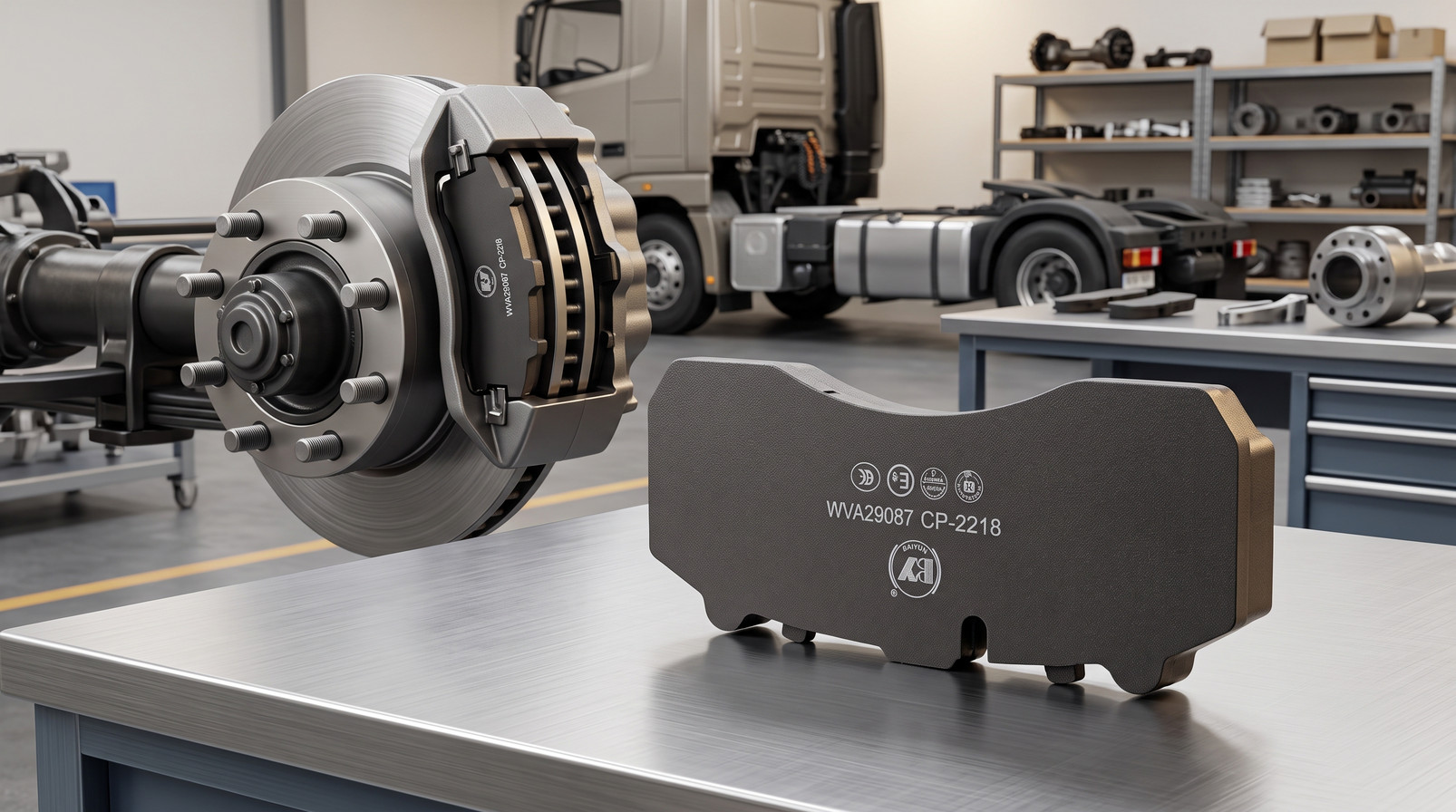
Quick answer: From sample submission to receiving an ECE R90 approval certificate, importers and fleet buyers should budget 8–12 weeks for a clean commercial vehicle brake pad or brake lining project. Dynamometer testing usually takes 3–5 weeks, documentation review adds 2–3 weeks, and administrative approval can take another 1–3 weeks. Certificates do not need periodic renewal in the way ISO certificates do, but they require regular production compliance audits and re-approval after material or process changes.
What Does the ECE R90 Approval Process Look Like for Commercial Vehicle Brake Pads?
A replacement brake pad or lining must pass ECE R90 performance testing before it can carry the approval mark for commercial vehicles. The technical service first confirms the product scope, then receives sample sets from the applicant. For heavy-duty truck and bus applications, testing focuses on dynamometer performance, which keeps lead times more predictable.
BAIYUN Brake's export team handles the process in stages: product data sheet and drawing review, sample preparation, technical service submission, dynamometer testing, report generation, and certificate issuance. Each stage has a measurable lead time. Buyers don't manage this directly, but they should understand where delays happen.
Missing documentation is the single biggest avoidable delay in ECE R90 sample approval. If the test laboratory questions the friction material declaration or the backing plate drawing, the process can stall for two to four weeks before testing even starts. That's why we link certification readiness to our IATF 16949 certified facility document control system.
For heavy-duty trucks (N2, N3) and buses (M2, M3), replacement brake pads and linings have required ECE R90 approval since September 1, 1999; discs since November 1, 2014; drums since November 1, 2016. These dates matter if you sell into legacy vehicle fleets that still run older commercial trailers.
What Is the Average Timeline from Sample Submission to Certificate Issuance?
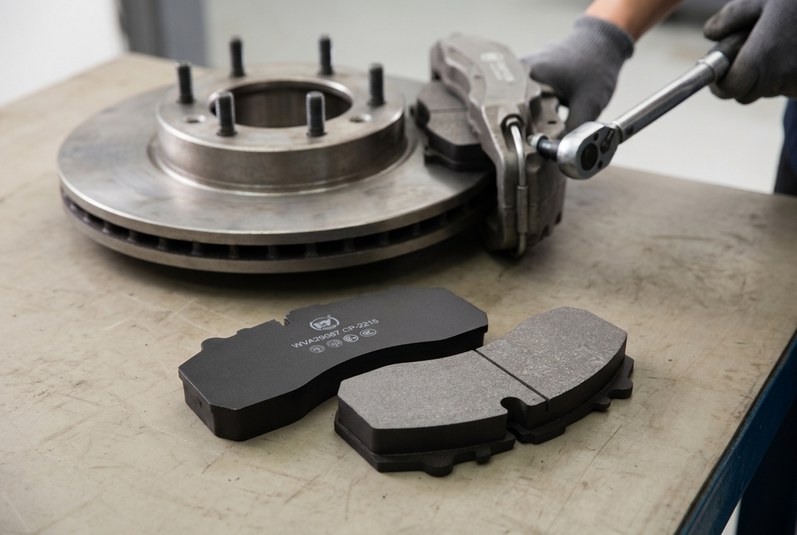
The average timeline breaks into four clear stages. BAIYUN Brake's 2024–2025 approval projects for commercial vehicle brake linings and pads matched the industry band of 8–12 weeks from sample submission to certificate, with slower cases pushed by technical service queues to 13–14 weeks.
| Approval Stage | Typical Duration | What Happens | Buyer Verification Point |
|---|---|---|---|
| Sample acceptance | 3–7 days | Technical service checks dimensions, drawings, friction material declaration | Request laboratory acknowledgement |
| Dynamometer testing | 3–5 weeks | Cold performance, speed sensitivity, fade and recovery per ECE R90 | Ask for preliminary test results |
| Report preparation | 1–2 weeks | Lab issues test report and technical file summary | Review report for formula/location match |
| Certificate approval | 1–3 weeks | Approval authority validates the package and issues certificate number | Verify certificate scope on approval authority database |
Total: 8–12 weeks average, 13–14 weeks under peak lab load.
For an importer ordering container volumes, this timeline matters. You don't want to finalize a fleet tender before the supplier's sample submission clears the laboratory. One practical tip: lock in a lab slot before sample dispatch. That simple step cuts total lead time by up to two weeks.
If you're sourcing heavy-duty truck pads, browse our heavy-duty brake pad range. Approved products come with test reports and certificate numbers you can verify before payment.
Which Factors Delay ECE R90 Sample Approval for Commercial Vehicle Brake Pads?
Three factors push a standard 8-week approval toward 14 weeks. The most common is incomplete documentation: missing drawings, inconsistent product part numbers, or unclear friction material declarations. The second is sample mismatch—if the submitted pads come from a hand-made prototype batch rather than production tooling, the test result may not represent volume output. The third is laboratory queueing, particularly in Q4 when many manufacturers push for year-end approvals.
Another underrated delay is formulation change during testing. If the manufacturer tweaks the friction compound after sample submission, the approval authority will require new samples and a fresh 3–5 week dynamometer run. That can add 6–8 weeks to the total timeline. BAIYUN Brake freezes the production recipe before submission and verifies batch traceability through our IATF 16949 system.
For brake linings, drum and shoe geometry can also slow approval because the technical service may request additional drawings or rivet data. We keep a controlled technical file for every commercial vehicle brake linings project to avoid back-and-forth.
How Often Do ECE R90 Certificates Need to Be Renewed or Maintained?
ECE R90 type approval certificates do not have a fixed expiry date. Compliance stays valid as long as the manufacturer passes periodic conformity of production audits and does not modify the approved product. For most brake pad and lining suppliers, CoP surveillance inspections happen every 12–24 months, depending on the technical service and the manufacturer's production-risk classification.
A CoP audit typically reviews material mixing records, incoming raw material certificates, dimensional inspection data, and brake performance trend results. If the auditor finds a major nonconformity, the approval authority can suspend or withdraw the certificate until corrective action is verified. This is what our 49+ years of manufacturing experience teaches us: treat every CoP window as a re-validation checkpoint, not a formality.
What triggers re-approval? A change in friction material formulation, a new backing plate supplier, a production site move, or a modification to the pad shape usually requires a new submission. Minor administrative changes may be processed as an extension. Buyers should ask for the current certificate revision and CoP status when comparing suppliers.
We link every approved part number to its live certificate and audit schedule through our certifications.
What Is the Real Cost of Delays for Importers and Fleet Buyers?
A 10-week approval delay doesn't just postpone a certificate. It blocks container bookings, fleet tender submissions, and aftermarket distributor launches. If a distributor loses a municipal bus contract because the supplier's ECE R90 approval is still pending, the financial damage can reach six or seven figures over a three-year service agreement.
From a sourcing viewpoint, the price difference between an approved pad and an uncertified alternative is usually modest—often 5–10% at factory gate. But the commercial risk is not. ECE R90 approval is a legal entry requirement for replacement brake linings in markets like Egypt, Malaysia, UAE, South Africa, and New Zealand, as well as the EU. A detained container at customs can cost importers $500–$1,500 per day in demurrage and storage, before you even count lost sales.
Smart buyers treat certification timeline as a supplier qualification metric. BAIYUN Brake maintains ECE R90 certification across its commercial vehicle range precisely because our distributor customers can't afford approval gaps. We schedule sample submission against the technical service calendar, not against the buyer's last-minute request.
Our competitive advantages include certificate-ready documentation and lab-ready sample sets.
How Can Buyers Verify ECE R90 Approval and CoP Status Before Ordering?
Importers should never rely on a supplier's word alone. ECE R90 approval numbers are checkable through the issuing approval authority or the technical service that performed the tests. The certificate shows the product type, vehicle category scope, technical service identification, and approval number.
Here's the verification checklist we recommend for commercial vehicle brake pad sourcing:
- Request the full ECE R90 approval certificate, not just the front page.
- Confirm the certificate includes heavy-duty applications such as N2, N3 trucks or M2, M3 buses.
- Check the approval number against the issuing authority database.
- Ask for the latest Conformity of Production audit date and result.
- Request the dynamometer test report to see the actual friction coefficient and speed sensitivity data.
- Confirm the tested friction formulation matches the production batch you will receive.
- Ask for exact WVA numbers and OE cross-references: Confirm with supplier catalogue.
If any of these items cannot be provided within 48 hours, treat that as a sourcing red flag. A manufacturer with genuine ECE R90 approval has the technical file on hand.
Need a reliable starting point? Contact our export team with your vehicle application and target market. We'll send the certificate and test report for the relevant commercial vehicle brake pad or lining range.
What Are the Most Common Misconceptions About ECE R90 Certification Timeline and Renewal?
Misconceptions here create expensive sourcing mistakes. Let's clear them up.
Misconception: ECE R90 certificates expire every three years like ISO certificates. → Reality: ECE R90 type approval has no fixed expiry. It remains valid while CoP audits stay satisfactory and no approved changes occur. Surveillance typically runs every 12–24 months, not every 36 months.
Misconception: A fast sample submission means a fast approval. → Reality: Testing queue and documentation quality matter more than sample speed. A rushed submission with missing drawings often ends up slower than a complete one submitted two weeks later.
Misconception: Once a pad type is approved, changing the friction compound slightly doesn't require re-approval. → Reality: Any change to the declared friction material formulation invalidates the original approval. The new compound must go through a fresh 8–12 week approval track.
These distinctions matter at the purchasing table. A distributor who assumes an old certificate still covers a new formula can end up with non-compliant inventory in a market that actively enforces ECE R90.
Takeaway: ECE R90 approval timelines are manageable when the manufacturer treats documentation and production conformity as seriously as the laboratory test itself.
What Questions Do Buyers Ask About ECE R90 Certification Timeline Renewal?
Here are the questions we hear most from importers and fleet parts managers.
Q: How long does a new ECE R90 sample submission take for commercial vehicle brake pads?
A: Plan for 8–12 weeks from sample submission to certificate. Dynamometer testing takes 3–5 weeks, report preparation adds 1–2 weeks, and administrative approval adds 1–3 weeks. Peak lab loads in Q4 can push the total to 13–14 weeks.
Q: Do ECE R90 certificates expire?
A: No, ECE R90 type approval certificates do not have a fixed expiry date. They stay valid while CoP audits remain satisfactory and the approved friction formulation is unchanged. Surveillance inspections typically run every 12–24 months.
Q: What maintenance is required after ECE R90 approval?
A: Manufacturers must pass periodic CoP audits covering material mixing records, dimensional inspection, and performance trend data. Nonconformities can lead to certificate suspension. High-risk producers may face audits every 12 months.
Q: Can a supplier reuse an existing ECE R90 certificate for a minor formulation change?
A: No. Any change to the declared friction material formulation invalidates the original approval. The modified product must pass a new 8–12 week approval cycle before it can be legally sold in ECE R90 markets.
Q: How can a buyer verify ECE R90 approval before ordering?
A: Request the full certificate, check the approval number with the issuing authority, and ask for the latest CoP audit date. Also request the dynamometer test report to confirm the friction data matches the production batch.
Ready to Source ECE R90 Approved Commercial Vehicle Brake Pads?
If the certification timeline influences your sourcing decision, you're asking the right question. BAIYUN Brake's commercial vehicle brake pad and lining programmes are built around certificate-ready documentation, lab-ready sample sets, and a CoP schedule that protects your market access. To move forward, request OEM commercial vehicle brake pad quote or contact our export team for certificate verification and lead-time confirmation.
Was this article helpful?
Average Rating: 5/5 (282)