How much do ECE R90 dynamometer tests and homologation typically cost per part number, and can multiple references be grouped in one test program?
Summary:
ECE R90 testing cost per reference for commercial vehicle brake pads ranges from $8,000 to $15,000 for a single dynamometer homologation program. Grouping similar references can cut that cost by 40% to 60% when the technical service approves family testing. Buyers should understand dynamometer test scope, OEM baseline costs, certification review fees, and the documentation required before paying a lab. This guide explains how multiple WVA references can be grouped in one ECE R90 test program, what factors drive cost, and how BAIYUN Brake helps importers and distributors plan homologation efficiently. Learn what to verify before signing a test quote, how to avoid hidden fees, and why a family-based approach matters for commercial vehicle brake pads and linings. Use the buyer checklist and FAQ to compare lab offers and source with confidence.
How much do ECE R90 dynamometer tests and homologation typically cost per part number, and can multiple references be grouped in one test program?
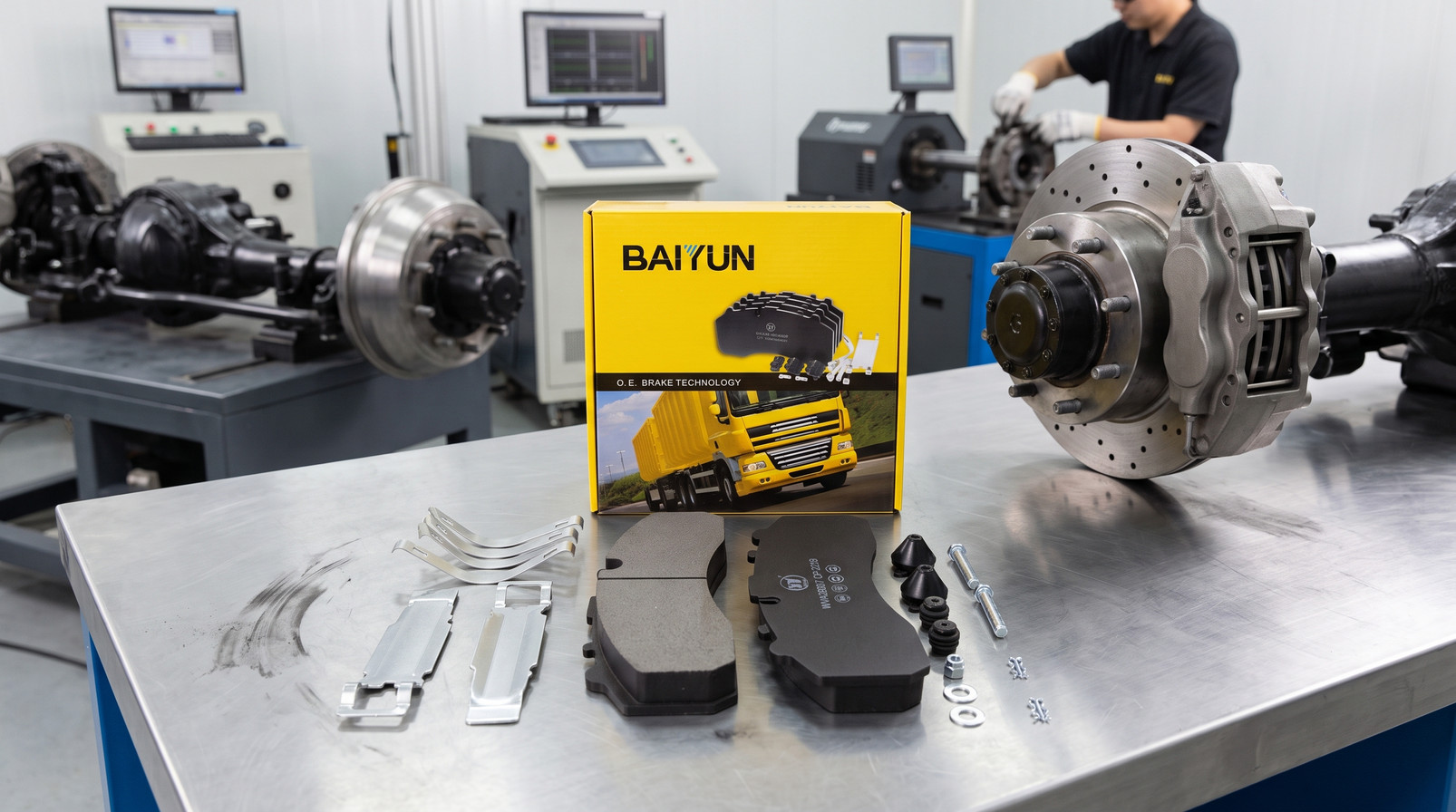
Quick answer: For commercial vehicle brake pads, ECE R90 homologation usually costs between $8,000 and $15,000 per reference for a full dynamometer test program. Multiple references can be grouped in one test program if the friction material, backing plate design, and attachment geometry are close enough to satisfy the technical service. Grouping often cuts cost per reference by 40–60%, but not every WVA number qualifies automatically. Your lab will assess grouping against ECE R90 Annex 9 criteria and the original equipment performance envelope.
What Actually Determines ECE R90 Dynamometer Test Cost per Reference?
Five cost drivers dominate commercial vehicle brake pad homologation: vehicle category, test scope, laboratory location, sample logistics, and whether the technical service accepts grouping. A truck brake pad for a 40-tonne tractor unit goes through a heavier inertia simulation than a light commercial vehicle pad, so the dynamometer program costs more.
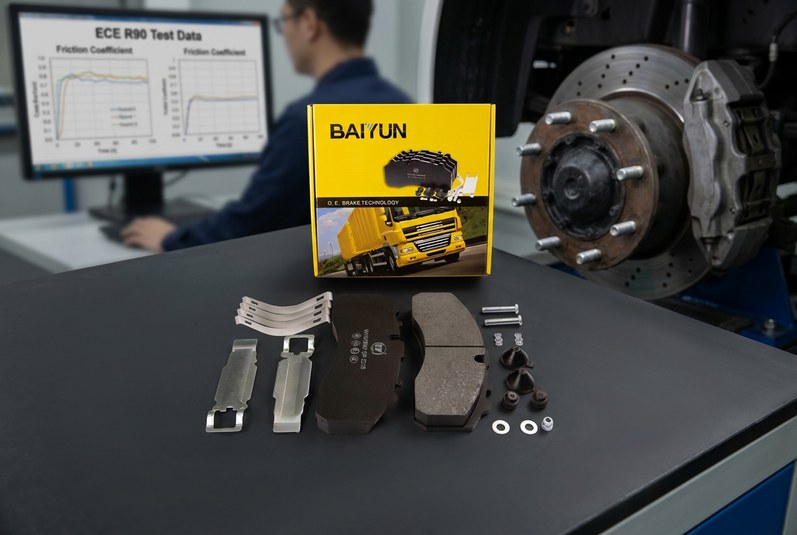
You're not just paying for one brake test. A full ECE R90 approval for a replacement lining includes cold performance equivalence, speed sensitivity, and temperature behavior checks. Labs report friction coefficient at multiple points, usually from 100°C to 400°C, and compare against the OEM reference. That measurement work adds 3 to 6 test hours per reference.
The lab's accreditation also matters. A technical service with ISO 17025 recognition charges more than a non-accredited test house, but the certificate carries more weight with EU importers. For export-focused suppliers, a recognized test report reduces port or distributor friction later. See our IATF 16949 certified facility for how manufacturing process control supports repeatable test results.
Key takeaway: ECE R90 cost per reference is not a fixed fee; it hinges on vehicle class, test protocol scope, lab accreditation, and reference grouping potential.
How Much Does a Single ECE R90 Dynamometer Test Program Cost for Commercial Vehicle Brake Pads?
A realistic single-reference budget for commercial vehicle brake pads runs $8,000 to $15,000, excluding your sample production and shipping. Some Asian laboratories quote lower, around $6,000, but those figures often cover only the basic Annex 9 matrix without full documentation support. European and North American labs tend to sit at the upper range, particularly when ECE R90 test reports must be submitted to a type approval authority.
Break down the approximate fees: dynamometer bench time, $3,000–$6,000; OEM reference pad procurement and baseline testing, $1,500–$3,500; test fixture setup and instrumentation, $800–$1,800; data analysis and report generation, $900–$2,000. Certification body review and certificate issuance can add another $1,500–$3,000 depending on the country.
If you're looking at wholesale CV brake pads inquiry, ask your supplier whether homologation costs are bundled into the part price. Some manufacturers amortize testing across annual export volume, bringing the effective cost down to a few cents per set.
Key takeaway: A single commercial vehicle ECE R90 dynamometer program typically costs $8,000–$15,000 all-in, but regional lab pricing and test scope can push the figure higher or lower.
Can Multiple References Be Grouped in One ECE R90 Test Program?
Yes, multiple references can often be grouped in one test program, but only when the technical service accepts that the variants are equivalent for performance. The lab compares backing plate dimensions, friction material formulation, piston contact area, and attachment geometry. If differences are limited to non-functional features like chamfer shape or shim color, grouping is usually approved.
ECE R90 allows a family concept for replacement brake linings, but the authority, not the manufacturer, decides the final list. In practice, a commercial vehicle brake pad family might include 8 to 15 WVA references under one certificate if the friction couple and thickness remain stable. For commercial vehicle brake linings, grouping often works because many heavy-duty applications share the same rivet pattern and friction grade.
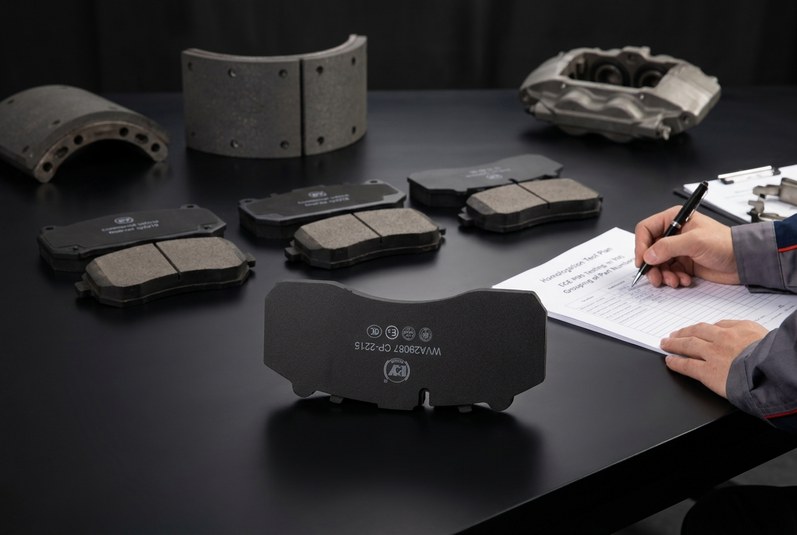
Don't assume every reference with a similar photo can group. Different pad heights, slot patterns, or backing plate steel grades can trigger separate inertia simulations. The lab will issue a test plan listing worst-case representative references and extended coverage references. Think of it as certifying the strongest cases and letting the authority extrapolate to similar parts.
Key takeaway: Grouping is possible under ECE R90, but eligibility depends on engineering similarity and the technical service's family approval decision, not just part number count.
What Are the Real Savings When You Group ECE R90 References?
Grouping changes the cost math significantly. If one reference costs $12,000, a grouped program covering five references might total $25,000–$35,000 instead of $60,000. That brings the cost per reference down to $5,000–$7,000, a 40–58% reduction.
Here's a working comparison based on 2025 China and EU lab quotes for heavy-duty truck brake pads:
| Cost factor | Single reference program | Grouped program (5 references) | Typical impact |
|---|---|---|---|
| Dynamometer bench time | $3,000–$6,000 | $5,000–$9,000 | One baseline plus two worst-case tests |
| OEM reference baseline | $1,500–$3,500 | $1,500–$3,500 | Usually one OEM sample set |
| Technical documentation | $900–$2,000 | $1,500–$3,000 | Family list and test plan add work |
| Certification review | $1,500–$3,000 | $2,000–$4,000 | Per certificate, not per reference |
| Total | $6,900–$14,500 | $10,000–$19,500 | Cost per reference often falls 40–60% |
This is why importers and distributors should ask about family grouping before committing to a test program. The savings compound when you're launching a range of air disc brake pads for trailers and trucks.
Key takeaway: Grouped ECE R90 homologation can cut cost per reference by roughly half, making it the single most effective budget lever for multi-part brake programs.
What Should Buyers Verify Before Paying for ECE R90 Homologation?
Get the lab's written scope first. A quote without a test plan is just an estimate. Ask which references will be physically tested, which are listed by extension, and whether the certificate covers all target markets such as EU, Middle East, Africa, and South America.
- Confirm the technical service is designated for ECE R90 in your export region.
- Request a complete reference list with WVA numbers, dimensions, and friction grades before grouping.
- Check the homologation certificate validity and renewal requirements—some authorities require renewal every 3–5 years.
- Verify whether the lab includes OEM reference pad sourcing in the quote or charges extra later.
- Ask about retest fees if one reference fails the first speed sensitivity run.
- Confirm sample quantity: most programs need 8–12 sets per reference plus OEM sets.
- Review the final certificate naming: your distributor may need the importer's legal entity name.
At BAIYUN Brake, we've seen buyers waste money because a test lab grouped references by visual similarity instead of friction material identity. A 20-minute technical review before signing can prevent a failed homologation cycle. Browse the full brake pad product range if you're mapping references to a new program.
Key takeaway: Written test scope, reference list, sample requirements, and certificate validity should be locked down before any ECE R90 payment.
How Does BAIYUN Brake Approach ECE R90 Homologation for Commercial Vehicle Customers?
BAIYUN Brake uses a family-based homologation strategy for its commercial vehicle brake pad and lining export programs. The engineering team starts with the friction material grade and backing plate platform, then selects the heaviest and lightest applications as physical test references. Intermediate references are covered by extension when the technical service accepts the similarity argument.
In recent heavy-duty programs, this approach reduced the number of physical dynamometer tests by 4 to 7 runs compared with testing every part number individually. For a 12-reference trailer brake pad range, the homologation budget came in roughly 55% below a one-by-one testing model. That savings often equals $20,000 to $40,000 per program, depending on lab rates.
BAIYUN Brake's 49+ years of manufacturing experience matters here because the test lab needs detailed material data sheets, dimensional drawings, and process control evidence. A supplier that can't document formulation consistency will struggle to get grouping approved. We've built the documentation system around IATF 16949 and ECE R90 requirements so the homologation file moves faster.
Key takeaway: BAIYUN Brake's family grouping method typically cuts ECE R90 homologation costs by around 55% for multi-reference commercial vehicle brake programs.
What Are the Most Common Misconceptions About ECE R90 Testing Cost and Grouping?
Misconception: Every WVA reference with the same friction code can automatically share one ECE R90 certificate. Reality: The technical service checks backing plate geometry, pad height, attachment features, and sometimes steel thickness. Similar friction material alone doesn't guarantee family acceptance.
Misconception: ECE R90 dynamometer testing is a one-time cost with no renewal. Reality: Many type approval authorities require renewal or at least periodic surveillance. Factory audits, material changes, or new backing plate sources can trigger partial retesting.
Misconception: A lower quoted lab price always saves money. Reality: Quotes under $6,000 often exclude OEM baseline testing, documentation support, or worst-case reference selection. The final invoice can climb back to $12,000 once hidden scope is added.
Key takeaway: Don't confuse sticker price with homologation value; grouping eligibility and quote completeness drive real ECE R90 cost per reference.
Frequently Asked Questions About ECE R90 Testing Cost Per Reference
Q: How much does ECE R90 testing cost per reference for commercial vehicle brake pads?
A: A full dynamometer homologation for one commercial vehicle brake pad reference typically costs $8,000 to $15,000 at accredited labs. The final price depends on vehicle class, test scope, OEM reference sourcing, and certification body fees.
Q: Can multiple brake pad references be grouped under one ECE R90 test program?
A: Yes, when the technical service accepts the family criteria for backing plate geometry, friction formulation, and attachment design. Grouped programs commonly cover 5 to 15 references, with 2 to 3 physically tested worst-case representatives and others listed by extension.
Q: How much can buyers save by grouping ECE R90 references?
A: Grouping can reduce cost per reference by 40% to 60%. A five-reference program might total $25,000 to $35,000 instead of $60,000 if each part number were tested separately.
Q: What is the typical ECE R90 dynamometer test scope for commercial vehicle brake linings?
A: The scope includes cold performance equivalence, speed sensitivity, and high-temperature behavior up to 400°C, with friction coefficient measured across multiple points. Some programs add bedding, wear, or noise checks depending on certification authority requirements.
Q: What should an importer ask a brake pad supplier about ECE R90 homologation?
A: Ask for the certificate copy, the listed WVA references, the technical service name, and the renewal date. Also confirm whether the certificate covers your target market and whether future material changes trigger retesting fees.
How Should You Budget Your Next ECE R90 Homologation Program?
Plan for $8,000 to $15,000 per reference as a safe single-part budget. If you're homologating a family of commercial vehicle brake pads or linings, push for grouped testing. The savings are real: 40% to 60% per reference is typical when the lab approves worst-case representatives and extension coverage.
Your best move is to work with a manufacturer that already controls the technical documentation. That's where homologation timelines get shorter and grouping approvals become realistic.
Key takeaway: Budget conservatively at $8,000–$15,000 per reference, but negotiate grouping early to cut homologation cost per reference by roughly half.
If you need commercial vehicle brake pads or linings with ECE R90 support, request OEM commercial vehicle brake pad quote and tell our team how many references you plan to list. Contact our export team for a homologation-ready quote today.
Was this article helpful?
Average Rating: 5/5 (249)