
What Is ECE R90 Brake Pad Certification?
Summary:
What is ECE R90 brake pad certification? ECE R90 is the EU type-approval regulation that requires replacement brake pads, linings, discs and drums to perform within ±15% of the original equipment reference across cold, speed, fade, compressibility and shear tests. For commercial vehicle importers and fleet buyers, this certification is a mandatory market-access document. It proves a specific part number has passed regulated conformity testing, not just a factory's general reputation. Buyers should verify the E-mark approval number, match part numbers exactly, and confirm the manufacturing site against the IATF 16949 certificate. This article breaks down the tests, common misconceptions, buyer verification checklist and real cost impact for wholesale brake pad sourcing.
What Is ECE R90 Brake Pad Certification?
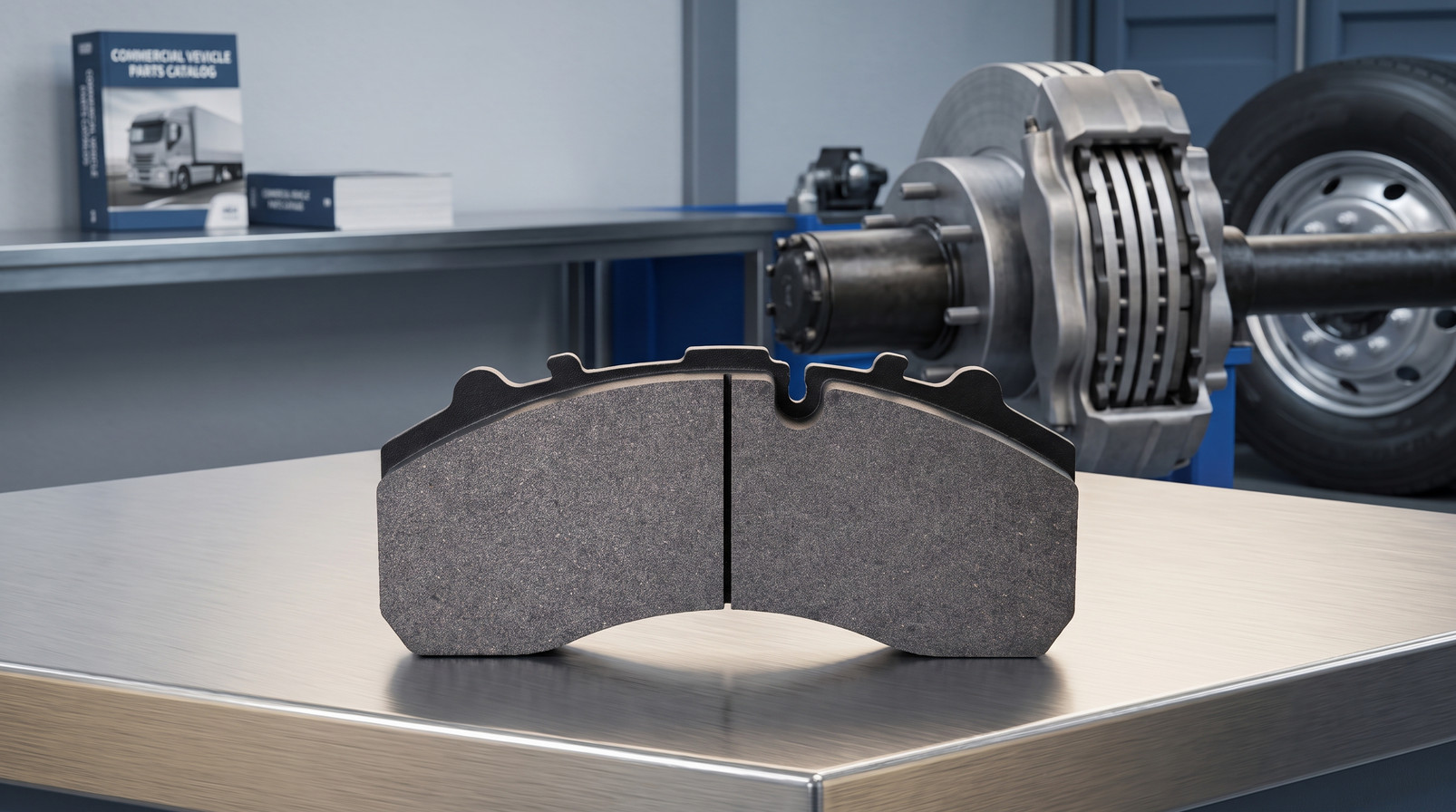
Quick answer: ECE R90 brake pad certification is a mandatory homologation proving that aftermarket brake friction for EU road vehicles delivers braking performance comparable to the OE component—typically within ±15% across regulated dynamometer or vehicle tests. For importers and fleet buyers, the certificate is a pass/fail market-access document, not a marketing badge.
Why Does ECE R90 Certification Matter So Much for Brake Pad Importers?
If you're importing commercial vehicle brake pads into the EU, a missing ECE R90 approval means your shipment can be stopped at customs before a single set reaches a workshop. That's not a hypothetical. EU market surveillance authorities routinely block uncertified brake friction because it's a road-safety product.
ECE Regulation 90 sets the homologation framework for replacement brake lining assemblies, brake pads, brake discs and drums. The regulation's core idea is simple: the aftermarket part must not make the vehicle brake worse than the original equipment. That means performance stays within ±15% of the OE reference across cold stopping, speed sensitivity, high-temperature fade and recovery sequences.
For a distributor moving 1,000 heavy-duty pad sets per month, inconsistent friction behavior batch-to-batch is a warranty and safety nightmare. ECE R90 testing reduces that risk by forcing the manufacturer to prove conformity against the specific OE part number before the product reaches the aftermarket. Check our commercial vehicle brake pads catalog to see which part numbers carry active approvals.
Key takeaway: ECE R90 is a mandatory market-access gate for EU brake friction, and it exists to confirm aftermarket parts behave within ±15% of OE braking performance.
Which ECE R90 Tests Actually Apply to Heavy-Duty Brake Pads?
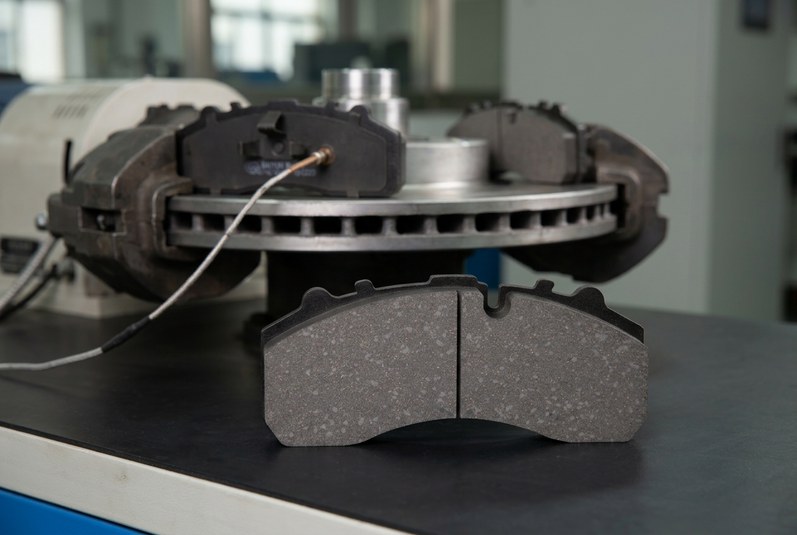
ECE R90 testing isn't a single dyno run. The test program compares replacement friction against the OE reference on several performance dimensions. For heavy-duty truck and bus applications, the test speeds and loads are adjusted to the vehicle category, but the evaluation logic stays the same.
Cold performance tests measure brake output before the system heats up. Speed sensitivity tests check that the pad doesn't over-perform or under-perform across the vehicle's operating speed range. Fade tests push the friction pair through repeated high-energy stops, then measure recovery. Compressibility and shear strength tests then confirm the pad's mechanical stability under hydraulic clamping force.
In BAIYUN Brake's 2025 dynamometer testing, heavy-duty pad friction pairs are monitored from ambient to 350°C, with recovery checks after the fade cycle. The approval number on your certificate is tied to specific part numbers, not to a factory's general reputation.
| ECE R90 Test Area | What It Checks | Commercial Buyer Relevance |
|---|---|---|
| Cold braking performance | Initial stopping power vs OE reference | Reduces low-speed delivery stop complaints |
| Speed sensitivity | Brake force consistency across speed range | Prevents unstable loaded highway braking |
| Fade and recovery | Behaviour after repeated high-energy stops | Critical for mountain routes and port duty cycles |
| Compressibility | Pedal feel and caliper displacement | Affects driver confidence and pad-to-disc contact |
| Shear strength | Friction material adhesion to backing plate | Reduces lining delamination risk on heavy axles |
Key takeaway: ECE R90 approval requires multi-test conformity covering cold performance, speed sensitivity, fade, compressibility and shear—not a single friction coefficient claim.
How Does ECE R90 Compare with IATF 16949 or ISO 9001?
Many buyers confuse a quality management certificate with a product homologation. ISO 9001 says the factory has a quality system. IATF 16949 says that system meets automotive-sector process control, traceability and risk requirements. ECE R90 says a specific brake pad part number passed regulated performance tests.
They're different filters. You can have an IATF 16949 plant making pads that don't carry ECE R90 approval—perfectly fine if the parts stay outside the EU. You can also find a certified product from a plant whose quality system isn't at IATF level, though that's less common among serious commercial vehicle suppliers. BAIYUN Brake operates an IATF 16949-certified manufacturing system and maintains ECE R90 approvals for its exported EU commercial vehicle part numbers. You can read more on our IATF 16949 certified facility page.
Key takeaway: ECE R90 is product homologation; IATF 16949 is manufacturing process certification. Reliable commercial vehicle sourcing checks both in parallel.
What Should Importers Verify Before Accepting an ECE R90 Certificate?
This is where many sourcing mistakes happen. A PDF copy of an ECE R90 approval isn't enough. The certificate must tie back to your actual part number, manufacturing site and current conformity status. Use the checklist below before releasing a purchase order.
- Confirm the certificate shows the correct E-mark approval number, not a template or a sibling part's approval.
- Check that the part number on the invoice matches the part number on the ECE R90 document exactly.
- Verify the manufacturer name and production address are the same as the IATF 16949 certificate.
- Request the latest surveillance or conformity of production report, usually issued within the last 12 months.
- Ask for batch-level compressibility or friction test data for your first container.
- If the approval covers a brake liner, confirm the riveted or bonded assembly application on your vehicle data sheet.
Don't accept claims like "our pads are tested to ECE R90 standards". That's not approval. The legal phrase is "approved to ECE Regulation 90". For a deeper look at our factory records, visit BAIYUN Brake or browse our brake lining product range if your order includes drum applications.
Key takeaway: ECE R90 buyer verification means matching part number, approval number, factory address and current conformity of production—not relying on a website logo.
What Does ECE R90 Cost Really Look Like on Commercial Vehicle Orders?
Buyers often ask if ECE R90 pads cost 30% more. Not typically. At BAIYUN Brake, the main cost drivers on heavy-duty commercial vehicle pads are formulation, backing plate grade, shims and testing volume. ECE R90 homologation adds a fixed approval cost per part number and annual conformity testing, but that cost gets absorbed across production volume.
Field replacement data from European fleet operators suggests that using certified friction reduces early lining delamination and premature workshop returns by roughly 6–10% compared with uncertified grey-market pads in the same duty cycle. For a fleet running 200 urban buses, that's a meaningful reduction in road-call events and maintenance scheduling.
So the real question is not the unit price. It's the cost of a rejected shipment, a customs hold, or a warranty claim after 40,000 km. One rejected container of uncertified pads can wipe out the margin from several clean shipments. If you're sourcing drum brake linings for trailers, the same logic applies—see our wholesale CV brake lining inquiry options for approved part numbers.
Key takeaway: ECE R90 approval increases per-part compliance cost slightly, but reduces customs rejection and field warranty risk far more on high-volume commercial vehicle programs.
What Are the Most Common Misconceptions About ECE R90 Brake Pad Certification?
Misconception: ECE R90 is only about paperwork. → Reality: The approval requires physical conformity testing on a dynamometer or vehicle. A certificate without test evidence and annual conformity checks isn't valid for road use.
Misconception: Any factory with one ECE R90 approval can apply that approval to all its part numbers. → Reality: Each part number or family must be tested and listed. An E-mark approval covers the specific application tested against the OE reference, not the whole catalogue.
Misconception: ECE R90 guarantees longest service life. → Reality: The regulation controls braking performance conformity, not wear rate. Pad life depends on formulation hardness, route profile and caliper condition. A certified pad can still wear faster if it's specified for the wrong axle load.
Understanding these differences helps you avoid overpaying for imagined claims and under-verifying real certificates. Our trusted brake pad supplier page explains how we structure approval documentation for export buyers.
Key takeaway: ECE R90 proves regulated performance conformity for a listed part number; it doesn't automatically mean longest life or whole-catalogue coverage.
What Are the Five Most Common ECE R90 Sourcing Questions Distributors Ask?
Is ECE R90 mandatory for all commercial vehicle brake pads in the EU?
A: Yes. Since its introduction under ECE Regulation 90, replacement brake pads, linings, discs and drums for on-road vehicles in EU/EEA markets must carry an E-mark approval. Non-approved friction parts cannot be legally sold for use on public roads.
Does ECE R90 mean the brake pad is identical to the OE part?
A: No. The regulation requires braking performance within ±15% of the OE reference across specified cold, speed and fade tests. It doesn't force the aftermarket part to copy the exact chemistry, design or wear rate.
How do I verify a supplier's ECE R90 certificate before ordering?
A: Request the full approval PDF, not just the first page. Check the E-mark approval number, match the part number exactly, and confirm the manufacturing site address against the supplier's IATF 16949 certificate. Current conformity of production should be within the last 12 months.
What's the difference between ECE R90 and IATF 16949?
A: ECE R90 is product homologation for specific brake pad or lining part numbers. IATF 16949 certifies the manufacturing quality management system across the plant. BAIYUN Brake holds both, but they serve different verification purposes in a sourcing audit.
Does ECE R90 cover brake discs and drums as well as pads?
A: Yes. ECE Regulation 90 applies to replacement brake linings, pads, discs and drums for road vehicles. Commercial vehicle importers should request the same approval documentation for all friction-related part categories in the container.
Ready to Source ECE R90 Certified Brake Pads for Your Market?
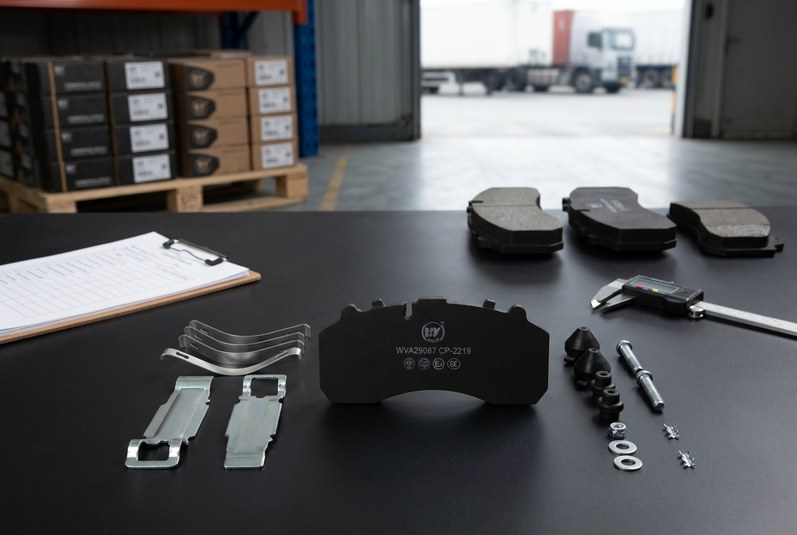
If your next tender requires E-marked friction material for trucks, buses or trailers, don't treat certification as a checkbox. Treat it as a sourcing filter that protects your customer relationships. Request the full documentation, match part numbers, and verify factory records before you commit.
At BAIYUN Brake, we supply ECE R90 approved commercial vehicle brake pads and linings with IATF 16949 manufacturing control. For a current approval list or pricing, request OEM commercial vehicle brake pad quote or browse the full product lineup for distributors. Our export team can provide certificates, conformity of production reports and batch test data with your quote.
Request a wholesale quote today and tell our team your target market and part numbers. We'll confirm the ECE R90 status for each item before you order.
Was this article helpful?
Average Rating: 5/5 (520)