
How to Choose a Commercial Vehicle Brake Pads Supplier
Summary:
Learning how to choose commercial vehicle brake pads supplier is a sourcing decision that affects fleet uptime, compliance, and landed cost per kilometer. This B2B guide walks distributors, importers, and fleet buyers through ECE R90 homologation, IATF 16949 process control, batch traceability, friction data, MOQ, lead time, and export readiness. You'll find a supplier verification checklist, a comparison table for test standards, and five wholesale-focused FAQs. BAIYUN Brake's 49+ years of manufacturing experience supports part-specific dynamometer reports and commercial vehicle brake pad programs for trucks, buses, and trailers. If you're comparing ex-works prices only, you may be missing the $500–$900 per truck per day risk of unplanned brake downtime. Use this practical framework to shortlist suppliers that can document performance batch after batch, then request a wholesale quote.
How to Choose a Commercial Vehicle Brake Pads Supplier
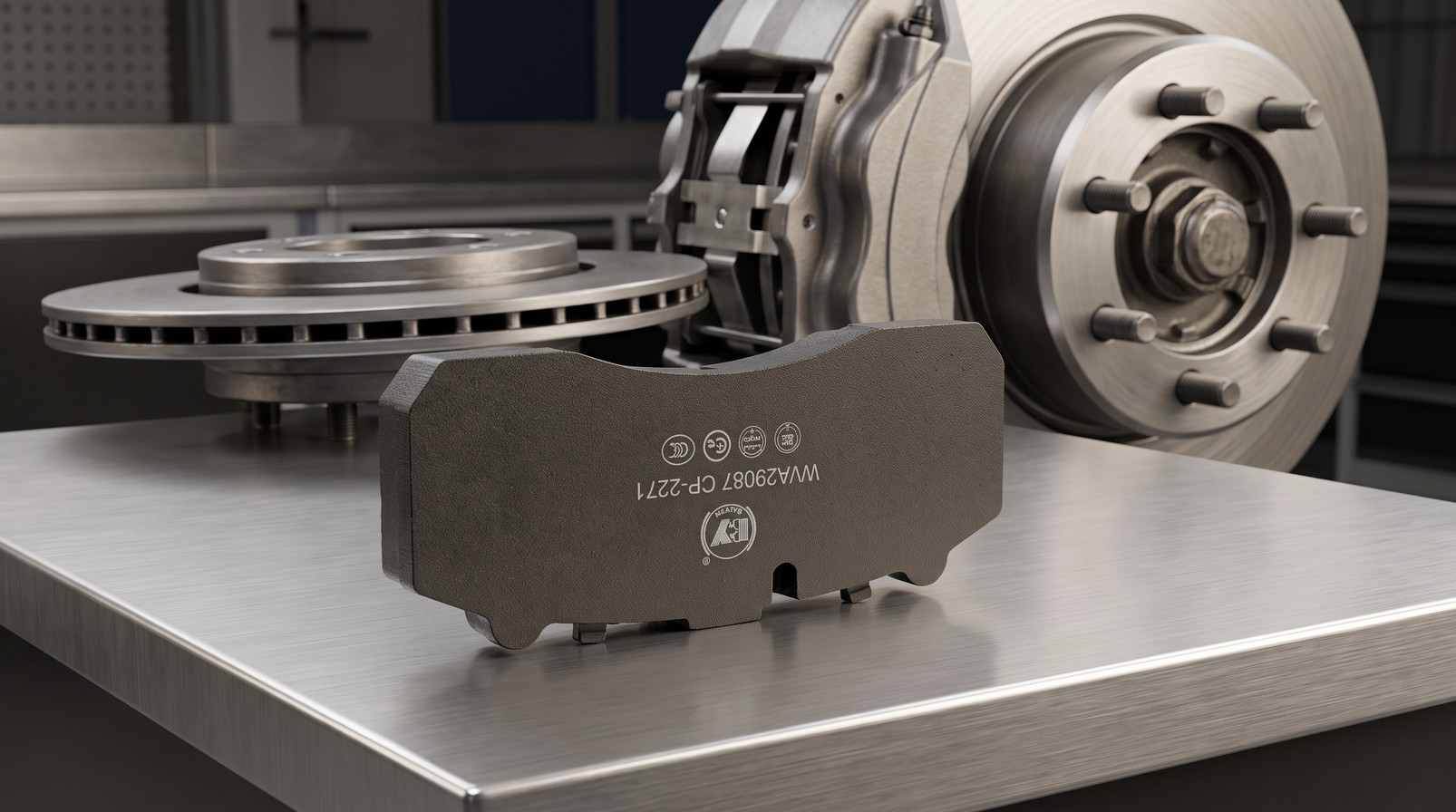
Quick answer: Choose a commercial vehicle brake pads supplier that documents ECE R90 compliance for your target market, operates an IATF 16949-certified process, and shares friction coefficient data across three or more production batches—not just a single lab sample. You'll also want written MOQ, lead time, and packaging terms, plus a trial order option. Distributors and fleet buyers should prioritize consistent stopping performance and batch traceability over the lowest unit price.
Why Does Supplier Verification Matter More Than Unit Price for Fleet Buyers?
A distributor ordering 800 axle sets per month can't afford a 0.04 mu batch-to-batch drift. When friction output moves outside the homologated band, trucks pull unevenly, brake temperatures climb, and maintenance intervals shrink. That turns a $2 saving per pad into a $700-per-day downtime event.
Fleet maintenance data regularly puts unplanned brake service between $500 and $900 per truck per day once you add tow, bay time, and missed delivery penalties. Commercial vehicle operators feel that immediately. So sourcing isn't really about price per set—it's about cost per safe kilometer.
If you're comparing suppliers, ask for the same part number produced in three separate months. A serious exporter can show that friction data. Browse our heavy-duty brake pad range to see how part-specific technical data should be presented.
Supplier verification takeaway: A low quote without batch data is not a saving; it's an unplanned maintenance risk.
Which Certifications Should You Require for Truck and Bus Brake Pads?
ECE R90 is the baseline for replacement brake linings and pads sold into EU and many export markets. Under ECE R90 testing, a replacement pad must retain at least 80% of the original cold braking performance after thermal cycling to 400°C. That's not a brochure claim. It's a pass/fail homologation gate.
IATF 16949 matters differently. It's the automotive quality management standard that forces a plant to control raw material batches, production deviations, and corrective actions. A supplier with ISO 9001 only may still make good pads, but they haven't proven the same process discipline for serial production. Some export markets also require EAC, INMETRO, or local homologation; make sure the supplier can support your destination country.
As an IATF 16949 certified facility, BAIYUN Brake couples ECE R90 product homologation with process control. When you ask a potential supplier for certificates, require the approval number to match the part number and batch code on the box.
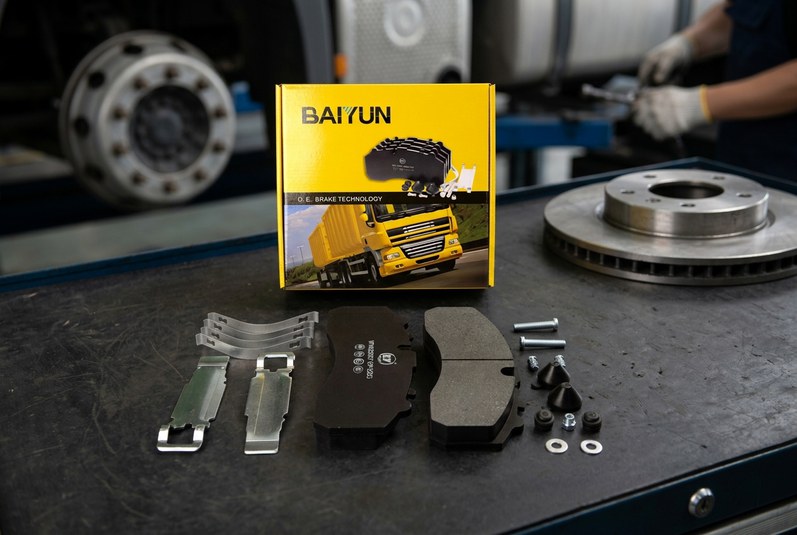
Certification takeaway: Ask for ECE R90 part-specific approval plus IATF 16949 process scope—not a generic factory certificate.
How Do You Compare Friction Material Test Data Across Suppliers?
Most buyers compare two numbers: price and friction code. That's too thin. You need to see how the pad behaves across a temperature curve. Commercial vehicle brakes regularly run from 100°C under light city braking to 350°C on long descents.
Request the full SAE J2522 or ECE R90 dynamometer report, not the summary page. A useful report lists friction coefficient at 100°C, 200°C, 300°C, and 350°C, plus fade and recovery values. Stable formulations stay within a 0.35–0.45 mu range across that window; better export-grade batches hold a band of 0.38–0.42 mu.
| Test / Standard | What It Checks | Why It Matters for Sourcing |
|---|---|---|
| ECE R90 | Replacement pad performance vs. OE homologation, cold/hot braking, speed sensitivity | Required for EU and many export markets; pads must stay within 80% of original cold performance after 400°C cycling |
| SAE J2522 (AK Master) | Bedding, fade, recovery, wear, speed/pressure sensitivity | Shows a pad formulation's real-world stability; ask for the full 15-section test, not just a pass/fail |
| GB5763 | Chinese commercial vehicle friction material requirements, friction coefficient and wear limits | Useful for domestic China production and some export homologation; combine with ECE R90 for global confidence |
Download a commercial vehicle brake pad test report to see the format a professional exporter should provide. If a supplier won't share at least one full report before sampling, that's a red flag.
Test data takeaway: Compare temperature-specific friction coefficients and recovery, not just a one-page pass/fail certificate.
What Should a Batch Traceability and Quality Report Include?
Batch traceability is where many low-cost brake pad exporters fall apart. They can pass a one-time audit but can't tell you which raw material lot went into which production run.
At BAIYUN Brake, production records link each pad set to raw compound mix, pressing cycle, and final grinding measurements. That matters because friction material can shift subtly when resin, steel fiber, or filler batches change. A reliable report includes raw material lot codes, mixing time and temperature, press pressure, cure curve, thickness range, and friction test sign-off.
Ask for quarterly audit reports, not a one-off certificate. If you're running trucks or buses in inspection-sensitive regions, compliance paperwork is part of the product. A commercial vehicle brake adjustment mismatch can look like a friction problem; proper batch records help you separate the two.
Traceability takeaway: Require raw material to finished pad lot traceability, and verify batch numbers against homologation documents.
How Do You Check Production Capacity, MOQ, and Logistics Before Ordering?
A supplier might quote $6.80 per axle set but take 70 days to ship. If your distributors' shelves run dry, you've created a stock-out problem more expensive than the unit saving.
Ask three direct questions: What is your monthly capacity for this part family? What is the written MOQ? Can you load a mixed container of brake pads and brake linings? A plant producing 300,000 sets per month can absorb a 5,000-set order without line stoppages. If your supplier can't state capacity, they're likely a trading company. Our 49+ years of manufacturing experience means BAIYUN Brake can support both standard CV pad programs and private label packaging runs, but we still document lead times per part number.
A realistic export sequence for standard CV brake pads runs 20–35 days from drawing approval to shipment. Custom compound or private label tooling pushes lead time to 45–60 days. Confirm whether the quote includes sea freight booking and full export documentation.
Capacity takeaway: Written lead time and MOQ matter as much as unit price; a low quote that ships late is not a sourcing win.
What Are the Most Common Misconceptions About Choosing a Commercial Vehicle Brake Pads Supplier?
Misconception: Any factory with ECE R90 approval can supply the exact same pad as a premium brand. Reality: ECE R90 approval is part-number-specific. A supplier may hold approval for one pad but not for the 18 mm thick severe-duty formulation your fleet needs. Always verify the homologation number against the part number.
Misconception: Higher price always means better quality. Reality: Export pricing varies by brand overhead, not just friction performance. An IATF 16949 plant selling factory-direct can undercut a trading company while providing better traceability. Compare landed cost per kilometer, not ex-works price alone.
Misconception: One dynamometer report proves the entire range. Reality: Each friction formulation and backing plate combination has its own test profile. Insist on part-specific reports. If you're sourcing both pads and linings, ask for separate evidence; request a quote for commercial vehicle brake linings with the same documentation standard.
Misconception takeaway: Documentation is product-specific and batch-specific—blanket approvals don't eliminate sourcing risk.
What Should Your Supplier Verification Checklist Include Before You Order?
- Request ECE R90 homologation numbers and matching batch numbers from the product packaging.
- Confirm IATF 16949 scope covers commercial vehicle friction production, not just final assembly.
- Ask for dynamometer test data for the exact CV part number, not a family average.
- Check friction coefficient band: should stay within ±0.03 or better across 100°C to 350°C.
- Validate monthly capacity, MOQ, and shipment lead time in writing.
- Audit packaging: export-grade boxes, anti-rattle hardware, shims, and labels with batch numbers.
- Request a small trial order before committing to a 12-month distribution contract.
Check all seven boxes before signing. Missing one means you're accepting risk you'll pay for in warranty claims.
What Questions Do Wholesale Importers Ask About Commercial Vehicle Brake Pad Sourcing?
Q: How do I confirm a commercial vehicle brake pad supplier is ECE R90 compliant?
A: Request the ECE R90 homologation certificate and compare the approval number to the batch number on the packaging. The certificate should cover the exact friction formulation and backing plate part number. If the supplier won't match batch numbers, walk away.
Q: What MOQ should a distributor expect for heavy-duty truck brake pads?
A: BAIYUN Brake and similar export-focused manufacturers typically work with MOQs starting around 300–500 axle sets for standard CV part numbers, with higher flexibility for mixed containers. Custom private label orders may require 1,000 sets or more depending on tooling. Always request written MOQ and lead-time terms.
Q: How do I compare batch-to-batch friction consistency without lab access?
A: Ask for the supplier's internal dynamometer report for the last three production lots of the same part number. Compare friction coefficient at 100°C, 200°C, 300°C, and 350°C; a stable supplier should show variation below 0.04 mu across lots. Reputable plants keep these records under IATF 16949 process control.
Q: What's the realistic lead time for OEM commercial vehicle brake pads from China?
A: Standard CV brake pad orders usually ship within 20–35 days after drawing approval and deposit. Custom compounds, private label packaging, or new tooling can push lead time to 45–60 days. Confirm whether the quoted lead time includes production, sea freight booking, and customs paperwork.
Q: Can I source both brake pads and brake linings from the same commercial vehicle supplier?
A: Yes, and it reduces inspection and shipping complexity. BAIYUN Brake supplies both C.V. brake pads and C.V. brake linings under the same IATF 16949 quality system, with shared batch traceability and technical support.
How Do You Build Your Shortlist and Request a Wholesale Quote?
Don't settle for a quote sheet alone. Ask for ECE R90 documents, dynamometer data, and a sample batch. Then compare total landed cost, not just ex-works price. If you're sourcing C.V. brake pads for trucks, buses, or trailers, request OEM commercial vehicle brake pad quote or submit your inquiry to our sales team. We'll walk you through the same batch reports and compliance pack you should demand from any serious exporter.
Was this article helpful?
Average Rating: 5/5 (625)