
Wagner Introduces OEx Brake Pads – AftermarketNews
Summary:
Wagner Introduces OEx Brake Pads - AftermarketNews covers the launch of Wagner's OEx brake pad line in North America, with a claimed stopping distance reduction of up to 50 feet in independent tests. For fleet buyers, distributors, and maintenance teams handling commercial trucks, buses, and trailers, this aftermarket news raises a practical question: does a new light-duty friction formulation change what you should require from a heavy-duty brake pad supplier? The short answer is no. Commercial vehicle brake pads still need IATF 16949 and ECE R90 certification, a verifiable WVA reference, and consistent friction performance across loaded operating temperatures. BAIYUN Brake, a Chinese brake pad manufacturer and exporter with 49+ years of experience, supplies commercial vehicle brake pads and linings that meet these requirements. This technical guide explains how to evaluate the Wagner OEx launch in context, verify supplier qualifications, and source heavy-duty brake pads with confidence.
Wagner Introduces OEx Brake Pads - AftermarketNews
Quick answer: AftermarketNews reports that Wagner introduced its OEx brake pad line in North America, with independent tests showing up to 50 feet shorter stopping distances in light-duty applications. For fleet buyers and distributors sourcing commercial vehicle brake pads, this product launch is useful market intelligence but doesn't shift heavy-duty requirements: you still need IATF 16949 and ECE R90 certification, a verifiable WVA reference, and consistent friction performance under loaded truck, bus, and trailer conditions. BAIYUN Brake supplies certified commercial vehicle brake pads and linings for global aftermarket channels.
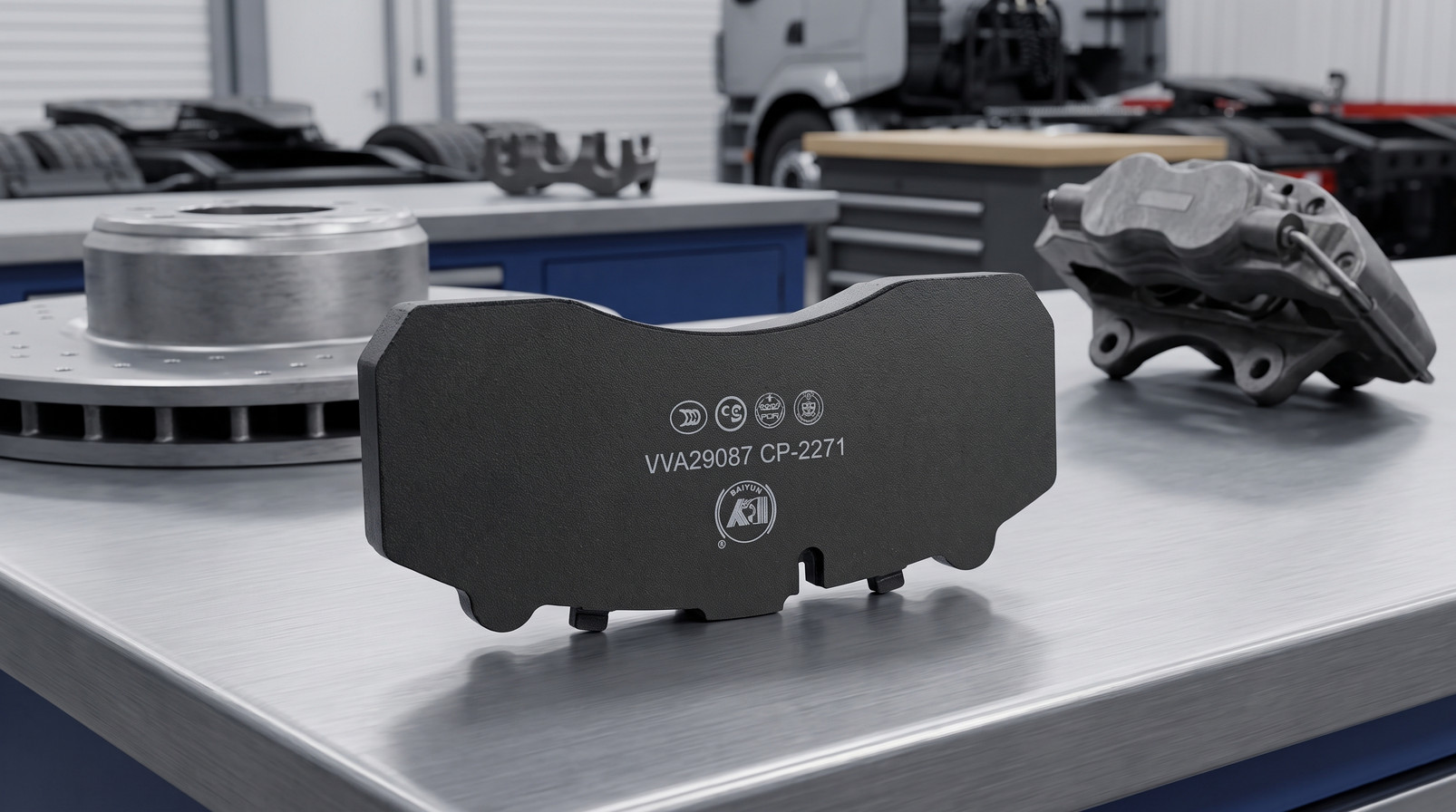
Why Should Fleet Buyers Care About a New Aftermarket Brake Pad Launch?
A fleet manager running 40 city buses doesn't buy pads based on a light-duty stopping distance claim. But when a major aftermarket brand pushes a new friction formulation, it can set expectations for friction stability, noise control, and wear life across the supply chain. Wagner's OEx launch, covered by AftermarketNews, focuses on shorter stopping distances and proprietary technology. That's a light-duty result, not a commercial vehicle specification.
For trucks, buses, and trailers, the bigger question is whether a new pad formulation maintains its friction coefficient from 100°C to 600°C under axle loads that can exceed 13 tonnes. That's where many light-duty aftermarket materials fall short, and why commercial vehicle brake pads need a different certification path. Distributors who stock both light-duty and heavy-duty brake parts should keep those segments separate when evaluating new product news.
BAIYUN Brake has spent 49+ years manufacturing friction materials for commercial vehicles, not just adapting light-duty formulations. If you're a truck brake pad supplier, the real takeaway from the Wagner OEx story isn't the stopping distance claim—it's that aftermarket brands are investing more in friction consistency and thermal management. Good heavy-duty suppliers already live there.
What Certifications Separate Commercial Vehicle Brake Pads from Standard Aftermarket Parts?
A brake pad that stops a light truck quickly can still fail after 20 hard stops on a loaded trailer. That's why certification matters. Commercial vehicle brake pads exported to Europe, the Middle East, and many African markets require ECE R90 approval. That regulation sets performance windows within ±15% of the original equipment pad for cold and hot braking, speed sensitivity, and lining wear. For the manufacturing system itself, IATF 16949 is the quality standard automotive and heavy-duty suppliers rely on. ISO 9001 alone is rarely enough for fleet-grade parts.
SAE J2522 is another useful benchmark for commercial vehicle disc pads. It classifies friction behavior using codes like EE or FF under different speed, pressure, and temperature conditions. Chinese national standard GB5763 also defines minimum friction and wear performance. Buyers should ask for actual test reports, not just certificates on a wall. A real IATF 16949 certified facility can produce control plans, process audits, and dynamometer test summaries on request.
Here's a quick comparison of what to verify before you commit to a commercial vehicle brake pad supplier.
| Verification Area | What to Ask | Why It Matters |
|---|---|---|
| ECE R90 approval | Can supplier provide ECE R90 test report for the specific part number? | Legal entry requirement for aftermarket brake pads in EU and many export markets. |
| IATF 16949 quality | Is the manufacturing site IATF 16949 certified, not just ISO 9001? | IATF requires documented process control, product traceability, and continuous improvement. |
| WVA reference | Can supplier give the WVA number for each truck axle application? | WVA numbers enable accurate cross-referencing across brands and reduce fitment errors. |
| Friction test data | What is the hot and cold friction coefficient range? | Loaded commercial vehicles need stable friction from 100°C to 600°C; wide variation causes uneven lining wear. |
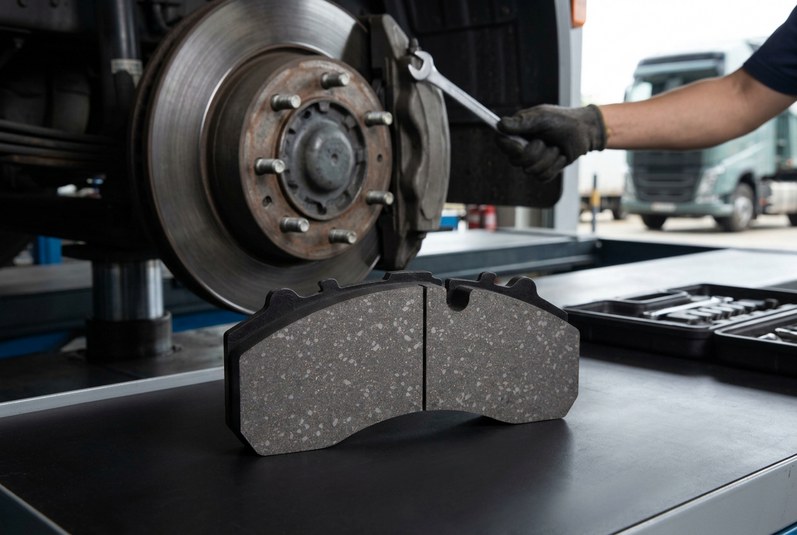
How Does WVA Reference Help Distributors Cross-Reference Brake Pads?
If you manage a mixed fleet of Mercedes-Benz, Volvo, and Scania trucks, part numbers get messy fast. The WVA numbering system gives friction materials a standardized identifier that works across original equipment and aftermarket brands. A correct WVA reference lets you match a brake pad to an axle, caliper, or brake type without relying on a single OE number. That's a practical advantage for distributors who need to serve multiple vehicle makes.
However, WVA numbers are not universal for every commercial vehicle platform. For BAIYUN Brake CV brake pads and linings, the specific WVA reference for a given application should be: Confirm with supplier catalogue. Don't guess. A wrong WVA match on a bus or semi-trailer can create fitment issues, uneven wear, and warranty claims. Ask your supplier for the WVA number alongside the axle application and OE cross-reference before you order.
We include WVA references in our commercial vehicle brake pad catalog for distributors where available. For full lining programs, we also cover commercial vehicle brake linings for drum brake axles still common in trailer and bus fleets.
What Should a Truck Brake Pad Supplier Qualification Checklist Include?
A distributor sourcing 500 sets monthly can't afford inconsistent friction coefficients batch to batch. Before you switch suppliers or onboard a new CV brake pad line, run through this verification list.
- Certification documents: Current ECE R90 and IATF 16949 certificates, not expired or pending.
- WVA and OE cross-reference list: Confirm WVA numbers against axle part numbers; if missing, write "Confirm with supplier catalogue."
- Friction test reports: Ask for SAE J2522 or GB5763 dynamometer test data, not just a marketing brochure.
- Batch traceability: Supplier must be able to trace raw material lots to finished brake pad batches.
- Packaging and private label capability: Can they handle neutral boxes, your brand, and required labeling?
- Logistics record: Ask for recent export documentation, lead times, and Incoterms.
Frankly, the price gap between certified and uncertified pads rarely justifies the warranty risk. A $0.30 per set saving that turns into a failed brake test or a container held at customs isn't a saving at all. Why choose BAIYUN Brake as your truck brake pad supplier? Because we've done the certification and testing groundwork, so your import process doesn't stall on documentation.
What Are the MOQ, Lead Time, and Logistics Realities for Imported CV Brake Pads?
Importing commercial vehicle brake pads from China isn't like buying consumer goods online. Container loads, payment terms, and inspection timing all affect your landed cost. Most CV brake pad manufacturers set minimum order quantities by part number or total container volume. For BAIYUN Brake, MOQs vary by product line and whether you want private label packaging. Standard lead time for a mixed container of brake pads and linings typically runs 30 to 45 days from order confirmation to port departure, depending on raw material availability and testing requirements.
Logistics matter more than many first-time importers expect. A 40-foot container can hold roughly 22 to 24 tonnes of brake pads, depending on packaging density. You'll need to confirm whether the supplier quotes FOB, CIF, or DAP terms, and whether they handle export documentation like the Certificate of Origin and ECE R90 test certificates. BAIYUN Brake's export team supports these documents for every shipment. For full technical data, you can download our product catalogue before you request pricing.
What OEM and Private Label Options Do Distributors Need?
Most established distributors don't want another supplier's brand competing with their own. They want a factory that can produce pads under their label, with their part numbers, and their packaging. That's where OEM and private label programs come in. BAIYUN Brake offers flexible private label options for commercial vehicle brake pads and linings, from neutral white boxes to full custom-printed cartons with your logo and barcodes. We also supply OEM production for brake brands that need consistent quality without building their own friction material plant.
Private label projects usually involve a minimum order per SKU, a die cost for new backing plate shapes if you're developing a new part, and a lead time extension for packaging design approval. But the payoff is control. You own the part number, the brand, and the customer relationship. For importers who want to build a long-term commercial vehicle brake line, private label is the more sustainable path. You can start with our stock full brake pad product range and transition to private label as volume grows.
Frequently Asked Questions for Distributors and Maintenance Teams
Q: Does the Wagner OEx launch mean BAIYUN Brake uses the same friction formulation?
A: No. Wagner OEx is Wagner's own aftermarket line, reported by AftermarketNews. BAIYUN Brake develops separate commercial vehicle friction formulations tuned for truck, bus, and trailer axle loads. Fleets should evaluate pads on their own WVA reference and loaded test data, not on a light-duty stopping distance claim.
Q: What certifications should I require for commercial vehicle brake pads imported to Europe or the Middle East?
A: ECE R90 is mandatory for aftermarket brake pads in the EU and many surrounding markets. IATF 16949 covers the manufacturing quality system. BAIYUN Brake holds both certifications, backed by 49+ years of brake manufacturing experience and documented test reports.
Q: How do I confirm the correct WVA reference for a truck or trailer application?
A: Ask the supplier for the WVA number matched to the axle part number or OE reference. For BAIYUN Brake CV brake pads and linings, confirm with supplier catalogue. Never rely on visual similarity alone, especially for mixed fleets.
Q: What is the typical MOQ and lead time for importing commercial vehicle brake pads from China?
A: MOQs vary by product line and packaging requirements. Standard lead time for a mixed container of CV brake pads and linings from BAIYUN Brake typically runs 30 to 45 days after order confirmation, with export documentation included. Request a quote for your specific volume and destination.
Q: Can BAIYUN Brake provide OEM or private label packaging for commercial vehicle brake pads?
A: Yes. We offer OEM and private label options for distributors and importers, including custom part numbering, neutral boxes, and branded cartons. Minimum orders apply, and new backing plate dies may extend lead time for custom part development.
So what does all this mean for your bottom line? A catchy aftermarket launch like Wagner OEx may generate headlines, but heavy-duty brake sourcing still comes down to certification, WVA reference, friction consistency, and logistics. BAIYUN Brake has spent 49+ years building that foundation for commercial vehicle fleets and distributors worldwide.
If you're reviewing suppliers for truck brake pads or need a reliable partner for brake linings, start with our commercial vehicle brake pad range or request a wholesale quote from our export team. We'll help you match the right WVA references and certifications for your market.
Was this article helpful?
Average Rating: 5/5 (151)