
Brake Issues Put 11% of CMVs Out of Service in CVSA Brake Safety Day – Heavy Duty Trucking
Summary:
Brake Issues Put 11% of CMVs Out of Service in CVSA Brake Safety Day - Heavy Duty Trucking. The latest CVSA enforcement data found 11.3% of inspected commercial motor vehicles had brake-related critical violations, with 773 trucks and buses placed out of service until repairs were completed. For fleet buyers, distributors, and maintenance teams, the number is more than a compliance headline. It highlights the cost of mismatched WVA references, inconsistent friction material, and skipped adjustment checks. BAIYUN Brake supplies IATF 16949 and ECE R90 certified commercial vehicle brake pads and linings for heavy-duty truck, trailer, and bus applications. This article breaks down what the CVSA data means for sourcing, which certifications matter, and how importers can qualify a brake pad supplier before committing to large volume orders.
Brake Issues Put 11% of CMVs Out of Service in CVSA Brake Safety Day - Heavy Duty Trucking
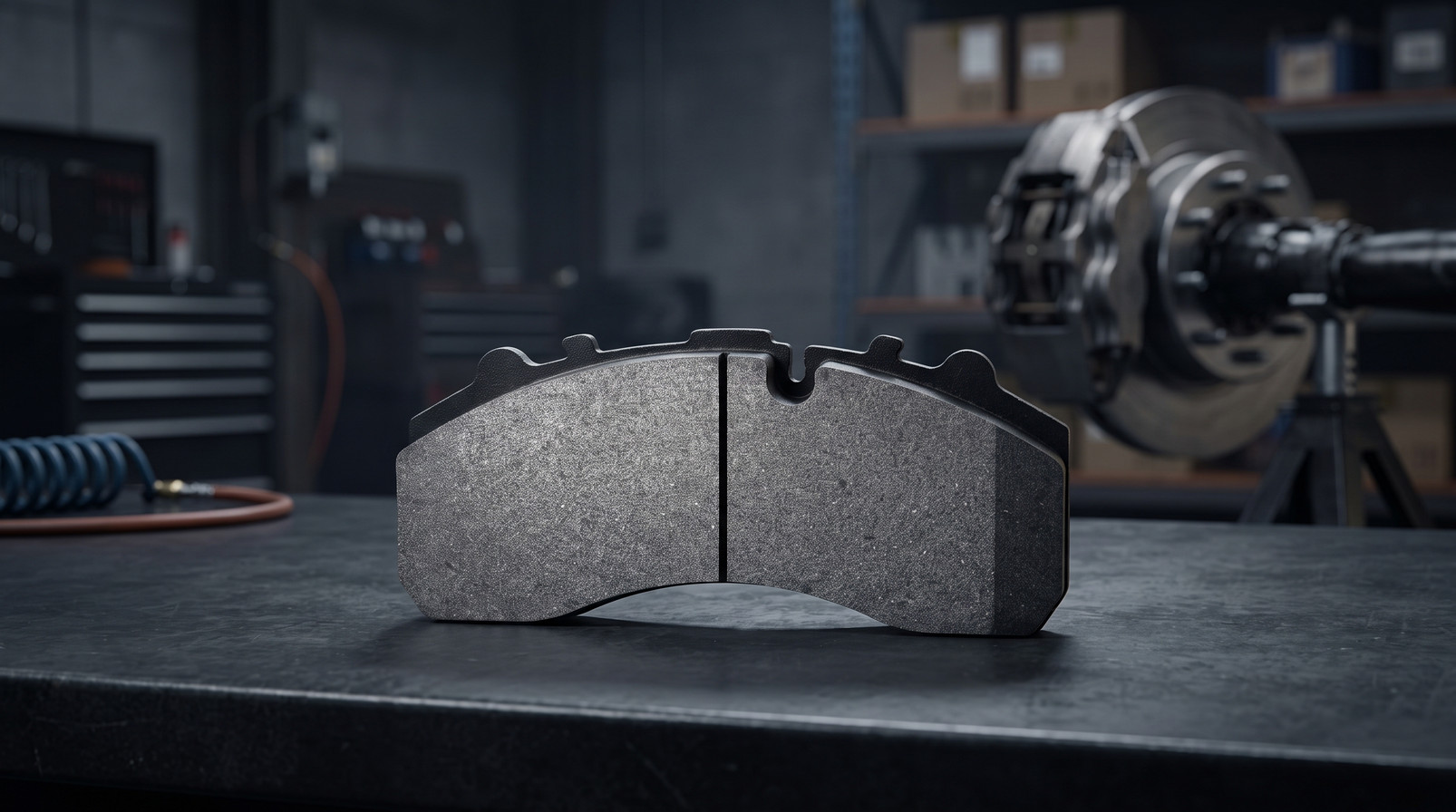
Quick answer: During CVSA’s Brake Safety Day, inspectors found brake-related critical vehicle inspection items on 11.3% of commercial motor vehicles checked, putting 773 CMVs out of service until violations were fixed. For fleet buyers and importers, that means roughly one in nine trucks or buses had brake problems serious enough to be parked. Sourcing IATF 16949 and ECE R90 certified commercial vehicle brake pads and linings is the most direct way to reduce that risk.
What Does an 11.3% Brake Out-of-Service Rate Actually Mean for Your Fleet?
Roadside brake inspections don't test laboratory friction charts. They test whether a loaded truck can stop safely and whether the hardware on that axle is in proper adjustment. CVSA's Brake Safety Day found brake-related critical vehicle inspection items on 11.3% of vehicles checked. That's 773 commercial motor vehicles parked until repairs were completed.
Compare that with the previous year, when 1,290 CMVs were placed out of service, or 14.1% of the 9,132 inspected in a single day. The rate improved, but the scale of the problem remains serious. For a fleet running 300 power units and 500 trailers, an 11% failure rate could mean dozens of your own assets would not survive a surprise inspection event.
What's often missed in the headline number is that each out-of-service order carries real money: towing or on-site repair, missed delivery windows, CSA scores in the U.S., and repeat inspection exposure. Fleet buyers and importers who treat brake friction as a commodity end up paying for it downstream.
For importers, this is also a demand signal. When CVSA publishes out-of-service data, fleet maintenance managers call distributors looking for certified replacement parts before the next Brake Safety Week. Stocking brake pads with clear ECE R90 marks and traceable lot codes becomes a sales advantage, not just a compliance box.
Why Do Brake Hose Chafing and Out-of-Adjustment Brakes Keep Appearing?
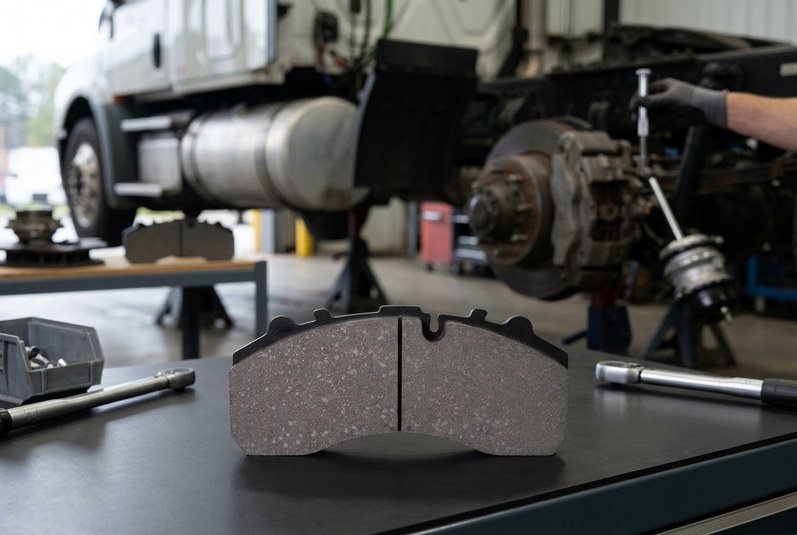
Brake-related violations cluster around a few recurring failures. Out-of-adjustment brakes, brake hose and tubing chafing, lining cracks, and oil or grease contamination are common findings. These are rarely caused by one bad batch of friction material. Most come from installation shortcuts, skipped running clearance checks, or mismatched replacement parts.
A distributor might sell a 10-pad axle set that fits dimensionally but doesn't match the original friction coefficient. The vehicle stops, but side-to-side balance suffers. Inspectors catch this during performance-based brake testing or stroke measurement. If the pad's WVA reference is wrong or unconfirmed, you inherit the liability. Missing data? Confirm with supplier catalogue.
Maintenance teams often overlook running clearance. Our technical team points fleets to brake running clearance tips because a properly installed lining with no clearance check will still create drag, heat, and premature wear.
Commercial Vehicle Brake Pads and Linings: Where Sourcing Decisions Hit the Road
If 11% of CMVs fail a brake-only inspection day, the aftermarket has a consistency problem. A commercial vehicle brake pad is only as predictable as the friction formulation behind it. You can't manage a 500-vehicle fleet with pads that vary 0.05 coefficient of friction from batch to batch.
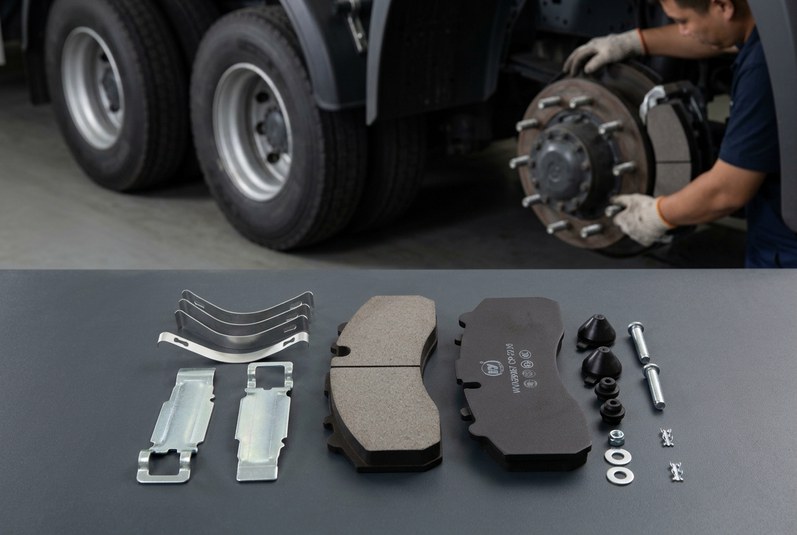
BAIYUN Brake operates with IATF 16949 quality management and ECE R90 approved references across a wide commercial range. For disc-brake fleets, our commercial vehicle brake pads cover common truck and bus applications. For drum brake trailers and buses, the same thinking applies to commercial vehicle brake linings.
We've seen customers reduce field complaints by consolidating part numbers around a single qualified supplier. That doesn't mean you stock fewer SKUs. It means the SKUs you do stock behave the same way from container to container.
That's why we recommend buyers request coefficient-of-friction curves across the 100–350°C range. A pad that looks fine at 100°C can fade badly on a long mountain downgrade. BAIYUN Brake's commercial references are designed for exactly those duty cycles, but don't take our word for it. Ask for the batch report.
IATF 16949 and ECE R90: What Fleet Buyers Should Verify Before Placing a PO
Two certifications matter for international truck and bus brake sourcing. IATF 16949 is a quality management system standard built for automotive supply chains. It forces process control, traceability, and nonconformity management. ECE R90 is a product-level approval for replacement brake linings and pads in many European and UN-ECE-adopted markets.
An IATF 16949 certificate alone doesn't mean every reference is approved. You still need to check the specific WVA number and ECE R90 approval marking on the packaging. That's why serious buyers ask for both the certificate and the batch-specific test data. At BAIYUN, our IATF 16949 certified facility runs dynamometer and shear testing on production batches, not just initial type approval.
| CVSA brake system focus | Typical inspection finding | Fleet sourcing countermeasure |
|---|---|---|
| Brake adjustment | Excessive pushrod stroke, out-of-adjustment slack adjuster | Spec WVA-correct friction pairs; schedule running clearance checks |
| Brake lining condition | Cracks, oil contamination, uneven wear | Request shear strength and thermal fade data from supplier |
| Brake hose/tubing | Chafing against suspension or air lines | Use application-specific kits; review routing during installation |
| Brake balance / equalization | Side-to-side braking variance | Buy batch-tested axle sets, not mixed references |
MOQ, Lead Time, and Private Label: Buying for Distribution vs. Fleet Replacement
Distributors and fleet purchasing managers ask different questions. A distributor wants private label boxes, stable lead times, and references that match the local vehicle parc. A fleet buyer wants container-level consistency, pad marking clarity, and a supplier that doesn't disappear after the first order.
Both should start with the reference list. If the WVA reference, OEM cross, or axle fitment isn't confirmed by the supplier catalogue, no MOQ discussion matters. Confirm with supplier catalogue. The same applies to CP-series commercial references; without the master cross list, you're guessing.
For private label and OEM programs, packaging languages, inner box counts, and label artwork add lead time. Standard packed references move faster. If you're building an annual contract, ask for a pilot run before committing to 12 months of inventory. A wholesale CV brake lining inquiry should include annual volumes and target regions to produce an accurate quote.
Lead times are less about the pad and more about your packaging spec and shipping lane. If you need ECE R90 marking and trilingual labels, the artwork approval gate can add a week. That's manageable if you plan early.
Buyer Verification Checklist for Roadside-Compliant Brake Friction
- Request IATF 16949 certificate and ECE R90 approval document for the exact WVA reference you will import.
- Ask for recent dynamometer test report: coefficient of friction, cold and hot performance, shear strength.
- Confirm WVA reference and OE cross numbers against current supplier catalogue; if missing, stop and request a written confirmation.
- Review side-to-side axle sets to ensure same batch, same friction code.
- Check packaging for ECE R90 marking, country of origin, and traceability lot code.
- Run a pilot order of 200–500 axle sets and inspect wear, noise, and brake balance before scaling.
Five Questions Importers Ask After CVSA Brake Safety Day
Q: Does the 11.3% rate mean commercial brake quality is getting worse?
A: No. The rate improved from 14.1% the previous year. Different sample sizes and inspection conditions make year-over-year comparisons rough, but the trend suggests better parts and maintenance can push the number lower.
Q: How can a buyer verify that an aftermarket brake pad will pass a roadside brake check?
A: Focus on three things: correct WVA reference, ECE R90 approval, and consistent friction coefficient from batch to batch. Ask for dynamometer data and verify the supplier holds IATF 16949 certification.
Q: Is ECE R90 the same as IATF 16949?
A: No. ECE R90 is product approval for replacement brake linings and pads in ECE markets. IATF 16949 is a quality management system for the entire manufacturing process. You want both.
Q: Can BAIYUN Brake support private label or OEM box builds?
A: Yes. Standard and private label packing are available for commercial vehicle brake pads. MOQ and lead time vary by WVA reference, so you'll need a factory quote based on your target part numbers. Confirm with supplier catalogue.
Q: What's the first step for a distributor switching suppliers?
A: Send your current part number list and annual volumes. The factory can cross-reference approved references, identify gaps, and propose a pilot order. Start with small quantities to verify fitment and packaging before committing.
The Sourcing Takeaway
An 11% brake-related out-of-service rate should make every fleet buyer and distributor reconsider what good enough means. The real cost isn't the pad. It's the roadside violation, the missed delivery, the warranty claim, and the customer who walks away.
BAIYUN Brake has spent 49+ years manufacturing commercial vehicle friction. We've seen cheap batches fail in the field long before a dynamometer would catch them. That's why we hold IATF 16949 and ECE R90 across the heavy-duty range.
If you're building or refreshing a commercial brake program, start with the data. Request OEM commercial vehicle brake pad quote or request a wholesale quote from our export team. Send your target WVA references and annual volumes. We'll confirm what's available, what's approved, and what lead time you can expect.
Was this article helpful?
Average Rating: 5/5 (227)