
The anatomy of a truck’s air brake system – Commercial Carrier Journal
Summary:
The anatomy of a truck's air brake system - Commercial Carrier Journal matters for fleet buyers, distributors, and maintenance teams because air supply, control circuits, and foundation brakes all influence commercial vehicle brake pad and lining performance. BAIYUN Brake supplies IATF 16949 and ECE R90 certified friction materials for S-cam drum brakes and air disc brakes used on trucks, buses, trailers, and special-purpose commercial vehicles. Understanding compressor pressure ranges, governor settings, relay valves, brake chambers, and slack adjusters helps importers avoid false warranty claims and select the right WVA reference. This technical guide covers supplier verification, certification requirements, MOQ and lead time logistics, private label options, and fleet maintenance strategies. It includes a certification comparison table, buyer checklist, and wholesale-focused FAQ. For specific WVA numbers, confirm with supplier catalogue.
The anatomy of a truck's air brake system - Commercial Carrier Journal
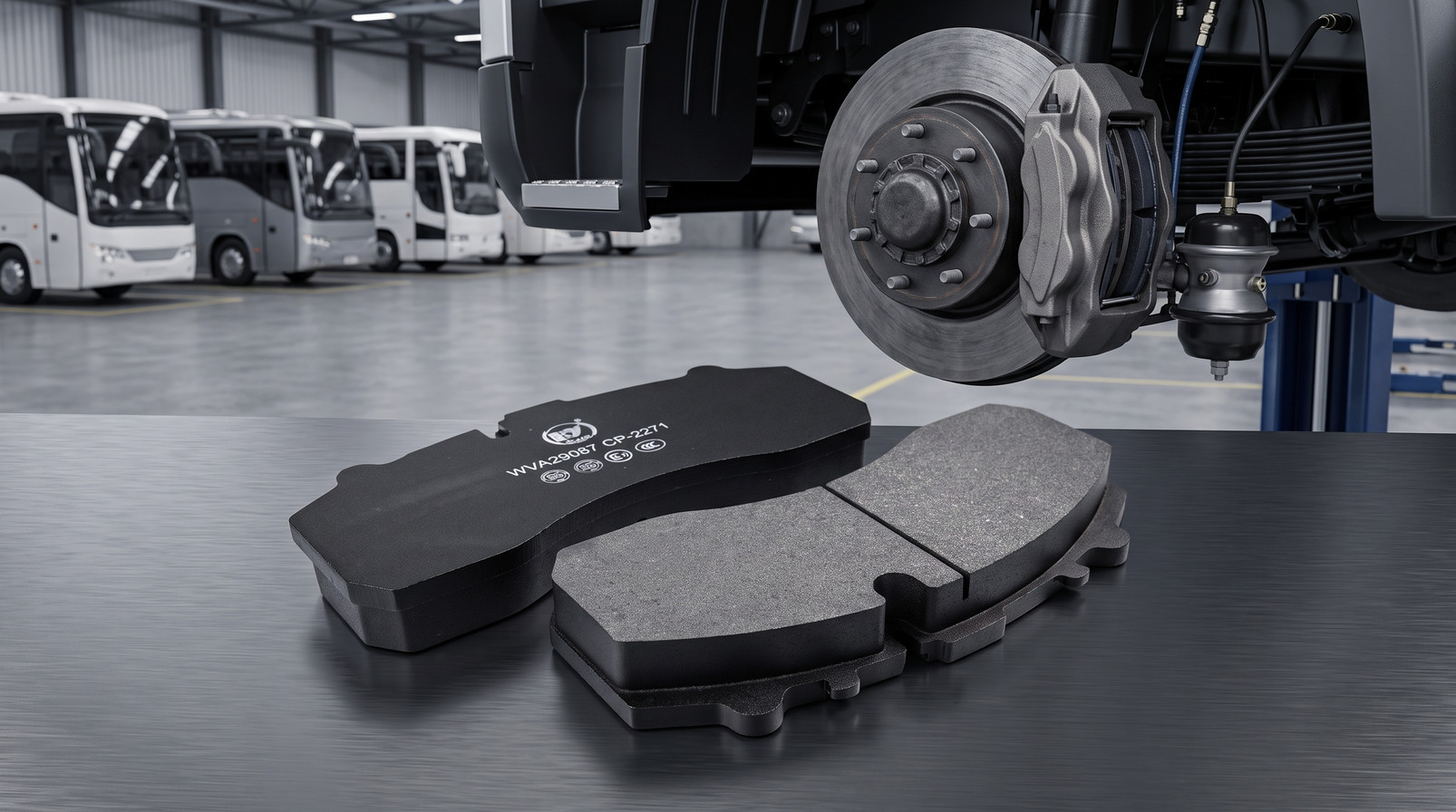
Quick answer: A truck's air brake system uses compressed air from an engine-driven compressor, stored in reservoirs, and controlled by valves to actuate S-cam drum brakes or air disc brakes. Fleet buyers and distributors need to understand the air supply, control circuits, and foundation brake hardware because friction material choice affects stopping distance, service intervals, and total cost per kilometer. BAIYUN Brake supplies IATF 16949 and ECE R90 certified commercial vehicle brake pads and linings engineered for these systems.
Why fleet managers treat the air brake anatomy as a buying filter, not a theory
Ask any fleet maintenance manager what keeps trucks off the road, and brakes come up fast. A commercial vehicle air brake system is more than the pad or lining at the wheel end. The compressor, reservoirs, valves, and brake chambers all must work together before friction material gets a chance to do its job. If you're buying brake pads or linings for distribution across North America, Europe, or the Middle East, understanding that chain separates a low-cost part supplier from a reliable friction partner.
Commercial Carrier Journal's Air Brake Book, 11th edition, organizes the system into air supply, control, and foundation brake sections. Smart sourcing teams use the same mental model. You'll often see the same WVA reference from three different brake pad suppliers, but you won't get the same brake feel or wear life. The friction material has to work inside an air brake system that operates at 100 to 130 psi, cycles from cold to over 400°C at the pad surface, and must release cleanly every time the driver lifts the foot valve. A pad that works on a test rig but behaves differently under real air pressure modulation will create complaints from fleets, warranty returns for distributors, and harsher drum or disc wear. BAIYUN Brake has 49+ years of manufacturing experience in solving exactly these mismatches.
What does the air supply side tell you about pad and lining durability?
An air brake system starts with a gear-driven or belt-driven compressor. The governor cuts the compressor out at roughly 120 to 130 psi and cuts it back in around 100 psi. Air dryers, reservoir tanks, and check valves remove moisture and keep air available. Why should a friction buyer care? Moisture, oil carryover, and pressure drop have an indirect but real effect on foundation brakes.
Excess moisture leads to corroded brake chambers, sticky relay valves, and inconsistent application force. Over time, that produces uneven pad or lining wear. On a heavy truck, a leaking air dryer can leave enough water in the tanks to freeze a pressure protection valve in cold weather. That's not a friction defect, but it will still show up as premature brake wear on one axle. If you source commercial vehicle brake pads for mixed fleets, collect application details: duty cycle, terrain, auxiliary air demand, and whether trucks idle long hours. Those factors shape the right friction coefficient and heat range faster than a WVA reference alone.
How do S-cam drum brakes and air disc brakes change the friction product you buy?
Most heavy commercial vehicles worldwide still run S-cam drum brakes. When air enters the brake chamber, the pushrod extends, rotates the brake adjuster and camshaft, and spreads the brake shoes against the drum. Lining thickness, radius, coefficient of friction, and thermal recovery matter more in drum brakes because heat builds inside the drum. Air disc brakes use a caliper clamping two pads against a ventilated rotor. They cool faster but put more mechanical load on the caliper and pad backing plate. A distributor buying only on price will see different failure modes: drum linings may crack from thermal shock, while disc pads may suffer from edge tapering or backing plate deflection.
Inside a drum on a long descent, temperatures can exceed 600°C, while air disc rotors often run 100 to 150°C cooler under the same conditions. That's why BAIYUN Brake formulates separately for drum and disc applications, with different friction curves and compressibility targets. For drum applications, request a wholesale CV brake lining inquiry instead of assuming one friction material fits both. Fleet maintenance teams should also check brake running clearance tips during installation; incorrect clearance on S-cam brakes will destroy a new lining in a few thousand kilometers.
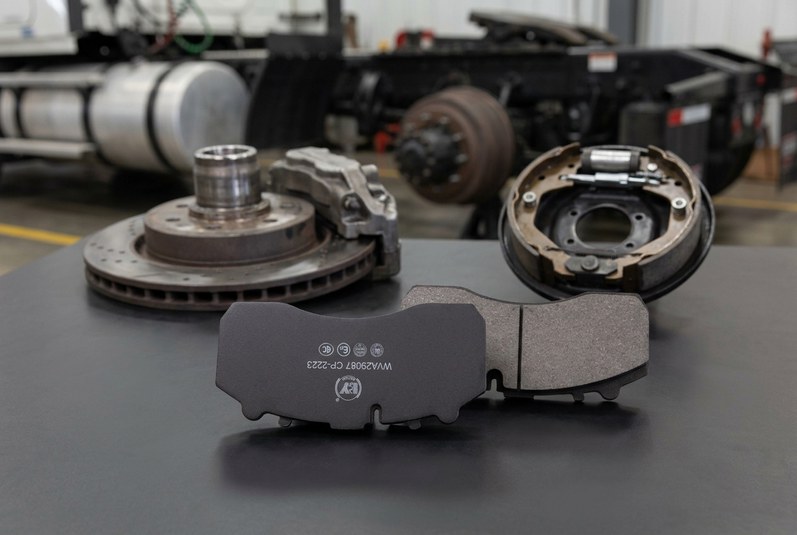
What happens between the brake pedal and the brake chamber? Control circuit basics for buyers
The foot valve, relay valves, quick release valves, and proportioning valves control air delivery. On a tractor-trailer combination, the red and blue gladhands and trailer relay valve add complexity. Why this matters for a brake friction supplier: smooth, proportional air application reduces pad wear and heat spikes. If a truck's relay valve is slow to release, the pads drag and temperatures climb. That can lead to glazing on disc pads or carbonization on drum linings.
BAIYUN Brake reviews fleet failure returns with this in mind. We've seen linings returned for 'low friction' that actually came from a dragging brake chamber or an unadjusted slack adjuster. Before you reject a batch, isolate the air circuit. Ask the fleet to test brake release time and chamber pushrod stroke. If the pushrod stroke exceeds the manufacturer's limit, fix that first. For distributors, this also means you can reduce false warranty disputes by documenting installation and brake adjustment practices.
Why ECE R90 and IATF 16949 matter when sourcing commercial vehicle friction
In Europe and many export markets, replacement brake pads and linings for commercial vehicles must carry ECE R90 approval. This is not a paper exercise. ECE R90 tests compare replacement friction to the original part's performance across cold, speed, and hot braking cycles. An IATF 16949 certified factory adds process control, traceability, and defect prevention on top of that. BAIYUN Brake operates under both systems and invites customer audits at the IATF 16949 certified facility.
For a buyer, that means you can request the ECE R90 approval number for each part number and ask for current test reports before sampling. If a supplier hesitates, that's a red flag. Use this table to verify friction documentation at the supplier selection stage:
| Certification / Standard | What it verifies for commercial brake friction | Buyer verification step |
|---|---|---|
| ECE R90 | Approval for replacement brake linings and pads; tests braking performance, speed sensitivity, and cold performance | Request valid ECE R90 approval number on label and test certificate |
| IATF 16949 | Automotive quality management system for production, traceability, defect prevention | Ask for current IATF certificate and audit scope |
| SAE J2522 / J866 | Friction classification and dynamometer test protocols used in North America | Confirm product meets relevant class and test cycle |
| GB 5763 | Chinese national standard for brake linings; includes friction coefficient and wear limits | Review batch test reports for each shipment |
| WVA reference | Identifies pad and lining shape and fitment | Confirm with supplier catalogue |
What should your supplier verification checklist include before you place a wholesale order?
Don't rely on a certificate alone. Run a short verification process with every new brake pad or lining supplier. Your checklist should cover the points below:
- Confirm ECE R90 approval number visible on product or packaging.
- Request IATF 16949 certificate with current scope and expiry date.
- Ask for batch-level friction coefficient and wear test data from dynamometer testing.
- Check WVA reference against your application list; if specific WVA numbers are not supplied, Confirm with supplier catalogue.
- Review packaging and label for batch traceability and production date.
- Confirm MOQ, lead time, and private label options before sampling.
MOQ, lead time, and private label options only work with a clear air brake application list
For importers and distributors, the real operational question is order planning. A 20-foot container can hold thousands of pad sets, but mixing too many part numbers in one order increases picking errors and inventory risk. BAIYUN Brake recommends grouping parts by brake type: air disc pads for European tractor axles, S-cam drum linings for North American trailer axles, and specific heavy-duty applications like mining or municipal buses. Most common heavy-duty references can be produced and shipped on a standard schedule, while private label packaging adds time for artwork approval and plate making. Before negotiating MOQ, send a target part list with WVA references or OE cross numbers. If WVA numbers are not supplied, Confirm with supplier catalogue. That avoids pricing errors and lead time surprises.
Does the air brake anatomy change your fleet maintenance and replacement strategy?
Yes. A fleet that treats air system leaks and friction replacement as separate costs will keep paying for premature pad and lining wear. Plan maintenance around both. For a mixed fleet, track air compressor duty cycle and air dryer desiccant replacement at least twice a year. For brake friction, record baseline thickness at installation and re-check at every tire rotation or A-service interval. If one wheel end loses 2 mm more than the others, inspect the chamber, slack adjuster, and caliper guides before blaming the pad. This is the kind of insight distributors can pass to their fleet customers to build loyalty.
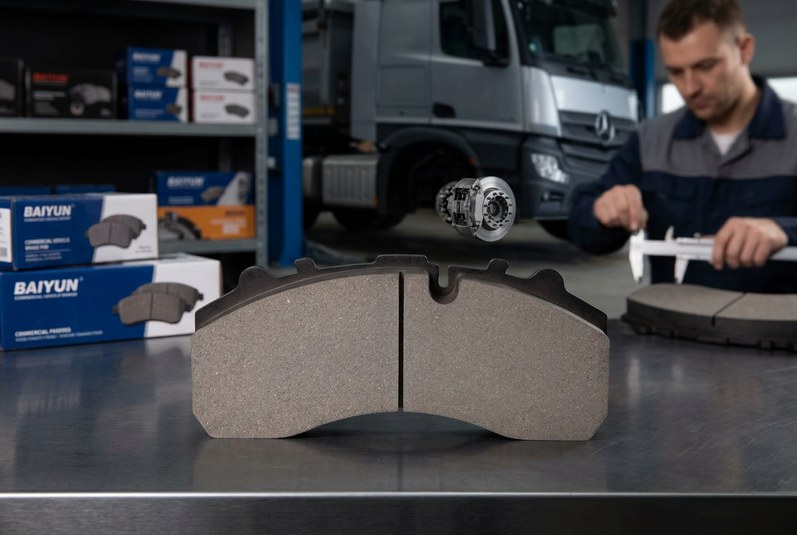
If you're sourcing commercial vehicle brake pads or linings for a fleet, distribution network, or private label program, start with a part list and a friction requirement. BAIYUN Brake can match ECE R90 and IATF 16949 requirements against your application. Request an OEM commercial vehicle brake pad quote or request a wholesale quote from our export team today.
Was this article helpful?
Average Rating: 5/5 (186)