
Truck brake pad supplier with ECE R90 certificate: Importer and Distributor Buying Guide
Summary:
A truck brake pad supplier with ECE R90 certificate is non-negotiable for importers and distributors selling into EU, ECE, Middle Eastern, and African commercial vehicle markets. This guide shows how to verify ECE R90 type approval by part number, collect supplier documentation, run a remote factory audit, and compare real landed costs. You'll also get a buyer verification checklist, red flags that show up in supplier paperwork, and five FAQ answers built specifically for wholesalers and fleet distributors. BAIYUN Brake adds 49+ years of friction material manufacturing and IATF 16949 process control, so importers can reduce certification risk without paying third-party consulting fees. Use this practical sourcing checklist before you sign a supplier contract or wire a deposit. Confirm each pad family, request dynamometer reports, and always match the ECE R90 approval to the part number on your order.
Truck brake pad supplier with ECE R90 certificate: Importer and Distributor Buying Guide
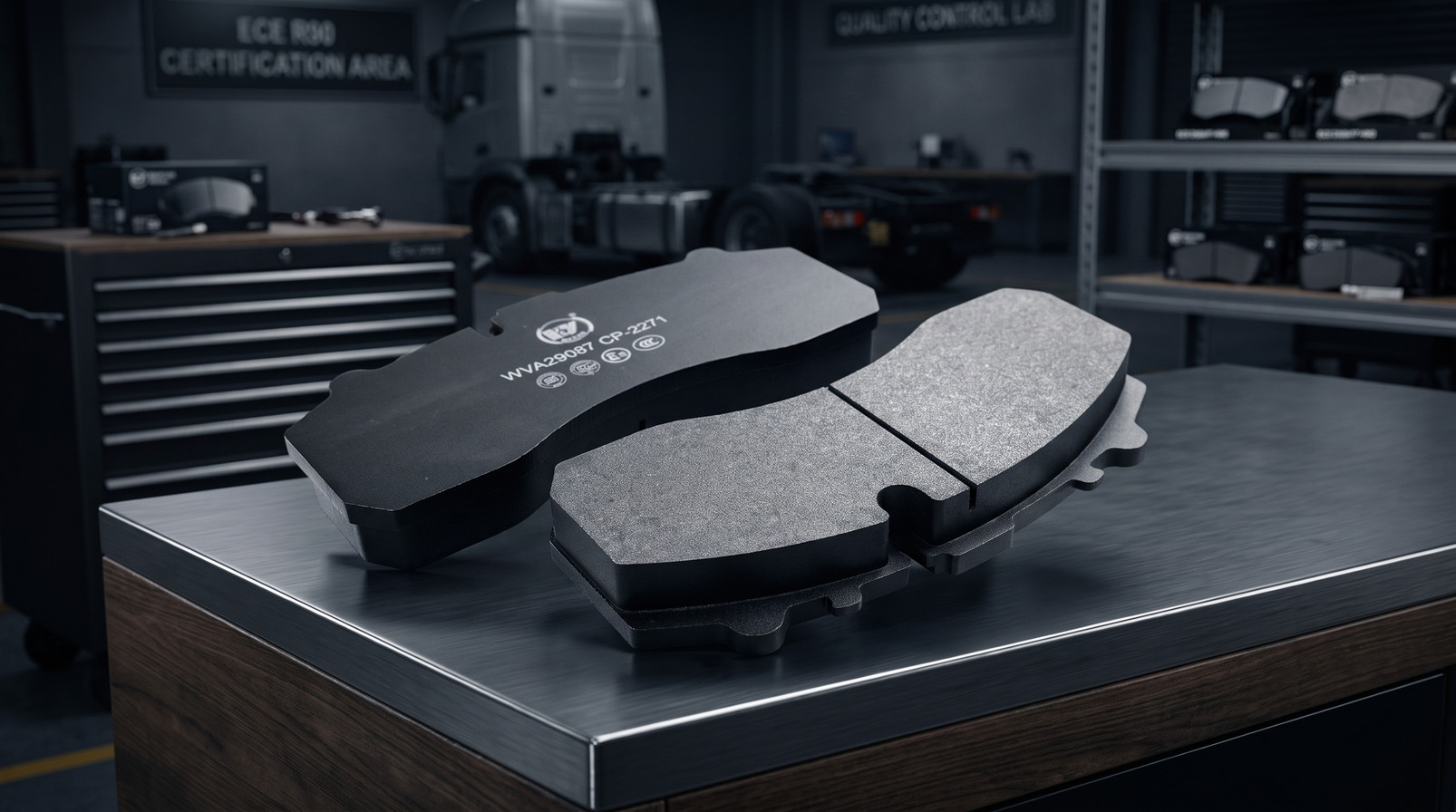
Quick answer: Every EU/ECE-bound shipment of replacement truck disc brake pads must come from an ECE R90 approved supplier. Verify the approval number covers each part number, audit the factory's IATF 16949 process control, request third-party dynamometer reports, and compare landed cost across at least three audited manufacturers. BAIYUN Brake makes this easier: 49+ years in friction materials, IATF 16949 and ECE R90 certification, and importer-friendly wholesale programs. Always ask for the certificate before ordering samples.
Why Do Importers Get Burned by “ECE R90 Certified” Suppliers?
Ask any importer who has sourced commercial vehicle friction for more than 24 months and you'll hear the same warning: a certificate isn't a factory audit. An ECE R90 approval is type approval for a specific brake pad assembly, not a blanket certification for the factory building. A supplier can hold one valid approval and sell you thirty other part numbers that aren't covered.
A valid ECE R90 test file includes cold performance, speed sensitivity, fade, and recovery. The approval number printed on the pad or its box must match the document. If the certificate doesn't list the part number or WVA code you're buying, the shipment isn't certified. Full stop.
Some trading companies show you a certificate from one pad family and use it to sell another. That's the most common upstream failure in commercial vehicle aftermarket. Type approval follows the part, not the warehouse. When you shortlist a factory, ask for a pad from their heavy-duty range and match the approval number line by line. You can see the kind of pad families we certify at browse our heavy-duty brake pad range.
What Documentation Should You Collect Before You Commit?
Paperwork won't stop a dishonest supplier, but missing paperwork will stop your container at the border. Collect these documents before you pay for tooling or send a deposit.
| Document | What to verify | Red flag |
|---|---|---|
| ECE R90 approval certificate | Approval number, part number / WVA number, issuing authority, validity | Certificate shows a different pad family or expired date |
| IATF 16949 / ISO 9001 certificate | Site address matches invoice address, scope covers brake pad manufacturing | Certification body not IATF-recognized or scope says trading only |
| Dynamometer test report | Friction coefficient, fade/recovery, wear rate, pad temperature range | Report older than three years or no test standard cited |
| Batch production records | Raw material lot traceability, mixing time, press temperature and pressure | No raw material incoming inspection data |
| Commercial invoice / packing list | HS code, gross weight, origin, ECE marking on each box | Vague description, missing ECE mark declaration |
Sound like too much paperwork? It's cheaper than a detained container. If a supplier can't produce a clean ECE R90 certificate for the exact pad you want, walk away. You can cross-check our own file by reviewing our certifications.
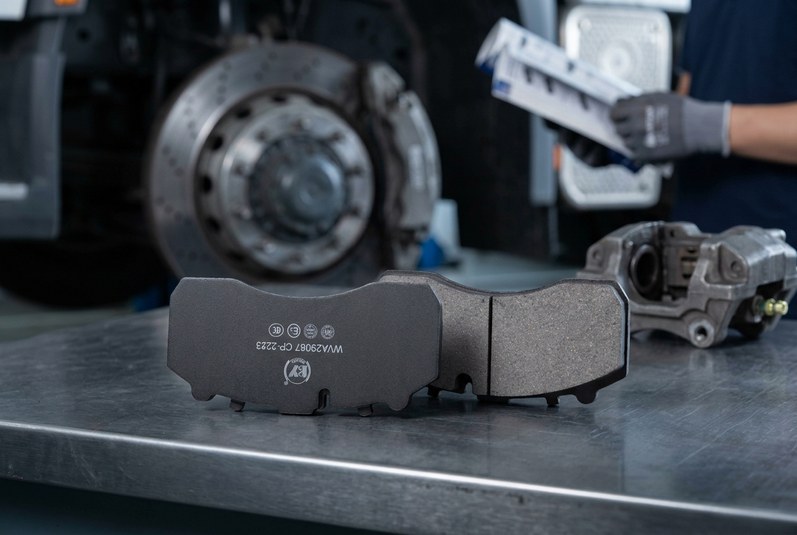
How Do You Run a Practical Factory Audit Without Flying to China?
You don't always need to board a flight. A live video audit, done properly, catches most process problems. Ask the supplier to walk the mixing room, the press line, and the final inspection area in one continuous video call. If they refuse or switch rooms, that's a signal.
IATF 16949 demands traceability from raw compound batch to finished set. During the call, ask to see a batch card from the exact pad family you're buying. Look for raw material lot numbers, mixing time, press temperature, and inspection stamps. If the batch card looks blank or photocopied, don't ignore it.
You can also hire a third-party inspection firm for $250–$400 per day in many Chinese manufacturing regions. That's cheap compared to a container of brake pads that fails an end-customer fleet inspection. A proper inspector will check the press cycle time, raw material storage, and whether the ECE marking is applied to the correct pad set.
BAIYUN Brake runs 49+ years of friction material production with IATF 16949 process control. A quick look at our mixing and press areas tells you whether a factory is serious or just sourcing blanks. Get a baseline by checking our manufacturing facility before you compare other vendors.
What Does a Real Commercial Vehicle Brake Pad Quote Include?
A price quoted as $4.50 per set doesn't tell you anything until you see the full landed cost. A proper quote should break out unit price, tooling amortization if any, packaging, palletization, FOB port, sea freight, customs brokerage, and payment terms.
- Typical MOQs for truck disc brake pads start at 300–500 sets per part number or a mixed 20-foot container.
- Production lead time usually runs 30–45 days after deposit.
- Sea freight to Rotterdam or Hamburg adds about 15–25 days, depending on port congestion.
- Private label boxes can add 3–5 weeks unless the supplier already stocks generic packaging.
Ask for EXW, FOB, and CIF comparisons. A $0.30 set price gap can disappear in inland trucking and customs fees. If you also carry brake linings for drum-equipped trailers, request a combined quote. It often lowers per-kilo freight. Check our commercial vehicle brake linings range to see what you can consolidate.
Freight cost for heavy truck brake pads can run $2,000–$3,800 per 20-foot container depending on the port pairing and fuel surcharges. That number swings more than the unit price, so fix the freight quote in writing. Don't forget payment terms either. Many exporters ask for 30% deposit and 70% before shipment. If the factory is not financially stable, you're carrying the risk. Ask for a confirmed delivery window and a penalty clause for late shipment. It isn't about being aggressive; it's about predictable inventory.
OEM, Private Label, or BAIYUN Brand — Which Import Path Works Best?
A distributor in Poland might want his own box design. A fleet supplier in Mexico might just want a proven white-label program. The path you choose affects MOQ, lead time, and margin.
- Private label gives you brand control but usually requires higher MOQ per SKU and graphic approval cycles.
- BAIYUN brand is the fastest start because the pads are already certified, tested, and in active production.
- OEM supply works when your annual volume justifies a dedicated compound or backing plate design.
The key point: ECE R90 approval stays tied to the tested pad assembly, even if the box changes. That's why many importers keep the technical side with the factory and only apply their own packaging. It's also one of the reasons buyers choose our competitive advantages.
Private label is attractive, but it only makes sense if you're already selling 1,500–2,000 sets per year per SKU. Below that, the box printing and inventory complexity eat the margin. BAIYUN brand removes the startup delay and lets you test a market with certified stock. Once volume grows, you can switch to private label without changing the pad technical file.
Buyer Verification Checklist for Importers and Distributors
Run through this before you wire the deposit:
- Confirm the ECE R90 approval number appears on every pad or its packaging, and the part number matches your order.
- Request the latest third-party dynamometer report for the exact friction formulation, not a sister product.
- Verify the factory's ISO 9001 or IATF 16949 site address matches the production address.
- Ask for three recent export references in your region.
- Order 20–30 sets as a pilot batch. Test on one or two commercial trucks or buses in your market before committing to container volume.
- Check friction material thickness, backing plate flatness, and noise shim/chamfer consistency across the pilot batch.
- Compare unit price plus freight plus import duty plus inland delivery, not just FOB price.
- Keep certificates and test reports on file for customs and your own customer audits.
This list seems basic, but it filters out most problem factories before you spend serious money. If a supplier stumbles on three or more items, don't wait for the factory audit to fail.
Frequently Asked Questions for Importers and Distributors
Q: What exactly does ECE R90 cover for truck disc brake pads?
A: ECE R90 is a type approval for replacement brake lining assemblies. It verifies that the pad delivers braking performance close to the original equipment across cold friction, speed sensitivity, fade, and recovery. Approval is attached to a specific part number, so always check the pad or WVA number on the certificate.
Q: Can a supplier use one ECE R90 certificate for all its truck brake pads?
A: No. Type approval is part-specific. A factory may hold multiple ECE R90 certificates, but each certificate only covers the pad family or part numbers listed. If the WVA code on your order isn't on the certificate, the shipment won't be accepted in many EU and ECE member countries.
Q: What's the minimum order quantity for imported truck brake pads?
A: Typical MOQs run 300–500 sets per part number for mixed container programs. BAIYUN Brake often supports lower pilot batches of 20–30 sets before a full container, depending on the pad family. Always confirm whether tooling and private label boxes affect the MOQ.
Q: How long does production and shipping take?
A: Standard production takes 30–45 days after deposit, with sea freight adding roughly 15–25 days to Northern European ports. Air freight can cut total lead time to under two weeks but adds 3–5 times the freight cost. Confirm the quoted lead time includes compound mixing, pressing, curing, and final inspection.
Q: What are the most common defects importers should check in a pilot batch?
A: Watch for backing plate flatness variation, uneven friction material thickness, missing wear indicator clips, and poor box marking with the ECE R90 approval number. Measuring thickness across 10 random sets usually reveals consistency. A good certified factory should keep batch-to-batch thickness variation under 0.3 mm, but confirm with the supplier catalogue.
Get Your Wholesale Quote Sorted Before Your Competitors Do
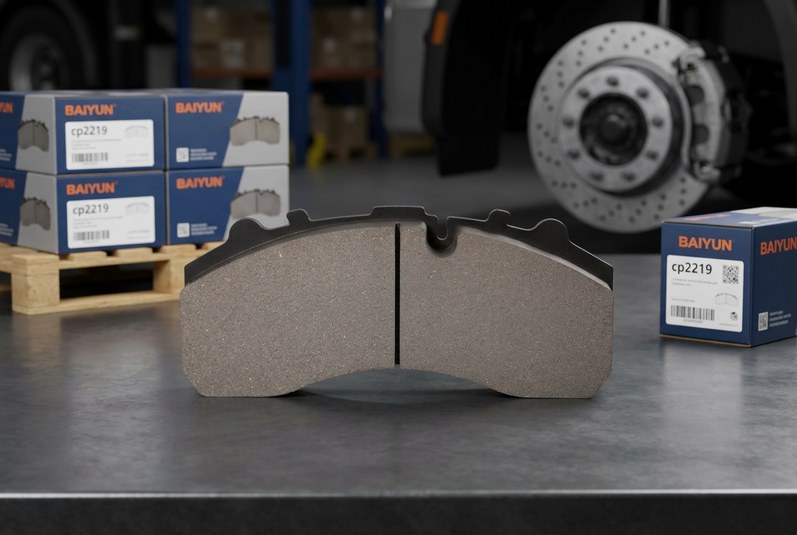
If you're tired of chasing suppliers who can't prove ECE R90 coverage for the exact part number you need, start with a factory that already has the paperwork, the process control, and the export experience. BAIYUN Brake has been manufacturing friction materials for over 49 years. Send us your part list or WVA numbers, and we'll match them against our certified heavy-duty range. Browse our commercial vehicle brake pad range and then request a wholesale quote.
Was this article helpful?
Average Rating: 5/5 (53)