
Commercial Vehicle Brake Pads Testing Standards: Importer and Distributor Buying Guide
Summary:
Commercial vehicle brake pads testing standards decide whether a shipment clears EU customs, passes a fleet audit, or becomes a warranty headache. This importer and distributor buying guide explains ECE R90, GB 5763, SAE J2522 and ISO 26867 in practical sourcing terms, not lab theory. You'll find a supplier verification checklist, test report red flags, MOQ and private label considerations, and BAIYUN Brake's IATF 16949 and ECE R90 audit position. Learn which documents to request before paying a deposit, how to compare batch consistency data, and why the cheapest quote rarely survives a roadside brake check. Written for wholesale buyers and distributors sourcing truck, bus and trailer brake pads from China, this guide covers cost savings, supplier audits, and request-for-quote steps for commercial vehicle aftermarket sourcing.
Commercial Vehicle Brake Pads Testing Standards: Importer and Distributor Buying Guide
Quick answer: Commercial vehicle brake pad testing standards are ECE R90, GB 5763, SAE J2522 and ISO 26867. Importers and distributors should verify test reports, certification markings, batch consistency data, and factory audit evidence before placing orders. The lowest quote is rarely the cheapest option when pads fail a roadside brake inspection or get rejected at EU customs. This guide covers which standards matter, how to read a test report, and what to request from suppliers like BAIYUN Brake.
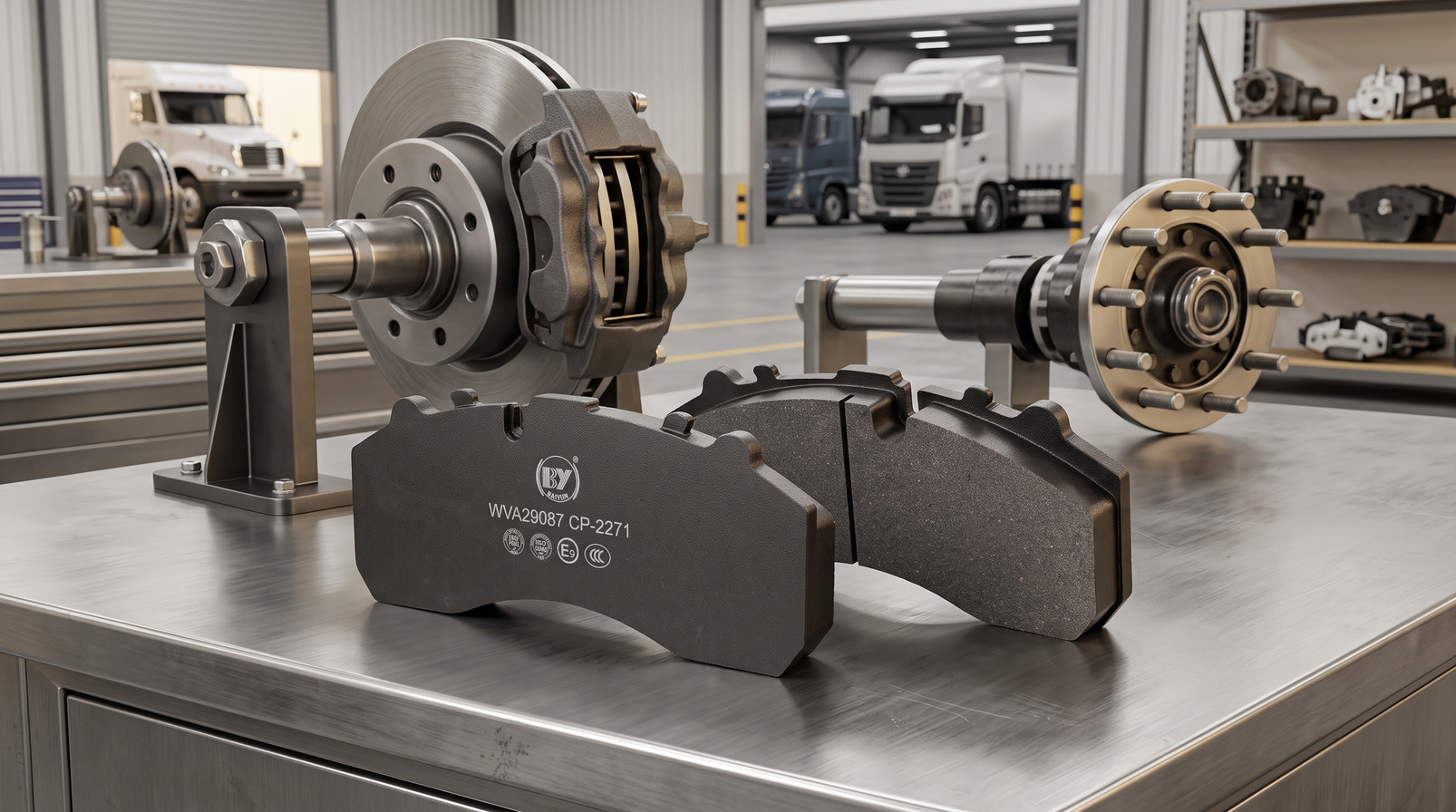
Why Testing Standards Should Drive Your Sourcing Decision
A distributor sourcing 500 sets monthly can't afford inconsistent friction coefficients batch to batch. If one batch fades at lower temperature than the previous one, fleet customers notice pedal feel changes, uneven wear and longer stopping distances. You don't need lab equipment to understand that. You need documentation that proves the supplier has been doing the testing before you pay the deposit.
Brake pads for trucks, buses and trailers don't get a second chance. Roadside inspections under CVSA International Roadcheck or national freight audits still treat brake systems as a primary out-of-service category. Even in 2026, with cargo securement as the official focus, inspectors look closely at brake pads, rotors, drums and air brake actuators. So you're not buying a commodity; you're buying compliance continuity. If you're comparing quotes, start with a wholesale CV brake pads inquiry and ask for the same test documents from every supplier.
Which Testing Standards Do Importers Actually Need to Verify?
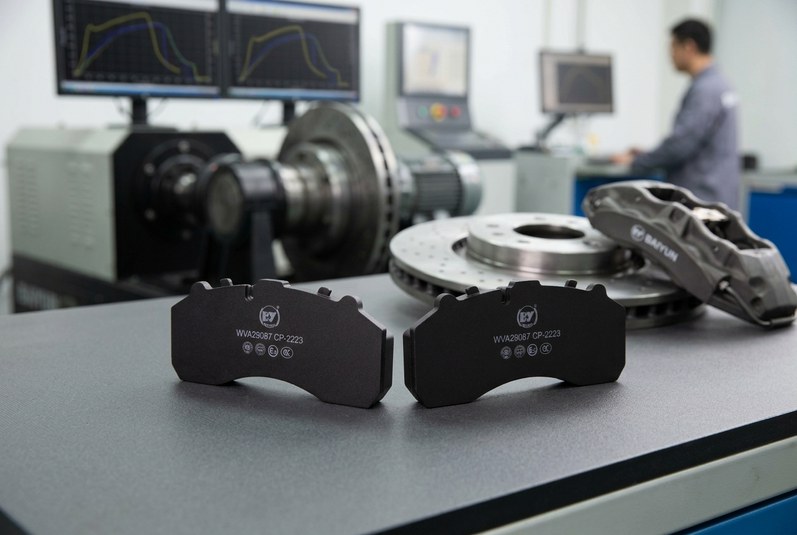
ECE R90 is the one that blocks cargo. The regulation requires replacement brake pad assemblies to stay within a defined performance envelope compared with the original part, covering cold performance, speed sensitivity and recovery. If the pads leave the factory without an ECE R90 approval number, a German or Dutch importer can't legally sell them. The same applies in many Gulf and African markets that follow UN/ECE type approval rules. BAIYUN Brake holds ECE R90 among its certifications, so the test reports and markings are already part of the package.
GB 5763 is China's national standard. It covers friction coefficient, wear rate and shear strength. Don't treat it as a substitute for ECE R90 when you're selling into Europe or the Middle East. It is, however, a useful baseline check for supplier capability when you're shortlisting factories. If you see a Chinese manufacturer that can't produce a valid GB 5763 certificate, you've got a red flag before you even discuss volume pricing.
SAE J2522, often called AK-Master, is not a pass/fail certificate in the same way ECE R90 is. It's a dynamometer test procedure. It gives you friction behavior across a matrix of pressure, speed and temperature conditions. An experienced buyer uses it to compare batch-to-batch consistency, not to put a stamp on the box. ISO 26867 provides a similar friction assessment framework and shows up in some global fleet RFQs. For specific WVA dimensions, friction codes, and OE cross references, confirm with supplier catalogue.
| Standard | What It Covers | Why Importers Verify | Typical Pass Signal |
|---|---|---|---|
| ECE R90 | Replacement brake pad performance vs OEM; cold and speed sensitivity; approval marking | Mandatory for EU and many export markets; customs and road checks | Approval number on pad and box, test report from notified body |
| GB 5763 | China national standard for brake linings; friction, wear, shear | Domestic China use and baseline supplier capability | Type test certificate with friction class and wear rate |
| SAE J2522 (AK-Master) | Dynamometer friction performance across pressure, speed, temperature steps | Common OEM/tier-1 benchmark for batch-to-batch comparisons | Consistent µ values within OEM defined corridors |
| ISO 26867 | Friction behaviour assessment for brake linings in road vehicles | Used by some global fleets to compare aftermarket suppliers | No pronounced fade beyond defined limits |
Which one matters most? If you're exporting to Europe, ECE R90 wins. If you're supplying North American fleets, expect to provide SAE J2522 test reports and maybe FMVSS 121 system-level proof at vehicle level. For China domestic business, GB 5763 matters. Don't ask for all of them if the application doesn't need them; ask for the right combination and verify the current test lab report. Check the IATF 16949 certified facility documentation, because certification alone isn't enough without current test data.
How to Read a Commercial Brake Pad Test Report Without Getting Lost
Ever picked up a test report and wondered if the supplier just printed a cover page? Look for four things. First, check the issue date. A report from 2019 won't help you understand current production. Second, find the part number or material code in the report header. If the supplier won't tie the report to the exact SKU you're buying, move on. Third, compare the coefficient of friction values. In normal operating temperatures, commercial brake pads often show µ in the 0.35–0.45 range depending on formulation. You don't need an exact universal number; you need to see stable values across the temperature steps where your customers actually run. Fourth, ask for batch data. Five consecutive production batches with a total spread of 0.03 or less is a strong sign. A spread of 0.06 or more means you'll hear about brake imbalance from fleets inside six months.
BAIYUN Brake's commercial vehicle brake pad test report is available to qualified buyers. Request it or use the commercial vehicle brake pad test report download as a starting point.
Supplier Verification Checklist for Wholesale Importers
Before you wire a deposit, run through this list.
- Request current ECE R90 approval certificate and the specific approval number for the part numbers you're buying.
- Ask for a commercial vehicle brake pad test report from the last 12 months, not a five-year-old sample.
- Verify the edge code and compare friction class against your fleet application.
- Ask for batch consistency data: coefficient of friction minimum/maximum over 5 consecutive batches.
- Confirm production plant certificates: IATF 16949 or ISO 9001, plus ECE R90.
- Ask to see photos of in-house dynamometer, shear test equipment and mixing line.
- Request a factory audit or third-party inspection before the first container.
- Clarify MOQ, lead time, private label printing and packaging approvals.
Factory audit isn't optional at high volume. If you can't visit, commission a third-party inspection. Ask for photos or video of the in-house dynamometer, shear tester, mixing line and finished goods warehouse. A supplier that only shows final boxes and sample pads is hiding thin process control. For truck and bus pads, test equipment should be heavy-duty rated, not a passenger car-only dyno. This matters especially for commercial vehicles because brake adjustment and running clearance affect perceived performance; see our commercial vehicle brake adjustment guide for context.
MOQ, Lead Time, and Private Label: Where the Real Money Sits
Many importers negotiate price per set and ignore how MOQ, lead time and packaging costs change landed cost. If you're ordering a mixed container of truck brake pads and linings, ask how product mix affects setup time. A supplier that batches different friction formulas efficiently can offer a better landed price than one that holds a low per-unit price but charges extra for small runs.
Private label is common. BAIYUN Brake can private label if you meet MOQ and sign off on packaging. But ask hard questions: Will the ECE R90 approval marking remain valid under your brand? Does your target country accept the approval certificate holder's marking? Some importers assume approval is transferable and get stuck at port. Not every claim transfers. Check before printing boxes.
Lead time for commercial brake pads from China typically runs 30–45 days for repeat production, depending on formula complexity and packaging. New private label or new friction codes can push that to 45–60 days. If a supplier quotes 15 days on a new heavy-duty compound, question whether you're getting made-to-order or old stock. If your order includes drum brake linings, use the same documentation process on commercial vehicle brake linings to avoid mixed-batch issues.
Cost Savings That Don't Backfire
Saving 8% on unit cost can cost you 30% in returns and freight if a batch fails border inspection. A rejected container from a Gulf port can eat your margin for a quarter. The smarter cost play: align test standards before sampling, order enough volume to spread certification and audit costs, and lock batch consistency thresholds into the purchase agreement. That's where the real margin comes from, not from buying uncertified pads.
Frequently Asked Questions for Importers and Distributors
Do commercial vehicle brake pads need ECE R90 certification for export?
For EU and UNECE markets, yes. ECE R90 approval marking is legally required for replacement brake pads. Shipments without it can be refused by customs and are easier for fleet auditors to fail.
What friction coefficient should commercial brake pads show?
Most heavy-duty formulations sit between 0.35 and 0.45 µ in normal operating temperatures. Buyers should focus on stability across temperature and speed steps rather than an exact high number; a spread of 0.06 or more between batches creates imbalance risks.
What documents should I request before placing a wholesale order?
Request the current ECE R90 certificate, a recent SAE J2522 or equivalent dynamometer report, GB 5763 certificate, batch consistency data, IATF 16949 or ISO 9001 certificate, and a completed private label packaging specification.
Is GB 5763 certification enough for export commercial brake pads?
No. GB 5763 shows China domestic compliance and baseline factory capability. For Europe, the Middle East and most international fleet sales, you still need ECE R90 approval evidence and appropriate friction test reports.
Can I use my own brand on commercial brake pads?
Usually yes if you meet MOQ and packaging approval. Check whether the ECE R90 marking can remain valid under your brand in the target market, and confirm lead time impact before committing to printed boxes.
Bottom Line for Commercial Brake Pad Buyers
Testing standards aren't paperwork. They're the difference between a repeat-order customer and a container stuck at port. If you're importing truck, bus or trailer pads, demand current reports, batch data and audit evidence. Don't let a low sample price blind you to compliance risk.
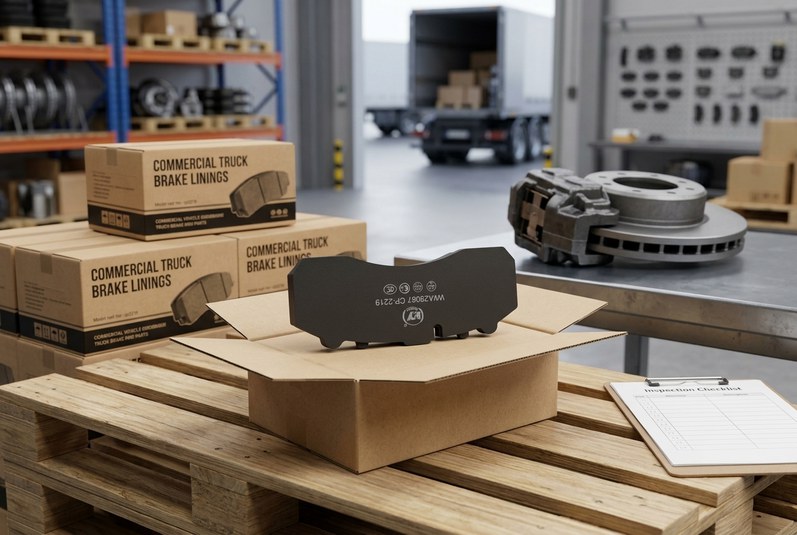
Look, I've seen too many importers treat commercial vehicle brake pad testing standards as a formality. That habit gets expensive. Compare quotes on technical evidence, not sample cost. Start with our request OEM commercial vehicle brake pad quote page or request a wholesale quote directly. Our export team can send current test reports, MOQ, lead times and private label options the same week.
Was this article helpful?
Average Rating: 5/5 (53)