
Truck Brake Pad Failures Cost Fleets Thousands — Here’s How to Avoid Them
Summary:
Premature heavy duty truck brake pad failures can cost fleets thousands in downtime and repairs, but importers can avoid these losses by sourcing correctly. The key is moving beyond price to prioritize certified load ratings, application-specific friction formulas, and batch consistency from IATF 16949 certified manufacturers like BAIYUN Brake. This guide details the common sourcing mistakes and provides a practical checklist for selecting reliable wholesale commercial vehicle brakes from China.
Truck Brake Pad Failures Cost Fleets Thousands — Here's How to Avoid Them
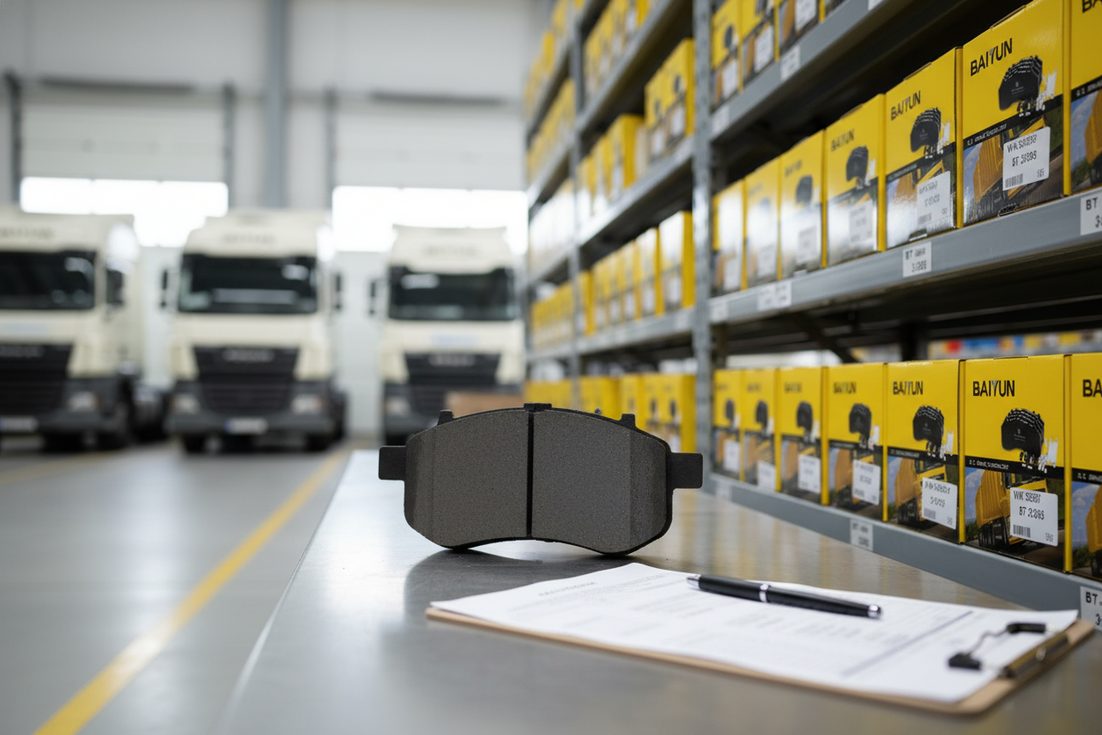
A single, unexpected brake pad failure on a heavy-duty truck can cascade into a five-figure loss. You're not just looking at the cost of the replacement part. Factor in the unscheduled downtime, the tow, the missed delivery penalties, and the labor for a roadside repair, and the bill gets steep fast. For importers and distributors sourcing heavy duty truck brake pads wholesale China, the real risk isn't just a defective product—it's the downstream financial impact on your customers' fleets.
We've seen the patterns over nearly five decades. The most costly mistakes aren't always about picking the wrong material. They're about overlooking the supply chain and technical details that separate reliable, profitable parts from liability magnets. This guide cuts through the noise. We'll focus on the common, expensive errors buyers make and the practical steps to avoid them, ensuring the brake pads you source protect both the trucks and your business reputation.
Mistake #1: Prioritizing Price Over Load Rating and Certification
It's the oldest trap in the book. A price per set that's 15-20% lower than the market average is tempting, especially when you're moving volume. But with commercial vehicle brakes, that discount often comes from skipping critical validation steps. A brake pad's load rating isn't a suggestion; it's a calculated specification based on the friction material's ability to manage heat and maintain stopping power under a specific Gross Vehicle Weight Rating (GVWR).
Underspecified pads might pass a visual inspection, but they'll fade dangerously under repeated heavy braking. The friction coefficient drops, stopping distances increase, and you get premature, uneven wear that takes out rotors and drums alongside the pads. That's when your customer's "cheap" brake job turns into a $3,000+ axle service.
How do you avoid this? Demand proof of compliance. Certifications like ECE R90 aren't just paperwork. They mandate a rigorous testing protocol that validates performance consistency and safety margins. A supplier with an IATF 16949 certified facility, like BAIYUN Brake, is audited on their entire quality management system, not just a final product sample. Always ask for the technical data sheet and match the pad's rated GVWR to the application. Don't let a generic "fits model XYZ" listing be your only guide.
Mistake #2: Ignoring the Friction Formula for the Application
All heavy duty brake pads are not created equal. The biggest differentiator is the friction formula—the blend of materials that creates the stopping power. Think of it like tire compounds: you wouldn't use a summer performance tire on an ice road. Yet, many buyers source one mid-range compound for an entire mixed fleet, from city delivery trucks to long-haul freightliners.
A pad formulated for stop-and-go urban traffic prioritizes cold bite and low noise. Put that on a highway rig, and it'll overheat and glaze on the first mountain descent. Conversely, a high-temperature, high-friction pad designed for mountainous terrain will be noisy and inefficient in a garbage truck, leading to driver complaints and unnecessary wear.
The solution is segmentation. Work with a manufacturer that offers a range. For distributors, this means carrying at least two or three core lines: a standard organic/semi-metallic for general duty, a premium metallic or low-steel for high-heat/high-load, and perhaps a ceramic-enhanced option for fleets prioritizing low dust and rotor life. A deep full brake pad product range allows you to match the product to the duty cycle, not just the vehicle model. This consultative approach builds trust and reduces comebacks.
Mistake #3: Overlooking Batch Consistency and Supply Chain Stability
Here's a scenario that damages distributor relationships: Fleet Manager installs 100 sets of pads from "Batch A." They perform perfectly, lasting 60,000 miles. He reorders, gets "Batch B," and they're shot at 40,000 miles with excessive rotor wear. The pads look identical, but the performance isn't. The culprit? Inconsistent raw material sourcing or lax production controls at the factory.
For a fleet, predictable wear is almost as important as long wear. It allows for accurate maintenance scheduling and parts forecasting. Inconsistency destroys that predictability and points the finger squarely at you, the supplier.
You need transparency into the manufacturer's process. Do they source key raw materials from consistent, certified suppliers? Do they use automated, computer-controlled mixing systems to ensure every batch of friction material has the exact same composition? Ask for production factory tour videos or audit reports. A manufacturer invested in stability will show you their process with pride. They'll also have a robust quality assurance protocol, testing not just final products but in-process materials. This level of control is what prevents the costly "bad batch" scenario.
Mistake #4: Neglecting Technical Support and Problem-Solving Resources
Brake issues in the field are inevitable. A driver reports a vibration. A mechanic finds a cracked lining. The question isn't if problems will arise, but how your supply source helps you solve them. If your only point of contact is a sales agent who says "send them back," you're losing time and money.
A technical issue is an opportunity to demonstrate expertise and strengthen a partnership. The right manufacturer provides diagnostic tools. This means having clear, accessible brake lining crack troubleshooting guides or brake maintenance cost analysis documents you can share with your customer. Is the crack from thermal overload, improper installation, or a defective part? A good guide helps you identify the root cause quickly.
Before you place a large order, test the support channel. Send a technical question about a specific application or a failure mode you've encountered. See how deep and how fast the response comes. A factory with real engineering expertise, like BAIYUN Brake, will have a dedicated technical team that can provide more than just a catalog number—they can help you diagnose and educate your end-user, turning a problem into a proof point for your service quality.
What Importers Should Ask Before Placing an Order
Turn these lessons into a checklist. Your next supplier conversation should go beyond price and MOQ.
- "Can you provide the ECE R90 test report for this specific part number?" This proves independent performance validation.
- "What is the controlled friction coefficient range (μ) for this formulation across the 100°C to 350°C temperature cycle?" A precise answer (e.g., 0.35-0.42) shows technical rigor.
- "What is your process for ensuring batch-to-batch consistency in raw materials?" Listen for specifics about supplier audits and automated mixing.
- "Do you offer technical data sheets and installation guides for all your commercial vehicle products?" Ask to download our product catalogue and a sample tech sheet to evaluate their depth.
- "What is your protocol if a customer suspects a material or manufacturing defect?" A clear, fair process protects you.
FAQ: Sourcing Heavy Duty Truck Brake Pads
Q: How can I verify a Chinese manufacturer's quality claims without visiting the factory?
A: Start with their certifications. IATF 16949 is a globally recognized automotive quality standard that requires rigorous process control, not just a final product check. Request audit summaries. Then, ask for sample test reports from independent labs against standards like ECE R90. Finally, request a virtual factory tour via video call—a reputable supplier will have nothing to hide.
Q: Is there a real performance difference between OEM-equivalent and aftermarket heavy duty pads?
A: Often, yes—and sometimes the aftermarket option is superior. OEM specs are designed for a broad average. A specialized aftermarket manufacturer might offer a formulation better suited to specific, severe conditions (like constant mountain driving or extreme cold) that actually outperforms the OEM part for that use case. The key is the manufacturer's R&D and testing focus.
Q: What's the biggest hidden cost of choosing the wrong brake pad supplier?
A: Reputational damage and lost future business. The direct cost of a warranty return is small compared to a fleet manager who no longer trusts your recommendations or a distributor who loses a key fleet account because of premature failures. Your supplier's reliability is directly baked into your brand's reliability.
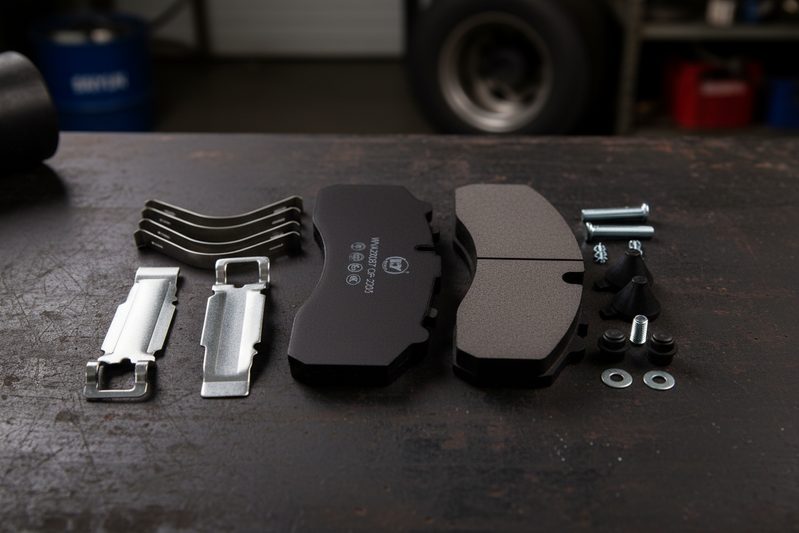
Choosing the right source for heavy duty truck brake pads wholesale China is a strategic business decision, not just a procurement task. The goal is to move from being a parts supplier to being a reliability partner for your fleet customers. That happens when the products you source deliver consistent, certified performance and are backed by real technical expertise.
It's about building a supply chain that prevents failures before they happen, saving your customers those thousands in unexpected costs and saving you the headaches of returns and damaged relationships.
Ready to source brake pads that protect your customers' bottom line? Explore our engineered solutions for commercial vehicles. Request a quote or a technical consultation today and see how a partnership focused on prevention can work for you.
Was this article helpful?
Average Rating: 5/5 (1132)