
Heavy Duty Brake Pads: OEM vs Aftermarket for Long-Haul Trucks
Summary:
Choosing between OEM and aftermarket heavy duty truck brake pads wholesale from China is a critical decision impacting fleet safety and total cost of ownership. The market is shifting towards certified aftermarket options that offer comparable performance at a lower cost, driven by rigorous standards like ECE R90. For distributors, understanding material specifications, wear rates, and the true cost savings beyond the sticker price is key to capturing growth in the commercial vehicle segment.
Heavy Duty Brake Pads: OEM vs Aftermarket for Long-Haul Trucks
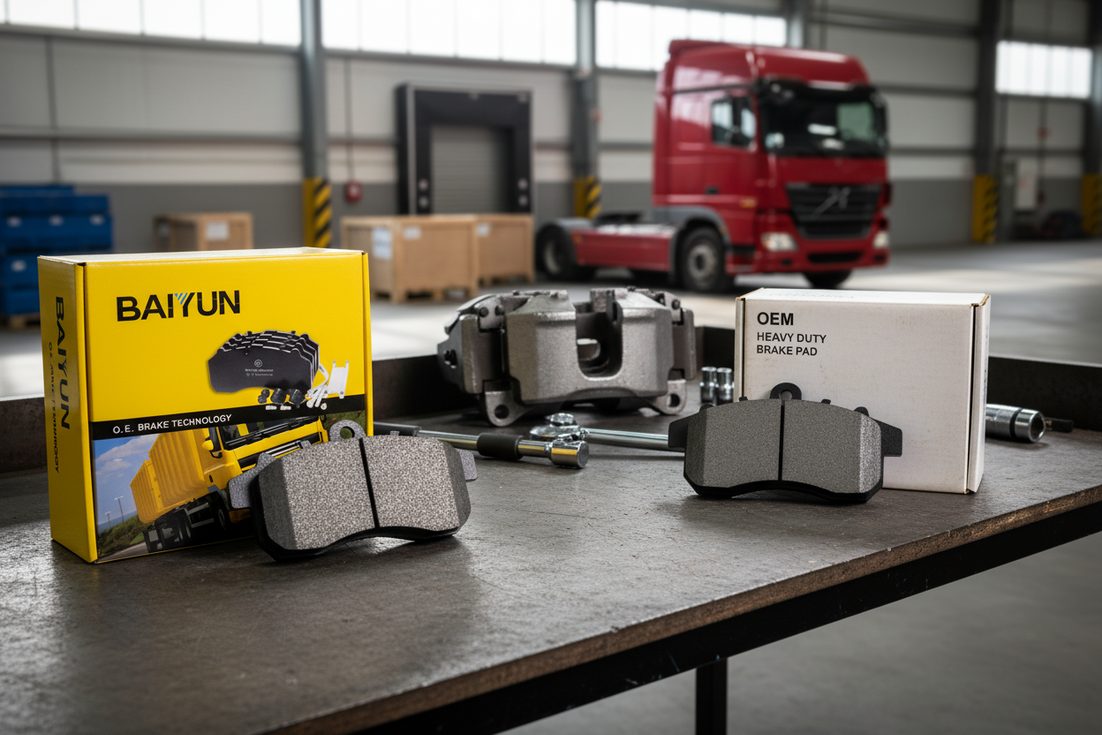
If you're sourcing brake components for a fleet, you're balancing more than just price. You're managing safety, uptime, and total cost of ownership across hundreds of thousands of miles. The global commercial vehicle aftermarket for parts like brake pads is projected to grow at over 5% CAGR through 2030, driven by aging fleets and rising freight volumes. That growth creates a significant opportunity for distributors who can offer the right product mix. The core decision often boils down to a choice: stick with original equipment manufacturer (OEM) parts or switch to a premium aftermarket supplier. It's not a simple binary, and the best answer depends heavily on your specific operational goals and the quality tier of the aftermarket option.
Let's cut through the noise. A cheap, uncertified aftermarket pad might save $50 per axle upfront, but what's the real cost of a premature failure or inconsistent performance? Conversely, paying a 40-60% premium for a branded OEM box doesn't automatically guarantee superior longevity if the friction formula isn't matched to your fleet's specific duty cycle. For wholesalers and importers, understanding this landscape is key to capturing market share and building a profitable, sustainable business.
What's Really Driving the Shift in the Heavy Duty Brake Pad Market?
Fleet managers are under more pressure than ever. Operational costs are rising, driver shortages persist, and regulations around vehicle safety and emissions are tightening globally. This environment is forcing a reevaluation of traditional procurement strategies. The 'always OEM' mentality is being challenged by data-driven decisions focused on total cost of ownership (TCO).
Independent studies and fleet maintenance logs increasingly show that certified aftermarket parts from established manufacturers can deliver equivalent or better performance at a lower TCO. How? It often comes down to specialization. While an OEM designs a pad to perform adequately across a wide range of applications for the life of the vehicle warranty, a dedicated brake specialist might develop multiple formulations targeting specific use cases—like high-temperature performance for mountainous routes or low-dust formulations for urban delivery fleets. This specialization, backed by certifications like ECE R90, is what's convincing more fleet operators to look beyond the OEM dealer network.
For a distributor, this trend is a green light. It means there's a growing, educated customer base actively seeking alternatives, provided you can supply products that meet their technical and compliance requirements. You're not just selling a commodity; you're providing a solution to a cost and performance problem.
How Do You Quantify Quality Beyond the Brand Name?
You can't manage what you can't measure. When evaluating heavy duty truck brake pads, whether OEM or aftermarket, you need to look at hard specifications, not just marketing claims. The friction material is the heart of the pad, and its performance is defined by several key metrics.
First is the friction coefficient (μ). This isn't a single number. A quality pad will have a stable μ across a wide temperature range (typically 100°C to 350°C or higher). A pad that performs well cold but fades dramatically when hot is a liability for a loaded truck descending a grade. Reputable manufacturers provide friction curves from dynamometer testing. Second is wear rate. It's measured in specific wear rate (mm³/Nm) under standardized test conditions. A lower number means longer life. Third is compressibility and shear strength, which affect pedal feel and the pad's ability to withstand extreme mechanical stress without cracking or delaminating.
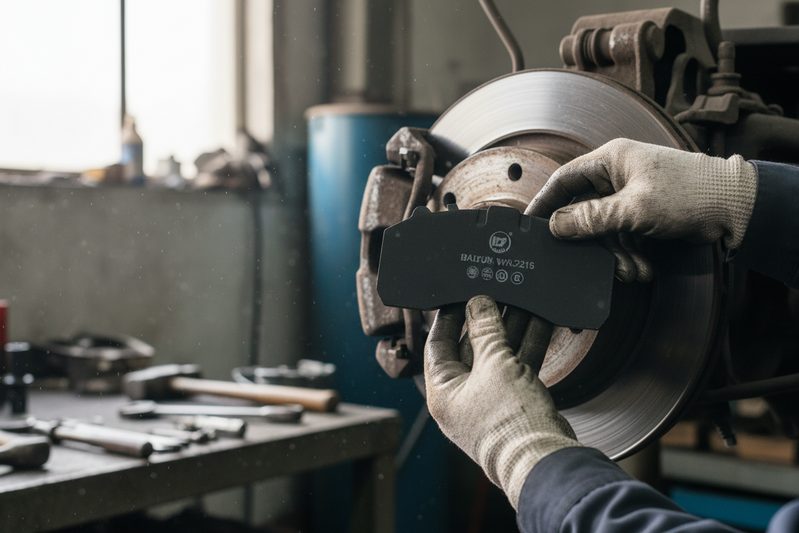
This is where certifications become critical. The ECE R90 standard, for example, isn't just a sticker. It's a rigorous set of tests that benchmark an aftermarket pad directly against the OEM part it's intended to replace. The aftermarket pad must perform within ±15% of the OEM pad's friction level and cannot wear out more than 1.5 times faster. Sourcing from an IATF 16949 certified facility, like BAIYUN Brake, provides further assurance that every batch is produced under a certified quality management system designed for the automotive industry. Don't just ask for a certificate; ask for the underlying test reports. A trustworthy supplier will provide them.
Where Do Cost Savings Actually Materialize for Fleet Operators?
The sticker price is the tip of the iceberg. The real financial impact of your brake pad choice is felt in the shop and on the road. Let's break down the total cost of ownership for a typical class 8 truck.
Assume an OEM pad set costs $400 per axle. A premium, certified aftermarket set might cost $280. The immediate saving is $120. But the calculation goes deeper. If the aftermarket pad lasts 15% longer due to an optimized wear rate, you extend service intervals. That means less labor cost per mile. If it generates less brake dust, it can extend the life of expensive wheel-end components. Most importantly, if its stable friction profile prevents brake fade, it contributes directly to safety and reduces the risk of a catastrophic, costly failure.
For a fleet of 100 trucks, the difference compounds quickly. The initial parts savings might be $12,000 per brake job cycle. Add in reduced labor from fewer changes and lower incidence of related repairs, and the annual savings can easily reach tens of thousands. This is the value proposition you bring as a distributor. You're not offering a cheaper part; you're offering a more cost-effective braking system over the vehicle's life. Our brake maintenance cost analysis provides a detailed framework for these calculations.
What Are the Biggest Pitfalls When Sourcing Aftermarket Pads Wholesale?
The opportunity is clear, but the market is fragmented. Not all 'heavy duty' pads are created equal. The primary risk for importers is inconsistency—receiving a great sample batch, then a subpar production run that damages your reputation with fleet clients.
One major pitfall is ignoring material formulation changes. Some suppliers will alter friction recipes to cut costs without informing buyers, leading to performance drops and increased wear. Another is poor quality control on backing plates and shims, causing noise and fitment issues. The third, and perhaps most dangerous, is a lack of proper homologation. Selling a pad that doesn't comply with regional safety regulations (like ECE R90 in many markets) opens you and your customers up to significant liability in the event of an accident.
How do you mitigate this? Partner with manufacturers who are transparent about their quality assurance processes. Visit the factory if possible, or review their factory photos and production videos. Insist on batch-specific test reports that match the friction and wear data from the initial qualification. Establish clear quality agreements. BAIYUN Brake, with nearly five decades of manufacturing focus, builds this consistency into its process, which is why global distributors partner with us for their C.V. brake pads supply.
How Should a Distributor Build a Winning Product Portfolio?
You don't need to stock every pad for every truck. A strategic portfolio covers the majority of your market demand while minimizing inventory complexity. Start by analyzing the most common truck models in your region—Freightliner Cascadia, Volvo VNL, Peterbilt 579, etc. These platforms share many common brake pad applications.
Offer two or three quality tiers. Have a premium, certified line (like pads meeting ECE R90) for cost-conscious fleets focused on TCO. This is your flagship. Have a value line for older vehicles or less demanding applications, but ensure it still meets basic safety standards. Crucially, complement your disc brake pad range with a selection of high-quality C.V. brake linings for drum brakes, which are still prevalent on trailers and certain axles.
Support your products with technical resources. Provide your fleet customers with access to brake lining installation guides and troubleshooting documents. This adds value and positions you as a knowledge partner, not just a parts vendor. A well-structured portfolio, backed by technical support, creates sticky customer relationships and recurring business.
Frequently Asked Questions for Brake Pad Wholesalers
Q: What's the minimum certification I should look for when sourcing from China?
A: For commercial vehicle brakes targeting European, Middle Eastern, or other regulated markets, ECE R90 certification is the baseline. It legally equates the aftermarket part to the OEM. For broader markets, insist on ISO 9001, and ideally IATF 16949, which is the automotive industry-specific quality standard. Always verify certificates are current and scope-covered.
Q: How can I verify performance claims before placing a large order?
A: Request third-party test reports (not just in-house data) for friction, wear, and shear strength. Reputable manufacturers like BAIYUN Brake provide these. Order a sample batch for real-world testing with a trusted fleet client. Monitor performance over a full wear cycle, tracking mileage, wear consistency, and driver feedback on feel and noise.
Q: What's the typical MOQ, and how does pricing scale?
A> Minimum order quantities for heavy-duty pads from a serious manufacturer usually start at 500-1,000 sets per part number to justify production setup. Significant price breaks occur at container load quantities (e.g., 10,000+ sets). Remember, the lowest FOB price might not offer the best landed cost if quality issues lead to returns. Factor in consistency and reliability as part of the price.
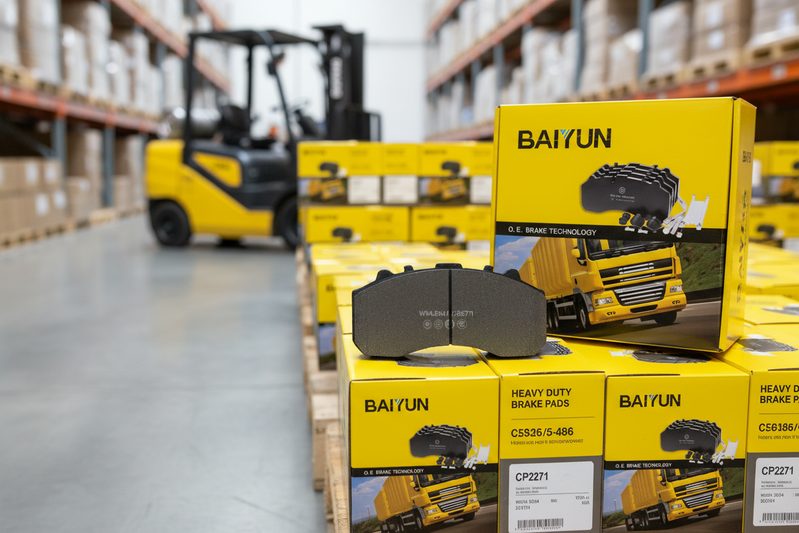
The debate between OEM and aftermarket heavy duty brake pads isn't about finding a universal winner. It's about making the right technical and commercial choice for a specific fleet operation. For distributors and importers, the growth is in the aftermarket space, but only if you're sourcing from partners who treat brake pads as a safety-critical component, not a generic commodity. The winning formula combines certified quality, transparent technical data, and a clear understanding of total cost of ownership.
Your customers are looking for reliability and value. By providing premium aftermarket options that are rigorously tested and certified, you give them a viable, often superior, alternative to OEM channels. You build your brand on performance and trust.
Ready to evaluate a reliable source for your heavy duty brake pad needs? Download our comprehensive brake pad catalog PDF and commercial vehicle brake pad test report to review specifications and performance data. Then, request a quote for your target part numbers. Let's discuss how a consistent supply of ECE R90 certified pads can strengthen your product portfolio.
Was this article helpful?
Average Rating: 5/5 (1171)