
Truck Brake Pad Failures Cost Fleets Thousands — Here’s How to Avoid Them
Summary:
Premature heavy duty truck brake pad failures are a major, preventable cost for fleets and the importers who supply them. This guide reveals the four most common sourcing mistakes that lead to downtime and warranty claims, and provides a clear framework for selecting reliable, high-performance commercial vehicle brakes. Learn how to prioritize load rating, system compatibility, and total cost of ownership when sourcing heavy duty truck brake pads wholesale China.
Truck Brake Pad Failures Cost Fleets Thousands — Here's How to Avoid Them
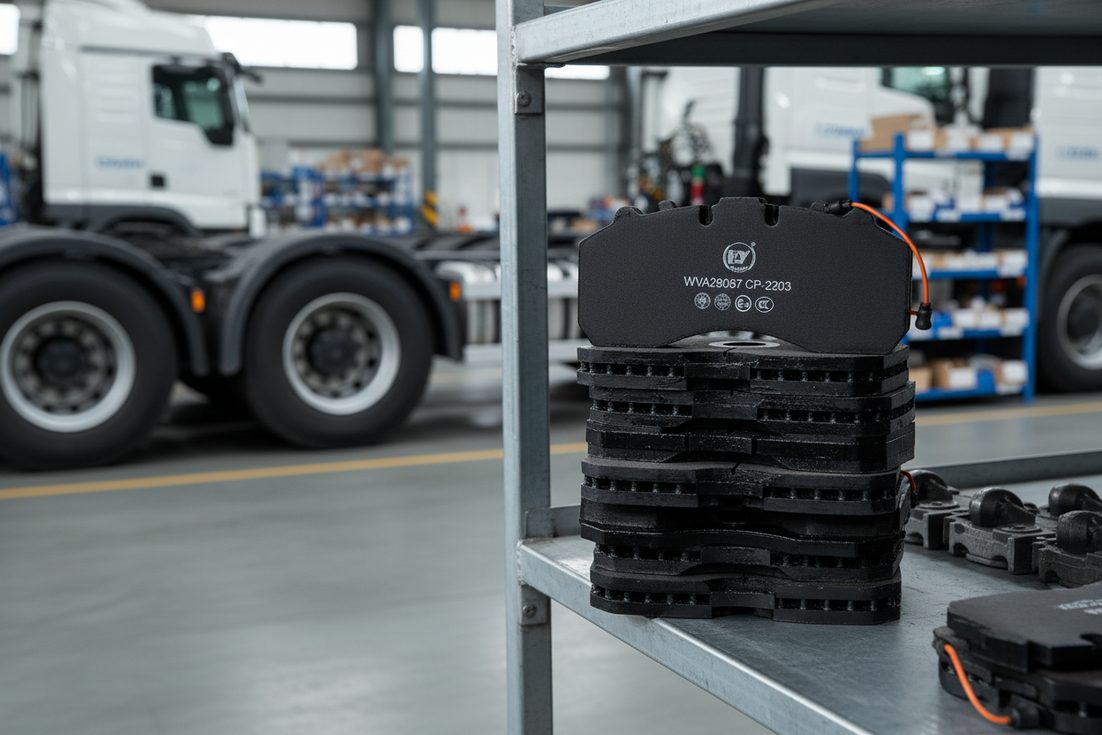
A single premature brake pad failure on a heavy-duty truck can easily cost a fleet over $2,500 in downtime, towing, and repair. Multiply that by a fleet of 50 vehicles, and you're looking at a six-figure problem. For importers and distributors sourcing heavy duty truck brake pads wholesale China, the stakes are even higher. Your reputation and your customers' profitability depend on the quality and reliability of the parts you supply.
We've seen the patterns over nearly five decades. The most expensive failures aren't random; they're predictable and often trace back to sourcing mistakes. Let's break down where things go wrong and how to get them right.
Mistake #1: Prioritizing Price Over Load Rating & Duty Cycle
It's the classic trap. You get a quote for a generic "truck brake pad" that's 30% cheaper than the competition. The temptation is real, especially when margins are tight. But here's the reality: a pad designed for a light-duty delivery truck will disintegrate under the constant stop-and-go of a garbage truck or the sustained heat of a fully loaded tractor-trailer descending a mountain pass.
Fleet-tested brands like Bendix and Meritor engineer pads for specific duty cycles—on-highway, severe-duty, vocational. Your sourcing must match that precision. A semi-metallic pad might be the standard for most air-disc systems, but the exact formulation of metallic fibers, graphite, and other friction modifiers is what determines its life under load.
Ask your supplier for the brake pad load rating and the specific application charts. A reputable manufacturer like BAIYUN Brake will provide detailed material data sheets that outline performance under different temperature and pressure conditions. Don't just buy a part number; buy a performance specification. Our material data sheets provide this critical technical clarity.
Mistake #2: Ignoring the System—Pads Don't Work in Isolation
Brake pads are just one component in a complex system. Installing a high-friction pad on a worn or mismatched rotor is a recipe for noise, vibration, and accelerated wear. For distributors, this translates to warranty claims and unhappy customers.
The compatibility between disc brake pads trucks use and their rotors is non-negotiable. The pad's friction material must be matched to the rotor's metallurgy and hardness. A pad that's too aggressive will score a rotor; one that's too soft will glaze over and fade.
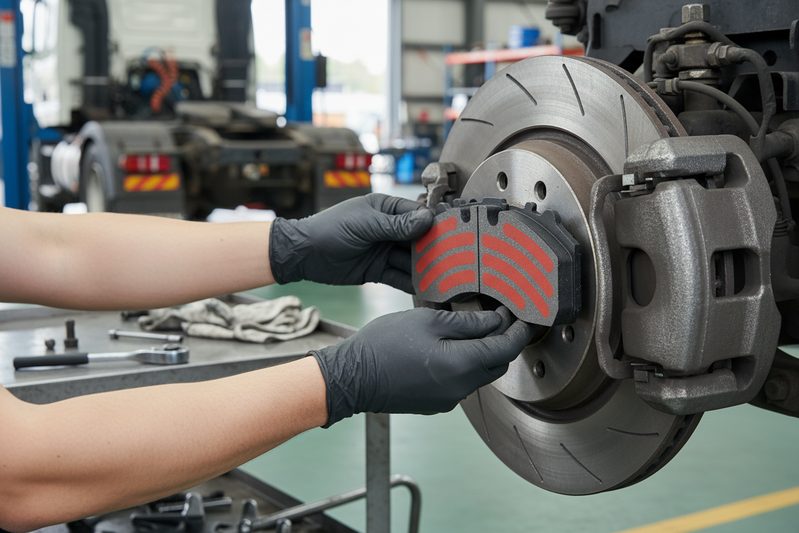
This is where technical support matters. Before you place a large wholesale order, confirm your supplier has the engineering depth to advise on system compatibility. Can they explain the importance of brake running clearance or diagnose issues like taper wear? At BAIYUN, our technical support center exists to help partners avoid these costly mismatches.
Mistake #3: Overlooking Certification & Batch Consistency
ECE R90 isn't just a sticker. It's a legally mandated certification in over 50 countries, proving a replacement brake pad meets or exceeds the performance of the vehicle's original equipment. Sourcing non-certified pads might save a few dollars per set, but it exposes you and your fleet customers to massive liability in the event of an accident.
More insidious than no certification is inconsistent certification. Can your supplier guarantee that every batch of heavy duty brake pads performs identically? Variations in raw material sourcing or production processes can alter the friction coefficient (μ). A fleet mechanic expects predictable performance; a shifting μ value leads to uneven braking, driver complaints, and premature wear on other axle components.
Our IATF 16949 certified facility is built for consistency. This automotive quality management standard mandates rigorous process controls, from raw material inspection to final testing. Every batch of our commercial vehicle pads is tested to ensure it delivers the promised performance, giving importers confidence in every container they ship. You can review our commercial vehicle brake pad test report to see the data for yourself.
Mistake #4: Forgetting About Total Cost of Ownership (TCO)
Fleet managers buy brake pads, but they're really purchasing miles of safe, reliable stopping power. The cheapest pad by unit price often has the highest total cost of ownership. How?
- Reduced Lifespan: A pad that wears out 20% faster increases labor costs for more frequent changes.
- Rotor Damage: Inferior materials destroy expensive rotors, turning a $200 pad job into an $800 rotor-and-pad job.
- Downtime: A roadside failure costs thousands in lost revenue, towing, and emergency repairs.
Smart importers sell TCO. They provide pads that offer longer service life, protect other brake system components, and come with reliable technical documentation. This builds loyal, repeat business. Our brake maintenance cost analysis tools can help you make this case to your fleet customers effectively.
The Right Way: Sourcing for Performance and Partnership
So what does a smart sourcing strategy look like? It moves beyond transactional purchasing to technical partnership.
First, demand transparency. A credible supplier will openly share their manufacturing capabilities, quality certifications (IATF 16949, ECE R90), and testing protocols. They should have a dedicated C.V. brake pad range and a separate line for brake lining products, recognizing the different engineering requirements.
Second, evaluate their support ecosystem. Do they offer comprehensive installation guides and troubleshooting resources? For instance, can they help a mechanic diagnose a specific issue like edge cracking, which is covered in our brake lining crack troubleshooting guide? This support makes your job easier and adds value for your end customer.
Finally, consider scalability and innovation. As truck technology evolves—with increased electrification and advanced driver-assistance systems (ADAS)—brake requirements change. Your supplier should have an R&D pipeline focused on next-generation materials.
Frequently Asked Questions (For Importers & Distributors)
Q: We source for multiple markets. How can we ensure the pads meet different regional certification standards (ECE R90, FMVSS, etc.)?
A: Work with a manufacturer that has a proven track record of global compliance. At BAIYUN Brake, we maintain separate production lines and formulations certified for specific markets. Provide your target markets upfront, and we can configure your order to meet all local legal requirements, complete with the correct documentation and markings.
Q: How do we handle quality disputes or warranty claims from our overseas customers?
A: A strong partner stands behind their product. Clear warranty terms and a responsive technical team are essential. Before you order, understand the claim process. We provide detailed brake lining trouble tracer guides to help diagnose issues accurately, often resolving problems without needing to ship product back. Most disputes arise from installation errors or system mismatches, not product defects.
Q: What's the minimum order quantity (MOQ) for testing a new heavy-duty brake pad line, and can we get samples?
A: MOQs vary, but a serious manufacturer will offer a feasible trial quantity—often a single pallet or a mixed container—for a new distributor to validate quality and market fit. Sample sets are standard for serious buyers. The key is to test them in real-world conditions on vehicles matching your target duty cycle, not just a visual inspection.
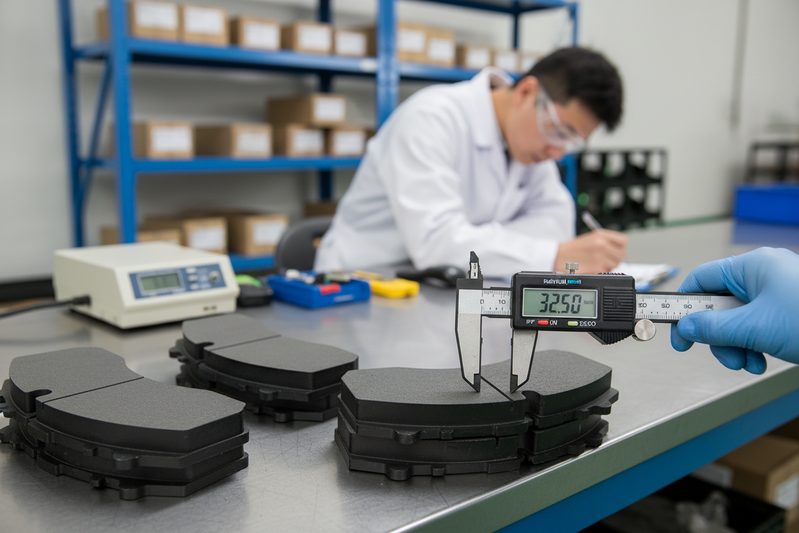
Stop sourcing brake pads as a commodity and start sourcing them as a critical safety component. The difference saves your fleet customers money and protects your business from the fallout of failures. You need a partner who understands the engineering, not just the export paperwork.
Ready to evaluate a supplier that gets it? Request a quote and technical specifications for our heavy-duty truck brake pad lines. Let's discuss your specific market needs and how our certified, consistent manufacturing can support your growth.
Was this article helpful?
Average Rating: 5/5 (1381)