
Heavy Duty Brake Pads: OEM vs Aftermarket for Long-Haul Trucks
Summary:
For distributors and fleet managers, choosing between OEM and certified aftermarket heavy-duty brake pads impacts cost, safety, and reliability. This guide analyzes specs, market trends, and sourcing strategies from China.
Heavy Duty Brake Pads: OEM vs Aftermarket for Long-Haul Trucks
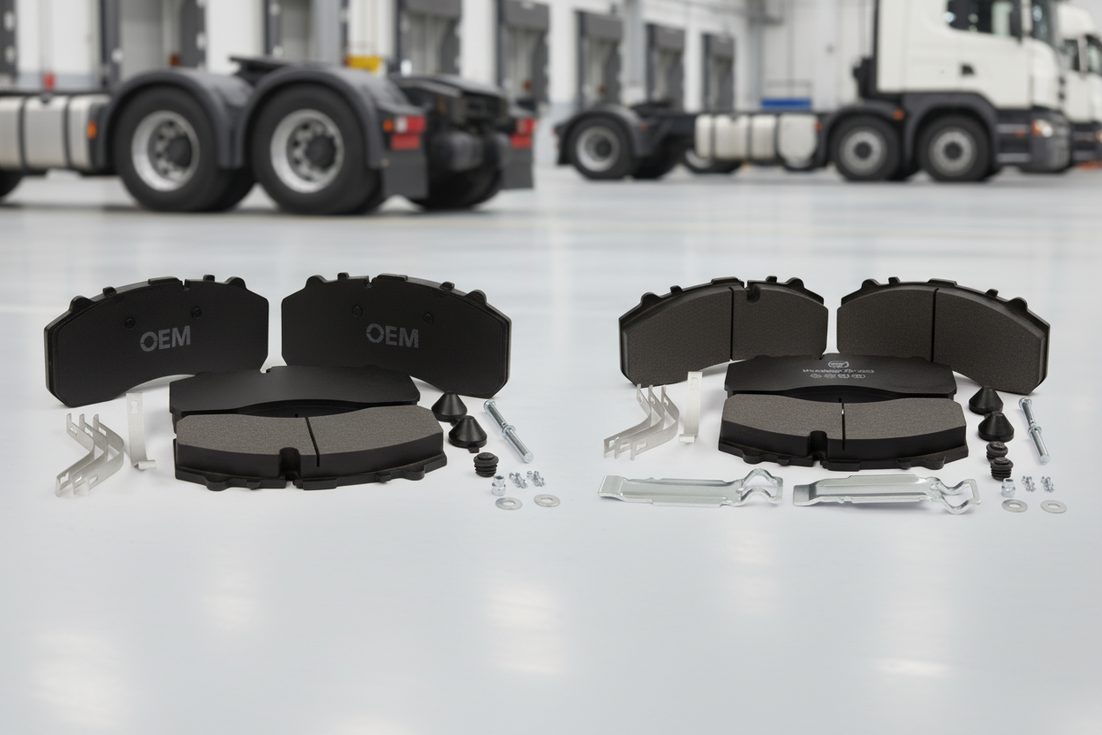
You're looking at a global heavy-duty truck brake pad market projected to hit $12.8 billion by 2028, growing at a steady 4.1% CAGR. That's a lot of friction material moving through supply chains. For distributors and importers, the real question isn't just about volume—it's about where the sustainable margin and reliability lie in the OEM versus aftermarket debate. The choice you make for your fleet clients or wholesale inventory directly impacts their total cost of ownership, safety compliance, and your brand's reputation.
Let's cut through the noise. An OEM pad might come with a familiar logo, but its performance and price are often locked into a specific vehicle manufacturer's ecosystem. The aftermarket, especially from certified manufacturers like BAIYUN Brake, offers a different value proposition: competitive pricing, often superior material formulations for specific applications, and the flexibility to service a wider range of models from a single, quality-assured source. For a fleet running 50 trucks, a 15% reduction in per-axle brake service cost, without sacrificing stopping power or pad life, translates into serious operational savings.
Market Dynamics: Where the Growth and Margin Are
The shift is palpable. Fleet managers are under more pressure than ever to control costs without compromising safety. A 2025 industry survey indicated that nearly 68% of large fleet operators have actively evaluated their brake component sourcing in the last two years, with a growing portion moving towards certified aftermarket alternatives for non-warranty vehicles. Why? The initial price delta can be 20-40%, but the real story is in the performance specs.
An aftermarket manufacturer focused on heavy-duty applications isn't tied to a single OEM's design freeze date. They can iterate, incorporating newer friction materials that better handle today's higher GVWRs and complex regenerative braking systems. For a distributor, this means you're not just selling a replacement part; you're offering a potential upgrade. The key is partnering with a supplier whose technical data sheets tell the full story—friction coefficients (μ) across temperature ranges, compressibility, and wear rates that meet or exceed OE specifications. You can explore our material data sheets to see this level of detail firsthand.
Decoding the Specs: More Than Just a Pad
"Heavy duty" isn't a marketing term; it's a set of engineering requirements. When you're sourcing C.V. brake pads, you need to look beyond the box. The load rating is critical. A pad designed for a city delivery truck hauling 10 tons won't last a month on a line-haul tractor pulling 40 tons cross-country. The difference often lies in the bonding process, steel backing plate thickness, and chamfer design to prevent noise.
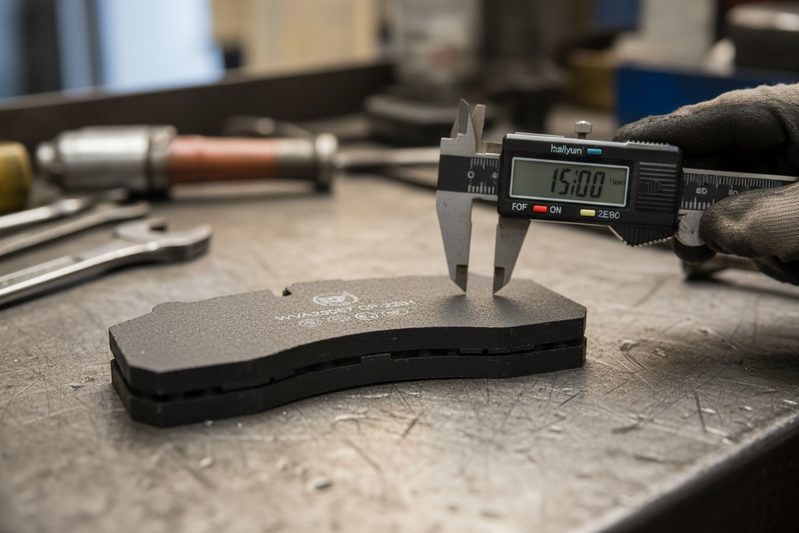
Then there's the friction material itself. Semi-metallic compounds are the workhorse for most air-disc systems, offering a good balance of durability and heat dissipation. But not all semi-metallics are equal. The metallic fiber content, the type of graphite used as a lubricant, and the resin system determine performance. A high-quality aftermarket pad from a facility with IATF 16949 certified processes will have consistent formulation batch-to-batch. That consistency is what prevents come-backs for your customers. Inconsistent friction levels? That leads to brake pull, premature rotor wear, and a very angry fleet manager.
The Total Cost Equation for Fleet Buyers
Here's the conversation you need to have with your clients. The cheapest pad per box is almost always the most expensive over the life of the vehicle. Total cost includes the pad price, installation labor, the impact on rotor life, and vehicle downtime. Let's run some numbers.
Assume a premium aftermarket pad costs 30% less than the OEM part but delivers 90% of the service life. For a fleet of 100 trucks, that's a direct parts saving on every brake job. But if that same aftermarket pad is poorly made and scores rotors, you've just added a $400 rotor replacement to the bill and taken the truck out of service for an extra two hours. The math flips instantly. This is where certifications like ECE R90 matter. They're not just stickers; they're a regulatory guarantee that the pad's effectiveness and safety are within strict tolerances compared to the OE part. It de-risks the purchase for the fleet manager and for you, the supplier. For a deeper analysis, our brake maintenance cost analysis provides useful frameworks.
Sourcing from China: Quality Benchmarks for Wholesalers
"Made in China" for brake components now spans a vast spectrum, from low-cost commodity items to world-class, certified products. The distinction is critical for your business. A reputable manufacturer like BAIYUN Brake operates on a different plane. Our production is governed by IATF 16949, the automotive industry's premier quality management standard. This isn't just about final inspection; it's about controlling every variable in the process—from raw material sourcing and compound mixing to curing and final packaging.
For a wholesaler, this translates to fewer headaches. Consistent quality means fewer warranty claims and customer complaints. It means the technical data you receive is accurate and reliable for your sales team. When you're evaluating a potential supplier, don't just ask for a certificate; ask for their process control charts for key parameters like shear strength and density. Visit the facility if possible, or request a virtual audit. Look for investment in R&D—does they have a dynamometer for testing? Can they provide ECE R90 certification documents traceable to specific production batches for the parts you're buying? This due diligence is what separates a sourcing partner from a mere vendor. Learn more about our approach in our quality assurance section.
Building a Competitive Advantage as a Distributor
In a crowded market, your edge comes from knowledge and reliability. You're not just moving boxes; you're providing a solution. Understand the applications: what pads work best for refuse trucks with constant stop-start cycles versus over-the-road trucks with sustained braking? Stock accordingly. Build a relationship with a manufacturer that offers strong technical support, clear documentation, and a responsive supply chain.
Promote the value of certification and total cost of ownership to your customers. Provide them with comparison sheets that show not just price, but also key performance indicators from the data sheets. By educating your fleet clients, you move the conversation away from pure price per unit and towards value, building loyalty and protecting your margins. A reliable supply of ECE R90-certified pads from a trusted source like BAIYUN Brake becomes a core part of your value proposition, ensuring safety and performance for your customers' fleets.
FAQ for Importers and Distributors
What's the minimum order quantity (MOQ) for heavy-duty truck pads from China, and can I get mixed containers?
MOQs vary by manufacturer and specific part number. At BAIYUN Brake, we understand the needs of distributors and typically offer flexible MOQs, often starting from one pallet for popular part numbers to facilitate market testing. For larger orders, we absolutely support mixed containers, allowing you to combine different pad types (e.g., for various truck models or axle positions) to optimize logistics costs and inventory. Our sales team works with you to build the most efficient shipment plan.
How do I verify the ECE R90 certification is authentic for the specific part numbers I'm buying?
This is a crucial step. A legitimate manufacturer will provide you with the official ECE R90 certificate issued by the certifying authority, which includes the manufacturer's name and address, the product family/type approval number, and the scope of approved products. Crucially, you should be able to cross-reference the part numbers you are purchasing with the annex of the certificate. At BAIYUN, we provide full transparency with our certification documents and can trace production batches back to the approved specifications. Always be wary of suppliers who only show a generic certificate that doesn't explicitly list the parts you're ordering.
What's the typical lead time from order confirmation to shipment from a Chinese manufacturer?
Lead time depends on order size, product complexity, and whether items are in stock. For standard, in-stock ECE R90 certified heavy-duty pads, BAIYUN Brake can often arrange shipment within 15-20 working days after order confirmation and receipt of deposit. For large custom orders or specific formulations, the lead time may extend to 30-45 days for production. We prioritize clear communication and provide regular updates throughout the process to ensure reliable supply chain planning for our distributors.
Was this article helpful?
Average Rating: 5/5 (1446)