
The Importer’s Guide to Brake Pad Wear Indicator Standards and Specifications: Selecting a Reliable Brake Pad Wear Indicator Supplier for Wholesale
Summary:
Choosing the right brake pad wear indicator supplier wholesale is a make-or-break decision for importers and distributors. Many focus on friction material costs and overlook wear indicator specifications, leading to sudden brake failures, rotor damage, and devastating warranty claims. This article reveals the most common sourcing mistakes—from mixing up mechanical and electronic sensors to ignoring ECE R90 annex requirements—and provides a practical checklist for qualifying a reliable wholesale supplier. With IATF 16949 and ECE R90 certified manufacturing, BAIYUN Brake shares data-driven insights that help you protect your brand, reduce field returns, and build lasting customer trust.
The Importer’s Guide to Brake Pad Wear Indicator Standards and Specifications: Selecting a Reliable Brake Pad Wear Indicator Supplier for Wholesale
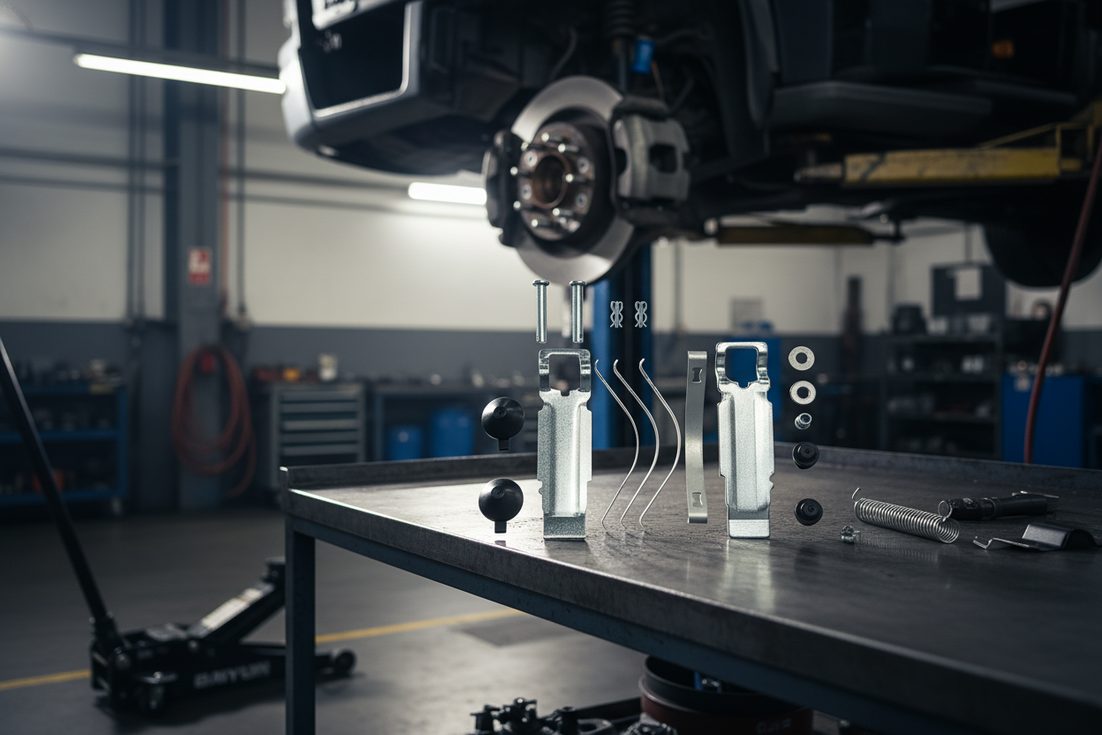
Two months after landing a large fleet contract, the complaints start rolling in. Brake pads were supposed to last 60,000 km, but drivers report grinding metal before any squeal. Rotors scored, downtime mounting. The distributor’s investigation reveals the source: the wear indicators never activated. The pads were perfectly fine on friction coefficient, but the indicator tab snapped off at 1.8 mm instead of the specified 2.5 mm. Now the distributor faces a costly recall, a damaged reputation, and a fleet owner who won’t be returning calls. It’s a scenario we’ve seen unfold too many times.
Wear indicators might seem like a trivial add-on when you’re comparing $3.50-per-set quotes against $4.80 from a certified factory. But for importers and distributors supplying workshops, repair chains, and commercial fleets, that tiny metal tab or embedded sensor is often the difference between a quiet profit and a public relations nightmare. Let’s unpack the mistakes that trip up even experienced buyers—and exactly how to sidestep them.
What’s the Real Cost of Overlooking Wear Indicator Specifications?
A single brake system failure traced back to a non‑functioning wear indicator can easily generate $50,000 in warranty claims, legal fees, and lost accounts if it reaches a commercial fleet. That’s not hyperbole; it’s the kind of number our clients quote after a bad batch.
Importers frequently obsess over friction material grades, backing plate hardness, and ceramic vs. semi‑met debates. The wear indicator gets a cursory glance. Yet a missing or defective indicator leads to metal‑on‑metal contact, destroying rotors, increasing stopping distance, and putting end users at risk. For a distributor handling 20,000 sets a month, just a 1% indicator failure rate means 200 avoidable comebacks. The math is ugly.
What’s more, ECE R90 doesn’t just test friction. The regulation explicitly requires that the replacement brake pad “must not impair the function of the vehicle’s warning device.” That means if the original pad had a mechanical indicator that squealed at 2.0 mm, your aftermarket pad must do the same—within a tight tolerance. In our IATF 16949 certified facility, every batch’s wear indicator activation point is verified within ±0.2 mm. Skip that level of control and you’re gambling with compliance.
Mechanical vs. Electronic Wear Indicators: Are You Stocking the Right Type?
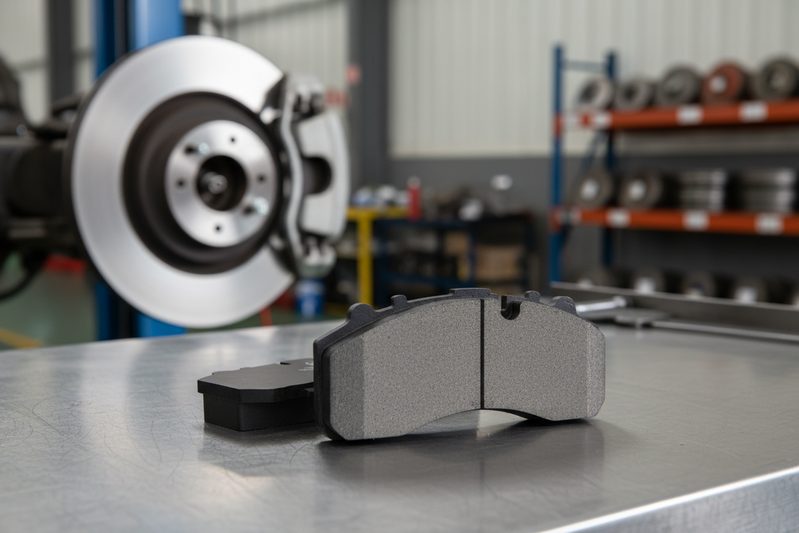
Here’s a common disaster. An importer orders 5,000 sets of a popular sedan pad, relying on a generic aftermarket catalog that listed only “with sensor.” The shipment arrives, and every pad has a mechanical tab. But the vehicle platform swapped to an electronic two‑stage sensor in mid‑2024. The distributor’s customers can’t install the pads without bypassing the warning light—some refuse, some attempt it, all blame the supplier.
Mechanical indicators (spring‑steel clips that rub the rotor) and electronic sensors (embedded wires that trigger a dash light) are not interchangeable. Worse, many OE designs blend both—a pad may have a physical tab and an electronic connector. Importers need to verify the original part number’s sensor configuration, not just the pad shape.
Our brake pad installation guide breaks down the different sensor types by vehicle generation, but here’s a rule of thumb: if the OE pad has a wire harness, you must match it. Some distributors try to cut costs by stocking only the cheaper mechanical version, and they’ll face a wave of returns from shops that can’t complete the job. Don’t let price dictate part number strategy—the smaller margin on the electronic version vanishes when you factor in return shipping and tarnished trust.
ECE R90 and IATF 16949: What Do They Actually Say About Wear Indicators?
Many buyers assume ECE R90 only covers stopping distances. Actually, Annex 4 of Regulation No. 90 requires that the warning device function remains equivalent to the original. The test procedure checks whether the indicator activates at the same remaining lining thickness and produces the same audible or visual signal. For electronic sensors, the circuit must break at the correct wear depth without false positives.
BAIYUN Brake holds both ECE R90 approvals and IATF 16949 certification. That doesn’t just mean the factory passed an audit; it means every production lot of wear indicators undergoes statistical process control. We measure the spring tension of mechanical clips to guarantee they produce 75–85 dB of squeal at 2.0–3.0 mm remaining thickness (depending on vehicle class). For electronic sensors, we validate that the parallel circuit breaks within 0.3 mm of the design target.
Without this documentation, an importer is selling blind. A supplier might deliver three consecutive shipments where the indicator activates at 1.5 mm instead of 2.2 mm. You won’t know until your end users discover the problem. That’s the kind of inconsistency that kills a brand in the aftermarket. Request batch test reports—if the factory can’t produce them, treat it as a red flag.
The Testing Blind Spot That Eats Wholesale Margins
You’ve received the certificate of conformity, the pad dimensions match the sample, and the friction coefficient is within range. So you sign off on the shipment. Three months later, warranty claims spike—rotors are destroyed, brake pads are worn to the metal, and the wear indicator was silent. What went wrong?
The paper trail didn’t capture real‑world activation. Wear indicators can corrode in humid coastal markets, lose tension after thermal cycling, or simply break off during aggressive heat cycles. In competitor brake pad test results we’ve analyzed, some so‑called “certified” pads showed indicator response at 1.2 mm instead of 2.5 mm—just 0.3 mm away from the backing plate. That’s catastrophic for the rotor.
BAIYUN Brake validates wear indicators on dynamometers using OEM‑spec loading and 100‑hour endurance cycles. We cool the brakes rapidly to simulate highway driving after a mountain descent, then apply full‑stop pressure and measure exactly when the indicator engages. This isn’t an optional extra; it’s the only way to guarantee the pad will behave the same in a customer’s vehicle as it did in the lab. For your wholesale business, insisting on this level of proof transforms an unpredictable cost center into a reliable selling point.
A Distributor’s Checklist for Qualifying a Brake Pad Wear Indicator Supplier
Right now, you might be thinking: “Fine, but how do I separate the factories that talk the talk from the ones that walk it?” Here’s the checklist we give to our own distribution partners when they’re vetting suppliers—including us.
- Activation thickness tolerance: Request written specs for the indicator activation range, and ask for brake pad technical specifications that reference the test method (dynamometer vs. bench test).
- ECE R90 scope: Verify the approval certificate explicitly covers the wear indicator function, not just friction. Ask for the homologation number and cross‑check with the issuing body.
- Batch testing records: Ask for control charts showing wear indicator activation point across recent production lots. A capable factory will have at least 30 samples per lot, and the Cpk index should exceed 1.33.
- Corrosion resistance: For markets with high humidity or road salt, mechanical spring indicators should pass 240‑hour salt spray testing without losing tension.
- After‑sales support: Confirm the supplier has a technical hotline that can help your customers troubleshoot indicator issues. Why choose BAIYUN Brake? We staff English‑speaking engineers who can diagnose compatibility problems within 24 hours.
Go through this checklist before signing a contract. It won’t eliminate every risk, but it will filter out 80% of the factories that cut corners. And if a potential partner refuses to share test data, politely walk away. You don’t need a supplier; you need a manufacturing partner who understands that a $0.05 spring clip can cost you a $10 million fleet tender.
Frequently Asked Questions About Brake Pad Wear Indicators
Q: How can I confirm that a brake pad’s wear indicator will work with a specific vehicle model?
A: Always cross‑reference the OE part number and verify the type of wear sensor (mechanical, one‑stage electronic, or two‑stage electronic) before ordering. At BAIYUN Brake, our catalog includes detailed compatibility notes, and we recommend importing a pilot lot and fitting them on an actual vehicle under your target driving conditions.
Q: What documentation should I request from a brake pad supplier regarding wear indicator compliance?
A: Request ECE R90 approval certificates that explicitly list the wear indicator function, IATF 16949 manufacturing audit records, and batch‑specific control charts showing activation thickness accuracy. BAIYUN Brake provides these as part of every shipment, so you have audit‑ready proof for your own customers.
Q: Is it acceptable to sell pads with missing or non‑functional wear indicators in markets with no strict regulation?
A: Legally, you might get away with it, but the reputational risk is enormous. Many fleet managers and independent workshops expect indicators to prevent rotor damage and down‑time. We supply only fully compliant pads because a single failure can erase years of trust. When you’re building a brand, cutting corners on a $0.10 component rarely pays off.
This article was produced by the BAIYUN Brake editorial team, combining 49+ years of brake manufacturing expertise with current industry research. For product inquiries or technical questions, contact our team.
Move Forward Without the Guesswork
Wear indicators are small, but their absence or malfunction looms large in a distributor’s bottom line. Every shipment that leaves your warehouse with a verified, compliant indicator is one less reason for a customer to call your competitor. If you’re ready to upgrade your sourcing strategy, start with a conversation. Whether you need a wholesale car brake pads inquiry covering popular sedan and SUV models, or you’re looking to request OEM commercial vehicle brake pad quote for heavy‑duty fleets, we’ll give you the data and support that turn a commodity into a trusted product. Request a wholesale quote today—let’s make sure your next container doesn’t become a cautionary tale.
Was this article helpful?
Average Rating: 5/5 (955)