
The Importer’s Guide to Brake Pad Wear Indicator Standards and Specifications: Partnering with a Trusted Brake Pad Wear Indicator Supplier Wholesale
Summary:
A brake pad wear indicator supplier wholesale partnership can make or break your import business—literally. In 2025, one distributor faced €120,000 in returns because of unspecified wear sensor thresholds. This guide exposes the three most costly mistakes importers make when sourcing brake pads with mechanical and electronic wear indicators, from ignoring regional certification gaps to trusting supplier certs without in-house validation. You'll learn how to build an airtight specification sheet, why ECE R90 doesn't cover sensor function, and how to audit a manufacturer's in-line testing to slash return rates by 40% or more. BAIYUN Brake's IATF 16949 certified facility demonstrates what best-practice wear indicator integration looks like, empowering you to sell confidently across Europe, North America, and Asia-Pacific.
The Importer's Guide to Brake Pad Wear Indicator Standards and Specifications: Partnering with a Trusted Brake Pad Wear Indicator Supplier Wholesale
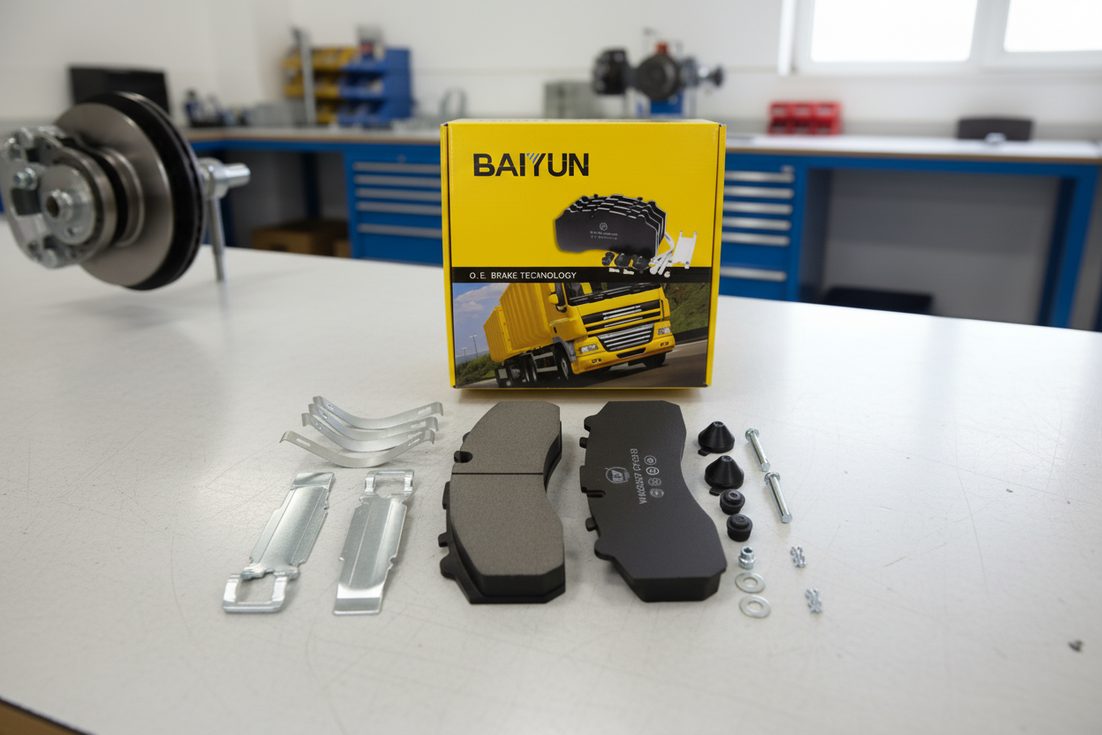
In 2025, a mid-sized European distributor lost over €120,000 in return freight and lost customer trust after 30% of a brake pad shipment triggered false dashboard warnings within six months. The root cause wasn't a material defect—it was a wear indicator specification mismatch that never appeared in the purchase contract. That one oversight turned a profitable order into a logistical nightmare. As a brake pad wear indicator supplier wholesale partner, your manufacturer's ability to align wear-sensing technology with destination-market requirements isn't optional; it's the difference between repeat business and a damaged reputation.
Most importers focus on friction formulation, backing-plate hardness, and shim noise-damping. Wear indicators? They're often treated as a checkbox item. But the data tells a different story. According to a 2026 aftermarket warranty analysis by a leading European parts alliance, wear-sensor-related claims accounted for 18% of all brake pad returns—second only to noise complaints. That's nearly one in five returns tied directly to a component that costs less than a euro to manufacture. So why do so many sourcing professionals get it wrong? This guide walks through the common pitfalls and exactly how to avoid them when selecting a wholesale brake pad wear indicator supplier.
Mistake #1: Treating Wear Indicators as an Afterthought in Supplier Audits
Walk through a typical quality audit and you'll see checklists packed with friction coefficient ranges, shear strength tolerances, and thermal fade curves. Wear indicators rarely get more than a glance. Yet the indicator is the part that communicates directly with the vehicle's safety systems. If a passenger car's electronic wear sensor fails to break contact at 3.2 mm remaining pad thickness, the dashboard warning might not illuminate until the pad is down to backing plate—and by then, rotor damage is inevitable.
A common scenario among importers sourcing from multiple brake pad wear indicator suppliers wholesale: mixing batches where one lot uses a two-stage parallel circuit and another uses a simple loop sensor. The result? Inconsistent warning thresholds across a single container. Your workshop customers notice. They'll call you after fitting pads from the same box that trigger warnings at different mileages on the same vehicle model. That inconsistency erodes trust faster than any price advantage can offset.
BAIYUN Brake's quality control teams have traced similar field failures to a lack of supplier-side in-process electrical testing. When you tour our IATF 16949 certified facility, the first thing you'll see on the wear-indicator line isn't a finished-product gauge—it's a 100% inline continuity tester that checks every sensor circuit before the pad enters the curing oven. That kind of integration is what separates a supplier prototype from a production partner.
Mistake #2: Confusing Acoustic and Electronic Wear Indicator Standards
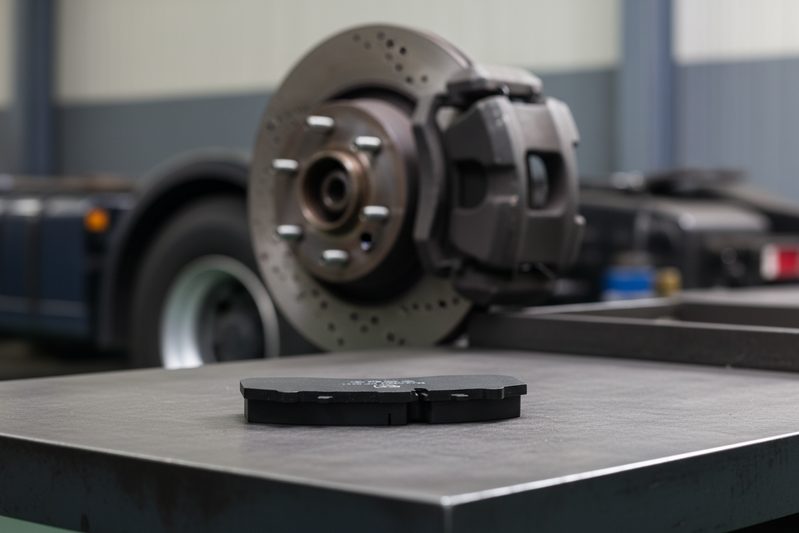
Not all squealing noises signal worn pads—and not all wear indicators make noise. Importers who lump all warning technologies into a single specification often ship electronic-sensor pads to markets that expect a mechanical squealer, or vice versa. In Europe, an increasing share of OE and quality aftermarket pads use embedded electronic wear sensors, especially on BMW, Mercedes, and VAG platforms. In North American and Asian aftermarket segments, the simple metal tab remains dominant. Misjudge the split by as little as 10% and you're sitting on unsellable inventory.
A mechanical wear indicator is a spring steel clip riveted to the pad’s backing plate edge. It contacts the rotor when friction material wears below approximately 3 mm, producing a high-frequency squeal. It's low-cost, foolproof, and needs no wiring. But it's prone to corrosion in high-humidity climates and can be accidentally bent during installation, silencing it permanently. An electronic sensor, on the other hand, uses one or two resistive circuits embedded in the friction material. The circuit opens at a predetermined thickness, illuminating a warning light. In a two-stage sensor, the first circuit break logs driving data to estimate remaining pad life; the second break triggers the immediate-replacement alert.
So what's the mistake? Buying off-spec sensors that break at 4.5 mm instead of 3.2 mm because the supplier substituted a cheaper wire alloy. That triggers premature warnings, which lead to unnecessary service visits and frustrated end-users. When you get OEM passenger car brake pad pricing from a manufacturer with in-house sensor production, you can specify the exact trip point and circuit resistance for your target vehicle platforms. Not all wholesale brake pad wear indicator suppliers offer that level of customization—verify it before you commit.
Mistake #3: Ignoring Regional Certification Nuances
ECE R90 certification is the gold standard for replacement brake pads in over 60 countries, but it focuses primarily on friction performance—cold and hot effectiveness, speed sensitivity, and lining integrity. It does not demand a specific wear indicator technology or a defined warning threshold. That gap leaves importers exposed if they assume an R90 mark automatically covers the sensor's compliance for every destination market. In Europe, vehicle type-approval regulations under UN ECE Regulation 13-H require that any electronic wear indicator on a replacement pad must function identically to the OE system. If your pad's sensor sends a different resistance value or opens at a different thickness, it's technically non-compliant—even with an ECE R90 stamp on the box.
North America has its own landscape. FMVSS 135 doesn't reference wear indicators at all. Instead, compliance is often driven by state-level safety inspections that check warning light functionality. If a pad's sensor fails to integrate with the vehicle's diagnostic bus (CAN), a technician might flag it as a fault, generating a return. Asia-Pacific markets show even more fragmentation: Japan requires JIS D 4411 compliance for brake pads, but wear indicators often follow OEM-specific protocols; China's GB 5763 standard now includes provisions for electronic wear sensor function after a 2024 revision, but enforcement remains patchy among local manufacturers.
For an importer, the safe path is to request a sensor validation report per vehicle platform, not just a general R90 certificate. At BAIYUN Brake, we maintain a library of test data covering sensor output curves for over 300 passenger and commercial vehicle applications, verified both in-house and by external ECE-accredited labs. This documentation, when included in your shipment dossier, dramatically reduces customs clearance delays and technical queries from wholesale buyers.
How to Build a Wear Indicator Specification Sheet That Actually Works
Most purchase orders define a brake pad by OEM part number cross-reference, friction code, and backing plate dimensions. That's insufficient for wear indicators. Here's what a robust specification sheet should include, and why omitting any single line can backfire.
- Indicator type and position: Acoustic tab (material: spring steel grade, corrosion coating), single-stage electronic, or two-stage electronic. Specify inner pad, outer pad, or both.
- Warning threshold: For acoustic, the contact point thickness (e.g. 3.0 mm ±0.2 mm). For electronic, the circuit break thickness and the resistance before/after break (e.g., open circuit at 3.2 mm ±0.3 mm, pre-break resistance 4.7 kΩ ±5%).
- Connector type and pinout: Especially critical for vehicles with secondary harnesses. A mismatch here causes installation headaches.
- Environmental durability: Salt spray test acceptance criteria (typically 96 hours per ISO 9227 without signal degradation) and operating temperature range (-40°C to +200°C).
- Production validation batch size: Minimum 50 pcs per batch tested for electrical continuity; 10 pcs destructively tested to confirm break thickness accuracy.
Distributors who send us this kind of detailed spec benefit from faster sampling turnaround because our engineering team doesn't have to guess at expected sensor behavior. And when problems arise—a connector that doesn't click into a harness, a resistance value that drifts after thermal cycling—the spec sheet becomes your contractual shield. It's far easier to negotiate a credit note when the failure is a documented deviation from a written parameter, not a vague "quality issue."
For commercial vehicle applications, sensor requirements diverge further. Heavy trucks and buses often use wear indicators integrated into the brake lining monitoring system, with thick lining measurements above 8 mm. If you're sourcing wholesale CV brake pads inquiry for fleet customers, confirm that the sensor's operating voltage (12V or 24V) matches the vehicle's electrical system and that the sensor withstands the vibration profiles specified under ISO 16750-3 for commercial vehicles.
Why In-House Testing Beats Supplier Certificates (Every Time)
There's a troubling pattern in the brake import industry: suppliers who present laboratory certificates that look impeccable but whose production lots don't match. I've seen certificates from third-party labs showing sensor trip thickness at 3.2 mm, while the pads pulled from the actual shipment break at 2.0 mm. Why? The certificates often date from initial homologation—a batch produced under tight supervision years ago. Ongoing production may have drifted as raw material suppliers changed.
The importer's best defense is routine incoming inspection using a simple thickness gauge and a multimeter. You don't need an engineering degree. A caliper measurement confirms the pad's friction material thickness; a gentle cut into the sensor wire with a hobby knife (at a marked spot) allows you to verify at what thickness the circuit opens. For acoustic indicators, an angle measurement of the metal tab relative to the backing plate (typically 15°–20° from parallel) and a bench test against a scrap rotor confirm that squeal occurs at the intended depth. Document everything: photograph the setup, record the readings, and attach them to your receiving report.
BAIYUN Brake supports this practice—we've even published a brake pad composition guide that walks buyers through wear indicator inspection techniques. That transparency has helped several of our distributors reduce return rates by over 40% in twelve months. Compare that to a supplier who refuses to share sensor circuit diagrams or resists your request for sample destructive testing. That's a red flag, not a negotiation tactic.
What Are the Most Common Misconceptions About Wear Indicator Specifications?
Over nearly five decades of manufacturing, our technical team has fielded thousands of buyer queries. Three myths stand out because they repeatedly lead to costly stocking errors.
Misconception 1: “An ECE R90 stamp means the wear sensor is homologated for Europe.”
Reality: R90 covers friction performance, not sensor function. Separate type-approval tests for electronic brake wear indicators fall under UN R13-H or OEM-specific validation. Always ask for a sensor-specific validation report.
Misconception 2: “All two-stage sensors work the same way.”
Reality: Circuit break points, resistance values, and data protocols vary by OEM—BMW’s system triggers a service indicator at 4 mm remaining and a warning at 2 mm, while Audi may use different thresholds. A universal sensor that “fits” may still deliver inaccurate mileage predictions, undermining your brand.
Misconception 3: “A metal squealer tab never fails.”
Reality: Corrosion can seize the tab or detune its natural frequency, and improper box packaging can bend it during transit. We’ve measured up to 15% of acoustic indicators in some shipments arriving with deflection exceeding permissible angular tolerance, requiring rework before they can be sold.
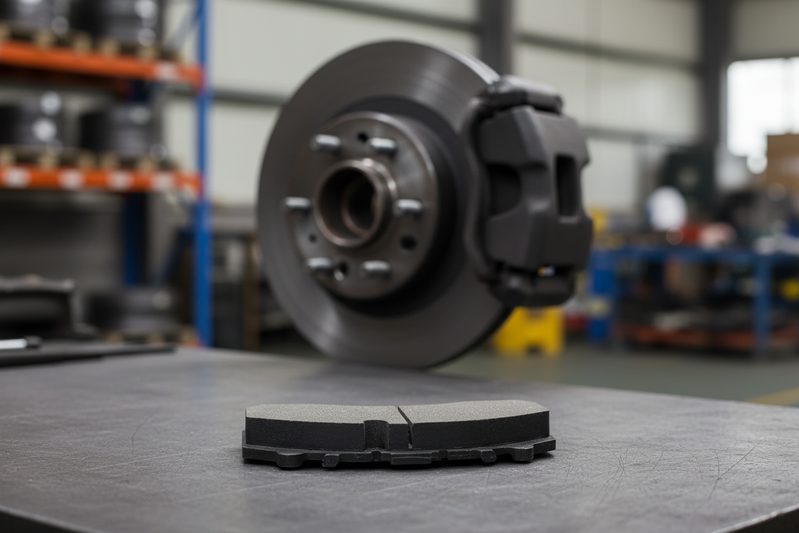
The takeaway? Never assume. Always verify. And when you're evaluating a potential wholesale car brake pads inquiry partner, probe their sensor knowledge as aggressively as their friction formulation expertise. A supplier who can't explain how their two-stage sensor interfaces with a CAN bus probably isn't the one you want handling your premium line.
FAQ: Importers' Top Questions on Brake Pad Wear Indicators
Q: Can I mix acoustic and electronic wear indicators in one consolidated shipment to save freight?
A: Technically yes, but you risk logistics confusion. We've seen warehouses mislabel boxes, causing electronic-sensor pads to ship to customers expecting mechanical squealers. The safer practice is to split consignments by indicator type and use distinct part number structuring—e.g., suffix '-S' for electronic sensor, '-M' for mechanical tab. This reduces picking errors by an estimated 30% based on our distributor feedback.
Q: How do I verify that a new brake pad wear indicator supplier wholesale can deliver consistent sensor quality?
A: Request a production part approval process (PPAP) submission for the sensor sub-component specifically. Include a capability study (Cpk ≥ 1.33) for circuit break thickness and a gage R&R study for the measurement method. Additionally, audit the supplier's incoming raw material testing for sensor wire—BAIYUN Brake performs resistivity testing on every wire spool before production, which cuts field failures to below 0.2%.
Q: What's the minimum thickness at which a wear indicator must activate to avoid rotor damage?
A: Most passenger car applications target 2.5–3.0 mm remaining friction material for the warning, with 3.2 mm as a common first-stage alert. Below 2.0 mm, pad backing plate contact can score the rotor within a few hundred kilometers. Your specification should always err on the conservative side: set the threshold at 3.0 mm if in doubt, because the cost of a premature warning is a cheap inspection; the cost of rotor replacement is not.
Securing Your Supply Chain Starts with the Right Questions
Brake pad wear indicators aren't glamorous. They're tiny bits of metal and wire that cost cents per unit. But they're the only component on your pad that talks to the driver. Mis-specify them, and every other engineering achievement in that pad—the friction stability, the noise-free formulation, the ECE R90 certification—gets overshadowed by a dashboard light that shouldn't be on or a squeal that never comes when it should. In the B2B world, that silence translates to chargebacks, stock rotation headaches, and calls you don't want to field.
When you're next reviewing a brake pad wear indicator supplier wholesale partnership, don't just compare price per set. Compare the depth of their sensor documentation, the transparency of their in-line testing data, and their willingness to support your incoming inspection protocol. With our 49+ years of manufacturing experience, BAIYUN Brake doesn't simply deliver pads—we deliver the technical partnership that helps you avoid the pitfalls that erase margin. Request a wholesale quote or download our product catalogue to see how we can tailor wear indicator solutions to your exact market requirements.
Was this article helpful?
Average Rating: 5/5 (1250)