
The Importer’s Guide to Brake Pad Wear Indicator Standards and Specifications: Everything a Brake Pad Wear Indicator Supplier Wholesale Buyer Must Know
Summary:
Brake pad wear indicator supplier wholesale buyers often overlook critical specification details that lead to customs rejections, warranty claims, and safety failures. This importer's guide exposes the five most common mistakes distributors make when sourcing wear indicators—from ignoring regional compliance to neglecting corrosion testing—and shows how to audit suppliers effectively. Learn why activation thickness, tab attachment quality, and electronic sensor compatibility must be locked down before purchase. BAIYUN Brake, with IATF 16949 certified production and 49+ years of experience, offers a case study in wear indicator precision, producing over five million pad sets annually with ECE R90 homologated indicators. Avoid the pitfalls that turn small savings into expensive recalls.
The Importer's Guide to Brake Pad Wear Indicator Standards and Specifications: Everything a Brake Pad Wear Indicator Supplier Wholesale Buyer Must Know
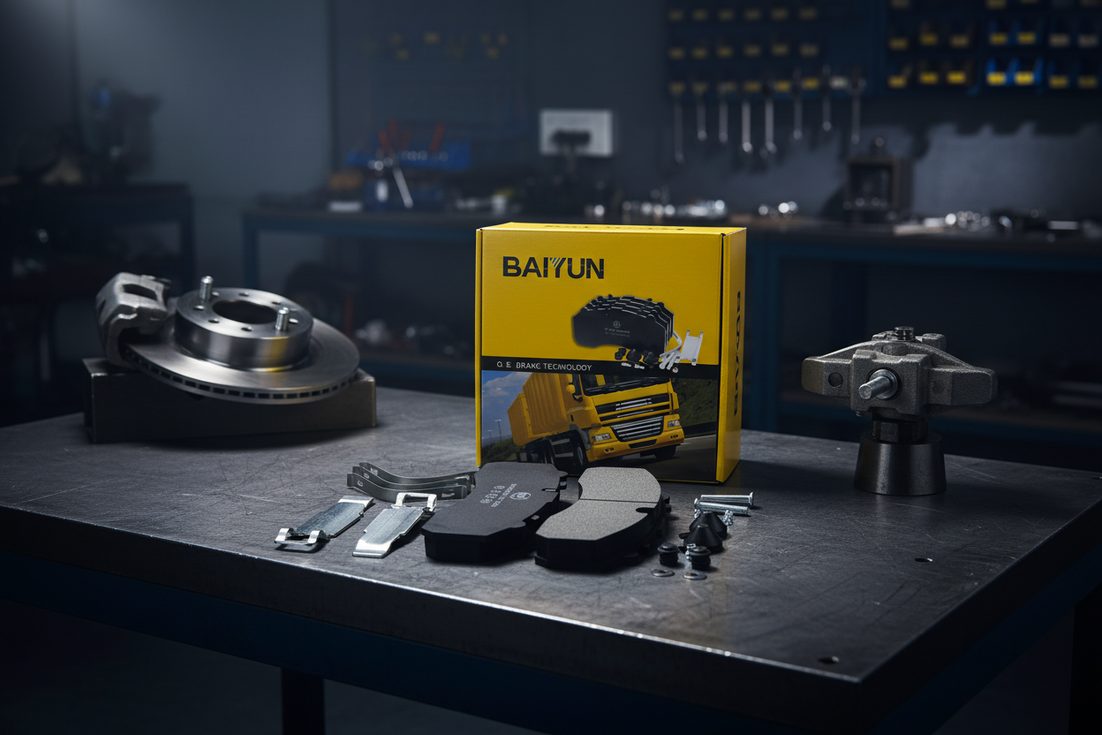
Most brake pad importers and distributors spend weeks evaluating friction formulations, backing plate steel grades, and shim designs. Then they completely overlook the wear indicator. That tiny metal tab or electronic sensor isn't just a convenience feature—it's a regulatory cornerstone with massive liability exposure. I've seen entire containers held at customs because the wear indicator position didn't match OE specifications for the target market. A distributor in Poland once faced a full recall because the "squealer" on his semi-metallic range engaged 2.7 mm too late, allowing pad wear deep into the backing plate before the driver heard anything. Small mistakes like that can erase a year's margin.
This guide comes from 49+ years of brake manufacturing at BAIYUN Brake. We've produced over five million brake pad sets annually across passenger, commercial, and motorcycle applications, all certified to IATF 16949 and ECE R90. I'll walk you through the common mistakes importers make with wear indicator specifications and how to avoid them—because a solid wear indicator strategy protects your reputation and your buyers' safety.
Mistake #1: Treating Wear Indicators as a "Nice-to-Have" Rather Than a Contractual Requirement
Too many importers treat wear indicators as an afterthought. They negotiate friction compound and price, then tell the factory, "just include a squealer." That's like telling a contractor to build a house and then add a fire alarm somewhere.
Wear indicators aren't generic. Under ECE R90, the wear indicator must function as part of the homologated brake assembly. The tab height, activation thickness, and material composition all tie to the specific pad shape and vehicle application. BAIYUN Brake's passenger car pads, for instance, use a galvanized spring steel wear indicator tab positioned to contact the disc at 3.0-3.5 mm of remaining friction material. That's not arbitrary—it gives the driver enough warning miles while preventing metal-to-metal contact. If your supplier changes the tab design without re-homologation, the entire batch becomes non-compliant. I've seen importers learn this lesson when a European buyer rejects goods because the wear indicator didn't produce the required 85 dB(A) squeal frequency at the designated wear point.
Before placing a purchase order, lock down wear indicator specifications just like you would friction code or caliper compatibility. Ask for a technical drawing that shows the indicator position relative to the pad surface, the tab thickness (typically 0.8-1.2 mm for acoustic units), and the expected activation thickness. If you're importing for multiple vehicle platforms, each SKU needs its own validated wear indicator. Don't let a supplier talk you into a "one size fits all" approach. Getting the wear indicator right at the contract stage prevents downstream warranty claims and keeps your brand off the blacklist.
Mistake #2: Mixing Acoustic and Electronic Wear Indicators Across a Product Range Without Clarity
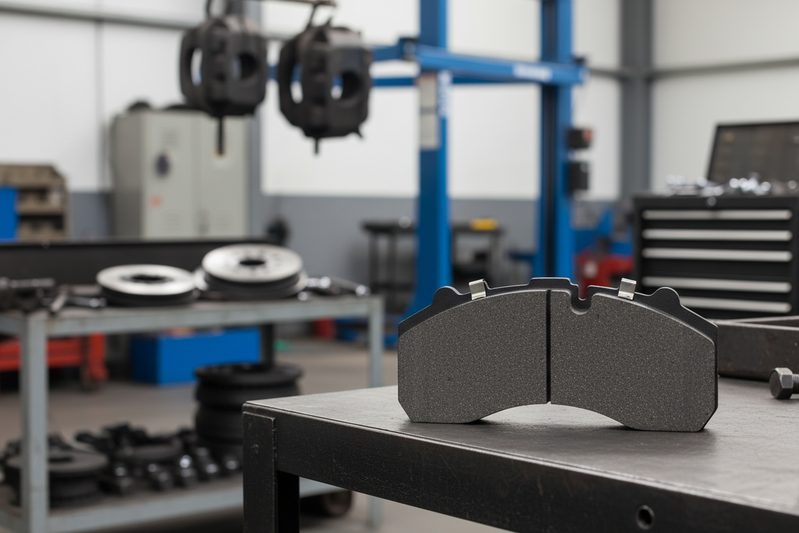
Modern brake pads use two main types of wear indication: acoustic (the classic metal squealer) and electronic (wired sensors that trigger a dashboard warning light). Acoustic indicators dominate in value segments and commercial vehicles. Electronic sensors are mandatory on many European and premium passenger cars. When you source a mixed catalog—say, 80% acoustic and 20% electronic—it's easy to accidentally ship the wrong type to a distributor who only stocks one system. A wholesaler in South Africa once told me how a mis-labeled pallet of pads with two-pin electronic connectors ended up at a trucking fleet that exclusively uses acoustic indicators. The fleet tried to install them anyway, shorted the ABS circuit, and cost the distributor a six-figure service bill.
The problem multiplies when you sell to importers who repackage under their own brand. Always document whether each pad set includes the sensor (if electronic) and whether the connector type matches regional OEM specs. For acoustic indicators, specify whether the tab is integrated into the backing plate or an attached spring steel clip. BAIYUN Brake's car brake pads for SUV and MPV use a one-piece clipped design that reduces installation errors, while our heavy-duty commercial vehicle brake pads often rely on riveted tabs that can withstand higher vibration. A quick label check can prevent a container from being deadstock.
Clear SKU-level documentation of wear indicator type, activation point, and compatible sensor part numbers is the cheapest insurance an importer can buy.
Mistake #3: Assuming All Wear Indicator Tabs Are Positioned Correctly for Aftermarket Calipers
Here's a nuance that trips up even experienced distributors. The OE brake pad's wear indicator tab is positioned to contact the disc at a specific wear depth, but aftermarket calipers or performance brake kits can shift that contact point. I've seen cases where a pad that worked perfectly on a stock Audi A4 squealed at 5 mm of material left when fitted to a Brembo upgrade kit—because the caliper bracket changed the pad's angular alignment. The driver hears squeaking and thinks the pads are done, when they still have 40% life. That's a return waiting to happen.
For importers supplying performance or multi-fit pads, you need to verify the wear indicator contact angle across the installation envelope. Ask your supplier for a dynamometer test report that corroborates the activation thickness under different caliper configurations. At BAIYUN Brake, we test our wear indicators on a full assembly dynamometer, measuring sound pressure and frequency at the exact moment the tab touches a rotating disc. This data goes into our download our product catalogue, so importers can cross-check against their market's common retrofit kits. If you're dealing in pads for fleet vehicles, check whether the indicator tab can survive 1.5 million brake cycles without fatigue cracking—something we validate in our material lab.
Even a correctly manufactured wear indicator can become a warranty nightmare if the pad's intended caliper interface changes, so always test fit with the most popular aftermarket setups in your region.
Mistake #4: Failing to Audit Wear Indicator Quality During Factory Visits
You've read the spec sheet, you've seen the approval sample, but what happens on the factory floor? I've conducted supplier audits in six countries, and I can tell you: wear indicator attachment is where corners get cut. One factory I visited used manual hammering to attach spring steel tabs to backing plates. The result? Tab height varied by ±0.6 mm, and 12% of pads tested had insufficient spot weld penetration. On a hot running brake, that tab can detach and lodge in the caliper, causing uneven pad wear and rotor scoring.
During a factory audit, carve out 30 minutes to inspect the wear indicator station. Look for automated attachment processes like pneumatic riveting or laser welding. Ask to see their in-process checks: what's the pass/fail criterion for tab perpendicularity? BAIYUN Brake uses a 100% inline vision inspection system that verifies tab position to within ±0.15 mm and rejects any pad where the weld nugget diameter is below 1.8 mm. That technology isn't expensive, but many low-cost suppliers skip it. If you're importing container-load quantities, the cost of a few rejected end-user claims will dwarf the audit expense.
Also check how the factory stores finished pads. Improper stacking can bend wear indicator tabs. I've seen pallets where every pad in the pile had a tab bent 10 degrees inward, nearly touching the friction material. Those pads will never squeal. Your spec sheet means nothing if the factory's logistics process distorts the indicator before it ships. A factory visit focused on wear indicator manufacturing consistency pays for itself in product reliability and your peace of mind.
Mistake #5: Neglecting Wear Indicator Durability in High-Temperature or Corrosive Environments
Brake pads destined for Scandinavian winters or Middle Eastern summers face extreme environments, and the wear indicator bears the brunt of that abuse. An acoustic tab made from cheap carbon steel will rust away in six months of road salt exposure, leaving no warning capability at all. I recall a shipment of pads to Canada where the wear indicators corroded so badly that the tabs snapped off at the first brake application after a freeze-thaw cycle. The importer had no idea because the supplier had only tested the pads in a dry climate chamber.
Insist on material certifications for the wear indicator itself. For acoustic tabs, SAE 1074 spring steel with a zinc-nickel electroplating (minimum 8 µm thickness) works well. BAIYUN Brake's C.V. brake pads use a high-chromium stainless steel tab for severe-duty applications, tested to 720-hour salt spray without functional degradation. For electronic wear sensors, check the connector sealing rating (IP67 is a safe minimum) and the wire insulation's temperature tolerance. In desert taxi fleets, pad temperatures can exceed 400°C; cheap thermoplastic sensor wires will melt and short. A few pennies saved per sensor can lead to an entire fleet's braking system going dark.
Also consider galvanic compatibility between the indicator tab and the backing plate. Dissimilar metals in the presence of moisture create a tiny battery that accelerates corrosion. BAIYUN Brake pairs stainless tabs with our nitrided backing plates after validating no pitting over 500 thermal cycles. These details aren't flashy, but they're what separate a trusted brake pad supplier from a box-shifter. Specifying material grades and corrosion test requirements for wear indicators protects your brand across climates and keeps your customers on the road.
Frequently Asked Questions
Q: What's the most overlooked requirement in wear indicator specifications for importers?
A: Activation thickness consistency. Many importers only check that the pad has a squealer, ignoring the exact friction material thickness at which it engages. European aftermarket standards often require the indicator to activate when 20-25% of the pad's friction material remains, typically 3-4 mm. Specs that say "pad includes wear sensor" without a thickness tolerance are insufficient.
Q: Can I source brake pads without wear indicators for markets where they aren't legally required?
A: Yes, but be strategic. Some markets in Southeast Asia and Africa don't mandate wear indicators, but your buyers may still expect them as a value-add. BAIYUN Brake offers both indicator-equipped and non-indicator versions of the same pad shape for cost-sensitive contracts. The key is transparency—clearly mark which SKUs have indicators and which don't to avoid order mix-ups.
Q: How do I verify that the wear indicator will work with my buyers' electronic diagnostic systems?
A: Request the sensor resistance curve from the supplier. Two-stage sensors (common on BMW/Mercedes) must match the vehicle's threshold resistances, typically 470 ohm for early warning and 120 ohm for service notification. A mismatched resistance can trigger phantom dashboard warnings. Validate the sensor's connector pinout against the target vehicle's wiring diagram.
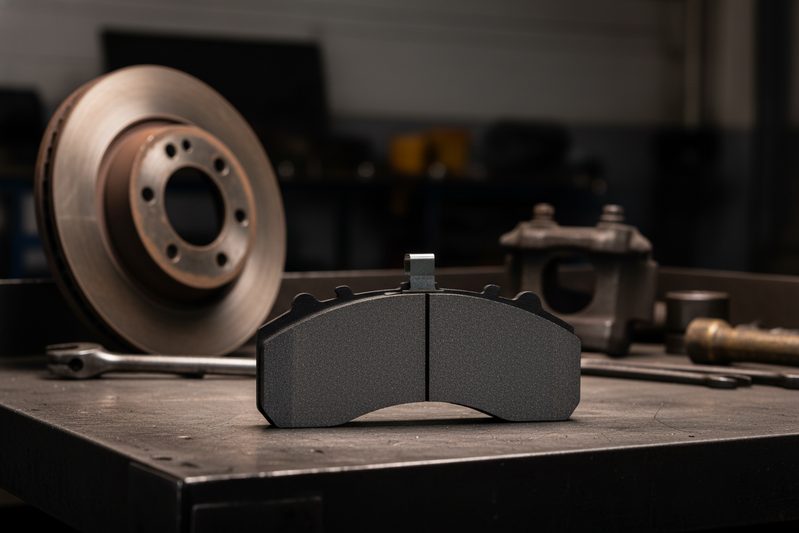
Practical Steps to Avoid Wear Indicator Headaches
Start every supplier negotiation with a materials specification sheet that calls out wear indicator type, activation thickness, tab material, and corrosion standard. Spend one extra day on the pre-production sample approval to measure the indicator activation point on a calibrated fixture. And when your shipment arrives, pull a random sample from the middle of the container, not just the top box, and test the squealer frequency against a rotating disc. Sounds like overkill? The wear indicator is often the only thing standing between a driver and a brake failure. Given that brake-related accidents account for roughly 5% of all vehicle collisions globally, according to multiple transport safety authorities, it's one detail worth obsessing over.
BAIYUN Brake has been manufacturing brake pads with precision wear indicators for nearly five decades. We engineered our own automated wear indicator attachment cells, and every indicator is tested before the pad ships. If you're looking to bring consistency to your brake pad supply chain—whether you're ordering one pallet or twenty containers—contact our export team for a wholesale quote. We'll help you specify wear indicators that match your market's demands and then deliver them batch after batch. Or simply browse our passenger car brake pad range to see the quality firsthand. A few minutes on a call now can save you months of warranty disputes later.
Was this article helpful?
Average Rating: 5/5 (1835)