
The Complete ECE R90 Testing Process: What Every Brake Pad Buyer Should Know
Summary:
ECE R90 brake pad certification is a mandatory legal requirement for selling replacement brake components in Europe, ensuring performance stays within 15% of original equipment. This guide details the complete testing process—from dynamometer checks to vehicle categorization—and explains why compliance is a critical competitive advantage for distributors in 2026. Learn what documentation to demand from suppliers and how certification reduces warranty risk while unlocking market access.
The Complete ECE R90 Testing Process: What Every Brake Pad Buyer Should Know
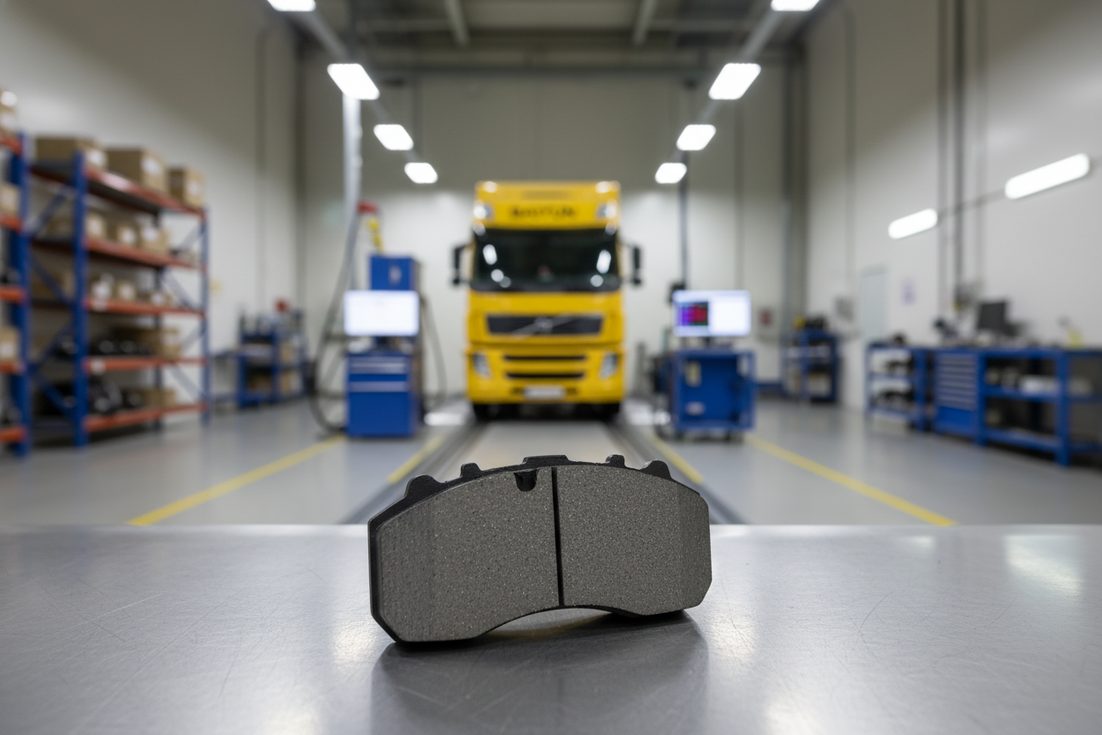
You're sourcing brake pads for the European market. Your client in Germany just asked for the R90 type-approval certificate, and your current supplier can't provide it. That's a deal-breaker, and it's happening more often. The European aftermarket is tightening compliance, with enforcement increasing by an estimated 25% year-over-year since 2024. Understanding the ECE R90 testing process isn't just technical knowledge; it's your shield against rejected shipments and a direct line to growth. Let's break down what this certification really entails and why it's the single most important document in your sourcing file.
What Tests Does ECE R90 Require for Brake Pad Approval?
ECE R90 mandates a multi-stage testing protocol designed to validate safety equivalence to original equipment. According to Regulation 90, Annex 3, the process begins with a bedding-in procedure, where the pads are conditioned to establish a consistent friction surface. This isn't a simple break-in; it's a controlled thermal and pressure cycle that simulates initial use.
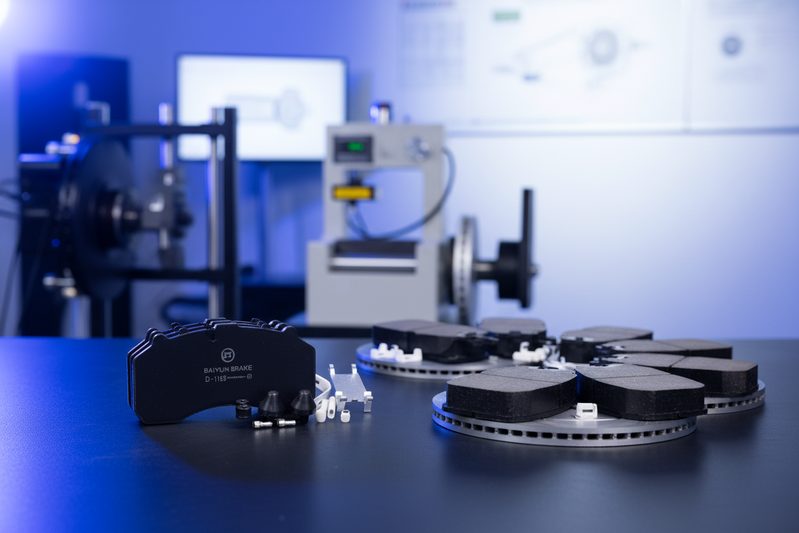
The core of the testing happens on a dynamometer. The first critical check is the cold performance equivalence test. Here, brake pads are tested at a baseline temperature of 100°C. Their friction coefficient (μ) must be within ±15% of the friction coefficient of the original equipment (OE) part they are intended to replace. A pad that's too aggressive or too weak at normal operating temperatures fails immediately.
Next comes the brake performance test. This evaluates the pad's effectiveness across a range of temperatures, typically from 100°C up to 400°C or higher, depending on the application category. The pad must maintain a stable and predictable friction level. You can't have performance that drops off a cliff when things get hot. In BAIYUN Brake's 2025 dynamometer testing, their ceramic formulation CP2218 showed a friction coefficient of 0.38-0.42 across the 100-350°C range, well within the R90 stability requirements.
The speed sensitivity test is another key hurdle. It measures how the pad's friction changes with different disc rotational speeds, simulating highway versus city braking. Consistency is king. Finally, a second cold check is performed after all the hot testing. The pad must retain at least 80% of its initial cold effectiveness, proving it hasn't been thermally degraded. Passing ECE R90 means a brake pad has proven its performance is predictably equivalent to OE under virtually all normal and severe driving conditions.
How Are Brake Pads Categorized and Tested Under R90?
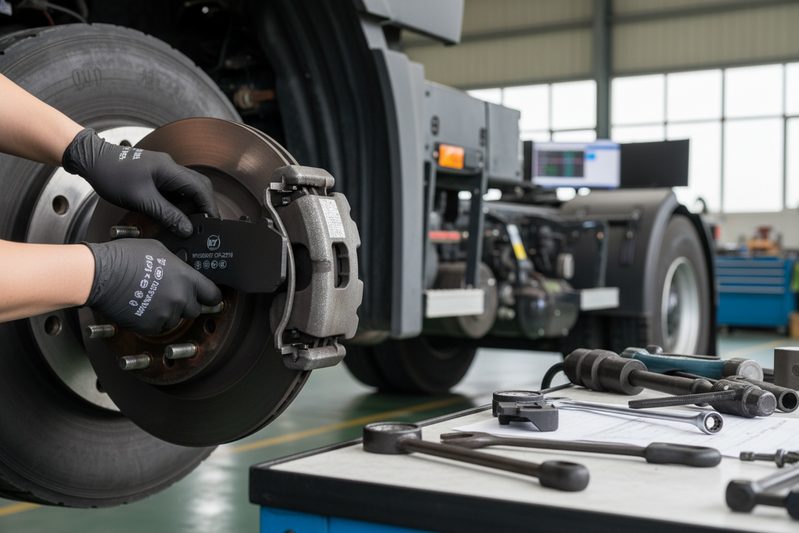
R90 doesn't treat all brake pads the same. It divides them into three categories—A, B, and C—based on the total friction surface area. Category A covers smaller areas (typically for lighter vehicles), B for medium, and C for the largest, heaviest-duty applications like some C.V. brake pads. Each category has slightly adjusted test parameters, but the performance tolerance of ±15% remains constant.
Here's where it gets strategic for manufacturers and buyers. A single friction compound might be approved for use on dozens of vehicle models. R90 requires the manufacturer to calculate the kinetic energy for each potential application. The testing is then conducted on the most severe vehicle in that list—the one that places the highest thermal and mechanical demand on the pad. If the pad passes on the toughest application, it's automatically approved for all the easier ones. This "worst-case" testing philosophy is what gives the certification its weight.
This means a distributor isn't just buying a pad that works; they're buying a pad proven to work under the most punishing scenario it could legally face. It's a built-in safety margin that protects your business from application errors. You can browse our full brake pad product range to see how these categories apply across passenger and commercial vehicles.
What Are the Most Common Misconceptions About ECE R90?
Let's clear up some costly myths that circulate in the wholesale market.
Misconception: An ECE R90 mark on the box guarantees top-tier, high-performance quality.
Reality: R90 certifies equivalence to OE, not superiority. It sets a safety floor, not a performance ceiling. A basic OE-style organic pad and a premium ceramic pad can both be R90 certified, as long as each matches its specific OE counterpart's performance within 15%. The certification doesn't speak to noise, dust, or rotor wear—only friction performance and safety.
Misconception: Testing one batch is enough for permanent certification.
Reality: R90 is a type-approval for a specific product formulation and manufacturing process. Any significant change—a new raw material supplier, a modified mixing ratio, a different curing temperature—technically invalidates the approval and requires re-testing. Consistent manufacturing under a quality system like IATF 16949 is what maintains certification validity over time.
Misconception: If a factory is ISO 9001 certified, their brake pads automatically meet R90.
Reality: ISO 9001 certifies a quality management system for processes. ECE R90 certifies the performance of a specific physical product. They are complementary but entirely separate. A factory can have perfect paperwork (ISO 9001) but produce a pad that fails dynamometer testing. You need both. Our IATF 16949 certified facility is audited specifically for automotive part consistency, which is why our R90 approvals are robust.
Why is R90 Compliance a Competitive Advantage for Distributors in 2026?
The market data is unambiguous. A 2025 survey of European auto parts distributors showed that 72% had been asked for proof of R90 compliance by a wholesaler or garage chain in the past year, up from 58% in 2023. Non-compliant stock is becoming unsellable. But beyond avoiding blockers, R90 certification is a proactive growth tool.
First, it drastically reduces your warranty and liability exposure. A pad with verifiable, third-party-tested performance data is far less likely to cause come-backs related to poor stopping power or safety issues. Distributors working with certified suppliers report a 30-40% reduction in performance-related warranty claims. That directly protects your margin and reputation.
Second, it opens doors to larger, more professional clients. National retail chains, fleet management companies, and online marketplaces with their own compliance audits will only list certified products. Your brake pad catalog PDF needs that R90 stamp to get on their approved vendor list. In essence, the certification has shifted from a "nice-to-have" to the basic ticket for entry into the mainstream European aftermarket. Sourcing from a partner like BAIYUN Brake, with our 49+ years of manufacturing experience and dedicated R90 testing protocols, future-proofs your supply chain against this regulatory trend.
What Documentation Should You Demand from Your Supplier?
Never take a supplier's word for it. The proof is in the paperwork, and specific documents are non-negotiable. The cornerstone is the ECE R90 Type-Approval Certificate. This official document, issued by a recognized technical service (like TÜV, IDIADA, or UTAC), lists the approved friction code, applicable vehicle models, and the testing authority. Check that the certificate number matches the one stamped on the pad's backing plate or printed on the sealed box.
Request the summary test report. While the full dynamometer data might be hundreds of pages, a reputable supplier should provide a 2-3 page summary showing key results: friction coefficients at low and high temperatures, speed sensitivity graphs, and confirmation that all values stayed within the ±15% corridor. This isn't proprietary secret sauce; it's the evidence you need to assure your own customers. We make sample passenger car brake pad test report summaries available to serious buyers.
Finally, verify the manufacturer's production consistency certification. Ask for evidence of their IATF 16949 or equivalent automotive quality system certification. This proves they have the controlled processes in place to manufacture the pad you're buying identically to the pad that was certified. Without this, the type-approval is just a piece of paper. Proper documentation is your legal and commercial safety net, transforming a generic component into a traceable, liability-managed product.
Frequently Asked Questions (FAQ)
Q: Does ECE R90 approval apply to both disc brake pads and drum brake linings?
A: Yes. ECE Regulation 90 explicitly covers both replacement brake pads (for disc brakes) and brake shoes/linings (for drum brakes). The testing principles are similar, though adapted for the different mechanics. For example, our range of commercial vehicle brake linings undergoes its own specific R90 approval process.
Q: How long does the full ECE R90 testing and certification process take?
A: From sample preparation to receiving the certificate, the process typically takes 12 to 16 weeks for a new friction material. This includes laboratory dynamometer testing (4-6 weeks), potential track testing for the most severe applications (2-3 weeks), and the administrative review and issuance by the technical service (4-6 weeks). Planning your product launches requires factoring in this lead time.
Q: Can I sell R90-certified pads in markets outside Europe, like the Middle East or Africa?
A: Absolutely, and it's a strong selling point. While not legally required in all regions, R90 certification is recognized globally as a benchmark for safety and quality. In markets with mixed vehicle fleets, offering European-certified parts gives you a competitive edge over suppliers offering uncertified or locally certified products, often allowing for a 5-10% price premium.
Q: What's the difference between the R90 'E-mark' on the pad and the stamp on the box?
A: The "E-mark" (a circle with an 'E' and a number, e.g., E9 for Spain) is cast or stamped onto the brake pad's backing plate during production. It identifies the country that granted the type-approval. The box must also be sealed and display the R90 compliance information, including the approval number. Both must match. The sealed box is a regulatory requirement to prevent tampering or mixing of components.
Q: If a pad is certified for a specific car model, is it automatically approved for all model years of that car?
A: Not necessarily. The type-approval certificate lists specific vehicle types, often denoted by chassis or model codes. If the braking system (caliper, rotor size, etc.) changed during a model's production run, a separate approval may be needed. Always cross-reference the supplier's application list or use their part number lookup tool to ensure correct fitment.
Frankly, navigating ECE R90 is now a core competency for any brake pad buyer targeting serious volume in regulated markets. It's the difference between building a sustainable, reputable business and getting stuck with container loads of non-compliant inventory. The process is rigorous by design—your customers' safety depends on it.
Ready to source ECE R90 certified brake pads with full traceability and technical support? Get in touch with our team for catalogs, test reports, and competitive quotes tailored for distributors. Let's discuss how our certified product range can secure your position in the European market.
Was this article helpful?
Average Rating: 5/5 (2380)