
Squealing brakes, OEM parts from Toyota – Reddit: Practical B2B Guide
Summary:
Squealing brakes, OEM parts from Toyota - Reddit highlights a common buyer question: should fleets stick with OEM pads or switch to certified aftermarket? This B2B guide explains why brake squeal in commercial vehicles usually traces to installation issues, contaminated rotors, or economy friction materials—not necessarily the pad brand. It covers WVA reference verification, IATF 16949 and ECE R90 supplier qualification, MOQ and lead time expectations, and private label options for truck brake pad distributors and maintenance teams. BAIYUN Brake's 49+ years of friction manufacturing experience informs practical sourcing steps for fleet buyers.
Squealing brakes, OEM parts from Toyota - Reddit: Practical B2B Guide
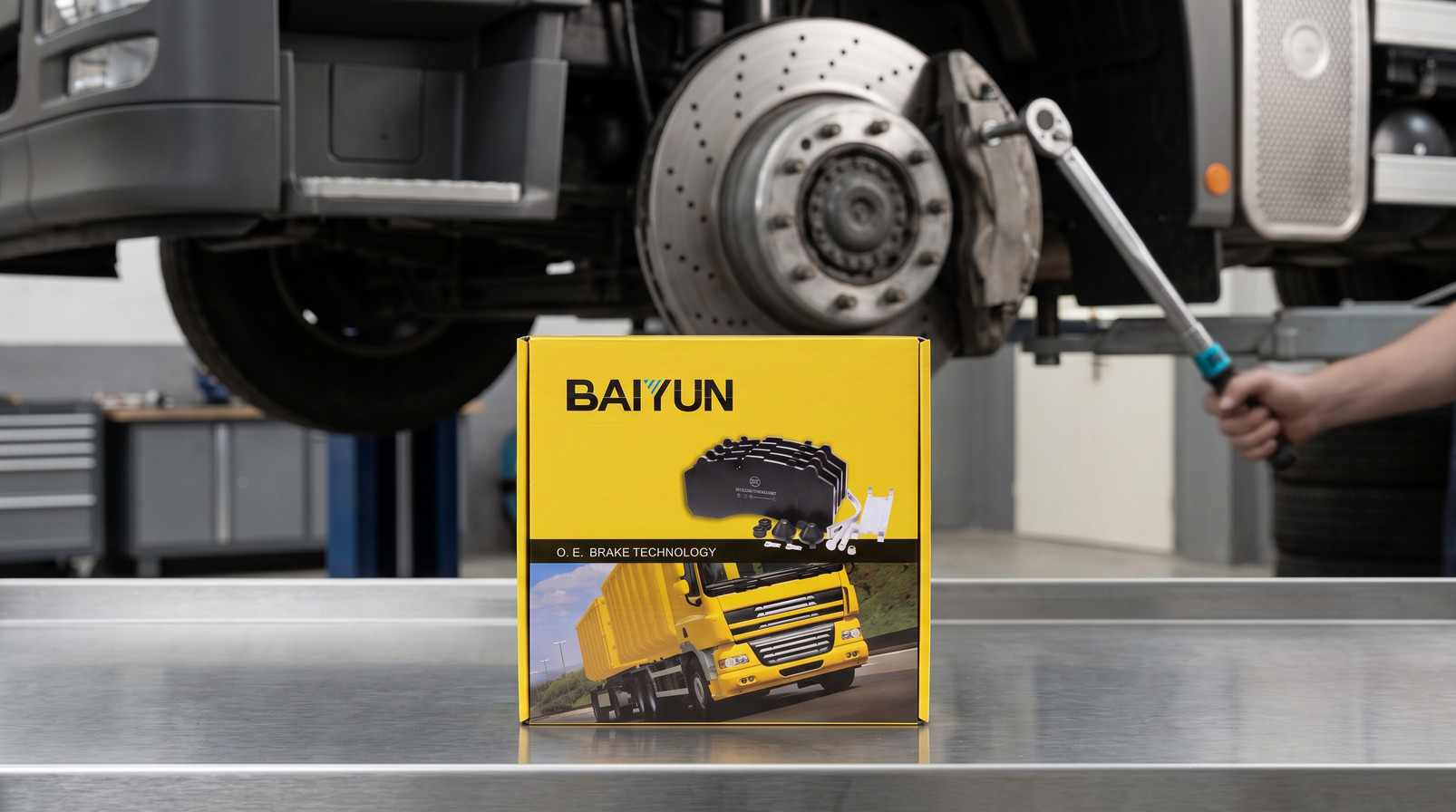
Quick answer: A viral Reddit thread about squealing brakes and Toyota OEM parts points to the real issue: installation mistakes and economy friction materials cause noise more often than the pad brand itself. For fleet buyers, the smarter move is certified aftermarket commercial vehicle brake pads with the correct WVA reference, backed by IATF 16949 and ECE R90. That approach usually matches OEM performance at 20–35% lower cost per axle set, without dealer lead times.
A Reddit Squeal Thread Is a Rorschach Test for Fleet Buyers
When a maintenance manager reads a Reddit thread about squealing brakes after a pad replacement, the first instinct is often "go back to OEM." That's a reasonable thought. Toyota has a strong OEM parts reputation, and many commenters in that thread said the same thing: use OEM specified or better components.
But here's what gets lost in the forum noise. The original poster's squeal probably wasn't caused by using aftermarket pads. Multiple commenters pointed to unwashed anti-rust coating on new rotors, missing shims, or economy-grade hardware. Another technician switched to ceramic pads years ago and never had a problem. So the real lesson isn't brand loyalty—it's supplier and installation control.
For commercial vehicle importers and fleet maintenance teams, the same logic applies at scale. A truck or bus brake job doesn't tolerate a 2,000 km bedding-in mystery. If the pad shape, backing plate, or friction formulation is wrong, you'll hear it across an entire fleet. That's why we tell buyers to evaluate the manufacturing system, not just the box label. Start with a serious request OEM commercial vehicle brake pad quote and compare the documentation side by side.
What Actually Makes a Commercial Vehicle Brake Squeal?
Brake squeal is high-frequency vibration at the pad-disc interface. Why do heavy vehicles make it worse? The same physics, but with more mass and higher heat. The usual suspects in fleet duty are:
- Contaminated or uncleaned rotor surfaces—factory anti-rust coatings are the classic hidden cause.
- Wrong WVA reference: a pad that's 2 mm too long or has the wrong chamfer angle will sit wrong and sing.
- Missing or loose anti-rattle clips, shims, and abutment hardware.
- Economy friction formulations with inconsistent compressibility and no noise validation.
- Improper bedding-in: a truck disc pad needs a controlled heat cycle to transfer a stable friction film.
None of these require going back to a dealer OEM part. In fact, a properly matched aftermarket pad from an IATF 16949 supplier will often reduce noise complaints because the manufacturer controls the friction formulation and validates pad shape against the WVA reference. If you're sourcing drum brake linings for trailers or buses, the same rule applies—ask for wholesale CV brake lining inquiry with noise test data, not just a photo.
OEM Toyota Parts vs Certified Aftermarket: What Should a Distributor Stock?
Let's get one thing straight. OEM Toyota or Hino commercial brake parts are good. They meet automaker validation, and they fit. But they come with dealership pricing, longer order cycles, and limited private label flexibility. For a distributor supplying 50 workshops or a fleet running 200 trucks, that's a cost problem.
Certified aftermarket pads from a manufacturer like BAIYUN Brake can hold the same performance line. The difference is the certification paper trail. Here's a comparison to use with your procurement team:
| Factor | OEM Toyota/Hino Part | Certified Aftermarket IATF/ECE R90 |
|---|---|---|
| Certification basis | Automaker internal spec | IATF 16949, ECE R90, SAE J2522 dyno tests |
| Cost per axle set | Premium pricing | Often 20–35% lower for equal or better friction consistency |
| WVA reference match | OE number only | WVA + OE cross-reference, confirm with supplier catalogue |
| MOQ flexibility | Fixed dealer packs | Mixed WVA containers, private label options |
| Lead time | Dealer network dependent | Typically 30–45 days from order, depending on tooling |
| Batch traceability | OEM batch codes | Required batch traceability and material data sheets |
We're not saying every aftermarket pad beats OEM. A cheap no-name pad without ECE R90 is a risk. That's the point made in the Reddit thread: economy components cause noise and short life. But a certified pad from a manufacturer with real dynamometer data is a different conversation. Check the supplier's IATF 16949 certified facility and ask for the test report before you commit.
Supplier Verification Checklist for Truck Brake Pad Importers
So how do you avoid bringing a squealing problem into your own inventory? Run the supplier through this list before placing a container order:
- Confirm the IATF 16949 certificate scope explicitly covers commercial vehicle friction materials.
- Request ECE R90 approval numbers for every WVA reference you plan to import.
- Ask for SAE J2522 or GB5763 dynamometer reports showing friction stability, wear rate, and noise index.
- Have the supplier cross-check the WVA reference and OE number against your vehicle population. Never accept a photo match alone.
- Inspect backing plate thickness, chamfer, shim design, and wear indicator presence on pre-production samples.
- Verify batch traceability: heat number, mix recipe version, and production date should be recoverable for two years minimum.
- Clarify MOQ, lead time, packaging format, and private label printing options before issuing a PO.
One more thing from the maintenance side: improper caliper slide or running clearance can mimic pad noise. Even the best pad will squeal on a seized guide pin. Our team often points fleet maintenance managers to this brake running clearance tips guide before they condemn a pad batch.
WVA Reference and Fitment: The Quiet Part of Sourcing
The WVA numbering system is the closest thing to a universal language for commercial brake pad geometry. It ties a friction pad shape, thickness, and attachment features to a specific brake model. When a distributor skips WVA verification, they import a pad that looks right in a photo but sits 1.5 mm off in the caliper bracket. That offset creates uneven pressure, localized heating, and a squeal that returns after every service.
For fleet buyers, the WVA reference is also a sourcing shortcut. You can consolidate multiple OE part numbers into one WVA and reduce SKU sprawl. But you must confirm the WVA reference with the supplier catalogue. BAIYUN Brake's export team checks WVA drawings before sampling, and we publish our reference data in the download our product catalogue for distributor validation.
MOQ, Lead Time, and Private Label Without Surprises
Here's a common sourcing failure. A distributor finds a cheap commercial brake pad supplier, places a trial order for 50 sets, and then discovers the supplier's real MOQ is 5,000 sets for custom branding. Or they wait 14 weeks because the WVA tooling is not available. The result: stockouts, emergency air freight, and a fleet customer who switches to someone else.
That's why we tell importers to negotiate the commercial terms as rigorously as the technical specs. A serious truck brake pad supplier will quote a realistic MOQ based on the WVA reference, offer mixed containers for slow-moving part numbers, and confirm lead time before you open a letter of credit.
BAIYUN Brake has been manufacturing friction materials for 49+ years, and our commercial vehicle brake pad production runs on the same IATF 16949 system we use for OEM and private label programs. You can see more about our 49+ years of manufacturing experience before you set up a call.
Brake Pad Materials and Friction Standards for Fleet Maintenance
Truck and bus brake pads don't all use the same friction family. Semi-metallic formulations dominate heavy-duty applications because they handle high thermal loads, while ceramic and low-met formulations show up in light commercial and urban bus duty where noise matters more. The friction coefficient of a commercial disc pad typically sits between 0.35 and 0.45 across the 100–350°C working range, but the key number is stability—not peak value.
ECE R90 requires aftermarket pads to stay within 15% of the cold performance baseline after high-temperature conditioning. SAE J2522 gives a standard dynamometer procedure that separates pads that stay quiet and consistent from those that fade and squeal under repeated stops. For fleet buyers, requesting the SAE J2522 report is not academic. It's the difference between a pad that works for 80,000 km and one that gets condemned after the first mountain route.
FAQ: Squealing Brakes and OEM Toyota Parts for Fleet Importers
Q: Does a squealing brake complaint mean the pad batch is defective?
A: Not necessarily. Squeal often comes from installation issues—uncleaned rotors, missing anti-rattle clips, or wrong bedding-in. A Reddit thread traced one case to an anti-rust coating left on new rotors. In commercial fleets, roughly 60% of early brake noise complaints relate to fitment or installation, not friction material failure. Request installation documentation and bedding procedure from your supplier.
Q: Is OEM Toyota/Hino always the safest choice for commercial vehicles?
A: OEM parts meet automaker specs, but IATF 16949 and ECE R90 aftermarket pads can match or exceed those specs at lower cost. The key is selecting a manufacturer with valid certificates and consistent dynamometer data across production batches. Don't assume OEM branding solves a fitment or cleanliness problem.
Q: How do I confirm the correct WVA reference for a truck brake pad?
A: Use the vehicle axle data, brake model, and current pad dimensional drawing. Your supplier should cross-check against the WVA catalogue or OE part number. BAIYUN Brake's export team confirms WVA reference before sampling to avoid wrong shape noise. Never rely on photo matching alone.
Q: What MOQ and lead time should fleet importers expect for commercial brake pads?
A: Typical MOQs for private label commercial brake pads run around 200–500 axle sets, with 30–45 day lead times depending on WVA tooling. BAIYUN Brake can offer mixed WVA containers for distributors. Confirm exact numbers with your account manager using the supplier catalogue.
Q: What certification documents should I request before importing?
A: Ask for the IATF 16949 certificate, ECE R90 approval numbers by WVA, and SAE J2522 test reports. A serious truck brake pad supplier will also provide material data sheets and batch traceability records. These documents protect your fleet customers from noise and wear complaints.
Where Fleet Buyers Go From Here
If your current commercial brake pad supplier can't produce an ECE R90 approval number for your WVA reference, that's your answer. Squeal doesn't improve with a bigger discount. It gets worse across a fleet, and the warranty claims eat the savings.
My advice: pick two critical WVA references from your highest-volume vehicles. Send them to BAIYUN Brake with your annual volume and target price. Ask for samples, test reports, and a mixed-container quote. Then run a controlled field trial on five trucks for 10,000 km. The absence of noise complaints will tell you more than any Reddit thread.
Start by reviewing our browse our heavy-duty brake pad range or request a wholesale quote from the export team. We'll match the WVA, verify the certification, and ship a sample batch you can actually test.
Was this article helpful?
Average Rating: 5/5 (72)