
Soooooooooooooo just got quoted $2500 for brake pad/rotor replacement… – Reddit: Practical B2B Guide
Summary:
Soooooooooooooo just got quoted $2500 for brake pad/rotor replacement... - Reddit is a retail consumer quote, not a commercial fleet price. This B2B guide explains why fleet buyers, distributors, and maintenance teams should focus on friction material certification, WVA fitment, batch consistency, MOQ, lead time, and supplier production stability. BAIYUN Brake offers IATF 16949 and ECE R90 certified commercial vehicle brake pads and linings for OEM and private label programs. Learn how to qualify a truck brake pad supplier, verify SAE J2522 and GB 5763 test data, check WVA references, and avoid costly brake maintenance mistakes in heavy-duty truck, bus, and trailer fleets. We cover buyer verification checklists, common misconceptions, and FAQ for wholesale importers. Request a wholesale quote from BAIYUN Brake's export team.
Soooooooooooooo just got quoted $2500 for brake pad/rotor replacement... - Reddit: Practical B2B Guide
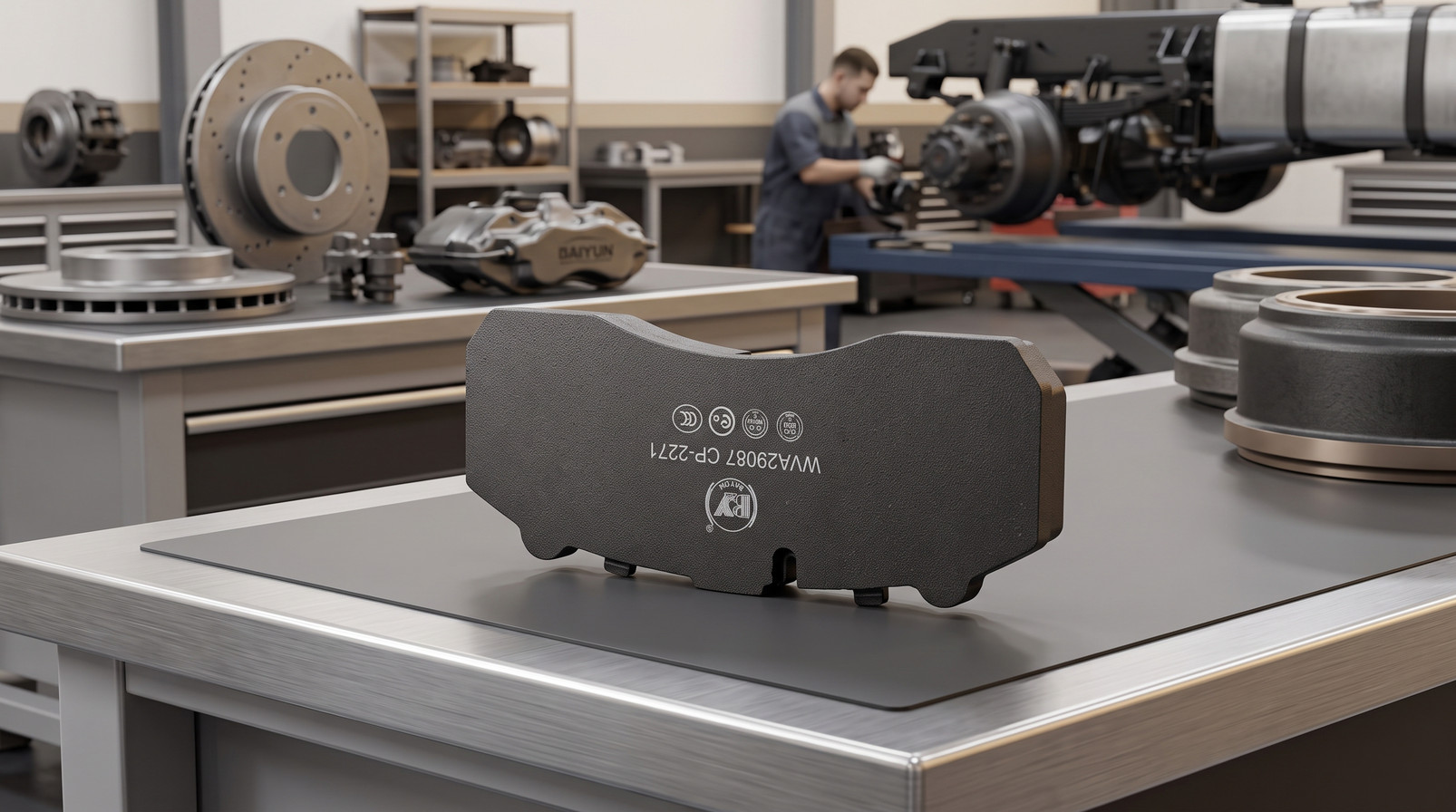
Quick answer: A $2500 brake pad/rotor quote from a Reddit thread is a retail consumer number, not a commercial fleet price. If you manage trucks, buses, trailers, or distribute aftermarket brake parts, your real cost drivers are friction material certification, WVA fitment, batch consistency, and supplier production stability. The question isn't 'why so expensive?' but 'which certified manufacturer can supply this axle requirement at repeatable quality and landed cost?'
Why Does a $2500 Brake Pad/Rotor Quote Look Different for Commercial Fleets?
When a commercial vehicle operator posts a $2,500 quote for pads and rotors, the first thing fleet managers should do is separate retail labor markup from actual parts cost. A shop invoice for a light commercial truck often bundles 40–55% labor, disposal fees, and premium-brand markup. For a fleet running 50 trucks, that math doesn't scale. You don't pay $2,500 per axle; you negotiate a per-axle contract based on duty cycle, route terrain, and annual mileage.
Commercial brake maintenance usually takes up 15–20% of a fleet's total maintenance budget. If you're importing or distributing brake pads, your buyers care less about one Reddit quote and more about landed cost per axle over 24 months. That's where brake maintenance cost analysis becomes practical. The real questions: What's the friction material's wear rate per 10,000 km? Does the supplier hold batch-to-batch coefficient stable? Can they supply the same WVA reference for mixed truck and trailer axles?
So what does that mean for your bottom line? If a distributor buys 1,000 pad sets for a city bus fleet, a $3 difference in landing cost equals $3,000. But a 5% increase in premature rotor wear from an unproven friction formula can cost $18,000 in parts and downtime. That's why commercial buyers treat a brake pad invoice as a reliability decision, not a one-time purchase.
Frankly, a $2,500 retail quote can hide cheap rotors. Commercial buyers should worry about heat checking, judder, and pad-to-disc compatibility, not just the invoice.
What Certifications Should a Commercial Brake Pad Supplier Hold?
ECE R90 is the baseline for brake pads sold in many export markets. It requires frictional performance within ±15% of the original equipment reference pad in cold performance and speed sensitivity tests. For aftermarket commercial brake parts, that certification isn't a marketing badge; it's a legal requirement in over 40 countries. IATF 16949 adds another layer: production control, traceability, and defect prevention. IATF 16949 certified facility audits cover everything from incoming steel backing plate inspection to finished pad geometry.
Ask your supplier for GB 5763 or SAE J2522 dynamometer test reports. The numbers matter. A heavy truck pad should show a stable mu level across 100°C to 350°C, not a spike that fades after repeated stops. BAIYUN Brake, with 49+ years of friction material manufacturing, documents this data rather than relying on a catalog photo. That's the difference between a buying decision and a warranty claim.
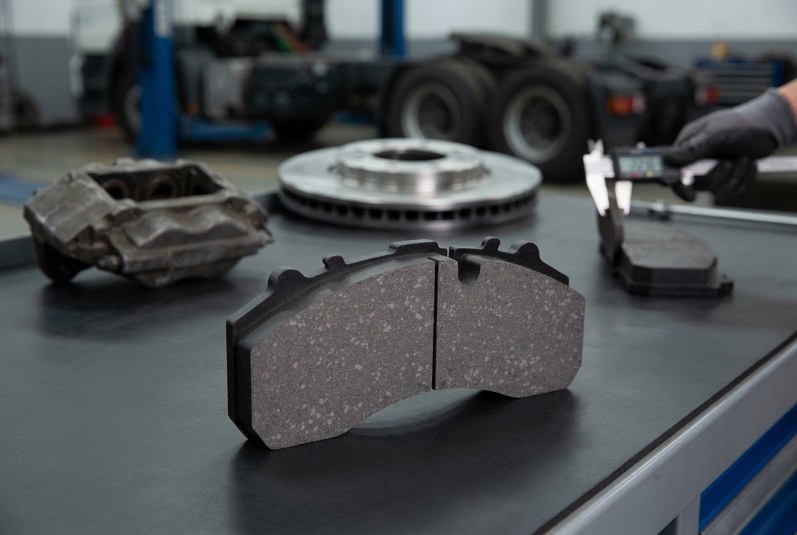
Don't confuse SAE J866 edge codes with heavy-duty performance. The two-letter edge code gives a rough cold/hot friction classification, but it doesn't prove the pad survived 400°C thermal cycling or maintained 80% effectiveness after fade recovery. Demand the actual dynamometer chart for your axle weight.
I've seen distributors accept supplier declarations without test data, then struggle with noise complaints from fleet customers. Don't do that. Verify the certification number against the product batch.
How Should Fleet Buyers and Distributors Qualify a Commercial Brake Pad Manufacturer?
Qualification starts with fitment. Every commercial brake pad has a WVA reference number that defines dimensions, friction material grade, and backing plate interface. If a supplier can't provide WVA references or says 'it fits', walk away. You need the WVA number to cross-check axle manufacturer specs for Meritor, BPW, SAF, Volvo, Scania, Mercedes-Benz, or whatever equipment your fleet runs. If the specific number isn't in the supplier catalogue, Confirm with supplier catalogue.
Then look at production control. A distributor sourcing 500 sets monthly can't afford inconsistent friction coefficients batch to batch. Request three consecutive production batch test reports. Check for heat fade, recovery, and wear rate. Ask whether the plant runs automatic mixing or manual blending. Manual blending creates variation; automatic systems keep coefficient scatter under 0.02. BAIYUN Brake has invested in automatic batch mixing for exactly this reason.
For commercial vehicles, the pad must also match the caliper's retraction behavior and the rotor's metallurgy. A pad that's too aggressive can crack heavy-duty rotors. Too soft, and you're replacing linings every 20,000 km. Browse our heavy-duty brake pad range to see how material grades map to axle loads.
What Are the Real MOQ, Lead Time, and Logistics Considerations?
MOQs for commercial vehicle brake pads usually run from 200 to 2,000 sets depending on the WVA reference and whether the backing plate requires painting, shims, or mechanical wear indicators. If you're private labeling, expect MOQs on the higher end because the production line resets for your brand. Lead time after sample approval typically runs 30–45 days for container orders, but only if the manufacturer holds the steel backing plate tooling. If new tooling is cut, add 20–30 days.
Logistics matter too. Truck brake pads are heavy. Sea freight costs often exceed the product cost for low-volume air shipments. A competitive supplier quotes FOB port, palletizes to protect friction edges, and documents export packaging. Ask for a per-container pack list and cubic meter calculation. Wholesale CV brake lining inquiry should include those details early.
For importers, landed cost includes freight, import duty, insurance, and customs brokerage. A pad quoted at $12 FOB might land at $17–$19 after ocean freight and duty. That's why export packing density matters. More sets per pallet lowers freight cost per unit, which matters when you're quoting a 12-month supply contract.
Don't forget after-sales. A proper commercial brake pad supplier offers a defined warranty period and accepts batch traceability. If a pad delaminates, you should be able to trace it to a specific production date, mix batch, and pressing cycle.
What OEM and Private Label Options Exist for Commercial Brake Pads?
Not every supplier can do OEM or private label. OEM requires PPAP documentation, process flow diagrams, control plans, and dimensional layout reports. Private label requires printing your brand on the backing plate or packaging, but the underlying friction formulation stays with the manufacturer. Some distributors start with private label packaging, then move to OEM once annual volume exceeds 20,000 sets.
Here's a practical comparison for commercial sourcing:
| Sourcing Factor | Retail Quote Context | Commercial Fleet/Wholesale Context |
|---|---|---|
| Typical brake job quoted | $2,500 for pads & rotors on one truck | Fleet contracts often price per axle with volume discounts |
| Labor share | Often 40–55% of invoice | In-house maintenance teams or contracted service reduce labor cost per unit |
| Friction material | OE or premium aftermarket | Must match axle load, route profile, and duty cycle |
| Certification requirements | Usually not discussed at retail | ECE R90, IATF 16949, GB 5763, SAE J2522 test data needed |
| WVA / cross reference | Rarely checked | Essential for correct fitment across truck and trailer axles |
BAIYUN Brake supports both routes. We've supplied commercial vehicle brake pads to export markets on an OEM and private label basis, with ECE R90 approval documents available for each production batch. That matters when your end customer asks for proof, not promises.
Buyer Verification Checklist for Commercial Brake Pad Sourcing
Use this before you approve any commercial brake pad supplier:
- Request ECE R90 approval certificates and latest test reports.
- Confirm WVA reference and OE cross-reference numbers match your fleet application.
- Ask for friction coefficient test data under hot and cold conditions (SAE J2522 / GB 5763).
- Verify IATF 16949 or ISO 9001 production audit reports.
- Check minimum order quantity, lead time, packaging, and private label options.
- Request samples for dynamometer or vehicle testing before bulk order.
- Confirm logistics terms (FOB/CIF, port, packaging, palletization) and after-sales warranty.
What Are the Most Common Misconceptions About Commercial Brake Pad Replacement Costs?
Misconception: A high retail quote means commercial brake pads cost just as much. Reality: Wholesale commercial pad sets often cost 50–70% less per axle when purchased in volume, excluding labor.
Misconception: Any ECE R90 pad is automatically suitable for heavy fleets. Reality: ECE R90 confirms safety baseline, not optimal wear rate, noise behavior, or rotor compatibility under 40-tonne loads.
Misconception: Private label means lower quality. Reality: Private label from an IATF 16949 plant uses the same production line and friction formulations; only the box and backing plate marking change.
Frequently Asked Questions
Q: Why does a Reddit user get quoted $2,500 for brake pads and rotors?
A: Retail quotes bundle 40–55% labor, shop overhead, and single-unit part markup. For commercial fleets, bulk purchases and in-house service reduce that cost per axle sharply.
Q: How do I know a commercial brake pad fits my truck or trailer axle?
A: Match the WVA reference number and axle manufacturer specifications. Do not rely on visual similarity alone. If the number is not in the supplier catalogue, Confirm with supplier catalogue.
Q: What certifications should I require for imported commercial brake pads?
A: Require ECE R90 approval and IATF 16949 or ISO 9001 facility certification. Ask for GB 5763 or SAE J2522 dynamometer test data showing friction stability across the pad's temperature range.
Q: What's a reasonable MOQ for aftermarket truck brake pads?
A: MOQs typically range from 200 to 2,000 sets depending on WVA reference and private labeling. New backing plate tooling can add 20–30 days to lead time.
Q: Can BAIYUN Brake supply OEM or private label commercial brake pads?
A: Yes. BAIYUN Brake offers OEM and private label options with ECE R90 approval documents and batch traceability for export distributors and fleet buyers.
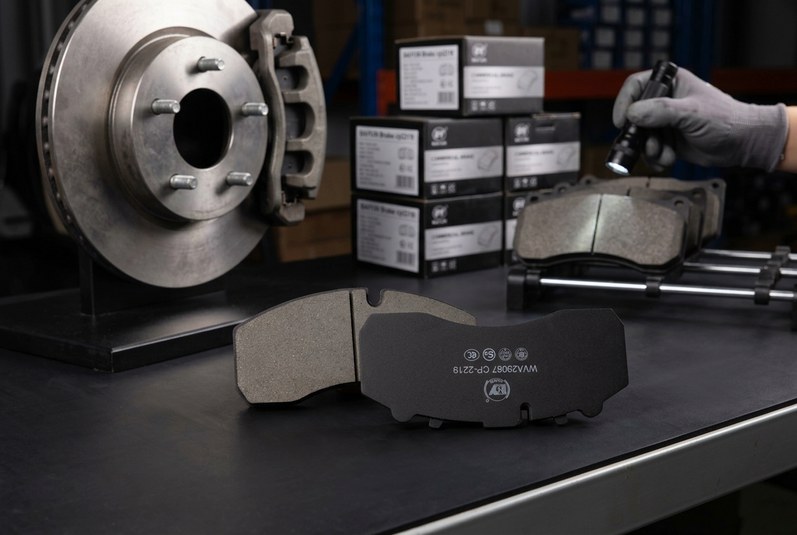
If you're tired of retail pricing surprises, start with a supplier audit, not a single quote. Request OEM commercial vehicle brake pad quote or request a wholesale quote from our export team. You can also download our product catalogue to review WVA references and technical data.
Was this article helpful?
Average Rating: 5/5 (171)