
Quoted $1,270 for replacement of rear brakes (pads, rotors, and calipers). – Reddit: Practical B2B Guide
Summary:
Quoted $1,270 for replacement of rear brakes (pads, rotors, and calipers). - Reddit often circulates as a consumer repair question, but for fleet buyers and commercial vehicle importers, the same baseline quote becomes a sourcing exercise. This B2B guide breaks down why a $1,270 rear brake package for a Class 6–8 truck, bus, or trailer is almost never full OEM-grade, what line items to audit, and how to compare aftermarket brake pads, rotors, and calipers. We cover ECE R90 and IATF 16949 requirements, WVA reference checks, MOQ and lead-time expectations, logistics, and private label options. BAIYUN Brake supplies certified commercial vehicle brake pads and brake linings to distributors, maintenance teams, and importers worldwide. Use the cost-per-axle table, buyer verification checklist, and FAQ to qualify suppliers and avoid hidden downgrades in your next brake service quote. Contact our export team for wholesale pricing.
Quoted $1,270 for replacement of rear brakes (pads, rotors, and calipers). - Reddit: Practical B2B Guide
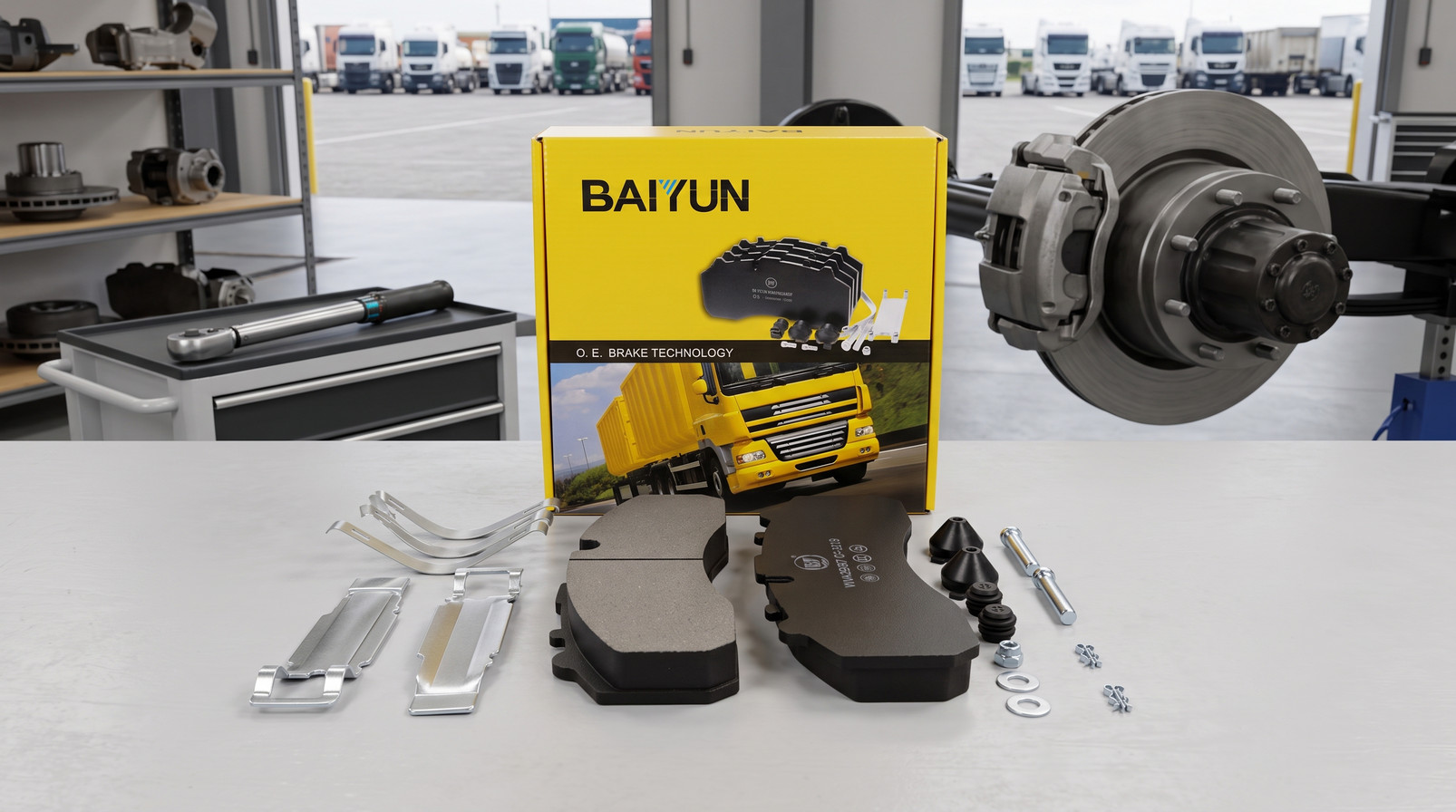
Quick answer: For heavy trucks, buses, and trailers, a $1,270 quote for rear brake pads, rotors, and calipers is rarely a full OEM-grade service. It's more likely a mix of remanufactured calipers, entry-level friction material, or axle-specific line items left out. Fleet buyers and distributors should strip the quote down to friction material, disc/rotor, caliper, labour, and brake fluid/ancillaries. Demand ECE R90 certification, IATF 16949 traceability, and a WVA reference before comparing. BAIYUN Brake supplies certified commercial vehicle brake pads and linings to importers and maintenance teams, so the conversation should start with material spec and cost per axle, not the headline number.
Where Does a $1,270 Rear Brake Quote Actually Break Down for Fleet Maintenance?
A $1,270 quote on a fleet RFP usually triggers three questions from the maintenance director: Why so cheap? Which components are included? And what will the downtime cost if a caliper fails in service? Those questions matter more in heavy commercial operation than in generic repair threads because a rear axle on a Class 6–8 truck, bus, or trailer operates under sustained thermal load, and component quality directly affects fleet safety scores.
Start with the line items. For an air disc brake rear axle on a heavy truck, a complete service using new components typically looks like this: one set of friction pads per axle, one ventilated disc rotor per side, one left and one right caliper, plus seals, fluid, and labour. At North American commercial fleet workshop rates of $95 to $145 per hour, a rear axle brake replacement can need 4 to 6 hours. That labour alone runs $380 to $870 before a single part goes on the truck.
Parts don't get cheaper when you move to buses or line-haul trailers. A good aftermarket set of air disc brake pads for a Class 8 rear axle lands between $130 and $280 per axle, depending on friction formulation and WVA reference. Cast rotors are often $320 to $750 each. Remanufactured calipers commonly sit at $180 to $420 per unit. Add ancillaries and brake fluid, and an honest quote usually passes $1,800. So a $1,270 total means somebody downgraded a component, used reman parts, or left labour stranded as a separate charge. For importers comparing OEM-level commercial vehicle brake pads, the price gap almost always lives in the friction material and caliper service kit, not the rotor.
How Should a Distributor or Fleet Maintenance Team Verify the Quote Before Signing?
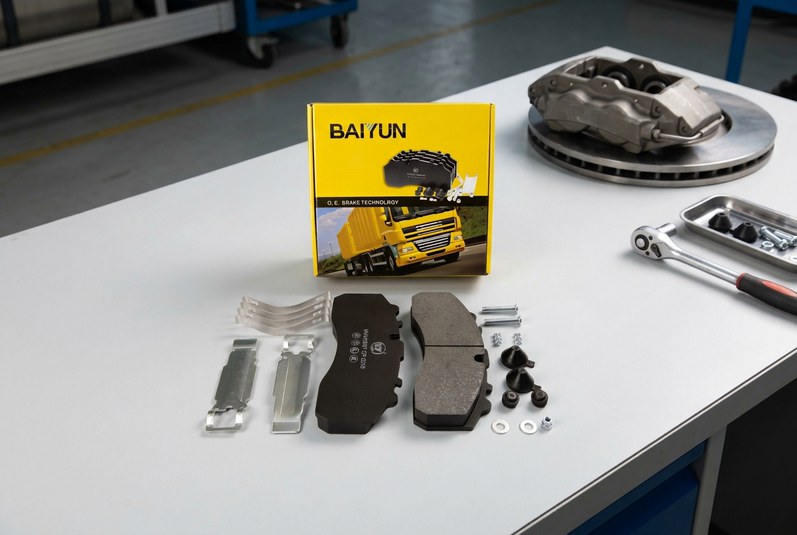
Start with friction material, not the total. A certified IATF 16949 certified facility will provide batch-level test data showing friction coefficient stability across the operating temperature range. If a supplier can't produce that, the low quote stops being a deal and becomes a liability.
Ask for the WVA reference on every pad or lining. The WVA number ties the part to a specific brake model and friction family. Without it, you can't compare two quotes cleanly. You might be pricing a standard steel backing pad against a premium ceramic-metallic friction formula. That's not the same job, even when the garage writes the same labour code.
Second, check the caliper description. In commercial vehicle service, remanufactured calipers are common, but they need to come from a controlled process. Look for a documented pressure test, new hardware, and a warranty. If the quote says new calipers but the total is $1,270 for pads, rotors, and both calipers, your supplier is either losing money or shipping grey-market parts. On a heavy trailer axle, that risk shows up as uneven pad wear, overheating, or a seized caliper within 30,000 km.
Third, compare the quote per axle, not per vehicle. Fleet buyers typically budget $0.02 to $0.04 per kilometre for brake wear on line-haul operations. A poorly specified rear brake set can push that to $0.06 or more because of shorter pad life and rotor scoring. That's the difference the $1,270 headline hides.
What Certifications Should Sourcing Teams Demand for Commercial Vehicle Brake Pads?
ECE R90 is the starting point for friction material sold into UN-ECE regulated markets. It requires a pad to deliver braking performance within a defined tolerance band compared with the original equipment reference pad. In practice, that means cold and hot friction must stay consistent, and the pad must not fade dramatically after repeated high-energy stops. For BAIYUN Brake pads, ECE R90 testing is part of the standard export file, not an extra.
IATF 16949 goes further. It covers the whole manufacturing process: raw material traceability, production audits, control plans, PPAP documentation, and continuous improvement. For a distributor ordering 500 to 2,000 axle sets per month, that's the difference between spot-checking incoming goods and trusting the supplier's process. Ask for the ISO 9001 certificate too, but don't treat it as a substitute for IATF 16949. One is a general quality system; the other is automotive supply-chain specific.
SAE J2522 and GB 5763 also appear in commercial vehicle friction specifications. SAE J2522 describes a standard dynamometer test sequence using a defined vehicle inertia and pressure schedule. GB 5763 is the Chinese national standard for brake linings and covers shear strength, friction coefficient, and wear. If you're sourcing from a manufacturer in China, request the test report for the exact WVA reference you're quoting. BAIYUN Brake ships with material data sheets and third-party test reports for core CV references, and we'll confirm the WVA reference before you order.
What Should You Expect on MOQ, Lead Time, Logistics, and Private Label Options?
Many brake pad plants won't talk to you below 1,000 axle sets per month for a custom friction formula. That's realistic if you need a unique private label box and a bespoke pad shape. For existing WVA references, BAIYUN Brake has export experience starting around 300 to 500 axle sets, depending on the friction family and backing plate tooling. Lead time splits into two parts: 15 to 20 days for bulk aftermarket packaging, and 25 to 35 days for OEM private label boxes with your artwork and bilingual technical inserts.
Logistics matter just as much as unit price. One 40-foot container can hold roughly 23 to 26 pallets of commercial vehicle brake pads, but the exact count depends on the WVA reference and packaging. Sea freight from major Chinese ports to Rotterdam, Jebel Ali, or Los Angeles typically runs 22 to 38 days in 2026, and you'll want a supplier who loads by axle set, not by loose pad, to reduce damage claims. For brake linings, the same logic applies. Wholesale CV brake lining inquiry should include the rivet type, camshaft orientation, and WVA reference so the quote matches the axle builder's drawing.
Private label customers get the same friction formulations as branded stock, but the box changes. You'll need to approve the artwork, product code format, and language for your target market. BAIYUN Brake keeps a library of download our product catalogue with 49+ years of manufacturing references. Confirm pricing after the artwork is locked, because multi-language printing can shift the per-unit cost by 2 to 5 percent.
Cost Benchmarks: What Does a Real Commercial Rear Brake Service Look Like?
Before you sign off on $1,270, compare it against typical component and labour bands for commercial vehicles. The table below reflects North American and European fleet data for heavy trucks, buses, and trailers in September 2026. These reflect heavy-duty commercial vehicles only—air disc or S-cam drum brakes.
| Rear Axle Component | Air Disc Brake Range (per Axle) | Drum Brake Range (per Axle) |
|---|---|---|
| Friction material set | $130–$280 | $90–$210 |
| Rotor or drum | $640–$1,500 (two rotors) | $380–$800 (two drums) |
| Calipers or wheel cylinders | $360–$840 (reman pair) | $100–$260 (wheel cylinder pair) |
| Ancillaries and fluid | $60–$120 | $50–$110 |
| Labour at $95–$145/hr | $380–$870 (4–6 hrs) | $285–$725 (3–5 hrs) |
| Typical total | $1,570–$3,610 | $905–$2,105 |
So the quote of $1,270 sits near the bottom of the drum brake band and below the air disc band. If your fleet runs air disc brakes—most new European and North American line-haul trucks do—$1,270 almost certainly means remanufactured calipers and an entry-level friction set. That's fine for an owner-operator with a short trade cycle, but not for a distributor promising 80,000 km pad life.
Buyer Verification Checklist for the $1,270 Quote
- Request the WVA reference for every pad or lining. If it's missing, confirm with supplier catalogue.
- Ask if calipers are new, OEM reman, or independent reman. Demand a pressure test certificate.
- Verify ECE R90 approval on the friction material for UN ECE markets.
- Check IATF 16949 and ISO 9001 certificates are current and include the producing factory.
- Compare friction coefficient curves, not just price per axle set.
- Confirm rotor thickness, minimum wear limit, and whether the quote includes new hardware.
- Get labour hours stated separately. A low parts price can hide inflated labour.
- Ask for batch traceability: heat lot, friction mix date, and production line.
Five Questions Wholesale Buyers Ask About This Quote
Q: Is $1,270 realistic for a Class 8 truck rear brake job?
A: Usually no. A complete air disc brake service on a Class 8 rear axle with new rotors, pads, and reman calipers typically runs $1,800–$2,600 in North America in 2026. $1,270 suggests either reman parts, low-grade friction, or missing line items.
Q: How do I compare two suppliers quoting the same WVA reference?
A: Ask for the SAE J2522 or ECE R90 dynamometer report for that exact WVA reference. Compare cold friction, hot fade at 400°C, and wear in cubic millimetres per stop. A 10–18 percent cheaper part can lose 30 percent more friction material over the same duty cycle.
Q: Does private label packaging change the brake pad formulation?
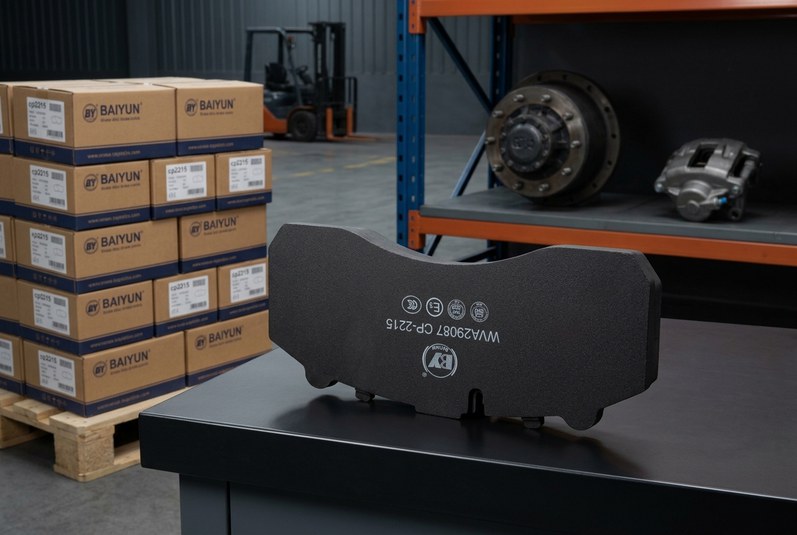
A: No. Private label changes the box, not the friction chemistry. At BAIYUN Brake, the cp2218 and cp2219 commercial vehicle series use the same formulations for branded and OEM boxed product. The MOQ and artwork approval drive the unit price.
Q: What is a reasonable MOQ for aftermarket commercial vehicle brake pads from China?
A: For an existing WVA reference, expect 300 to 500 axle sets for a standard aftermarket order and 500 to 1,000 for custom private label packaging. Lead time runs 15 to 35 days after artwork approval, plus 22 to 38 days sea freight.
Q: Why should I care about ECE R90 if my market doesn't require it?
A: Because ECE R90 provides an independent performance tolerance against the OE reference. It reduces the chance of field complaints from fleets in the Middle East, Africa, and South America, where ambient temperatures push pad fade harder. Importers who skip it often face warranty claims 12 to 18 months after delivery.
Seeing Past the Headline Number
The $1,270 quote isn't a shopping list—it's a contract in shorthand. For a commercial vehicle importer, distributor, or fleet maintenance team, the only useful comparison is cost per axle over 100,000 km, not the invoice total. That means friction material spec, WVA reference, caliper quality, and certification all outrank a $200 price difference.
BAIYUN Brake has spent 49+ years supplying commercial vehicle brake pads and linings to export markets, and our team can help you benchmark any quote against certified product. If you're reviewing a $1,270 rear brake package and need a like-for-like parts comparison, request OEM commercial vehicle brake pad quote. For a full commercial vehicle friction program, request a wholesale quote with your WVA reference, volume, and target market.
Was this article helpful?
Average Rating: 5/5 (166)