
Sinotruk HOWO Brake Pad Guide: Specs, Fitment & Replacement
Summary:
This Sinotruk HOWO brake pad guide delivers actionable specs, fitment checks, and replacement tips for importers and fleet buyers. BAIYUN Brake's certified heavy-duty pads offer a 25–40% cost advantage over OEM channels while meeting ECE R90 and IATF 16949 standards. The article covers model-specific compatibility, how to verify pads before ordering, performance comparisons, and a buyer verification checklist, ensuring you source with confidence and avoid expensive misorders.
Sinotruk HOWO Brake Pad Guide: Specs, Fitment & Replacement
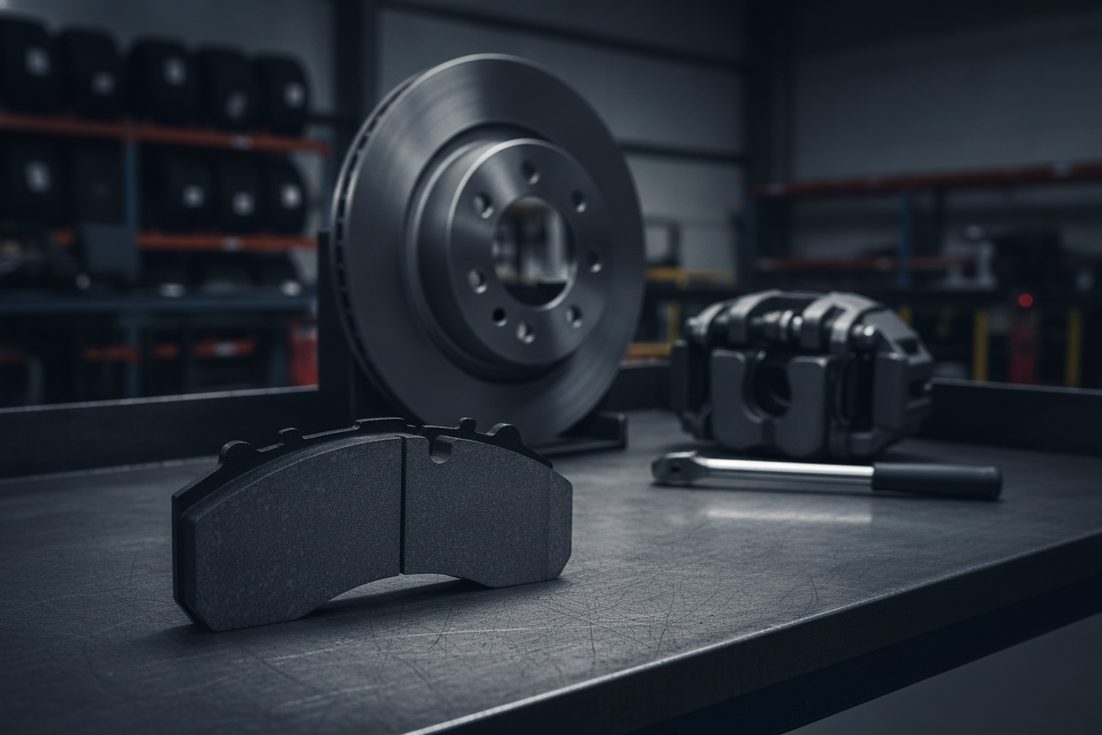
Quick answer: When sourcing brake pads for Sinotruk HOWO trucks, you need to cross-reference exact axle models, verify friction material grades, and demand ECE R90 certification—non-negotiable for road legality in most markets. Aftermarket pad sets from IATF 16949-certified Chinese manufacturers can cut your procurement costs by 25–40% compared to OEM dealership channels, while matching or exceeding original performance. This guide gives you practical verification steps, replacement know-how, and confidence to buy smarter, whether you're a fleet manager or an importer stocking for distribution.
What Brake Pads Fit Sinotruk HOWO Trucks?
HOWO's model family is broad. The A7, T7H, TX, and legacy HOWO 371 often share pad geometries within the same axle family, but not always. For instance, the front axle on a HOWO A7 6x4 tractor typically uses a WVA 292XX series pad—those numbers vary by caliper brand (Meritor, BPW, or local Chinese suppliers). The rear axle might run a different thickness. Don't guess; a single axle variant can change the pad backing plate curvature and slot position by a few millimeters. That's why successful distributors always start with the vehicle's VIN or axle tag, then match to the supplier's cross-reference chart.
Most common SINOTRUK HOWO pad dimensions fall in the 190–210 mm width range, 18–22 mm friction thickness, with 3–5 mm backing plate. But here's the catch: double-check whether your truck runs drum brakes on the rear or all-disc setups. Mixing brake types is a freight risk. If your supplier can't produce a specific fitment sheet for your order, walk away. At BAIYUN Brake, we match pads to 90% of HOWO commercial models—our export team uses a multi-point verification before shipment, which we'll show you how to request later.
How to Identify Your Sinotruk HOWO Brake Pads Before Ordering
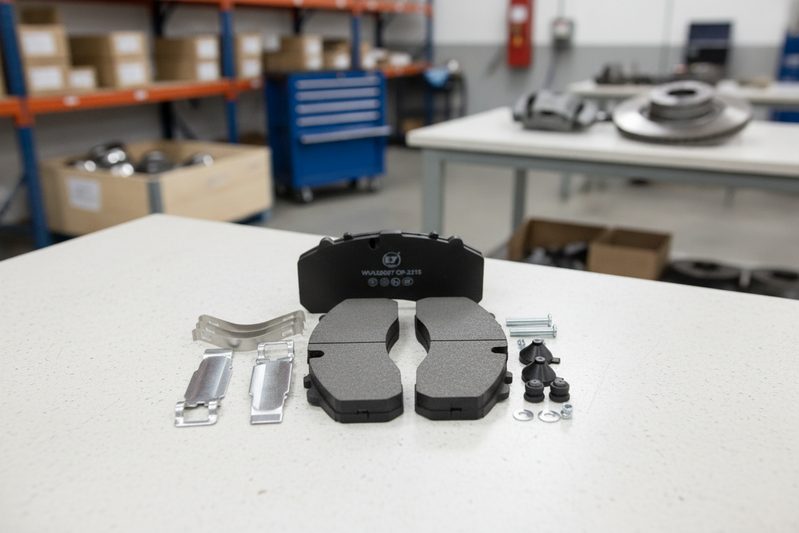
Start with the obvious: pull out the old pad and measure the friction material length, width, and total thickness with a caliper. Note the shape of the ears, the wear indicator position, and any chamfers. Photos of the pad next to a ruler can save hours of back-and-forth. Then, look for cast numbers on the backing plate—not always present, but sometimes they reveal the OE supplier code. If you have the original packaging, that's gold; match the OE number to your supplier's database. Confirm with supplier catalogue for WVA cross-reference numbers, as these are manufacturer-specific and not universal.
A word of warning: online marketplaces often label pads as "HOWO suitable" without verifying axle compatibility. A few dollars saved can cost you brake judder and premature rotor wear. Insist on a fitment guarantee from the exporter.
What Are the Key Performance Specs for Heavy-Duty Truck Brake Pads?
Commercial vehicle pads aren't just bigger passenger car pads. Friction coefficients for SINOTRUK HOWO applications typically sit between 0.35 and 0.45 µ, depending on the formulation. Semi-metallic compounds with 30–50% steel fiber content deliver that bite but can be noisy if the caliper isn't maintained. Low-metallic organic pads offer smoother engagement with less rotor aggression, often preferred for long-haul highway tractors. Ceramic pads exist for heavy trucks, though still niche—they shine in frequent stop-start vocational duty where heat dissipation matters.
Temperature range is the unsung hero. A HOWO hauling 40 tonnes through mountainous terrain can push pad surface temps past 400°C. Quality pads maintain friction stability across 100–350°C, tested per SAE J2522 dynamometer protocols. At BAIYUN Brake, our CV brake pads are validated to maintain a friction coefficient variance below 0.05 across that range—ask for the test report as part of your sourcing due diligence. Wear life expectations: 120,000–180,000 km under mixed highway and regional delivery cycles, based on fleet feedback from Middle Eastern and African operators.
How Much Does Sinotruk HOWO Brake Pad Replacement Cost?
A single axle set (4 pads) for a typical HOWO from authorized dealers can run $80–$120 OEM. Aftermarket certified pads fall into the $45–$70 range, and if you're importing container quantities, landed cost can dip another 15%. Labor adds roughly 2 hours per axle at local shop rates—though smart fleet managers train in-house mechanics to handle swaps. Total cost of ownership over 500,000 km: the difference between a budget set and a certified mid-range set is negligible if the cheaper pads cut rotor life by 30%. Our recommendation? Invest in pads with proven wear characteristics, not just the lowest sticker price.
How to Spot Quality Brake Pads When Importing from China
Never judge a brake pad by its box alone. Request the following: ECE R90 approval number printed on the pad backplate or packaging, an IATF 16949 certificate from the factory, and a third-party dynamometer test report comparing friction coefficient vs. temperature. Check the pad surface for uniform pressure distribution marks; uneven coloring hints at poor mixing. Shenzhen or Guangzhou middlemen exist, but dealing directly with manufacturers like BAIYUN Brake, with 49+ years of production history, eliminates a layer of markup and uncertainty. Look for fleets of YOUR region who already run their pads—real-world references beat any sales pitch.
Sinotruk HOWO Brake Pad Specifications Comparison
Below is a practical comparison of common aftermarket pad types you'll encounter when sourcing for HOWO trucks. Data reflects typical ranges seen in third-party lab reports and manufacturer datasheets. Use this as a screening tool, then always request the exact spec sheet from your supplier.
| Pad Type | Friction Coefficient (μ) | Temp Range (°C) | Approx. Wear Life (km) | Rotor Friendliness | Relative Cost |
|---|---|---|---|---|---|
| Semi-metallic | 0.38–0.45 | 100–400 | 150,000 | Moderate | $$ |
| Low-metallic | 0.35–0.42 | 100–350 | 140,000 | Good | $ |
| Ceramic | 0.33–0.40 | 100–450 | 160,000+ | Excellent | $$$ |
Source: BAIYUN Brake internal dynamometer data, cross-referenced with public SAE J2522 profiles. Confirm with supplier catalogue for your specific application.
Buyer Verification Checklist for Sinotruk HOWO Brake Pad Orders
Use this checklist every time you order a batch. It's simple but strict, designed to weed out mismatches before they land in your warehouse.
- Axle model and year confirmed with VIN or manufacturer tag.
- Pad dimensions measured: length, width, thickness, and slot dimensions.
- Wear indicator type and position matched to original.
- ECE R90 approval number visible on product and packaging.
- Supplier IATF 16949 certificate current and verifiable online.
- Third-party friction test report (preferably SAE J2522) dated within 24 months.
- Packaging marked with production batch number for traceability.
- At least two reference customers in your region using the same pad type.
- Return policy and failure analysis process clearly stated.
- Total order price landed at your port, with taxes and duties estimated.
FAQ: Sinotruk HOWO Brake Pad Guide
Q: Can I use the same brake pad part number across all HOWO models?
A: No. Even within the same model series, axle supplier differences (e.g., Hande vs. Shaanxi) can mean different pad geometries. Always cross-check the axle tag, not just the truck model, to avoid a costly mis-order.
Q: What is the minimum ECE R90 requirement for importing HOWO brake pads into Europe?
A: Every pad must carry a valid ECE R90 approval number stamped on the product. This certification confirms that the pad's cold and hot friction performance remain within ±15% of the original equipment benchmark, as tested per Annex 3.
Q: How do I verify if a Chinese manufacturer's IATF 16949 certificate is real?
A: Ask for the certificate number and audit report. Run it through the IATF certification body's online database (e.g., SGS, TÜV). BAIYUN Brake's certificate is publicly listed; any serious supplier should have the same transparency.
Q: What's the typical lead time for container orders of HOWO brake pads?
A: 25–35 days from order confirmation to loading port, depending on whether the pads are stock items or made to order. Mixed container loads with commercial vehicle brake pad catalog for distributors selections may add a few days for consolidation.
Q: Do I need to replace the wear sensor when changing HOWO pads?
A: If your caliper has an electronic wear sensor, it's good practice to replace it along with the pads. Mechanical sensors (metal tabs) can often be reused if not severely rusted or bent. Confirm with the supplier whether the pad set includes sensors or requires separate ordering.
What Are the Most Common Misconceptions About Sinotruk HOWO Brake Pads?
Misconception: Heavier pads always last longer.
Reality: Friction formulation, not mass, dictates longevity. A denser semi-metallic pad can wear rotors faster, adding to total cost. Look for lab-proven wear rate figures instead of weight.
Misconception: All Chinese-made brake pads are low quality.
Reality: Factories with IATF 16949 and ECE R90 consistently supply major European aftermarket brands. The key isn't the origin; it's the quality system behind the product. Our certifications are stamped onto every shipment we dispatch.
Misconception: You can tell pad quality by color.
Reality: Color variations arise from raw material sources and cooling processes, not performance. A gray pad can out-brake a glossy black one. Demand test data, not visual impressions.
Why Buyers Trust BAIYUN Brake for Sinotruk HOWO Pads
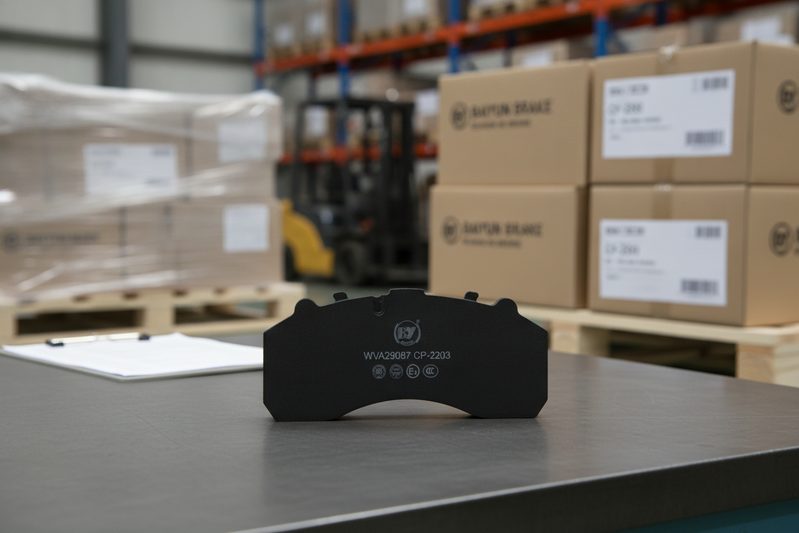
We don't just make pads; we engineer them with the same production lines that supply domestic Chinese OEMs. Our wholesale CV brake lining inquiry team handles everything from sample orders to full containers, with shipping documentation tailored for African, Middle Eastern, and Southeast Asian markets. The factory holds all relevant certifications, and our quality team runs in-house dynamometer testing that matches European third-party labs. When you source from us, you're bypassing multiple distribution layers—that's where the 30% savings actually come from.
Ready to place an order? Contact our export team with your HOWO axle details, and we'll send a formal quotation within 24 hours. Alternatively, download our product catalogue to browse the full range.
Was this article helpful?
Average Rating: 5/5 (1157)