
Kamaz Brake Pad Guide: Specs, Fitment & Replacement
Summary:
Kamaz brake pad guide for international importers and fleet buyers. Learn how to verify Kamaz brake pad specifications, cross-reference fitment, and source cost-effective replacements from certified manufacturers. Practical verification checklist, FAQ, and sourcing tips to save up to 35% on heavy-duty brake pads without compromising ECE R90 quality.
Kamaz Brake Pad Guide: Specs, Fitment & Replacement
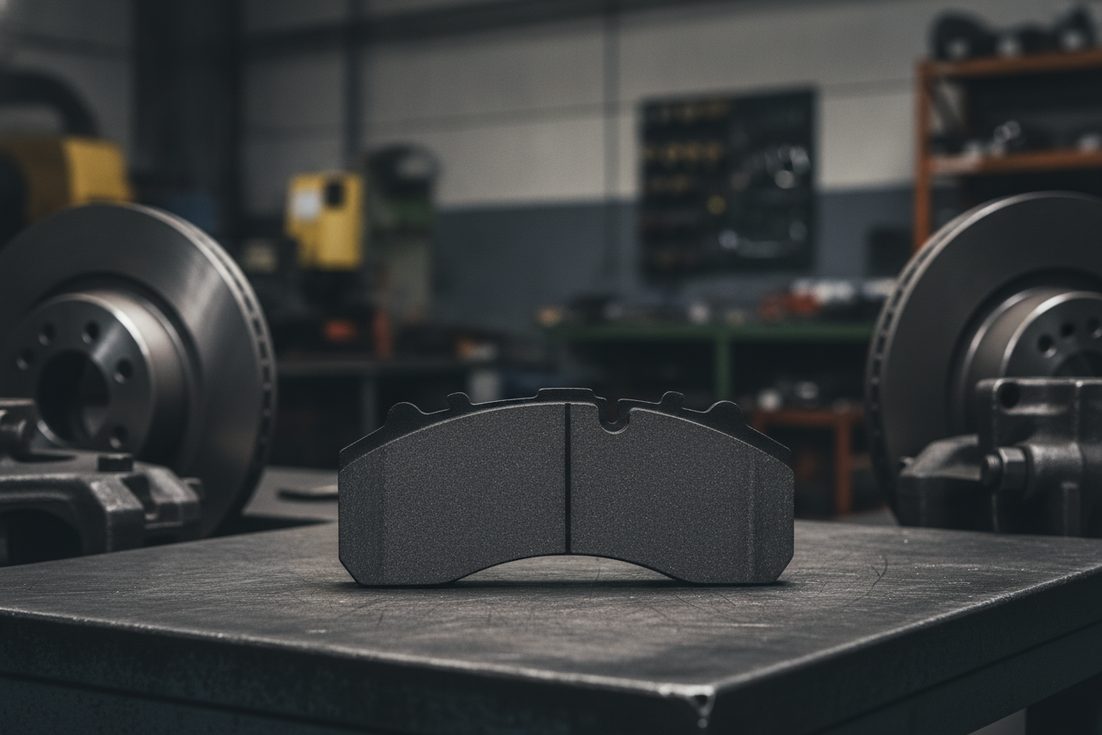
Quick answer: Selecting and replacing Kamaz brake pads for heavy-duty trucks isn't about picking a part number from a shelf. You need to cross-reference the correct OE specifications, confirm copper-free semi-met or ceramic formulations for your duty cycle, and verify that the pad meets ECE R90 and IATF 16949 standards. For importers and fleet buyers, the biggest sourcing win comes from working with a manufacturer that offers dimensional verification reports, dynamic test data, and flexible batch sizes without the OEM markup. This guide breaks down everything a Kamaz parts distributor should check before placing an order.
What Makes a Kamaz Brake Pad Specification Sheet Reliable?
Sourcing managers in the CIS, Middle East, and Africa often get handed a one-page PDF with a few friction codes and a “Kamaz” stamp on it. Frankly, that's not enough. A proper datasheet for Kamaz commercial vehicle pads should list the friction material type (for example, semi-metallic with 12–18% steel fiber content), cold and hot friction coefficients (µ 0.35–0.45 from SAE J2522 or GB5763 testing), specific pad weight, backing plate thickness, and noise-damping shim configuration.
Without these numbers, you can't verify that the pads will hold up on a Kamaz 65115 dumper hauling 40-ton loads across unpaved quarry roads. BAIYUN Brake, with 49+ years of manufacturing experience, provides technical data packs for every production batch, including dynamometer graphs and wear-life projections. That level of detail turns a simple pad purchase into a strategic sourcing decision.
Which Friction Formulations Work Best for Kamaz Duty Cycles?
Logistics fleets running Kamaz 5490 tractor units on highway routes need a pad that balances cold initial bite with low rotor wear over 200,000 km. A copper-free ceramic-enhanced formulation often fits. Construction trucks (Kamaz 43118, 6520) face steep grades and mud. They demand high-temperature stability up to 500°C and good shear strength. Here, a semi-metallic compound with a friction coefficient above 0.40 at 400°C is safer.
One practical verification step? Ask your supplier for the fade test results according to GB5763 or ECE R90 Annex 3. The hot stop brake force shouldn't drop below 60% of the cold value. If the supplier can't produce that test sheet, you're buying unknowns. BAIYUN Brake's IATF 16949 certified facility tests every formulation family for thermal recovery, providing peace of mind.
How Do You Verify Kamaz Brake Pad Fitment Before Ordering a Container?
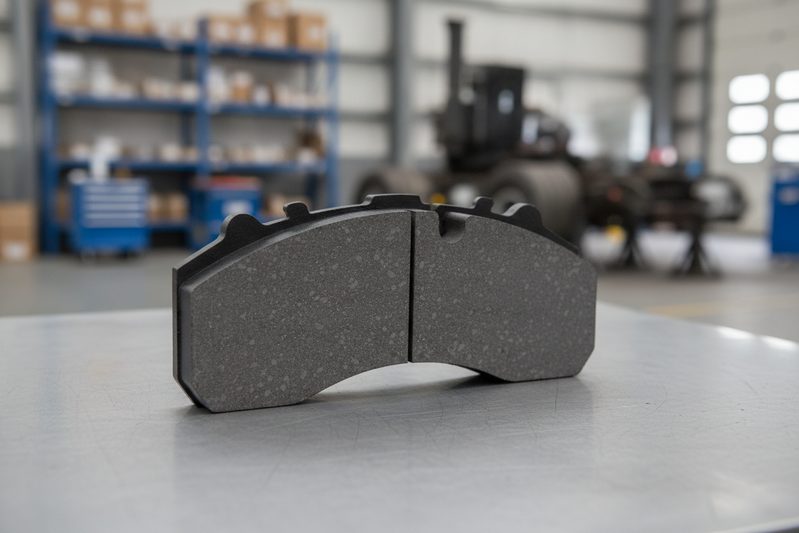
Mistakes here cost real money. A container of pads that don't seat properly in the caliper bracket means dead stock and shipping losses. The best approach isn't to trust a photo; it's to get a physical sample and measure it against three critical dimensions: overall length, width, and thickness of the friction material block, plus the distance between the retraction spring holes on the backing plate.
Here's a table of common dimensional checks (actual values vary by Kamaz model—always confirm with the supplier catalogue):
| Parameter | Typical Verification Method | Why It Matters |
|---|---|---|
| Pad outer length | Caliper bracket measurement / OE drawing | Wrong length won't fit the caliper; 2 mm off is already a return |
| Friction material thickness | Micrometer on sample | Too thick causes drag; too thin reduces service life by 15–20% per mm |
| Backing plate steel quality | Hardness tester (HRB 70–90 typical) | Soft plates deform under high clamping pressure, leading to uneven wear |
| Wear indicator slot position | Compare with OE reference | Misaligned slot triggers false warnings or no warning at all |
| Shim attachment | Visual + peel test | Detached shim = 5–8 dB more noise in urban bus applications |
For Kamaz 4310 and 43118 series, the caliper mounting is usually a fixed two-pin design, but there are variations between production years. Cross-reference with your supplier using the Truck's VIN or axle part number. BAIYUN Brake's engineering team can assist with technical support to decode OE numbers and align them with manufacturing tooling.
Cost-Saving Sourcing: Can a Chinese Supplier Deliver Kamaz-Spec Pads at 30% Lower Cost?
The short answer is yes—but only if you bypass unnecessary middle layers. Direct factory sourcing from a manufacturer with ECE R90 approval and IATF 16949 certification can cut landed costs by 25–35% compared to branded truck OES pads. The catch? Quality consistency must be verified.
Look for suppliers that offer:
- Batch-specific hardness and friction reports (not just a generic certificate)
- Dimensional Cpk > 1.33 on critical features
- Ability to produce private-label packaging with your brand
One importer we worked with saved $4.20 per axle set by switching from a European aftermarket brand to BAIYUN Brake's commercial vehicle brake pads. The saving came from shipping full container loads directly from China instead of via a European warehouse, plus a 17% lower unit price. The pads were delivered with ECE R90 approval and a detailed inspection report. That's the kind of confidence a parts distributor needs.
Replacement Steps That Kamaz Fleet Workshops Actually Use
We've seen too many guides that treat a truck like a passenger car. Heavy-duty brake replacement on a Kamaz 6x4 tractor requires different torque specs and safety procedures. Here's the real sequence a workshop follows:
- Park on level ground, chock all wheels, release both parking and service brakes.
- Lift the axle with a heavy-duty jack and support it with axle stands rated for at least 12 tons.
- Remove wheel nuts using a 1-inch drive impact wrench (torque on Kamaz wheel nuts can exceed 550 Nm).
- Extract the caliper retainer pins. On many Kamaz models, you'll need to compress the caliper pistons with a special tool that rotates the piston while pushing.
- Slide out the old pads, clean the caliper bracket contact areas, and inspect the guide sleeves for rust.
- Apply ceramic grease to the backing plate edges (never on the friction face) and insert the new pads, making sure the wear sensor wire, if equipped, is routed clear of the rotor.
- Reassemble, torque caliper bolts to the axle manufacturer's spec, and perform a manual brake bleed if the brake pedal feels soft.
After installation, a bed-in procedure is critical: perform 10–12 gentle snubs from 50 km/h to 30 km/h, then 3–4 hard stops from 70 km/h to 20 km/h, letting the brakes cool between cycles. This transfers a uniform friction layer. BAIYUN Brake supplies detailed installation guides in the brake lining installation guide for commercial vehicles.
Buyer Verification Checklist for Kamaz Brake Pad Imports
Before signing a purchase order, run through this checklist. It's built from what experienced importers have learned the hard way:
- Request at least 3 pre-shipment samples from different production batches and check dimensional accuracy and friction coefficient.
- Confirm ECE R90 certification number is listed on the pad backing plate and on the packaging. If not present, it's not legally marketable in many regions.
- Ask for a chemical composition report—copper content above 5% by weight may face import restrictions in some countries.
- Check packaging durability: Kamaz pads are heavy; boxes must survive stacking and maritime humidity. BAIYUN Brake uses reinforced 5-ply cartons with desiccant packs as standard.
- Verify the supplier's ISO 9001 or IATF 16949 certificate is current and covers brake pad manufacturing, not just trading.
- Test the supplier's responsiveness: send a technical question about a Kamaz 6520 front axle pad and measure how long it takes to get a drawing and quote. Good suppliers answer within 24 hours.
- Compare total landed cost including freight, customs duty, and potential port storage fees—not just the FOB price.
Frequently Asked Questions for Kamaz Brake Pad Distributors
Q: How can I be sure the Kamaz brake pads I import will pass an ECE R90 spot check?
A: Always ask for the full ECE R90 approval letter with the test laboratory details. The approval number should match the marking on the pad. Reputable factories like BAIYUN Brake maintain the same formulation and production line for each approved compound, ensuring the pads you receive match the tested type. A factory audit is the ultimate confidence booster.
Q: What's a realistic minimum order quantity (MOQ) for custom-branded Kamaz pads?
A: For a new private label project, expect an MOQ of around 500 to 1,000 axle sets per SKU, depending on the backing plate tooling cost. However, some manufacturers offer lower MOQs for initial trial runs if you're willing to share mold costs or accept slightly higher unit prices. Always negotiate a phase-out plan for the first order.
Q: What lead time should I plan for a 40-foot container of mixed Kamaz pads?
A: Typically 35–45 days after order confirmation and artwork approval, but raw material availability for high-grade steel fibers can add 2 weeks during peak seasons. BAIYUN Brake often keeps semi-finished product in stock for fast-moving Kamaz SKUs, reducing lead time to 25 days for repeat orders.
Q: Are aftermarket Kamaz brake pads as durable as genuine OES pads?
A: In many cases, a well-engineered aftermarket pad can match or exceed OES durability because it uses a more premium friction formulation. The key is the friction material's wear rate under loaded cycles. Request SAE J2707 wear test data; look for a wear rate below 0.25 mm per 1,000 stops on a heavy-duty dynamometer for Kamaz class trucks.
Q: What's the best way to handle warranty claims with a brake pad manufacturer?
A: Establish a clear protocol before the first shipment: require that all claims be supported with digital photos, the installed mileage, and a measurement of remaining friction thickness. Many manufacturers require the failed pads to be returned for analysis. BAIYUN Brake's quality team typically resolves valid claims within 10 business days via free replacement on the next container, not by cash refund, to keep logistics simple.
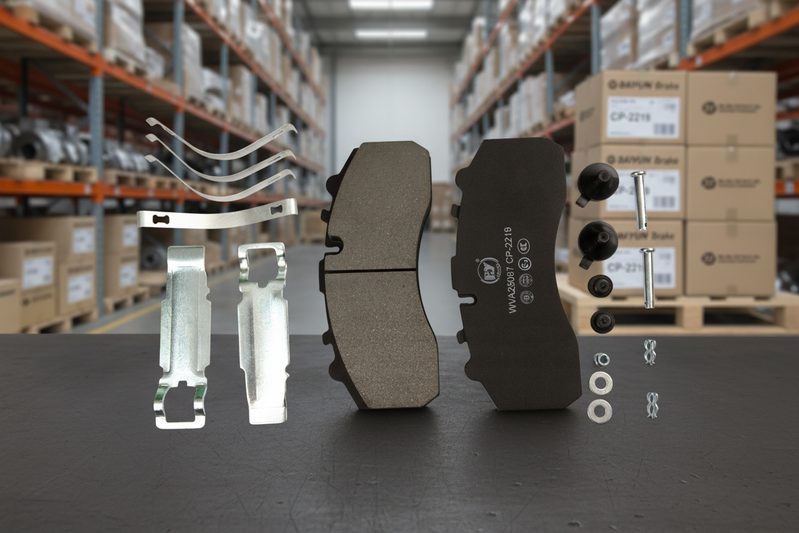
This article was produced by the BAIYUN Brake editorial team, combining 49+ years of brake manufacturing expertise with current industry research. For product inquiries or technical questions, contact our team.
Ready to source high-quality Kamaz brake pads with full traceability and ECE R90 certification? Take a look at our heavy-duty brake pad range for commercial vehicles. When you're ready for pricing or a sample kit, submit your inquiry to our sales team and we'll respond within one business day with a tailored quotation.
Was this article helpful?
Average Rating: 5/5 (889)