
Private Label Brake Pads vs OEM Brake Pads: Buyer Guide
Summary:
Private label brake pads vs OEM brake pads is a business model decision, not just a product swap. For commercial vehicle distributors and fleet managers, OEM brake pads mean standardized fitment, OE network support, and a fixed specification. Private label brake pads mean your brand, lower landed cost, and full control over friction family, packaging, and part numbering. This buyer guide compares the two sourcing paths on certification, cost, life cycle, and supplier verification. You'll find a cost comparison table, a buyer inspection checklist, and five FAQs covering ECE R90, IATF 16949, MOQ, warranty claims, and cross-reference control. The article also explains how ECE R90 testing, 400°C thermal cycling, and μ 0.30–0.42 friction stability affect sourcing confidence. BAIYUN Brake draws on 49+ years of brake manufacturing to show importers how to source private label commercial vehicle brake pads with confidence and avoid the common mistake of buying on price alone.
Private Label Brake Pads vs OEM Brake Pads: Buyer Guide
Quick answer: OEM brake pads carry the vehicle maker's part number and are built to a fixed specification. Private label brake pads are the same aftermarket product, made by a certified friction manufacturer, but branded for your distribution business. For commercial fleets and importers, private label typically delivers 18–30% lower landed cost, full control over packaging and part numbering, and equal ECE R90 safety compliance—provided you verify the manufacturer's quality system and friction test data before placing a blanket order.
What’s the Real Difference Between Private Label Brake Pads and OEM Brake Pads?
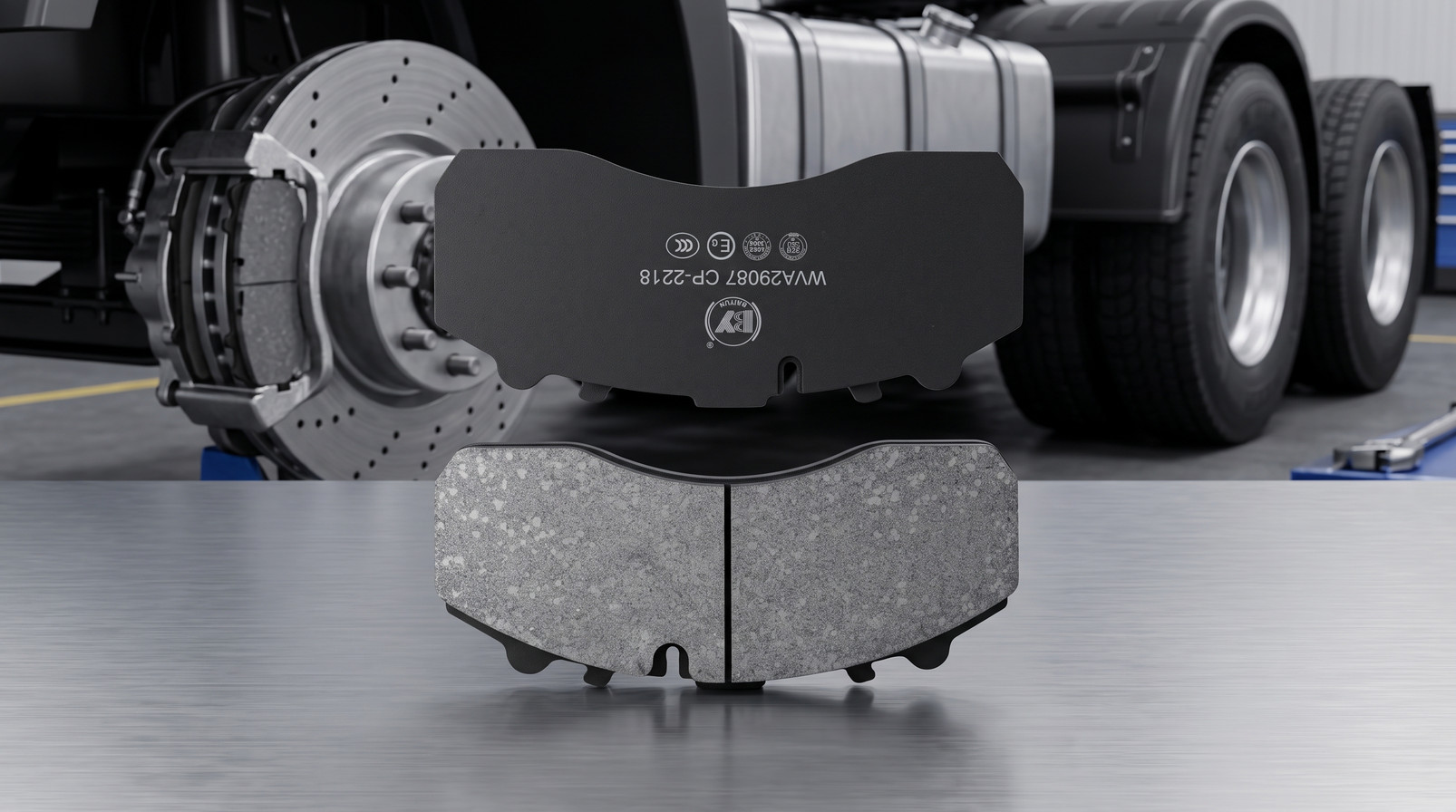
OEM brake pads are sold under the vehicle or axle maker's part number. The specification is fixed at first fitment, and the aftermarket replacement chain follows that homologation. Private label brake pads are the same aftermarket friction product, manufactured by a certified friction supplier, but branded and boxed for your distribution business.
Think about the container turning into your warehouse, not the part number. A private label program gives you control over part numbering, packaging design, friction family selection, and pricing. That's not a minor packaging issue; it's a gross margin and inventory strategy decision.
For a fleet running 40-tonne tractor-trailers, the consequence of bracket creep isn't theoretical. If a batch shifts from μ 0.42 to μ 0.34, drivers notice longer pedal travel and brake temperatures climb on downhill runs. That's why buyer verification matters more than label choice.
Summary: OEM means someone else's brand and someone else's margin. Private label means your brand—and your supplier's quality file.
Why Do Commercial Vehicle Buyers Choose Private Label Brake Pads?
A distributor moving 500 sets per month can't afford friction coefficient drift between production batches. Private label sourcing works when the factory can document batch-to-batch stability and match the correct friction family to your customers' duty cycles.
Private label also changes the logistics math. According to 2024–2025 aftermarket distribution data, private label brake programs reduce landed cost by 18–30% compared with equal-spec OE-boxed pads. For a mixed manifest of truck, bus, and trailer pads, that saving often covers freight, customs clearance, and first-year warranty reserve.
You also get shelf control. Instead of carrying three regional OE labels for the same pad size, you consolidate into one brand. This reduces inventory duplication and speeds up picking—especially for CV brake pad catalog for distributors that spans multiple axle brands.
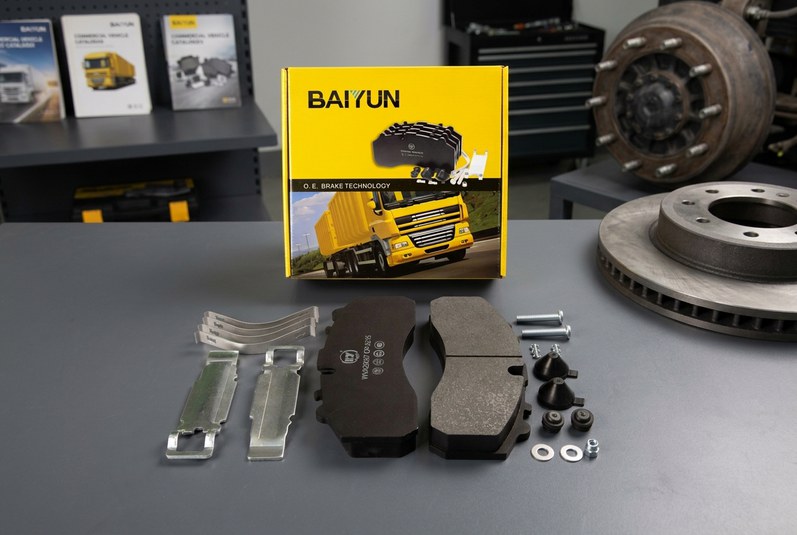
Does that mean OEM pads are irrelevant? Not for fleets that require OE-only maintenance contracts. But for distributors and importers building their own channel brand, private label normally wins on flexibility and margin.
Summary: Private label commercial vehicle brake pads reduce landed cost by 18–30% while giving importers control over branding, packaging, and inventory consolidation.
What Certifications Should You Verify Before Ordering Private Label Brake Pads?
ECE R90 requires replacement brake pads to maintain at least 80% of their cold braking effectiveness after thermal cycling to 400°C. That's a minimum street-legal safety threshold, not a premium feature. Any serious private label supplier should produce the ECE R90 approval number and test report for each friction family.
IATF 16949 is the production system standard for automotive suppliers. A valid IATF 16949 certificate means the factory runs process controls, traceability, and corrective action systems—not just final inspection. At BAIYUN Brake, our IATF 16949 certified facility covers mixing, pressing, curing, grinding, and packaging. That's the kind of control you want behind your own label.
Ask the factory for three batches of dynamometer data. You're looking for a friction coefficient spread of μ 0.30–0.42 across the 100°C to 350°C range, depending on the heavy-duty formulation. If the supplier can't show batch data, the price advantage isn't worth the liability.
Summary: ECE R90 and IATF 16949 are buyer verification tools, not marketing badges. Demand the test report and batch data before you print your first label.
How Do Private Label and OEM Brake Pads Compare on Cost and Life Cycle?
Friction material is only 30–40% of total brake pad landed cost. Freight, packaging, branding, duty, and warehousing often exceed the raw material cost. That's why two pads with identical friction formulations can have very different invoice prices—and why private label economics are so strong.
| Comparison Factor | OEM Brake Pads | Private Label Brake Pads |
|---|---|---|
| Brand control | Vehicle/axle maker's brand | Your company brand and part numbering |
| Formulation flexibility | Fixed to OE homologation | Factory formulations matched to duty cycle |
| ECE R90 compliance | Usually required for road use | Required; verify approval certificate |
| Typical landed cost | Baseline (100%) | 18–30% lower on equal friction material |
| MOQ | High, tied to OE supply chain | Often 500–1,000 sets per friction code |
| Warranty control | OE network handles claims | Your brand handles claims; supplier must back warranty |
| Cross-reference data | OE part number only | Confirm with supplier catalogue |
Life cycle varies by route. A long-haul tractor at 40 tonnes gross weight may get 120,000–160,000 km from a properly matched heavy-duty pad, while a refuse truck in stop-and-go urban service may see 25,000–40,000 km. Private label lets you match the friction family to that duty cycle instead of accepting the OE one-size-fits-all compound.
Check our full brake pad product range for heavy-duty disc pads and linings.
Summary: Private label usually saves 18–30% on equal friction material because you remove OE box premiums and align the compound with actual duty cycles, not the OE aftermarket's conservative default.
What Should a Private Label Brake Pad Inspection Checklist Include?
Supplier verification starts before product approval, not after the first container arrives. Use this checklist to filter manufacturers before you invest in private label artwork and tooling.
- ECE R90 approval: Request the ECE R90 test report and approval number for each friction family. Pads must show at least 80% of reference performance after 400°C thermal cycling.
- IATF 16949 certificate: Verify the production facility certificate is current and covers brake pad manufacturing, not just assembly.
- Batch friction stability: Ask for a dynamometer report showing friction coefficient spread across at least 3 production batches. Acceptable commercial CV range: μ 0.30–0.42 from 100°C to 350°C, depending on formulation.
- Shear strength: Heavy-duty linings/pads should meet or exceed 250 N/cm² shear strength at room temperature, depending on application. Confirm with supplier catalogue for exact values.
- Packaging and private label artwork: Confirm box dimensions, barcode generation, and country-of-origin printing before production.
- Sample order: Run a 50–100 set pilot across mixed axle applications before committing to container volume.
- Warranty terms: Nail down claim ratio, return freight, and inspection process. A credible supplier should accept no more than 0.5–1.0% warranty claims on CV fleets.
If a supplier hesitates on any of these points, that's a signal to walk away. Frankly, the price gap between certified and uncertified pads rarely justifies the warranty risk in commercial vehicle service.
Summary: The checklist separates real private label manufacturers from trading companies that only box pads. Verify ECE R90, IATF 16949, batch friction data, and warranty terms before placing a purchase order.
What Are the Most Common Misconceptions About Private Label vs OEM Brake Pads?
Misconception: Private label pads are made with cheaper friction material.
Reality: When produced in an IATF 16949 facility with ECE R90 approval, private label pads use the same friction families and steel backing plates as OE aftermarket programs. The difference is the box, not the friction coefficient.
Misconception: OEM pads always last longer in commercial vehicles.
Reality: Pad life depends on axle load, route, and friction formulation. A heavy-duty private label pad matched to 40-tonne tractor application can deliver 120,000–160,000 km, similar to or better than OE pads when the correct compound is selected.
Misconception: ECE R90 approval is automatically carried over to private label orders.
Reality: The approval belongs to the manufacturer and the specific friction family. You must request the approval number and test report for your exact product code. Never assume a general company certification covers every private label SKU.
Summary: Private label quality depends on the factory's certification and batch control, not on the label. Test data is the only reliable proof.
What Questions Do Fleet Buyers Ask About Private Label vs OEM Brake Pads?
Here are the questions importers and fleet managers ask BAIYUN Brake most often.
Q: Do private label CV brake pads meet ECE R90?
A: Yes, if the manufacturer holds ECE R90 approval for the specific friction family. ECE R90 requires replacement pads to stay within ±15% of homologated reference performance, and BAIYUN Brake heavy-duty formulations typically maintain μ 0.38–0.42 between 100°C and 350°C in dynamometer testing. Always request the approval number for your SKU.
Q: What is the minimum order quantity for private label commercial vehicle brake pads?
A: MOQ depends on pad size and packaging, but many factories ask 500–1,000 sets per friction code. At BAIYUN Brake, we help importers plan a first container that balances shelf coverage with cash flow. Confirm with supplier catalogue for specific part numbers.
Q: How much does private label save compared with OEM brake pads?
A: Private label programs typically reduce landed cost by 18–30% for equal friction material. That saving comes from removing OE box premiums and simplifying distribution packaging. Some importers report payback on private label artwork within the first 1,000 sets sold.
Q: Can I use private label pads for mixed fleets with different axle brands?
A: Yes. The key is cross-reference control. You need a supplier who can map physical dimensions, friction family, and WVA numbers across axle makers. BAIYUN Brake provides cross-reference support for commercial vehicle applications; exact WVA numbers should be confirmed from the commercial vehicle brake linings catalogue to avoid fitment errors.
Q: What warranty terms should a private label supplier offer?
A: A credible supplier should accept 0.5–1.0% warranty claims on CV fleets, with a clear inspection process and return freight policy. Anything above 2% claim ratio points to material or fitment problems. Request a written warranty clause before ordering.
How Do You Start Sourcing Private Label Brake Pads with Confidence?
Start with the certification file, not the price list. A lower unit price means nothing if the friction coefficient drifts on a 40-tonne downgrade. Ask for ECE R90 approval numbers, three-batch dynamometer reports, and IATF 16949 scope before you invest in private label artwork.
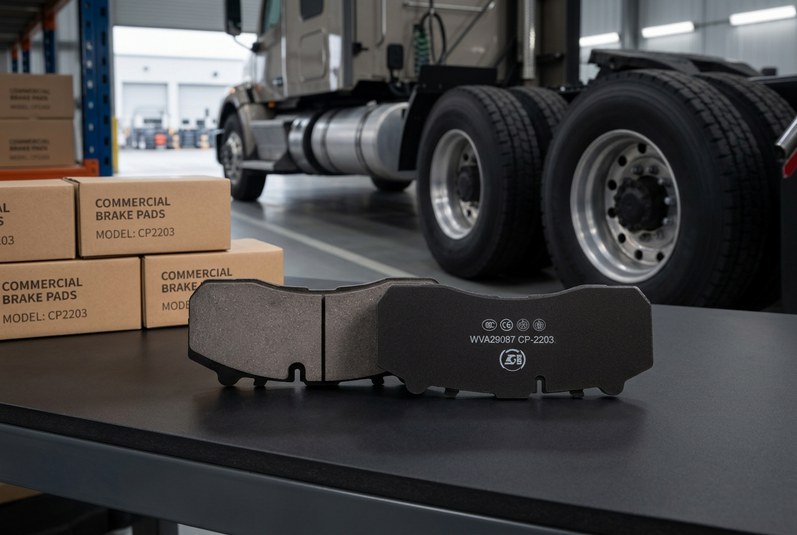
BAIYUN Brake has spent 49+ years of manufacturing experience manufacturing brake friction for commercial vehicles. We run IATF 16949 and ECE R90 production processes, and we help importers build private label programs with batch traceability and cross-reference support. If you're ready to compare formulations, request OEM commercial vehicle brake pad quote or submit your inquiry to our sales team for sample production and lead time.
Summary: Choose the supplier first, then the label. Verified private label manufacturing gives you OEM-level safety with better margin control.
Was this article helpful?
Average Rating: 5/5 (768)