A reliable private label brake pads supplier from China with IATF 16949, ECE R90, and 49+ years of manufacturing can cut your landed cost by 30-50%. This guide covers certification checks, MOQs, lead times, OEM/ODM workflow, and a 7-step buyer verification checklist to help importers and distributors source commercial vehicle brake pads with confidence from a trusted China brake factory. Learn how to verify suppliers, compare costs, and build your own brand in the heavy-duty aftermarket.
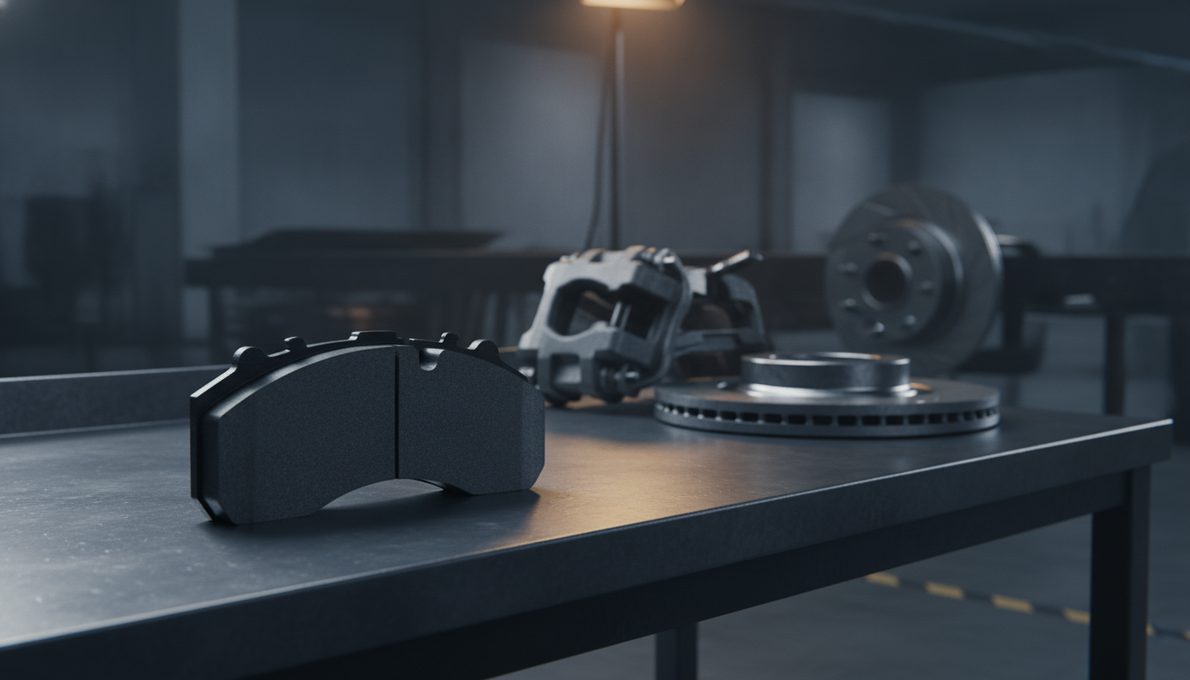
Quick answer: A reliable private label brake pads supplier from China should hold IATF 16949 and ECE R90 certifications, offer MOQs as low as 200–500 sets, deliver within 25–35 days, and provide full packaging customization. BAIYUN Brake, with 49+ years of manufacturing, fits this profile. Sourcing directly from a certified Chinese factory cuts your landed cost by 30–50% versus European aftermarket brands while meeting the same regulatory standards.
You don't need to fly to China to vet a supplier. The right documentation and a structured audit process tell you 90% of what you need to know. Start with these three non-negotiables.
First, demand an IATF 16949 certificate. It's the global automotive quality management standard, and any factory worth your time will have it. In 2025, only about 15% of Chinese brake pad factories held valid IATF 16949 credentials—a quick filter that eliminates most amateurs. BAIYUN Brake's certificate is active and audited annually, and we'll share it before you even ask.
Second, check ECE R90 approval for each pad family you intend to import. Without it, you can't legally sell into Europe, the Middle East, or many Asian markets. The regulation mandates that aftermarket pads match OE performance within ±15% on friction coefficient and pass hot shear, compressibility, and speed sensitivity tests. Ask for the TÜV or IDIADA test reports—not just the certificate number—and cross-check the WVA codes.
Third, look at the factory's own testing data. A serious manufacturer will run SAE J2522 dynamometer tests (formerly AK-Master) and provide full friction vs. temperature curves, green and hot fade behavior, and wear rate projections. If a supplier can't show you a recent AK-Master report for the exact pad formulation you're buying, you're gambling.
Combine these three checks with a video factory tour—watch our production process—and you'll have more confidence than a one-day on-site visit would ever give you.
Verification in a box: IATF 16949 + ECE R90 test reports + SAE J2522 data.
Certifications are not wallpaper. They are your legal shield and your quality guarantee when things go wrong. Here's what separates a trading company from a genuine IATF 16949 certified facility.
When you request material data sheets, look for these certifications listed alongside the specific formulation code. If they're missing, move on.
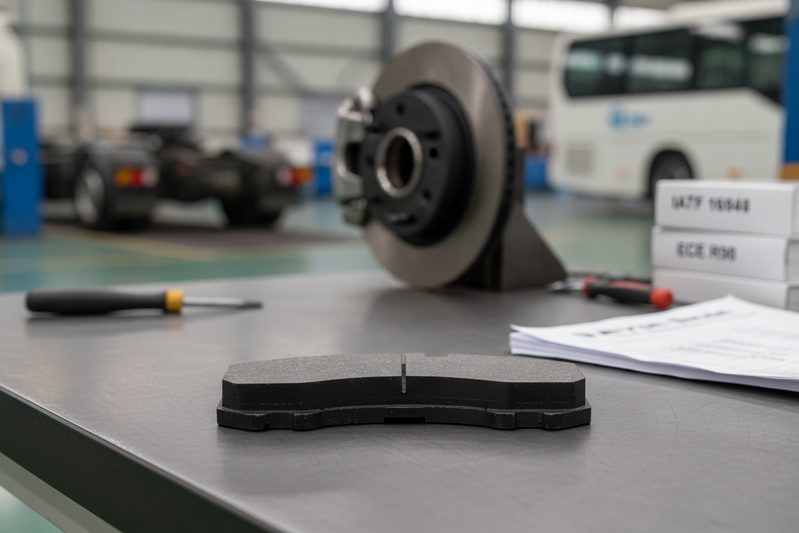
Real numbers matter. Here's what we deliver every month to importers in Europe, the Middle East, and Southeast Asia.
| Order Type | Typical MOQ | Production Lead Time | Shipping Mode | Transit Time |
|---|---|---|---|---|
| Standard commercial vehicle pads (10–20 SKUs) | 200–500 sets per SKU | 25–35 days | Sea freight (FCL or LCL) | 25–40 days to Europe, 15–25 days to Middle East |
| Custom formulation with new shape tooling | 500–1000 sets per SKU | 35–50 days (includes tooling) | Sea or air (urgent samples) | Air: 5–7 days |
| Small trial order (existing tooling) | 100–200 sets | 15–20 days | Express courier | 5–10 days |
Tooling costs for a new commercial vehicle pad shape range from $800 to $2,500 depending on complexity. We amortize it over the first container if you commit to annual volumes above 10,000 sets. For most distributors, the per-piece tooling amortization adds less than 3% to the unit cost.
On the logistics side, BAIYUN Brake ships from Qingdao or Shanghai ports. We handle FOB, CIF, or DDP terms depending on your preference. Our export team will quote door-to-door all-in costs so you can compare landed cost per set directly against your current suppliers.
You have two paths when working with a private label brake pads supplier: OEM (you supply the specifications) or ODM (we propose a proven formulation and you brand it). Either way, the workflow is structured to eliminate surprises.
This approach prevents the classic horror story: importing a container of pads that squeal or fade after 10,000 km. With our competitive advantages, including in-house formulation R&D, you're not paying a middleman to outsource the testing.
Use this checklist every time you evaluate a new private label brake pads supplier. Skip any step and you're adding risk.
Distributors who follow this process typically reduce field complaints by over 60% in the first year compared to jumping in with a full container.
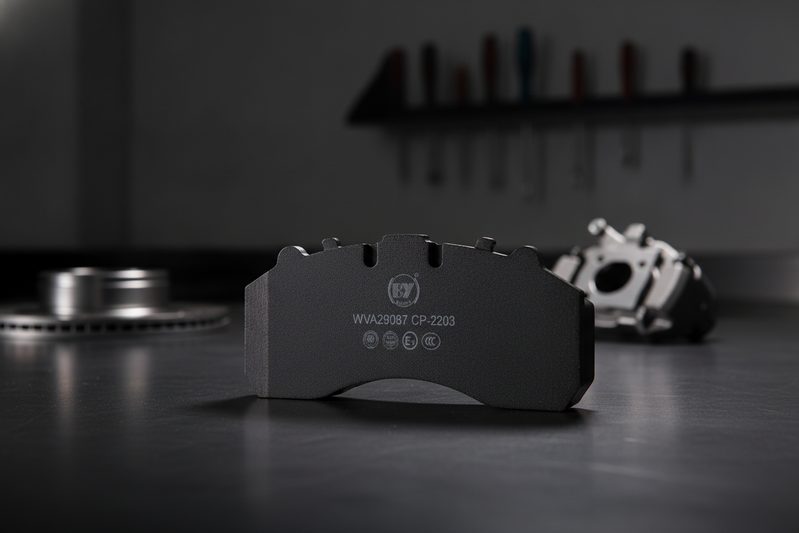
Let's talk numbers. A typical Mercedes-Benz Actros or Volvo FH front brake pad set (WVA 29087 or similar) costs around €65–90 at wholesale from a European aftermarket brand like Textar or Jurid. The same pad set, manufactured to the same ECE R90 standard by a certified Chinese factory and private-labeled for you, lands in Rotterdam at €28–38 per set—duty and freight included. That's a 45–55% reduction.
Over a year, a mid-sized distributor moving 5,000 sets annually saves roughly €150,000. That's not margin you squeeze out of thin air; it's margin created by paying for manufacturing, not for a European brand's marketing budget.
The comparison below assumes commercial vehicle pads for heavy trucks (16+ tons GVW), ECE R90 certified, standard box packaging.
| Source | Typical Ex-Works Price per Set | Landed Cost per Set (EU) | Certification Level |
|---|---|---|---|
| European aftermarket brand (Textar, Jurid) | €45–55 | €65–90 | ECE R90, OEM-level |
| OEM dealership pad set | €70–100 | — | OEM spec |
| China direct factory (BAIYUN Brake) | €15–22 | €28–38 | IATF 16949, ECE R90, GB 5763 |
Price gap aside, the real win is controlling your brand. When you private label through us, you're not at the mercy of a competitor who can start selling the same pads under their own name in your territory next quarter.
Q: What's the difference between OEM and ODM brake pad services?
A: OEM means you provide the exact specification—friction level, backing plate drawing, and shape. ODM means we suggest a proven formulation that fits your application and you brand it. For most aftermarket distributors, ODM is faster and less expensive; OEM is necessary when you're replacing a unique fleet specification.
Q: Can I get a small test order before committing to a container?
A: Yes. We ship trial orders of 100–200 sets by air or express. You can test them on actual trucks in your market and validate wear rate, noise, and stopping performance before placing larger orders.
Q: How do I ensure the pads won't squeal on my customers' trucks?
A: Squeal is predominantly a formulation and chamfer geometry issue. We tune the pad's modal frequency by adjusting the noise-damping underlayer and chamfer angle. During development, we run an SAE J2521 noise test and supply the noise index data. A good supplier will guarantee a noise index below 5%. Ask for it.
Q: Can you print my brand logo and artwork on the packaging?
A: Absolutely. We support full private label packaging: four-color print boxes, hot-stamped logos, anti-counterfeit stickers. Minimum order for custom printing is usually 500 boxes per SKU. We keep your branding files confidential.
Q: What quality control process do you have in place for each batch?
A: Every batch undergoes incoming raw material inspection (XRF spectrometer check on metal content), in-process press-force and temperature monitoring, 100% visual and dimensional inspection, and final random sampling for shear strength and compressibility. Each production lot is traceable back to raw material batch numbers.
This article was produced by the BAIYUN Brake editorial team, combining 49+ years of brake manufacturing expertise with current industry research. For product inquiries or technical questions, contact our team.
If you're ready to take control of your brake pad supply chain and stop competing on price with the exact same branded product, we should talk. Browse our heavy-duty brake pad range and pick a few SKUs that match your market. Then request a wholesale quote—our export team typically responds within one business day with pricing, MOQ, and lead time for your specific selection. No gimmicks, just a factory that's been doing this for half a century.
Average Rating: 5/5 (279)