
OEM commercial brake pads factory China: Importer and Distributor Buying Guide
Summary:
OEM commercial brake pads factory China sourcing doesn't have to feel like a gamble. This importer and distributor buying guide breaks down factory audits, IATF 16949 and ECE R90 verification, private label options, wholesale pricing, MOQ, lead times, and hidden costs. You'll learn which documents separate real manufacturers from repackagers, what a practical buyer checklist looks like, and how to protect your cash with trial orders and pre-shipment inspection. Use the technical document table and FAQ to qualify suppliers before you commit. Request a wholesale quote from BAIYUN Brake and compare a certified commercial vehicle brake pad option for trucks, buses, and trailers.
OEM commercial brake pads factory China: Importer and Distributor Buying Guide
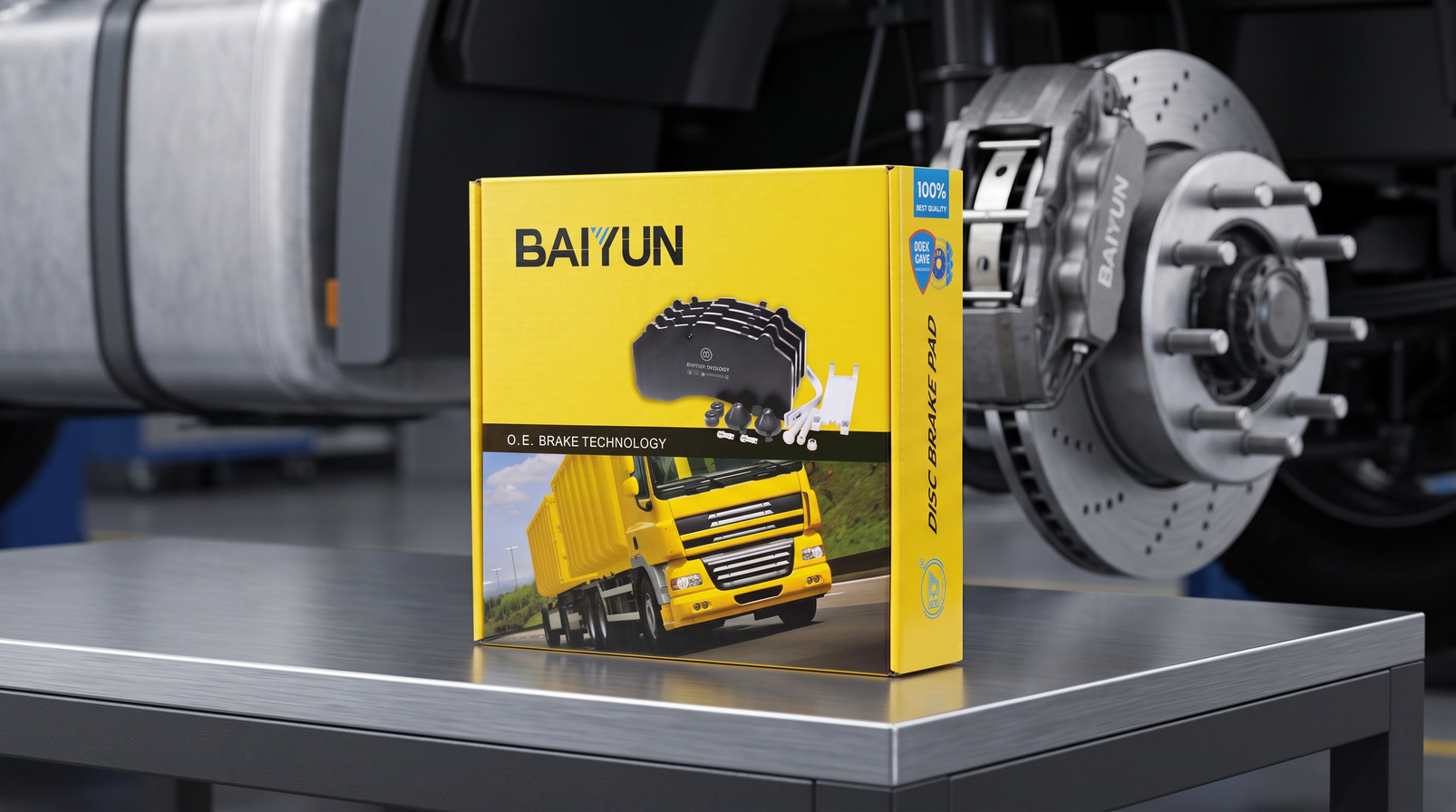
Quick answer: BAIYUN Brake runs an IATF 16949 and ECE R90 certified OEM commercial brake pad factory in China. Smart importers don't buy on price alone. You verify factory audit reports, confirm batch-level friction test data, and lock down MOQ, private label rules, and lead time before transferring a deposit. Typical wholesale MOQs range from 20 to 500 sets depending on the program; lead times usually run 20 to 40 days for mixed containers. Request the supplier's current ECE R90 homologation list and a dated production certificate before you commit.
Why do importers still get burned by unverified brake pad factories?
A distributor in Mexico ordered 3,000 truck brake pads from a trading company that claimed to own a factory. First shipment arrived with mixed friction formulas. Second container didn't match the approval sample. That happens more often than most people admit. The problem isn't China. It's weak supplier verification.
For commercial fleets, a brake pad with inconsistent friction can mean uneven wear across a dual-axle trailer, longer stopping distances, and liability nobody wants. A distributor sourcing 500 sets monthly can't afford friction coefficients that drift from batch to batch. You need a factory that controls the mixing room, not one that outsources compounding or simply repackages another plant's product.
Industry estimates put the global commercial vehicle brake pad aftermarket above $4 billion a year. China supplies a big slice of that, but volume brings noise: repackagers, trading companies, and factories that run one shift on old presses. Your job is to separate them from plants that can hold a friction coefficient across a 40-hour curing cycle. That's what an actual factory audit is for.
The most useful first step is a IATF 16949 certified facility walkthrough. You're looking for raw material segregation, computer-controlled batch mixing, press tonnage that matches the pad size, and a lab that tests shear strength and compressibility on every production lot. If a supplier hesitates to show you the mixing line, treat that as a red flag.
Which certifications actually reduce your import risk?
Most factories will show you an ISO 9001 PDF. That's table stakes. It doesn't prove brake pad competence. For commercial vehicles, two documents matter more: IATF 16949 and ECE R90.
IATF 16949 tells you the plant operates under automotive-grade process control, defect prevention, and full batch traceability. That's not a piece of paper; it requires annual audits and evidence of corrective actions. ECE R90 approval means the exact pad model passed performance testing in an accredited laboratory, covering friction behavior, speed sensitivity, and cold performance after thermal cycling. Without ECE R90, many European and UNECE markets won't let you sell the pad legally.
For a distributor in Germany or Poland, ECE R90 isn't optional. It's a market access document. Inspectors can pull your pad number and check it against the approval database. If it's missing, the shipment gets held. For markets outside Europe, ECE R90 still works as a strong signal that the factory invests in testing.
SAE J2522 is the common North American dynamometer test sequence for brake linings. GB 5763 is China's national standard for friction materials. Both give you comparable data points: hot friction, wear, and shear. A factory that can't produce a recent test report for the exact compound you're buying is guessing.
Ask for the homologation list. Check that your specific WVA number appears on it. Don't accept a blanket statement like "all our pads are ECE R90 approved." That sentence means nothing if the number isn't on the list.
Here's a quick technical document checklist before you order samples:
| Document / Test | What to confirm | Why it matters for importers |
|---|---|---|
| IATF 16949 certificate | Scope covers friction material production, not just assembly | Separates real factories from repackagers |
| ECE R90 homologation | Exact WVA / part number on the approval list | Required for legal sale in many EU and UNECE markets |
| SAE J2522 or GB 5763 test report | Friction coefficient, wear rate, shear strength | Confirms batch performance under thermal load |
| Batch traceability record | Mix date, press operator, cure cycle | Protects you during warranty claims |
| Factory audit report | Mixing line, press tonnage, contamination controls | Reduces risk of formula drift |
How does OEM and private label sourcing work for commercial brake pads?
You won't always buy off-the-shelf WVA numbers. Many distributors bring their own part numbers, box designs, and friction targets. That's where OEM and private label programs get interesting.
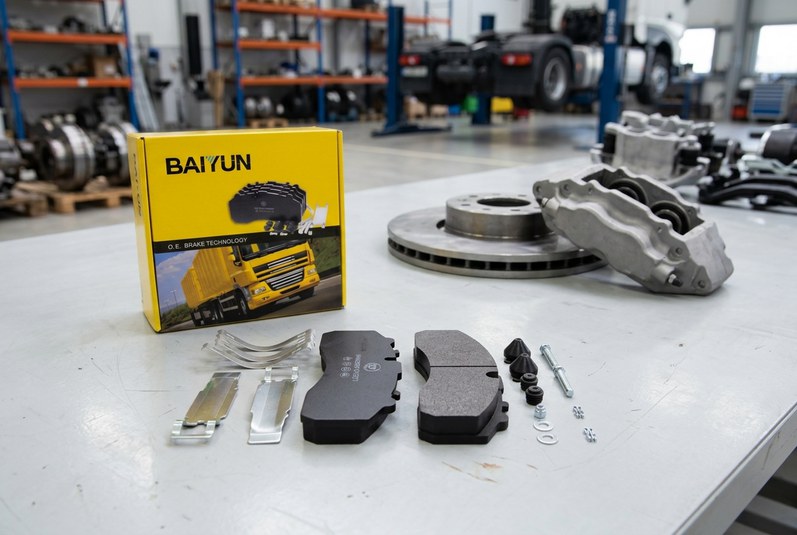
For stock references, you can browse our heavy-duty brake pad range and match WVA numbers to your existing inventory. For private label, expect a longer conversation. You'll confirm the backing plate, friction compound, slot or chamfer design, and whether you want your logo on the box, the pad, or both. Some buyers also want a specific color for the powder coat or a cert label in their market language.
The process usually goes like this: you send target WVA or OE numbers, the factory checks its tooling library, then sends a quotation with samples. If you need a new backing plate profile, tooling cost may apply. Many factories amortize tooling across the first container. Ask about that.
BAIYUN Brake approaches this as an engineering exercise, not just a printing job. If your market requires a specific friction level for hilly routes or mining logistics, the compound can be adjusted within an approved formulation window. That's what a true OEM factory does. You're not stuck with whatever's on the shelf.
Before you commit, ask whether the factory has why choose BAIYUN Brake level traceability: from incoming steel plate to finished pad. If the answer is vague, keep looking.
What does real wholesale pricing look like — and where do hidden costs hide?
Price per set matters, but it's not the whole story. A low factory price can disappear after you add 3-layer export cartons, palletizing, labeling, and third-party inspection fees. And that's before freight.
Watch for these add-ons: inner box printing, master carton barcodes, pallets, shrink wrap, fumigation certificates, third-party inspection, and bank charges. Each one can add $0.08 to $0.30 per set. On 10,000 sets, that's real money.
For a mixed container of truck and trailer brake pads, you'll usually negotiate FOB or CIF terms. Ask for a breakdown that separates product cost, inner box, master carton, pallet, and any printing plate charges. Private label programs often include a one-time design fee per reference. That fee should be quoted upfront, not buried in the proforma invoice later.
Lead time depends on stock status. Standard references can ship in 25 to 35 days after deposit and artwork approval. Custom compounds or new WVA numbers might run 40 to 45 days. If you're also importing request a quote for commercial vehicle brake linings in the same container, factor in additional curing and packaging time. Combined orders can lower freight cost per unit if your factory packs them smartly.
Don't ignore the cost of a pre-production sample. It's cheap insurance. A $200 sample that fails your field test saves you from a $30,000 container of unsellable stock.
Buyer verification checklist before you sign the contract
Run through this before you transfer any deposit:
- Factory tour: Request a live video walkthrough of the mixing room, press line, and quality lab.
- Certification scope: Confirm IATF 16949 and ECE R90 documents are current and cover commercial vehicle brake pads.
- Homologation list: Match your target WVA numbers against the supplier's ECE R90 approval list.
- Batch traceability: Ask how a pad can be traced from raw compound to finished carton.
- Sample approval: Order 5 to 10 sets per reference for bench or field testing.
- Packaging spec: Lock down inner box, master carton, pallet size, and private label artwork files.
- Inspection terms: Decide whether you'll use SGS, Bureau Veritas, or your own agent for pre-shipment inspection.
- Payment terms: Typical is 30% deposit and 70% against B/L copy; don't agree to 100% upfront.
One more thing: factory photos are useful, but they're not evidence. Live video with a timestamp and a person walking the line is better. If a factory won't do that, cross it off the shortlist.
Frequently Asked Questions from Importers and Distributors
What is the minimum order quantity for OEM commercial brake pads from China?
MOQs vary. For private label programs, many factories ask for 100 to 500 sets per reference. For stock WVA numbers, some accept 20 to 50 sets. Always confirm whether the MOQ is per container, per reference, or per order.
Can I get private label packaging for truck brake pads?
Yes. Most OEM factories print custom boxes, labels, and barcodes. You'll usually pay a one-time plate or design fee and commit to a minimum per reference. Ask for a pre-production sample with your brand before mass production.
What lead time should I expect for a 40HQ container of CV brake pads?
Mixed commercial vehicle brake pad orders typically ship 25 to 40 days after deposit and artwork approval. High-demand WVA references might be in stock. Custom friction compounds can push lead time to 45 days.
How do I verify a factory's ECE R90 approval?
Request the homologation number and match it against the approval list for the specific pad shape. You can also ask for a copy of the test report from the accredited lab. Confirm the certificate isn't expired or limited to passenger car pads.
What's the easiest way to reduce import risk on first orders?
Start with a trial order of 50 to 100 sets per reference. Ship by air or LCL, run your own dynamometer or field test, and only then place the container order. That protects you from locking cash into unproven stock.
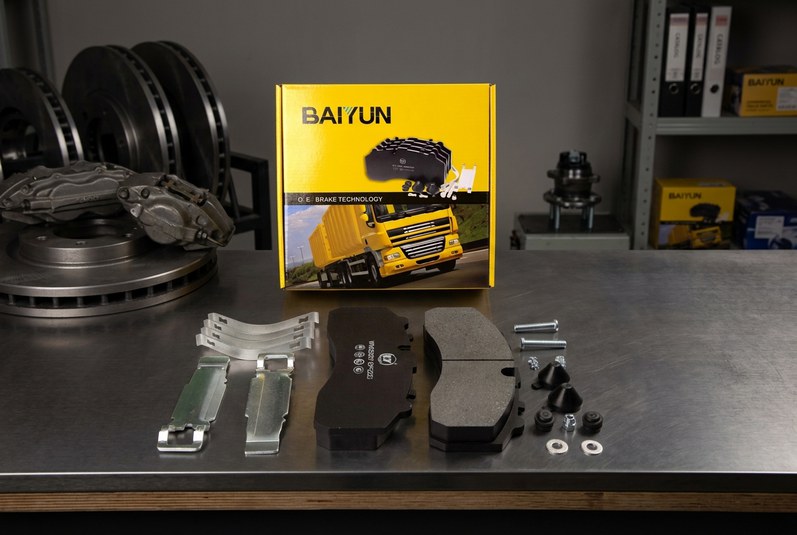
Bottom line: a reliable OEM commercial brake pad factory in China doesn't hide behind a nice catalogue. It shows you test data, opens the factory door, and commits to batch traceability. That's the standard we hold at BAIYUN Brake. If you're sourcing truck or bus brake pads and want to compare a certified option, request OEM commercial vehicle brake pad quote. For linings and mixed container programs, submit your inquiry to our sales team and we'll get back to you with MOQ, lead time, and FOB pricing.
Was this article helpful?
Average Rating: 5/5 (262)