
Bendix Testing Shows Value in Premium Aftermarket Replacement Pads
Summary:
Bendix testing shows value in premium aftermarket replacement pads for commercial truck and bus fleets—and the Trucks, Parts, Service coverage gives those findings weight with distributors, importers, and maintenance teams. Premium aftermarket pads maintain shorter stopping distances, consistent torque, and stronger ECE R90 compliance than average-grade replacements. For B2B buyers, that means sourcing from a factory like BAIYUN Brake with IATF 16949 production controls, WVA verification, and private label capability. This article covers supplier qualification, certification checks, MOQ and lead time planning, and a buyer verification checklist. Compare friction performance, homologation, and total ownership costs before placing your next truck brake pad order. Request a wholesale quote from BAIYUN Brake to match part numbers and export documentation to your application list.
Bendix Testing Shows Value in Premium Aftermarket Replacement Pads
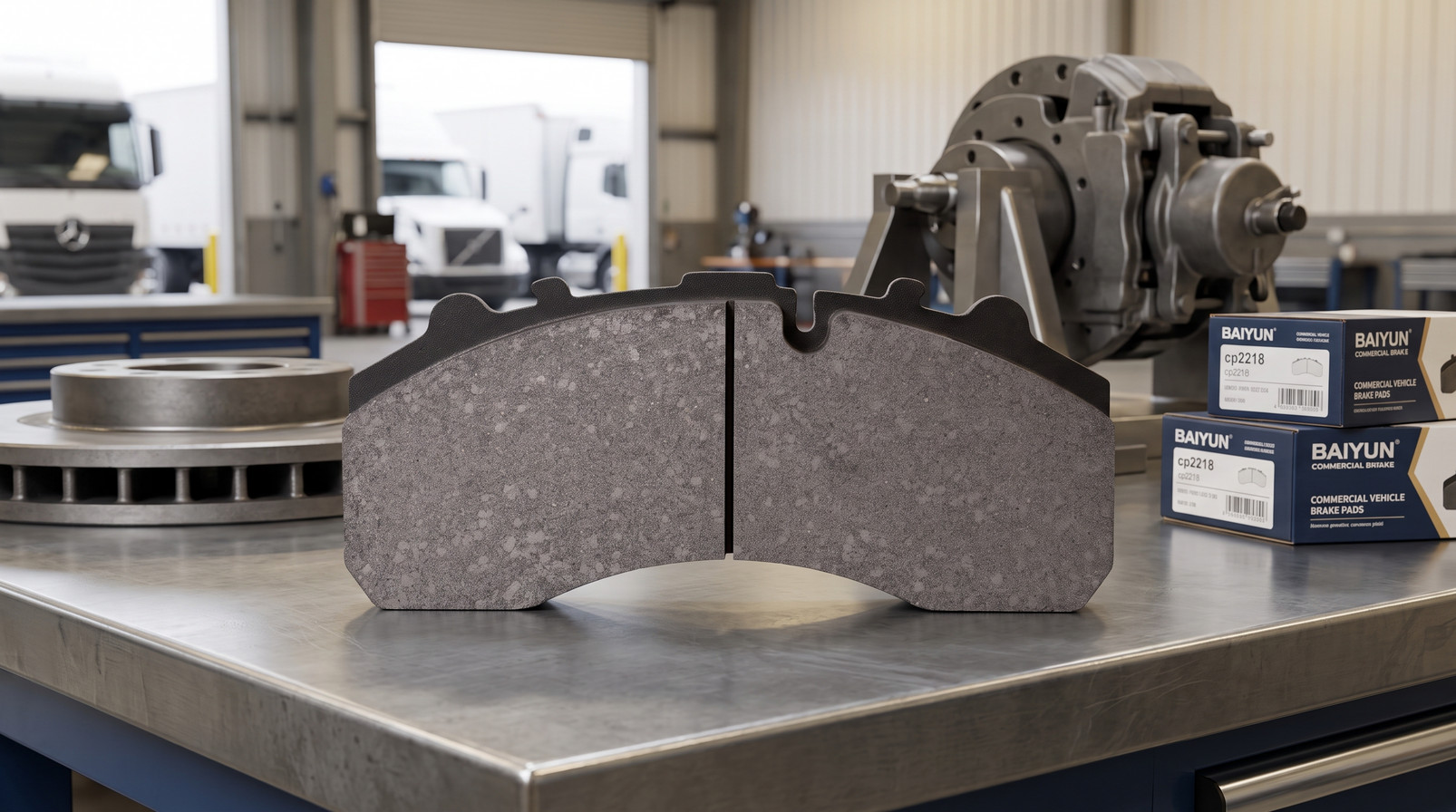
Quick answer: Bendix testing shows value in premium aftermarket replacement pads for commercial vehicles by linking pad choice to stopping distance, torque consistency, and brake system service life. For truck fleet managers and replacement part distributors, the takeaway is straightforward: choosing certified, batch-tested pads lowers liability risk and reduces cost per mile compared with the cheapest alternative. If you sell or service commercial vehicle brakes, premium doesn't just mean a higher price tag. It means repeatable friction performance, ECE R90 compliance, and fewer comebacks on air disc brake systems.
There's a reason the Trucks, Parts, Service coverage landed with fleet maintenance managers. It wasn't a product launch. It was a reminder that replacement pad choice directly affects the original air disc brake investment. Bendix testing found that average aftermarket pads can reduce stopping performance, increase liability risk, and shorten brake service life. That's not a luxury problem. It's a daily operating issue for trucks running 100,000 km a year.
Global medium- and heavy-duty truck demand keeps brake pad replacement volume steady. Fleets running intercity routes can log 120,000 to 160,000 km annually, so brake service intervals arrive fast. A premium pad that extends replacement intervals by even one cycle per year has real fleet value.
Why a Brake Pad Test Matters More Than a Brand Story
Brake linings look simple. Steel backing plate, friction material, maybe a shim or wear sensor. But under a fully loaded Class 8 truck, that pad set has to manage enormous thermal loads, repeated braking cycles, and axle-specific wear patterns. A brake dynamometer test doesn't care about the label. It measures torque output, fade, recovery, and wear across a specific temperature range. That's why Bendix testing in the commercial vehicle segment—reported by Trucks, Parts, Service—is useful for importers and maintenance teams. It shifts the discussion from brand name to measurable performance.
For a B2B buyer, what matters is whether the replacement pad can maintain stopping distance performance after several high-temperature cycles. Average pads often start well but lose effective friction once the disc and caliper get hot. On a long downhill grade, that gap shows up as longer pedal travel, more pressure on the foundation brakes, and a hotter brake assembly.
A distributor sourcing 500 sets monthly can't afford inconsistent friction coefficients batch to batch. If one shipment produces 5% longer stopping distances and the next produces 8%, the fleet notices. Brake pull complaints start. The distributor gets hit with returns. The price saving disappears in freight and customer service hours.
Premium Aftermarket Pads vs Average Pads: What Testing Actually Reveals
Let's talk numbers. Premium aftermarket truck brake pads designed for air disc brakes should maintain consistent friction coefficient—typically in the 0.38 to 0.45 range depending on formulation—across repeated braking. The ECE R90 test requires a replacement pad to stay within a defined tolerance band relative to the original part after thermal cycling. In plain terms, if the pad falls below 80% of its cold performance after heat soak, it fails homologation. Average replacement pads may not carry that certification at all. They can pass a visual inspection and still deliver 15% or more variation in torque from batch to batch. That inconsistency forces technicians to compensate. On a mixed fleet, it becomes a total cost of ownership problem rather than a simple unit price issue.
| Performance Area | Average Aftermarket Pad | Premium ECE R90 Pad | Fleet Impact |
|---|---|---|---|
| Cold friction after thermal cycling | May drop below 80% of baseline | Maintains at least 80% per ECE R90 | Predictable stopping distance |
| Torque consistency | Batch variation often visible | Controlled within narrow tolerance | Fewer pull complaints |
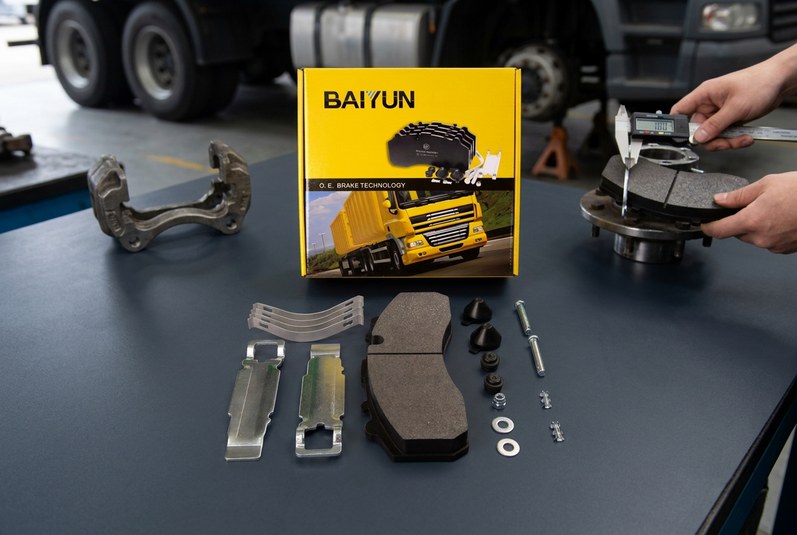
| Hardware inclusion | Often missing or separate | Hardware included where applicable | Faster install, fewer SKUs |
| Wear rate under heavy load | Can vary by axle position | Formulated for high thermal load | Lower cost per mile |
| Homologation | Not always ECE R90 | ECE R90 compliant | Legal and insurance confidence |
This table should not be read as a promise for a specific part number. Always Confirm with supplier catalogue for friction data, dimensions, and WVA fitment before ordering.
What Should Fleet Buyers Actually Verify on a Truck Brake Pad Quote?
You can't dyno-test every shipment. But you can demand documentation. A serious truck brake pad supplier will provide friction test reports, material data sheets, and batch traceability. Ask for the ECE R90 approval number and the WVA reference for each SKU. Then check that the WVA number matches the axle application you're buying for. If a supplier can't provide these, walk away—especially if the quote is 20% below market.
At BAIYUN Brake, our commercial vehicle brake pad range is built around IATF 16949 production controls and ECE R90 homologated friction formulations. We supply distributors and fleets that need repeatable batch performance, not just a first-article sample. Start with the product range here: browse our heavy-duty brake pad range and check whether your current supplier offers the same level of documentation.
Why Do Certifications Matter for Distributors and Importers?
An importer in Dubai or a distributor in South America may never visit the factory. Certifications become the buyer's due diligence. IATF 16949 means the production process is audited for automotive-grade quality management—not generic ISO paperwork. ECE R90 means the specific replacement pad has passed performance testing as a replacement part for the original application. For commercial vehicles, that's a legal requirement in many markets.
BAIYUN Brake operates under IATF 16949 and supplies ECE R90 certified commercial vehicle brake pads. Our IATF 16949 certified facility covers incoming raw material testing, in-process compression checks, and finished batch dynamometer sampling. That's the difference between a trading company quote and a factory that owns the manufacturing process.
European and Gulf markets increasingly require proof of ECE R90 at customs clearance, not just on the data sheet. If the homologation number doesn't match the actual part, the shipment can be rejected or held. That's one reason importers should request the test report before paying a deposit.
OEM and Private Label Options: Why One Size Doesn't Fit All Fleets
Fleet groups often want their own part number, packaging, and brand. That's private label. A factory-based supplier should handle it without forcing you into irrelevant vehicle programs. For heavy-duty trucks and buses, the product range should cover air disc brake pads and brake linings for drum brakes. Some distributors start with brake pads, then expand to linings for trailers and vocational vehicles. Bulk packing, neutral boxes, and export labeling matter as much as the friction material.
If you're building a commercial vehicle brake program, don't overlook commercial vehicle brake linings. Many mixed fleets still run drum brakes on trailers and steer axles, and you'll need both pad and lining supply to cover the full aftermarket requirement. We're a trusted brake pad supplier for just this kind of multi-line order.
Private label also requires stable tooling. If a supplier changes friction formulation without notice, your brand absorbs the warranty claims. Ask how formula changes are managed and whether batch samples are retained for 24 months. That's standard practice at a factory with IATF 16949 systems.
MOQ, Lead Times, and Export Logistics for Truck Brake Programs
Logistics decide margins as much as raw unit cost. A distributor ordering 300 sets of a single SKU might get a better unit price but sit on inventory for eight months. A smarter approach is a mixed container: truck brake pads, trailer linings, and hardware kits in one shipment. MOQ per SKU depends on the part number, material specification, and packaging type. Lead time also shifts with production scheduling and whether the part is existing tooling or a new private label project. For exact MOQ and WVA dimensions, Confirm with supplier catalogue.
Talk to a supplier that manufactures rather than resells. At BAIYUN Brake, the export team works around sea freight departures and regional certification paperwork. If you need to quote a municipal bus tender in six weeks, production lead time and document readiness matter just as much as the pad's friction coefficient. Typical production lead time after packaging approval runs 30–45 days, but that depends on the order profile.
Buyer Verification Checklist for Commercial Vehicle Brake Pad Sourcing
- Confirm ECE R90 approval number for each replacement pad SKU.
- Request WVA reference and application cross-check. If missing, Confirm with supplier catalogue.
- Ask for friction coefficient range and SAE J2522 or ECE R90 dynamometer test summary.
- Check whether hardware and wear sensors are included where applicable.
- Verify batch traceability: lot number, production date, material batch link.
- Review packaging: neutral box, private label, and export marking options.
- Request a sample or first-article test before committing to container volume.
At BAIYUN Brake, we handle these points as standard for distributor programs. If a quote skips documentation, the lowest price isn't a bargain.
Frequently Asked Questions from Distributors and Fleet Buyers
Does ECE R90 matter for truck and bus aftermarket brake pads?
Yes. ECE R90 requires replacement pads to stay within prescribed performance tolerance after thermal cycling, with cold effectiveness not dropping below 80% of baseline. Many markets in Europe, the Middle East, and Asia legally require ECE R90 homologation for commercial vehicle replacement pads.
How does premium pad choice affect stopping distance on a loaded truck?
Premium aftermarket pads maintain more consistent torque and shorter stopping distances because friction output doesn't fall off as aggressively under heat. Bendix testing indicates that choosing the wrong aftermarket pad can diminish the stopping performance you originally paid for with air disc brakes.
What is a WVA reference and why do importers ask for it?
WVA is a standardized part numbering system for friction materials. It lets a distributor verify that a replacement pad matches the original brake application. For specific dimensions and fitment, Confirm with supplier catalogue.
Can BAIYUN Brake support private label packaging for a truck brake pad brand?
Yes. BAIYUN Brake supplies OEM and private label commercial vehicle brake pads with neutral or customer-branded packaging, supported by IATF 16949 production and ECE R90 test documentation. MOQ and artwork approval vary by project; request a wholesale quote for details.
What should a fleet maintenance team do before switching pad suppliers?
Run a controlled pilot on a few trucks, track rotor and pad wear over one to two service intervals, and request dynamometer test reports from the supplier. Compare cost per mile, not unit price alone; a cheaper pad that destroys rotors or causes pull complaints is more expensive overall.
The Smarter Buy: Match the Testing, Not Just the Part Number
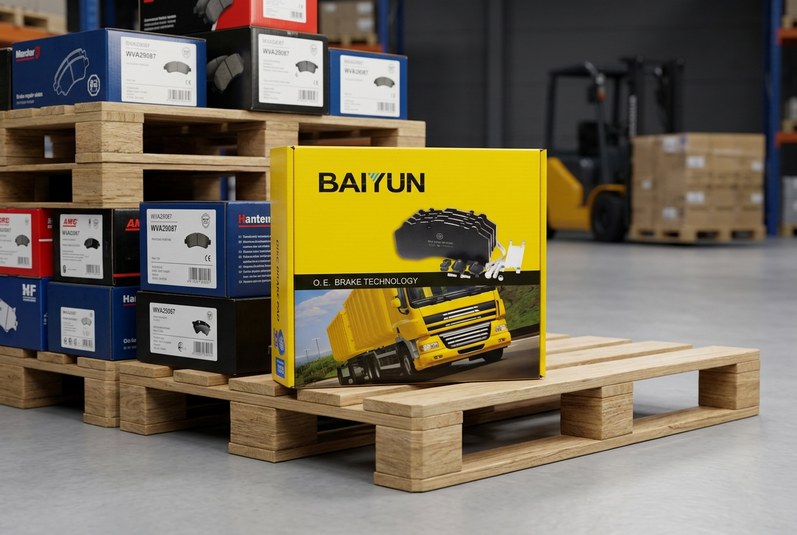
Bendix testing makes a practical point: average pads cost more in the long run when stopping distance, torque consistency, and brake system life are on the line. For fleet buyers and distributors, that means supplier qualification matters as much as the pad itself. Work with a manufacturer that can document what it sells. If you're building a recurring commercial vehicle brake program, start with the right product range. Browse our commercial vehicle brake pads and then request a wholesale quote with your application list. We'll help you match WVA references, test documentation, and export packaging to your market.
Was this article helpful?
Average Rating: 5/5 (414)