
Low-Dust Corrosion-Resistant Brake Pads: Why EVs Need Different Formulas
Summary:
Brake pads for electric vehicles require fundamentally different formulas than traditional pads, a critical fact for distributors sourcing from a brake pads electric vehicles EV supplier China. Regenerative braking creates unique challenges like corrosion from infrequent use and amplified cabin noise, demanding specialized low-dust, corrosion-resistant compounds. This shift represents a major growth opportunity in the expanding EV aftermarket.
Low-Dust Corrosion-Resistant Brake Pads: Why EVs Need Different Formulas
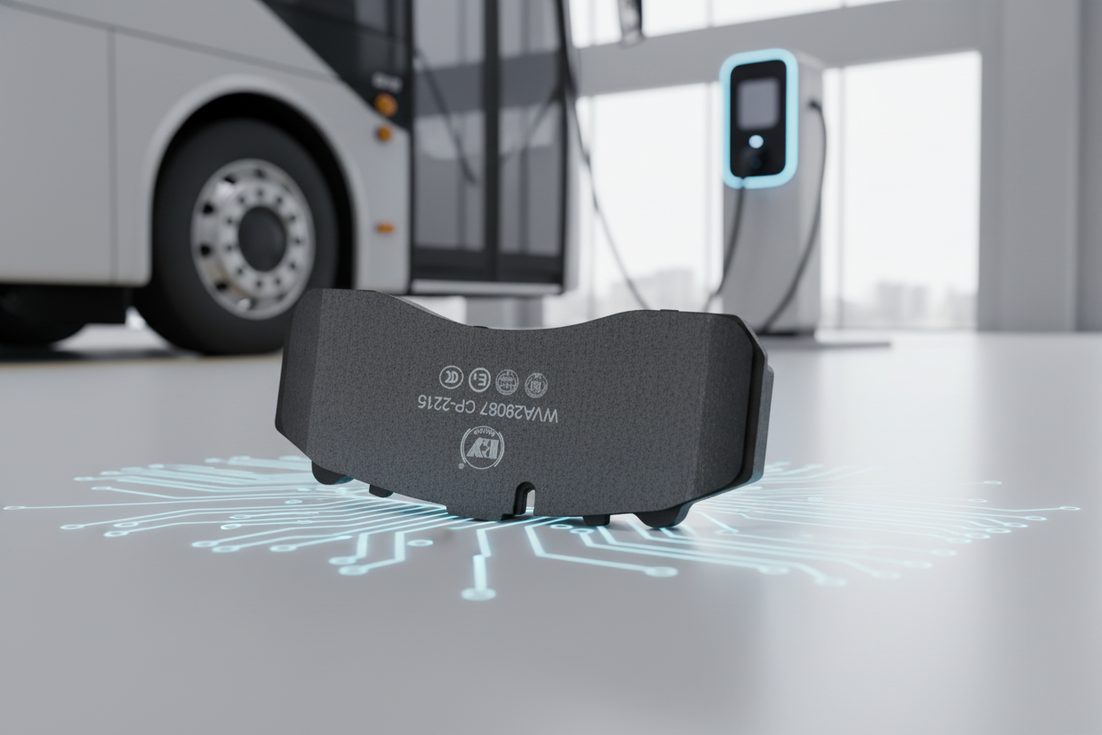
You've seen the headlines: the global electric vehicle market is projected to reach over 40 million annual sales by 2030. For distributors, that's not just a shift in powertrains; it's a fundamental change in the aftermarket parts you'll be sourcing. Regenerative braking might reduce friction pad wear by up to 70%, but it creates a unique set of challenges that standard brake pad formulas simply can't handle. The quiet cabin amplifies noise, infrequent use accelerates corrosion, and inconsistent friction application demands a more stable compound. Sourcing the right EV-specific brake pads isn't an option anymore—it's a critical business decision for staying competitive.
Let's be clear: a distributor sourcing 10,000 sets annually can't afford the warranty claims and customer dissatisfaction that come from using traditional pads on EVs. The performance gap is real, and the market is moving fast. This article breaks down the technical and commercial realities of EV brake pads, giving you the data and insights needed to make informed sourcing decisions from a trusted brake pad supplier.
How Regenerative Braking Redefines Pad Performance Requirements
Regenerative braking handles the majority of daily deceleration, often between 80-90% in city driving. This drastically reduces mechanical brake usage. While that sounds like a win for pad longevity, it creates a problematic operating environment. Friction brakes on EVs spend most of their time disengaged and cold. When they are called upon—for an emergency stop or when the battery is full—they must deliver maximum performance instantly from a cold state. Traditional pads are engineered for gradual heat buildup and consistent use; their friction coefficients can be unstable in this on-off, cold-operation scenario.
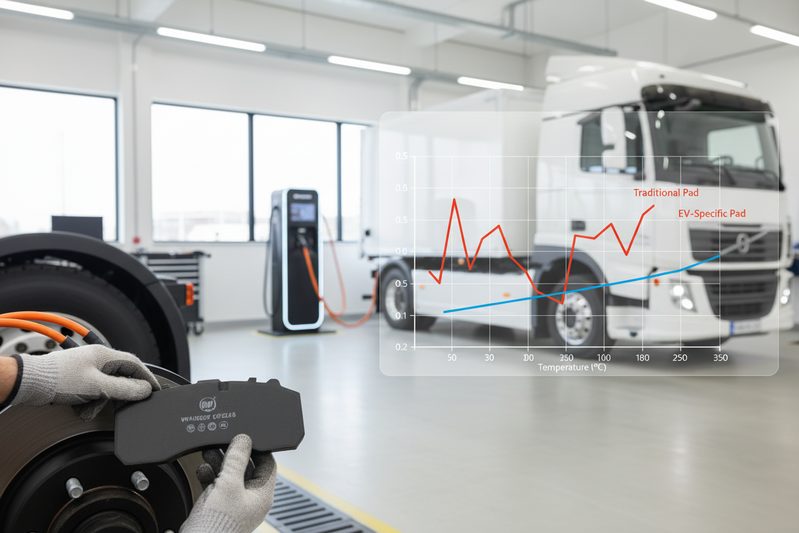
An EV-specific formula prioritizes a consistent friction coefficient (μ-value) across a wide temperature range, especially from low temperatures. A pad that performs well at 300°C but is grabby at 50°C is unacceptable in an EV. Furthermore, the reduced wear means pads and rotors can last the vehicle's lifetime, but only if corrosion doesn't compromise them first. This shifts the performance priority from pure wear resistance to a balance of low-noise, corrosion resistance, and stable cold friction. You can explore the material science behind this in our guide on understanding brake pad materials.
The Three Non-Negotiables: Low Dust, Corrosion Resistance, and NVH Control
Forget the old priorities. EV brake pad success hinges on three specific performance attributes that directly impact customer satisfaction and your brand reputation.
First, low dust is non-negotiable. EV owners are typically more discerning, and the large, often intricate alloy wheels common on EVs show brake dust immediately. A high-dust pad leads to constant cleaning complaints. Second, corrosion resistance is arguably the most critical factor. With infrequent use, pads and rotors don't get the cleaning action of regular engagement. Moisture and road salts sit on the friction surface, leading to pad glazing, rotor pitting, and that infamous 'clunk' on the first brake application after parking. A pad's backing plate and friction material must include anti-corrosion treatments.
Finally, Noise, Vibration, and Harshness (NVH) control is paramount. An EV's near-silent cabin turns minor brake squeal into a major annoyance. EV-specific pads use advanced chamfering, shims, and specialized rubberized compounds to dampen vibrations across a wider frequency range. Sourcing pads that master this trifecta is where a manufacturer's R&D investment pays off. For a deeper look at performance validation, review our passenger car brake pad test report.
Market Data and the Sourcing Opportunity for Distributors
The numbers tell a compelling story. The EV brake components aftermarket is expected to grow at a CAGR of over 18% from 2024 to 2030. While pad replacement intervals are longer, the premium price point for EV-certified pads (often 25-40% higher than standard equivalents) maintains healthy margin potential. More importantly, early adopters in this space are building brand loyalty for the long term. A distributor who becomes the go-to source for reliable, high-performance EV pads today secures a partnership for the next decade of vehicle turnover.
The sourcing landscape, however, is fragmented. Many factories are still adapting old lines. You need a partner with proven EV formulations, not just a marketing claim. Look for manufacturers who reference specific EV platform testing and can provide friction curves showing stability from 50°C to 350°C. Certifications like IATF 16949 are a baseline, but ask for evidence of ECE R90 testing on their EV-specific compounds—this regulation's thermal fade and recovery tests are highly relevant. Building a reliable supply chain starts with a partner who understands the engineering, not just the assembly. Learn more about our foundational approach in the BAIYUN Brake company introduction.
Why Generic Pads Fail and How to Vet an EV-Specific Supplier
Using a traditional semi-metallic pad on an EV is a recipe for comebacks. The metallic content can accelerate rotor wear during those infrequent engagements and is more prone to corrosion. The harder compound often leads to unacceptable noise in a quiet EV. The supplier vetting process needs new checkpoints.
Beyond certifications, request dynamometer test data for the exact friction code you're sourcing. The graph should show a flat, stable μ-curve. Inquire about their corrosion testing protocol—do they use salt spray chambers (e.g., ASTM B117) for backing plates? Ask for their NVH validation process; it should involve noise dynamometer testing, not just vehicle trials. A serious manufacturer will have this data readily available. Frankly, the minor cost savings from a generic pad source are obliterated by a single batch failure or a major OEM's rejection. Your due diligence protects your business. For a comprehensive view of our capabilities, you can always download our product catalogue and technical specifications.
Frequently Asked Questions for Brake Pad Distributors
Do EVs really need different brake pads, or is it just marketing?
It's a genuine engineering requirement. The operational profile—infrequent use, cold operation, and sensitivity to noise—demands a reformulated compound. Standard pads risk increased corrosion, noise complaints, and inconsistent pedal feel in EVs, directly impacting driver safety and satisfaction.
What's the biggest technical difference in an EV pad formula?
The focus shifts to stable friction at lower temperatures (50-150°C) and enhanced corrosion inhibitors. Materials are chosen to minimize dust and rotor wear, as the pads see less abrasive cleaning action. The binding systems and shim technology are also optimized for superior NVH performance in a quiet vehicle.
How do I explain the higher cost of EV pads to my customers?
Frame it as performance insurance. The higher cost reflects advanced materials (like specialized low-copper ceramics), extensive R&D for cold-friction stability, and rigorous corrosion testing. It ensures silent operation, protects expensive rotors from pitting, and maintains reliable stopping power regardless of how infrequently the physical brakes are used.
Can I use the same pad on both the EV and hybrid versions of the same car model?
Not always. While similar, hybrids may have different regenerative braking calibration and weight distribution. Always cross-reference the manufacturer's part number. Using the OE-specified compound, even between similar-looking models, is critical for warranty compliance and optimal performance.
What certifications are most important for EV brake pads?
IATF 16949 certification for the manufacturing facility is essential for quality system assurance. For performance validation, ECE R90 certification is a key global benchmark, as its test sequence evaluates fade, recovery, and effectiveness—all critical for EV performance. Supplier-specific dynamometer data matching OE friction codes is equally important.
The transition to electric mobility isn't slowing down. For brake pad distributors, this represents a strategic pivot point. The winners in this new segment won't be those who simply resell existing inventory but those who proactively source from manufacturers with dedicated EV engineering. It's about partnering with a factory that understands the physics of regenerative braking and has invested in the formulations to match.
At BAIYUN Brake, we've been developing and testing EV-specific low-dust, corrosion-resistant compounds for years in our IATF 16949 certified facility. Our formulations are engineered to meet the strict demands of silent operation and long-term durability in high-voltage vehicles. We provide the full technical dossier and test reports you need to supply with confidence.
Ready to future-proof your brake pad inventory? Get the technical specifications and competitive pricing for our range of EV-optimized brake pads. Contact us today to request samples and a detailed product presentation.
Was this article helpful?
Average Rating: 5/5 (1443)