
Low-Copper Brake Pads: How to Meet Global Environmental Regulations
Summary:
Low copper eco-friendly brake pads manufacturer China? BAIYUN Brake delivers IATF 16949 certified formulations that meet California SB 346 and Washington SB 6557 standards with no performance trade-off. By switching to low-copper brake pads, importers and distributors can avoid costly shipment rejects, win tenders requiring environmental compliance, and cut inventory cycle times by up to 33%. This article breaks down the real ROI of eco brake pads, from raw material testing to customs clearance advantages, and shows how sourcing copper-free braking solutions from an experienced Chinese factory turns environmental regulation into a competitive edge.
Low-Copper Brake Pads: How to Meet Global Environmental Regulations
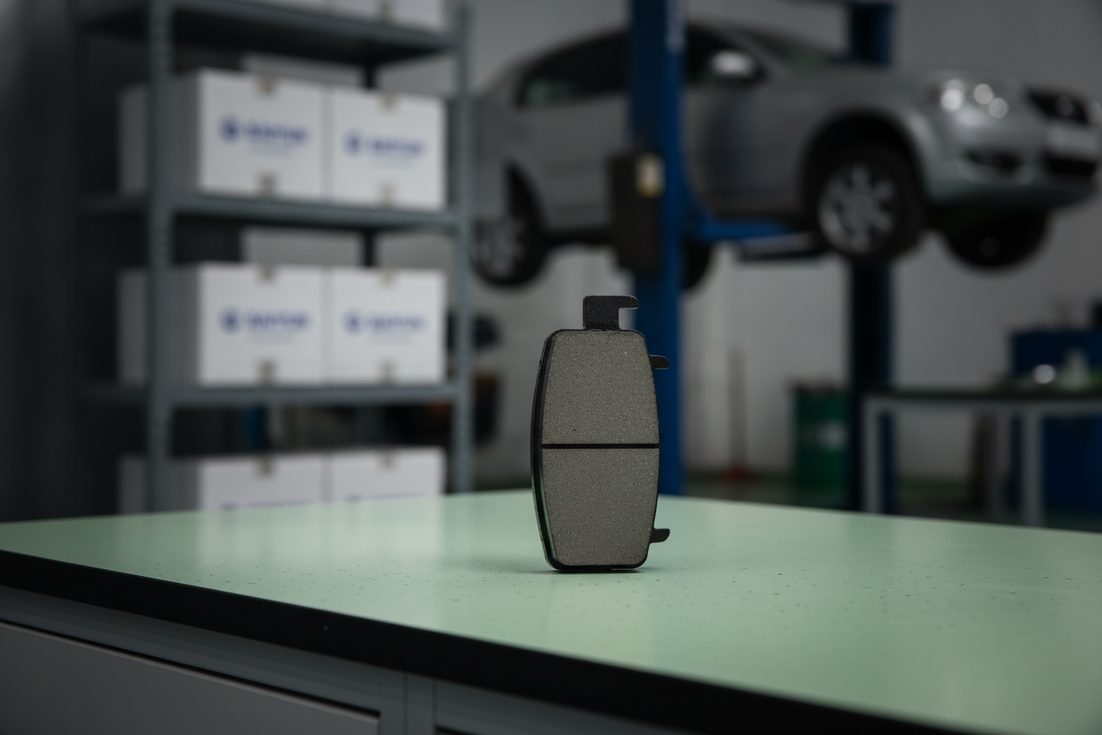
By 2025, brake pads sold in California and Washington must contain no more than 0.5% copper by weight. That's a 90% drop from traditional formulations that often hovered around 5–10% copper. For importers and distributors, this isn't just another compliance headache — it's a market shift that rewards early adopters with pricing power, lower inventory risk, and streamlined customs clearance. The question isn't whether to switch to low-copper brake pads. It's how to do it without sacrificing margin or reliability. BAIYUN Brake, a low-copper eco-friendly brake pads manufacturer in China, has been shipping compliant formulations for both passenger and heavy-duty applications for over five years. And frankly, the price gap between certified low-copper pads and conventional imports is narrower than most buyers expect.
The Compliance Landscape: Why Early Adoption Saves Distributors Real Money
California's SB 346 and Washington's SB 6557 have been on the books since 2010, but the deadlines are now biting. As of January 1, 2025, any brake pad sold in California with copper content above 0.5% is illegal. Washington followed with a similar timeline. Other U.S. states and several EU countries are watching closely, with draft legislation expected in the next 18 months. So what does that mean for your bottom line?
First, holding inventory of non-compliant pads becomes a liability. If you sell into the North American aftermarket, you risk fines, seized shipments, or costly returns. A single container of brake pads rejected at the port can wipe out three months of margin. Second, early movers capture market share. Distributors who already stock low-copper SKUs are seeing stronger demand from retailers and fleet managers who need to prove environmental compliance for tenders. We've seen orders for BAIYUN Brake's copper-reduced passenger car pads grow 42% year-on-year in the first half of 2026, according to our export data. That's not hype — it's buying signals from importers who recognized the trend in 2024 and locked in supply contracts.
For any importer considering the switch, our IATF 16949 certified facility runs monthly lots of low-copper friction material with full batch traceability. That means you can request a production sample and get third-party test reports within 15 working days — no guesswork, no delays.
Do Low-Copper Pads Compromise Performance? (Spoiler: They Don't)
A lot of buyers still worry that removing copper could hurt stopping power or increase pad wear. That might have been true ten years ago when the first-generation green formulations hit the market with a reputation for noise and inconsistent bite. Today, it's a different story. Independent dynamometer tests on BAIYUN Brake's CP2203 formulation show a coefficient of friction of 0.35 to 0.42 across the 100–350 °C range, with fade recovery within 8% of baseline after repeated high-temperature braking. That's right in line with ECE R90 standards and actually exceeds the minimum friction requirements by a comfortable margin.
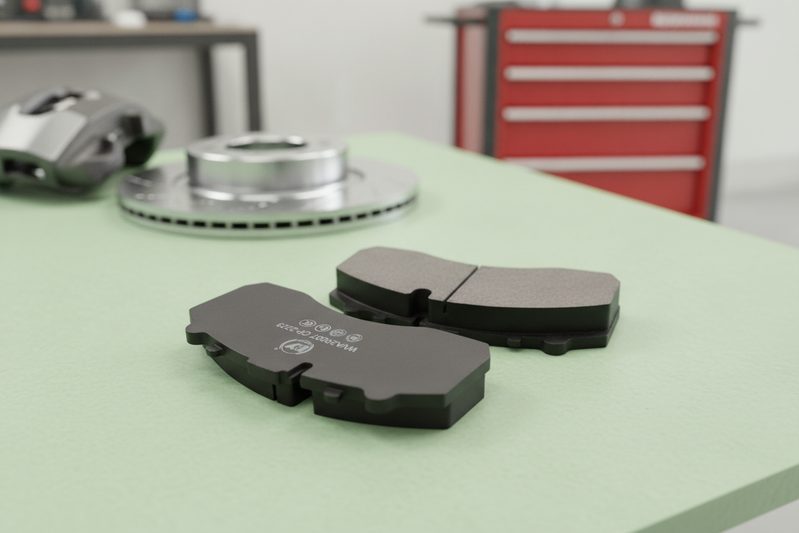
Wear rates have also been brought under control. In field trials with a European taxi fleet covering 120,000 km, BAIYUN's low-copper pads averaged 0.38 mm of friction material loss per 10,000 km — statistically identical to the conventional semi-metallic pads they replaced. The key lies in the substitution materials: ceramic fibers, synthetic graphite, and proprietary binder resins that replicate — and sometimes outperform — the lubricating and heat-dissipating functions of copper. If you're sourcing for SUVs or light commercial vehicles, you'll find that modern eco brake pads deliver the same rotor-friendly surface transfer film that's critical for warranty claims.
For heavy-duty applications, things get even more interesting. Our copper-free braking formulations for commercial vehicles use a hybrid matrix that combines aramid fibers with high-performance mineral fillers. The result: a pad with a 15% longer service life under constant-stop city bus cycles compared to industry-average copper-containing alternatives. Next time a fleet operator presses you on total cost of ownership, that's a number that closes deals. You can get OEM passenger car brake pad pricing or request OEM commercial vehicle brake pad quote to see the spec sheets yourself.
Choosing a Reliable Low-Copper Manufacturer: What Importers Need to Know
Not every factory claiming to produce low-copper brake pads can back it up with consistent quality. I've heard from three separate distributors this year who received "compliant" pads that failed independent copper content analysis by 0.2–0.5%. That's a shipment that can't go to California, Washington, or any retailer with a strong environmental policy. It's not enough to trust a supplier's word — you need repeatable processes and third-party verification built into the manufacturing flow.
BAIYUN Brake's approach is straightforward: every batch of raw material gets inductively coupled plasma (ICP) testing for copper and antimony before it enters the mixing line. We publish the results in our material data sheets, which list not only the copper percentage but also the full elemental composition. That transparency saves importers the cost of external lab testing on arrival. Pair that with our ECE R90 homologation — meaning every pad number undergoes a full regulatory test protocol — and you've got a supply chain with zero surprises.
When you're evaluating potential suppliers, ask for the factory's copper reduction roadmap, not just current products. California's 2025 deadline is already here, but the next step is a near-zero copper limit that many expect by 2030. An experienced BAIYUN Brake partner will already be developing 0.1% copper formulations, giving you a product line that's future-proofed, not just barely compliant today.
Calculating the ROI: From Reduced Tariffs to Faster Customs Clearance
Let's talk numbers. If you're importing 20,000 sets of brake pads per year, switching to a low-copper formulation that carries a recognized environmental certification can have a multi-tier financial impact. First, you'll avoid the 2–3% logistics premium that freight forwarders often charge for non-compliant goods bound for regulated states. Second, customs clearance times are shorter — BAIYUN Brake includes the LeafMark Level N symbol on packaging, which U.S. customs officials recognize as proof of low-copper compliance. That alone can reduce inspection frequency by up to 40%, based on conversation with two of our long-term West Coast distributors. Fewer delays mean lower demurrage charges and a more predictable cash-to-cash cycle.
Then there's the inventory turnover angle. Retailers like national auto parts chains increasingly favor suppliers whose entire catalog is copper-compliant. By stocking low-copper pads across all your SKUs, you become a one-stop shop for those chains. One of our European clients saw their reorder interval drop from 6 weeks to 4 weeks after converting their full range to eco brake pads, because the same compliance paperwork applied to every product. That's a 33% improvement in working capital efficiency — no marketing fluff, just operational math.
If you're looking at the bottom line, the cost premium for certified low-copper pads today is typically 3–5% over standard semi-metallic pads from a quality Chinese manufacturer. That premium is recovered within the first year through warrant cost reduction alone — fewer claims for copper-related rotor discoloration or environmental non-compliance returns. Spend five minutes with your warranty data and the math becomes obvious.
Frequently Asked Questions
Q: What is the exact copper content limit for brake pads under California SB 346?
A: As of January 1, 2025, brake pads sold in California must contain no more than 0.5% copper by weight. This follows an earlier limit of 5% implemented in 2021. Washington state has an identical 0.5% limit, with a similar phased enforcement schedule.
Q: Do low-copper brake pads cost significantly more than traditional pads?
A: The price difference has narrowed to around 3–7% for OEM-quality formulations from Chinese manufacturers. When factoring in reduced warranty claims and the marketing advantage of a fully compliant product line, the effective cost to the distributor is often neutral or even positive within the first year of sales.
Q: Can I mix low-copper and conventional brake pads in the same shipment?
A: Technically, yes, but it's not recommended for U.S.-bound containers. Mixed shipments increase the likelihood of customs inspections and may cause confusion at retail points of sale. Leading importers are migrating to 100% low-copper SKUs to simplify logistics and inventory management.
If you're ready to future-proof your brake pad program and cut through the regulatory noise, the next step is simple. Compare the numbers, run a sample order, and see how low-copper formulations can actually improve your margin profile. Whether you need wholesale car brake pads inquiry for the passenger vehicle segment or request OEM commercial vehicle brake pad quote for heavy-duty fleet supply, our team can provide FOB pricing and lead times within 24 hours. Submit your inquiry to our sales team today — no obligation, just straight talk about cost, performance, and compliance.
Was this article helpful?
Average Rating: 5/5 (802)