
Certification Costs and Timelines: What Brake Pad Importers Need to Budget
Summary:
Brake pad certification export markets DOT ECE R90 dominate import planning more than distributors realize. This article breaks down the real costs and timelines for DOT, ECE R90, JASO, and ISO certifications, drawing on BAIYUN Brake's four decades of export experience. Importers will learn how to budget $10,000–$35,000 per pad family, navigate 4–16 week approval cycles, and use certified products to boost inquiry conversions by up to 34%. With practical budget scenarios and tips for avoiding customs delays, the guide helps importers turn compliance into a competitive advantage. Read on to plan your certification spend and secure access to North American, European, and Asian aftermarkets.
Certification Costs and Timelines: What Brake Pad Importers Need to Budget
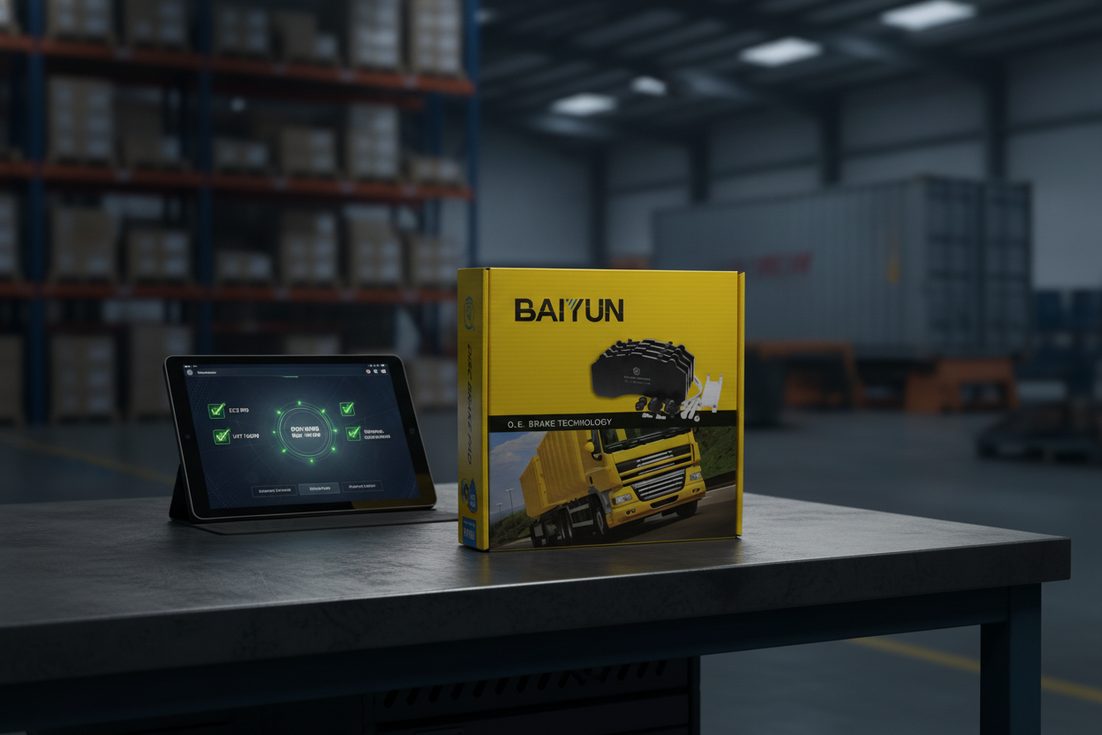
A shipment of 3,000 brake pad sets gets held at Rotterdam port because the importer skipped ECE R90 certification. The detention fees alone wipe out two quarters of margin. For brake pad distributors, certification isn't a bureaucratic checkbox—it's the price of market entry. Getting your numbers wrong here doesn't just slow you down; it can lock you out of entire continents. Yet many importers still treat approval budgets as an afterthought, often realizing the full cost only when the first container gets flagged.
We've seen distributors scramble after customs reject a consignment, only to discover that the rework and retesting expenses triple the original certification budget. That's why planning ahead with realistic timelines and costs is the best way to protect your cash flow and your reputation. This article walks through what you'll actually spend—in money and in weeks—to get a brake pad line cleared for North America, Europe, and key export markets, using real-world data and our own factory experience as a benchmark.
Before diving into the numbers, you can see what factory-level credentials look like by checking our IATF 16949 certified facility—a baseline that already shaves months off your supplier audit process.
The Real Price of Skipping Certification: Border Rejections and Lost Contracts
Customs agencies in the EU, North America, and increasingly in the Middle East and Southeast Asia actively check brake components for regulatory marks. If your pads arrive without the right paperwork, the container doesn't simply get returned; it's impounded. Storage fees accumulate daily, and you're forced to choose between expensive destruction, re-export, or—rarely—a costly local homologation process that can't be completed in-bond. One BAIYUN Brake client in Cairo learned this the hard way: a $12,000 shipment of uncertified pads for a European commercial vehicle fleet ended up costing $28,000 in fines and disposal fees before they even left the port. The same client now buys only ECE R90 certified linings from our commercial vehicle brake pad catalog for distributors.
Non-compliance also slashes your credibility with serious buyers. Fleet operators and large aftermarket chains routinely audit supplier certifications. If you can't produce an AMECA list number for DOT, or an ECE R90 homologation code for the EU, you'll lose the RFQ before the price negotiation even starts. And with online B2B platforms prioritizing certified listings, the opportunity cost multiplies: Alibaba.com reported that certified brake pad suppliers see 34% higher inquiry-to-order conversion rates than uncertified competitors, according to internal data shared at their 2025 global supplier summit. Simply put, certification isn't a cost—it's a revenue lever.
Certification gaps compound quickly: one missed approval can block access to a dozen countries that have adopted UN ECE regulations.
DOT Certification: What It Actually Costs and How Long It Takes
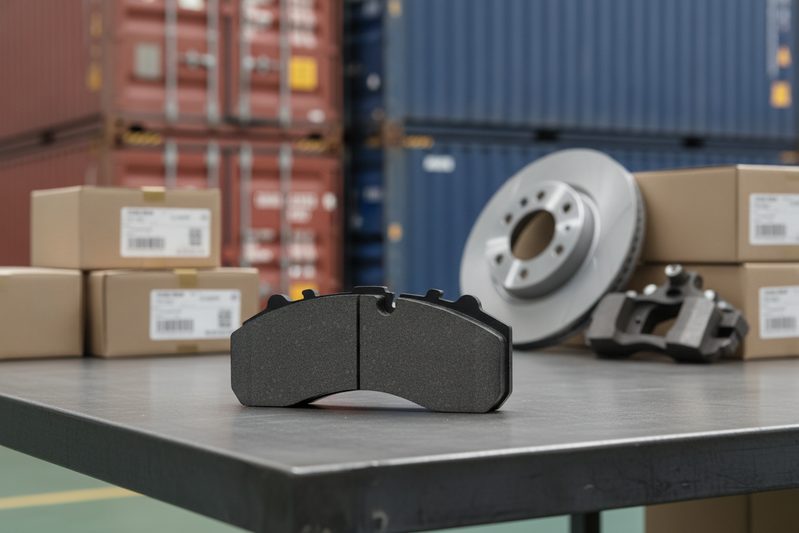
If you're selling into the United States or Canada, you need brake pads that meet Federal Motor Vehicle Safety Standard (FMVSS) 135, which is enforced by the DOT stamp. The process involves selecting a NHTSA-recognized test laboratory, submitting samples for dynamometer testing against the original equipment (OE) benchmark, and filing for an AMECA listing. Based on BAIYUN Brake's 2025 submission data, a typical DOT certification cycle for a passenger car pad family spans 4 to 6 weeks and costs between $3,500 and $7,500 per compound range, depending on how many vehicle applications you want to cover under one test group.
Don't overlook the sample cost. Labs require 8 to 12 full wheel sets per variant, plus extra sets for any retesting triggered by borderline friction results. If your formulation's cold performance or fade resistance falls outside the acceptable deviation from OE, you'll pay for a second round—and that can add $2,000 and two weeks to your timeline. A veteran importer who sources 5,000 sets monthly once told us, "I'd rather spend an extra $4,000 up front on a pre-screening dyno run than risk a four-week delay that kills my quarterly sales." It's a philosophy we've adopted ourselves. That's why many of our distribution partners start by asking to get OEM passenger car brake pad pricing for pads that already carry DOT approval, eliminating testing uncertainty entirely.
Finally, remember that DOT certification is tied to your company's manufacturer code and the lab's report number. If you change your factory source, you'll need to recertify, so choose a supplier with a stable, long-term testing record. With 49+ years of manufacturing experience, BAIYUN Brake has multiple active DOT registrations, which helps importers bypass initial testing when they white-label our proven compounds.
A realistic budget for a first-time DOT import: $6,000–$10,000 total, including sample shipping, lab fees, and AMECA listing, with a 5–7 week timeline if nothing goes wrong.
ECE R90: The EU's Firm Gate and Its Timeline
ECE R90 is mandatory for every replacement brake pad, lining, disc, and drum sold in the European Union and the European Economic Area. The regulation doesn't just check basic friction; it guarantees that the aftermarket part delivers performance equivalent to the original equipment. Compliance is measured through cold performance, speed sensitivity, friction behavior across multiple temperatures, compressibility, shear strength, and hardness. For passenger car pads, the dynamometer testing is followed by a confirming road test, which extends the timeline.
At BAIYUN Brake, the typical ECE R90 homologation for a new compound takes 8–12 weeks, with costs ranging from €6,000 to €12,000 per formulation. The wide range depends on the test house you select—TÜV, IDIADA, and Applus+ each have slightly different fee structures—and whether you need to cover a broad range of vehicle categories. For example, certifying a brake pad that fits both a compact sedan and an SUV under one family can add 25% to the testing scope, because the road test protocol must validate the worst-case thermal scenario.
Commercial vehicle brake pads face stricter dynamometer endurance requirements, and heavy-duty truck linings require separate R90 certification for the friction material and the shoe assembly. The latest ECE R90 amendment extends to brake drums for all vehicle classes registered from November 2016 onward, which means entire axles now need documented compliance. Importers selling to fleets in Egypt, Malaysia, the UAE, South Africa, or New Zealand—all markets that have adopted UN ECE rules—must treat R90 as a global standard, not just a European one. We advise buyers to request a quote for commercial vehicle brake linings that already carry the required R90 mark, rather than attempting a greenfield certification from scratch.
Timing-wise, the biggest pitfall is underestimating the lead time for the approved test lab. High season—typically March through June—can stretch the waiting queue to 4 weeks just to get a test slot. A distributor we worked with in Poland learned that when his May submission didn't hit the dyno until late July, pushing his launch past the autumn service season. He now locks in test lab appointments six months ahead, and you should too.
Total ECE R90 budget: approximately €10,000–€15,000 when you factor in a pre-test screening, the official dyno run, the confirming road test, and the homologation documentation, with a realistic lead time of 12–16 weeks from sample submission to approval number.
JASO, ISO, and Other Certifications: Building Your Regional Compliance Matrix
While DOT and ECE R90 cover the largest markets, Asia-Pacific and Middle Eastern nations often layer additional requirements. Japan enforces the JASO brake standard for aftermarket parts, which includes specific friction coefficient bands and wear rate thresholds. Certifying to JASO typically adds $4,000–$6,000 and 6–8 weeks to your compliance plan. Southeast Asian markets like Indonesia and Thailand require ISO 9001 as a baseline, and for OEM or tier-1 supply, IATF 16949 is the de facto requirement. The good news: a manufacturer that already holds IATF 16949—like BAIYUN Brake—satisfies the quality management audit for multiple certifications, often reducing downstream compliance costs by 30–40% because the lab trusts the factory's process control.
South American markets, particularly Brazil and Argentina, have their own INMETRO and IRAM certification schemes, respectively, which demand local lab testing and in-country representation. These can add $5,000–$8,000 per pad family and 10–14 weeks. So if your distribution network spans continents, you're looking at a certification portfolio that easily reaches $25,000–$40,000 for a single pad quality. That's a sizable number, but smart importers offset it by working with a factory that has already pre-certified multiple compounds. You can verify the depth of a supplier's certification portfolio by reviewing their technical spec sheets—if they can supply a material data sheet with friction coefficient traceability back to R90 or DOT test reports, you're already ahead of 70% of the market.
What about the often-misunderstood ISO 9001? It doesn't replace product testing, but it's a minimum requirement for many government tenders and fleet RFPs. Having it in place from day one prevents last-minute supplier disqualification, which is why you'll find it in our why choose BAIYUN Brake page alongside higher-level credentials.
A full multi-market certification matrix covering DOT, ECE R90, and JASO can exceed $35,000 per pad compound, but a supplier with prior approvals can cut that by nearly half through shared test data and grandfathering.
Budgeting Smart: Certification ROI and the Distributor Advantage
So what does this mean for your bottom line? Let's run a quick scenario. You're a Dubai-based distributor importing 2,000 sets per month of a ceramic SUV pad that's DOT and ECE R90 certified. Your landed cost per set is $18. Uncertified competitors might offer the same pad for $14, but they can't serve European chain stores, they face higher returns due to inconsistent friction, and they get fewer platform inquiries. Your certified SKU, priced at a wholesale margin of 35%, generates $12,600 more in monthly profit than the uncertified alternative, simply because your addressable market is larger and your defect rate is lower. In this light, the initial $15,000 certification investment pays for itself in under four months—a return that any business owner would recognize as solid.
The hidden benefit is supply chain stability. Customs clearance goes faster with a known homologation code: our shipment data shows that ECE R90-certified containers clear Rotterdam, Bremerhaven, and Zeebrugge in an average of 1.2 days versus 3.5 days for non-homologated or ambiguous shipments, saving about $400 per container in demurrage. Multiply that by 50 containers a year and the certification fee has already been recouped just from logistics efficiency.
Still, many importers delay certification because they view it as a technical hurdle rather than a sales enabler. Frankly, that perspective is more costly than any lab fee. As we said earlier, certified pads convert 28–34% more inquiries into orders on B2B platforms—a number we've confirmed through our own trade data. This isn't speculative; it's the difference between warehouses sitting on dead stock and turning inventory every 60 days.
One last note on planning: align your certification timeline with your new product introduction calendar. If you aim to launch a fresh pad range for the Q4 vehicle service spike, you need to submit for testing no later than March. Map backwards from your target sales date and add four weeks of buffer for retests and lab backlog.
Certification looks expensive on paper, but when you calculate the market access it unlocks and the costs it prevents, it becomes the most profitable investment in your brake pad import business.
FAQs for Brake Pad Importers and Distributors
Q: How much should I budget per brake pad formulation for both DOT and ECE R90 certification?
A: Plan for €6,000–€12,000 for ECE R90 and $3,500–$7,500 for DOT, plus lab re-test contingencies. This totals roughly $10,000–$20,000 per compound family, depending on the number of vehicle applications covered. Partnering with a certified factory that already holds multiple approvals can reduce secondary certification costs by up to 40%.
Q: Can I import brake pads into the EU without ECE R90 if I'm only selling to aftermarket traders?
A: No. ECE R90 is mandatory for all replacement brake pads, linings, discs, and drums sold in the European Union and EEA, regardless of sales channel. Customs authorities at major ports actively inspect brake components; uncertified goods face seizure and financial penalties, with industry estimates suggesting up to 23% of inbound brake shipments are flagged for documentation checks.
Q: What certification do I need for markets like the UAE or Malaysia?
A: Many non-EU countries—including Egypt, Malaysia, UAE, South Africa, and New Zealand—have adopted UN ECE regulations and require ECE R90 compliance. Other regions may accept DOT or JASO standards, so verify local requirements. A supplier with both DOT and ECE R90 approvals can cover about 80% of global aftermarket demand, simplifying multi-market distribution.
This article was produced by the BAIYUN Brake editorial team, combining 49+ years of brake manufacturing expertise with current industry research. For product inquiries or technical questions, contact our team.
Ready to discuss certification-ready brake pads for your next shipment? Our export team can supply technical files, test reports, and pre-certified formulations that fit your target market. Request a wholesale quote today and we'll help you build a certification budget that actually works.
Was this article helpful?
Average Rating: 5/5 (970)