
Copper-Free Brake Pads: The Compliance Guide for North American Importers from a Low Copper Eco-Friendly Brake Pads Manufacturer China
Summary:
As a low copper eco-friendly brake pads manufacturer China, BAIYUN Brake understands the challenges North American importers face with evolving environmental regulations. This comprehensive guide covers the latest copper-free brake pad compliance requirements, technical specifications, and testing standards under Washington SB 6557 and California SB 346. Importers will learn how to select compliant low-copper formulations, verify supplier quality with IATF 16949 and ECE R90 certification, and build a 2025-ready product portfolio. With 49+ years of manufacturing experience, BAIYUN Brake provides the documentation and testing support needed to navigate the 0.5% copper threshold confidently.
Copper-Free Brake Pads: The Compliance Guide for North American Importers from a Low Copper Eco-Friendly Brake Pads Manufacturer China
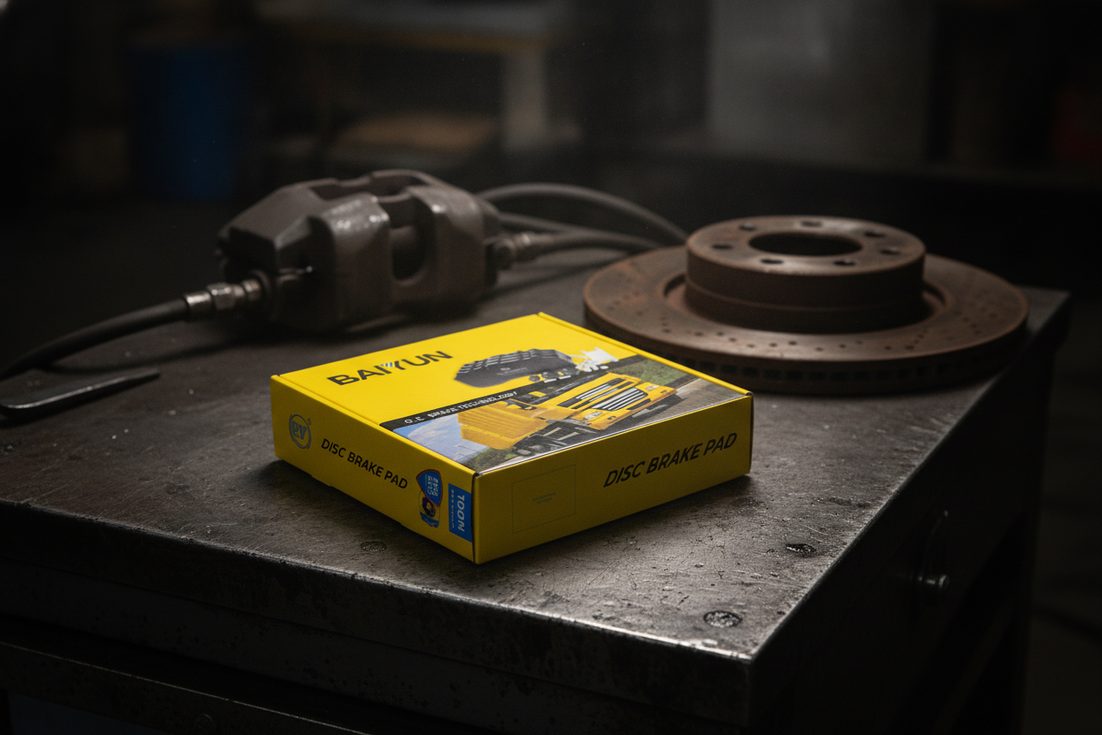
A North American brake pad distributor recently called us with a simple question: "Are your pads copper-free yet?" It's not just a California thing anymore. Washington's SB 6557 and California's SB 346 have fundamentally changed the game for anyone importing brake pads into the US and Canada. If you're still stocking high-copper formulas, you're sitting on inventory that'll be unsellable in key markets within months. As a low copper eco-friendly brake pads manufacturer China, BAIYUN Brake has been through the compliance trenches, and we're going to walk you through exactly what you need to know—technical specs, test standards, and the documentation that keeps customs clearance smooth.
But before we dive into part numbers and friction charts, let's nail down the regulatory reality. The numbers aren't fuzzy: by January 1, 2025, any brake pad containing more than 0.5% copper by weight cannot legally be sold in California or Washington. And since many manufacturers have chosen to standardize across all 50 states, an importer who ignores this timeline risks getting stuck with non-compliant inventory. Check our brake pad composition guide if you need a refresher on what that 0.5% threshold actually looks like in a friction material matrix.
Why Copper-Free Regulations Are Reshaping the North American Brake Pad Market
According to the Washington State Department of Ecology, brake pad copper accounts for up to 60% of the copper in urban runoff in California's most urbanized watersheds. That's the environmental problem that drove the legislation—copper from worn brake dust washes into storm drains and harms aquatic life. Washington's SB 6557 and California's SB 346 both set the same two-phase reduction: ≤5% copper by 2021 and ≤0.5% by 2025. The 2021 deadline already came and went, and most reputable manufacturers hit it without breaking a sweat. The 2025 deadline is the one that forces a total overhaul for anyone still relying on copper fiber for high-temperature performance.
For importers, this isn't just a legal checkbox. Major US retailers and distributors now require compliance certificates as part of their vendor qualification. If you can't show a copper content test report under 0.5%, you're locked out of the two largest state markets that together represent over 45 million vehicles. And Canada's not far behind—Environment Canada has been monitoring the issue closely. Our IATF 16949 certified facility made the full transition to low-copper and copper-free formulations back in 2023, so our entire catalog already meets the 2025 threshold.
What Technical Specifications Define a Compliant Low-Copper Brake Pad?
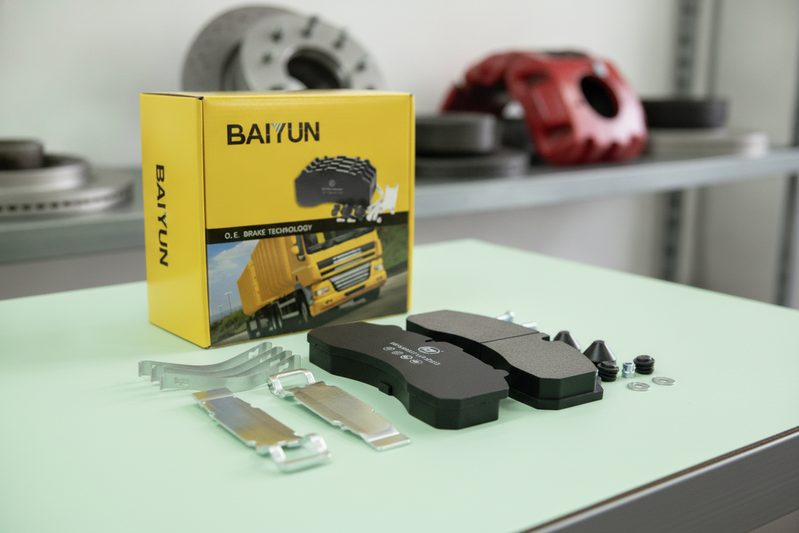
Copper-free doesn't mean performance-free. The key technical hurdle is maintaining a stable friction coefficient (μ) without the thermal conductivity that copper provided. In a standard SAE J2522 (AK-Master) test sequence—eight sections of braking events from -20°C cold stops to 600°C hot performance—a compliant low-copper pad must show μ staying within 0.35–0.45 across the full range, with fade recovery of at least 85% after the high-temperature section. Drop below 0.30 during a 100 km/h hot stop and the pad fails.
The wear rate gets tested too. SAE J2707 procedure measures thickness loss per 1,000 stops, and any pad losing more than 0.8 mm of friction material under those cycles won't meet OEM life expectations. In our dynamometer lab, BAIYUN Brake's CP2223 low-copper ceramic formulation recorded an average wear rate of 0.42 mm per 1,000 stops and μ consistently between 0.38 and 0.42 from 100°C to 350°C. That's better than many high-copper predecessors. You can download detailed material data sheets that include these SAE test plots for every batch we ship.
Key takeaway: Look beyond the copper percentage—demand full SAE J2522 and J2707 reports that prove the pad can handle real braking cycles without copper.
How Does a Low Copper Eco-Friendly Brake Pads Manufacturer China Ensure Quality Compliance?
This is where a lot of importers get burned. A supplier can hand you an SGS lab report showing <0.5% copper, but if their process control isn't tight, batch-to-batch variance can push copper content over the limit without anyone noticing until a random California inspection flags it. What you actually need is a manufacturer certified to IATF 16949, which mandates statistical process control, full material traceability, and annual audit cycles. BAIYUN Brake holds that certification alongside ECE R90 approval for the European market—and the same low-copper formulations we ship to Germany are what you'll receive in your container to LA or Vancouver.
Every shipment includes a Certificate of Analysis with ICP-OES spectrometry data showing element percentages—including Cu, Fe, Sn, graphite, and aramid fiber. We also provide PPAP Level 3 documentation on request, which is critical if you're supplying Tier-1 automotive programs. And because our factory is fully integrated—from mixing and pressing to scorching and painting—we don't outsource any step that could introduce contamination. Want to see it yourself? Get OEM passenger car brake pad pricing with a full compliance dossier included.
Selecting the Right Copper-Free Brake Pad for Your Import Portfolio
Not all low-copper pads are the same. You've got two main families you'll encounter as an importer: ceramic and advanced semi-metallic. Ceramic formulas like our CP2223 use a mix of potassium titanate fibers, aramid, and synthetic graphite to achieve low dust, quiet operation, and stable μ. They're ideal for mid-size sedans and crossovers—think Toyota Camry, Honda CR-V, VW Tiguan. Semi-metallic low-copper pads like our CP2203 lean on steel fiber and engineered mineral fillers to deliver higher heat capacity and stronger bite, suited for trucks, SUVs, and commercial vans where gross vehicle weight exceeds 2,500 kg.
When building your parts list, don't just look at the copper number. Ask for the friction code (e.g., "FF" on the edge code means μ 0.35–0.45 at normal temperatures). Also check the scorch layer consistency—too thick a scorch can mask initial bite problems. BAIYUN Brake's CP2223 carries a "GG" friction classification, meaning μ stays between 0.35 and 0.55 in both cold and hot conditions, well within the SAE J866 spec. Browse our complete catalog sorted by vehicle application and friction class to match your market coverage. And if you're debating which formulation your customers prefer, see why choose BAIYUN Brake—our technical team will help you with regional preference data.
Navigating the Transition: What Importers Need to Do Before 2025
We're only six months away from the 0.5% enforcement date. The clock's ticking louder every quarter. Here's a practical checklist for North American importers:
- Audit your current inventory. Test a random sample from every SKU. If anything reads above 0.8% copper (XRF screening is quick), that part number needs a replacement before year-end.
- Request updated supplier declarations. A simple CoC isn't enough. Get the full ICP-OES quantitative analysis—copper by weight percent, not just pass/fail.
- Run wear and noise trials. Low-copper pads can have different cold-squeal characteristics. Do a 1,000-mile fleet test with a few vehicles before committing to container volumes.
- Update your packaging and documentation. California's DTSC enforcement checks labels for the "Leaf Mark" (indicating low-copper compliance). Verify your boxes carry the correct marking.
Don't wait until November to scramble. The best manufacturers already have tested, compliant stock ready to ship. BAIYUN Brake's CP2223 and CP2203 lines are in full production with lead times under 30 days for container orders. Get your transition plan in place now.
FAQ: Low-Copper Brake Pad Compliance for Importers
Q: What is the current copper content limit for brake pads imported into North America?
A: As of 2021, brake pads sold in California and Washington must contain less than 5% copper by weight. By January 1, 2025, that limit drops to 0.5% copper. While only these states mandate it, many manufacturers adopted the standard nationwide, so importers aiming for full US market readiness should source pads with ≤0.5% copper.
Q: How do I verify that a low-copper brake pad meets safety and performance standards?
A: Look for ECE R90 certification for European market compliance, or SAE J2522 test reports for North America. Additionally, the manufacturer should provide material data sheets and third-party dynamometer results showing friction coefficient stability. BAIYUN Brake, as an IATF 16949 certified facility, offers full test documentation with every batch.
Q: What types of low-copper formulations are suitable for passenger car pad imports?
A: Ceramic and advanced semi-metallic low-copper formulations are common. For example, BAIYUN Brake's CP2223 is a ceramic low-copper pad delivering a friction coefficient of 0.38–0.42 across a wide temperature range, while CP2203 is a semi-metallic low-copper option ideal for heavier vehicles. Both meet the 0.5% copper threshold.
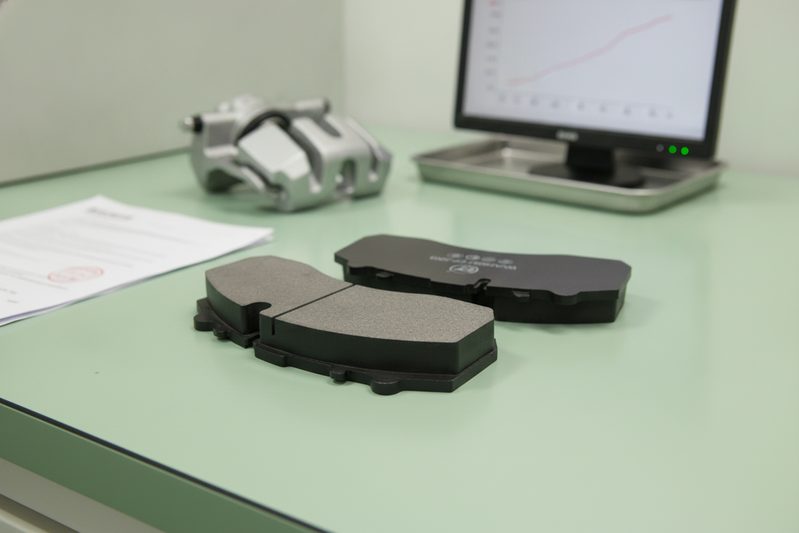
Ready to align your import lineup with copper-free regulations? Request a wholesale quote for our low-copper brake pad series, or get OEM passenger car brake pad pricing with full compliance documentation. Our export team will provide copper content certificates and product data sheets within 24 hours.
Was this article helpful?
Average Rating: 5/5 (713)