
Isuzu Truck Brake Pad Guide: Specs, Fitment & Replacement
Summary:
Isuzu Truck brake pad guide covering specifications, fitment across N-series models like NPR, NQR, and NRR, and practical replacement steps. Designed for international aftermarket buyers, this guide explains how to verify part numbers, cross-reference between Isuzu and GMC commercial trucks, and identify quality markers such as SAE edge codes and ECE R90. Learn sourcing strategies to cut costs and avoid common procurement mistakes. BAIYUN Brake's IATF 16949 certified production ensures batch-level consistency for distributors and fleets.
Isuzu Truck Brake Pad Guide: Specs, Fitment & Replacement
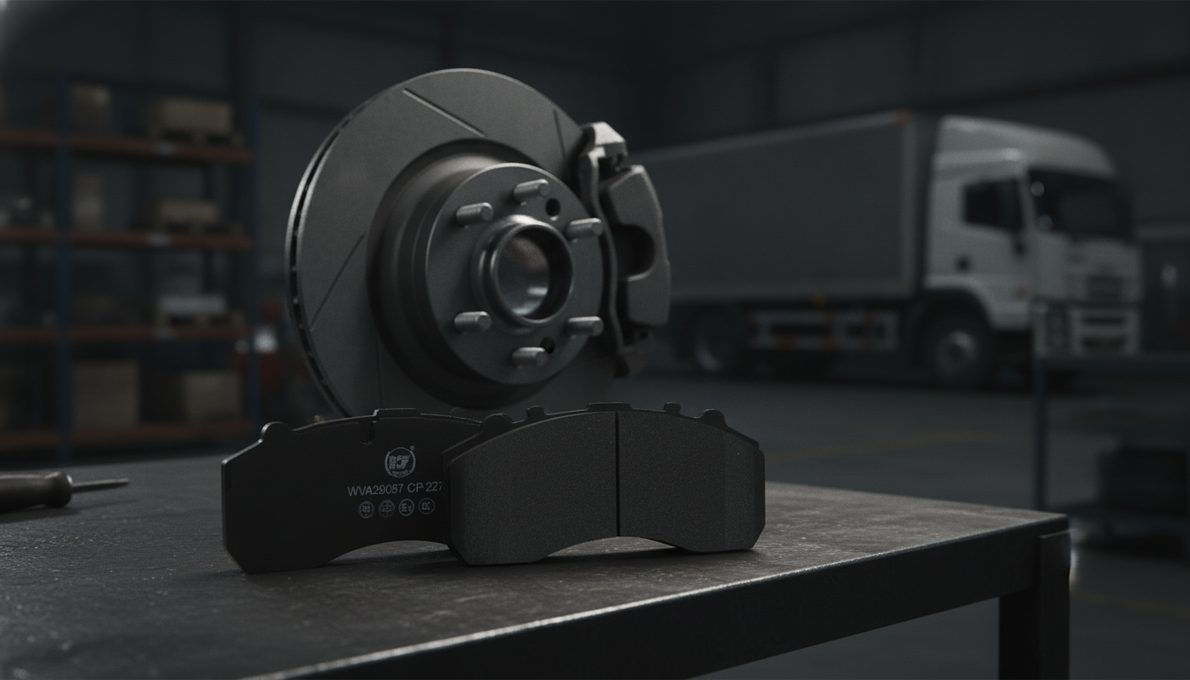
Quick answer: The right Isuzu truck brake pad set must match your specific model, axle type, and load rating. Key fitments span NPR, NQR, NRR, and heavier N-series variants from 1998 onward, often sharing pads with GMC/Chevrolet commercial equivalents. Always verify backing plate dimensions, friction material code, and certification marks before bulk ordering. For fleet managers and importers, sourcing pads with ECE R90 and consistent batch-level friction performance cuts replacement frequency and warranty claims.
Isuzu N-Series Brake Systems: Why One Pad Doesn't Fit All
Isuzu's medium-duty N-series trucks have been the backbone of urban distribution for decades. Yet a common trap for aftermarket buyers is assuming all NPR or NQR models use the same front pads. The truth? Even within the same series, brake caliper types split between Akebono, Sumitomo, and Bosch designs, each demanding a distinct pad plate shape and friction profile.
A fleet manager in Southeast Asia once ordered 200 sets of NPR pads from a generic catalogue. Half didn't seat properly because the backing plate ears were 2mm too wide for the Sumitomo caliper on 2012–2016 NPRs. That's a $4,200 mistake with downtime costs layered on top. Don't be that manager.
For sourcing teams, the lesson is simple: cross-referencing by vehicle model alone isn't enough. You need to isolate the caliper manufacturer and axle gross weight rating (GAWR) every time. Most reputable suppliers like BAIYUN Brake will ask for these details before confirming a part number.
Which Isuzu Truck Models Share Brake Pads? A Practical Cross-Reference
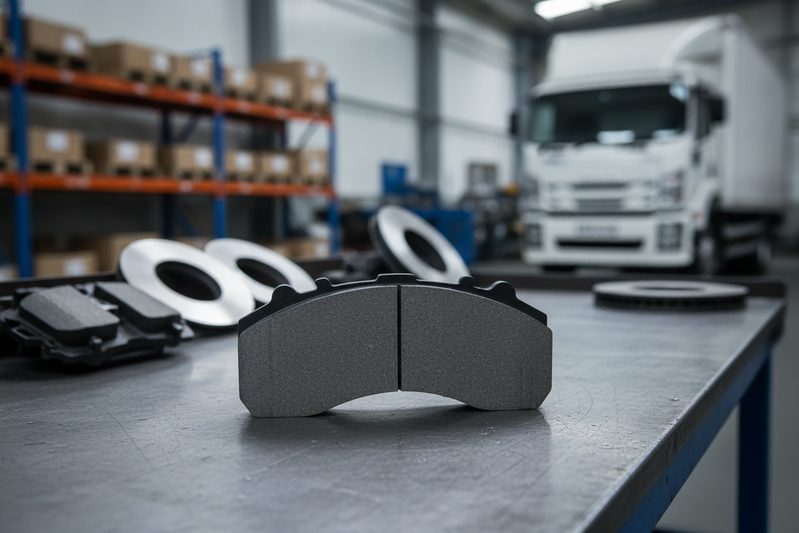
Let's cut through the noise. Based on real-world replacement cycles and our factory's export data, here's where the major fitment clusters sit:
| Isuzu Model / Series | Common Year Range | Typical Pad Position | BAIYUN CP Reference (for sample only) |
|---|---|---|---|
| NPR (Gas & Diesel) | 1998–2020 | Front | CP2271 |
| NRR (HD) | 2016–2020 | Front | CP2223 |
| NPR HD / NQR / NRR (heavy spec) | 1999–2024 | Rear | CP2219 |
| GMC W3500 / W4500 (Isuzu rebadge) | 1998–2009 | Front | Cross-reference with NPR same year |
Important: The CP numbers above are illustrative references from our commercial vehicle brake pad range. For exact OE cross-reference numbers (like Isuzu OEM 8-97039-XXX series), always confirm with the supplier catalogue. We don't publish unverified cross-reference data. Too many variables shift between markets.
Notice the NPR gas vs diesel split? Brake pads may differ not because of the engine but because the gross vehicle weight rating (GVWR) often changes with the powertrain. A 2012 NPR gas is typically a 14,500 lb GVWR truck, while the diesel variant can push to 17,950 lb. That extra 3,500 lb changes caliper piston sizes and pad friction targets. Never assume "same model, same pads."
What Should You Look for on the Brake Pad Itself Before Buying?
You're about to cut a purchase order for 500 sets. Before signing, ask for a photo of the actual pad edge codes and markings. Here's your 30-second verification checklist:
- Friction material edge code: Two-letter code (e.g., FF, GG) per SAE J866. For Isuzu medium-duty trucks, GG is common for front axle, requiring a hot friction coefficient ≥0.35. If the edge code reads "EE" and your client runs mountainous routes, you'll be replacing pads every 15,000 km.
- Shim and chamfer configuration: Genuine-style pads often have angled chamfers at leading and trailing edges plus a multi-layer shim. Missing chamfers on an NPR front pad? Expect noise complaints within the first 500 miles.
- Backing plate thickness and anti-rattle clip grooves: Measure with a caliper. NPR pads typically use 5–6 mm steel backing plates. Thinner plates distort under heat, causing uneven wear.
- ECE R90 approval number: Stamped on the backing plate or printed on the box. This is non-negotiable for any market requiring homologation. Pads without it won't pass customs in Europe, Australia, and much of Asia.
BAIYUN Brake pads, for instance, carry the ECE R90 mark right on the powder-coated backing plate—easy to spot during inbound quality inspection. Our quality assurance process logs batch-level friction data for traceability, so if a fleet ever questions a set, we can pull the dynamometer report within hours.
Is a DIY Brake Pad Replacement Feasible on Isuzu N-Series Trucks?
Yes, with caveats. A 2019 NPR HD front pad swap is mechanically similar to a heavy pickup job, but the components are bigger and everything weighs more. You're dealing with 8-lug hubs, 17" or 19.5" wheels, and caliper bolts torqued to 150–200 ft-lbs range. If your maintenance crew has done Class 3–5 truck brakes before, it's a 2-hour job per axle.
Step-by-step, the process aligns with industry practice: raise the truck on a proper lift (never rely on a bottle jack alone), remove the caliper slide pins or mounting bolts, swing the caliper aside, slide out old pads, clean and lube the pad abutment clips with graphite-based grease, install new pads with shims seated correctly, retract the caliper piston with a suitable tool, and torque everything to spec. New clips in the kit are often side-specific—don't mix them up or you'll get pad binding.
One thing that trips up first-timers: Isuzu NPR caliper guide pins are often "dry" style—no rubber sleeve. If you apply grease where it shouldn't be, the pin can hydro-lock and prevent caliper float, leading to tapered pad wear. Check the service manual for your exact year. For detailed installation steps, our brake lining installation guide covers the caliper side with diagrams that apply equally to pads.
How Can Importers Verify Brake Pad Quality Before a Large Order?
Relying on a supplier's word alone is a fast track to container-load disappointments. Here's a four-step due diligence playbook that professional buyers use:
- Request batch-specific test reports: Ask for SAE J2522 dynamometer reports not just for the initial sample but for the past three production batches. Look for friction coefficient stability across 100–650°C. A good GG-rated pad should hold μ between 0.38 and 0.44 in the 300–400°C range with less than 15% fade.
- Check minimum order quantity (MOQ) and pack sizes: Some factories quote attractive per-set prices at 2,000 sets MOQ, but your market only absorbs 300 sets per quarter. That ties up capital. Work with suppliers who offer flexible MOQs for first trial orders. At BAIYUN Brake, we start trial orders as low as 50 sets on common commercial vehicle references.
- Validate the IATF 16949 certification scope: It's not enough that the factory has the certificate. Look at the appendix—does the scope explicitly cover "design and manufacture of disc brake pads for commercial vehicles"? If it only lists "friction materials mixing," they're a blender, not a full-range manufacturer.
- Request a production line video call: A 15-minute walkthrough reveals more than 50 pages of a brochure. Look for automated mixing and pressing lines, not manual scoop-and-press stations.
We openly share our production process through factory tour videos, including the automatic batch mixing system that ensures every gram of friction material hits the target formulation.
What Are the Cost-Saving Opportunities When Sourcing Isuzu Brake Pads Directly?
Distributors buying from regional wholesalers often pay a 35–55% markup over ex-factory pricing. When a common NPR front pad (CP2271) leaves a certified Chinese manufacturer, the FOB unit price can be 40% less than what European or North American middle-tier brands charge. Multiply that across 1,000 sets a year, and the margin recovery is substantial.
But cost savings aren't just about the pad price. Certifications matter. Pads without ECE R90 might be $3 cheaper per wheel set, but if a shipment gets held at customs or a fleet operator demands certification for insurance purposes, that "saving" evaporates instantly. BAIYUN Brake ships every export order with full ECE R90 documentation, which streamlines clearance and depot acceptance.
Another hidden cost: brake pad weight affects air freight and LCL sea freight charges. Our commercial vehicle brake linings and pads are packaged in engineered cartons that minimize dimensional weight, saving roughly 8% on freight compared to generic bulk packaging. Over a year of regular shipments, that's real money back in your pocket.
Frequently Asked Questions for Isuzu Truck Brake Pad Buyers
Q: Can I use the same brake pads on an NPR Gas and NPR Diesel from the same model year?
A: Not always. NPR Diesel often carries a higher GVWR (up to 17,950 lb vs 14,500 lb for gas), which may require a different pad friction grade or thicker backing plate. Always confirm the GAWR and caliper model before ordering. For a specific cross-check, contact our export team with your VIN range.
Q: Do Isuzu NPR and GMC W3500/W4500 share the exact same brake pads?
A: Yes, for matching years and axle ratings. The GMC W-series trucks are badge-engineered Isuzu NPRs. However, model year breakpoints matter—2012-2016 NPR pads fit the W3500 up to 2009, but post-2017 NPR HD pads may not retrofit. Confirm with supplier catalogue using both Isuzu and GM commercial part numbers.
Q: What's the typical lifespan of an Isuzu NPR front pad set in city delivery use?
A: In stop-and-go urban delivery at full GVWR, expect 35,000–50,000 km per set with quality GG-rated pads. Highway-only light-load trucks can see 80,000 km. If your fleet gets less than 25,000 km, check for caliper guide pin seizure or incorrect pad material—EE-grade pads simply aren't durable enough.
Q: Are there aftermarket ceramic brake pads available for Isuzu commercial trucks?
A: While ceramic formulations exist for commercial vehicles, most heavy-duty Isuzu applications still use semi-metallic or organic-metallic blends because ceramics can struggle with the high heat capacity of repeated heavy braking. Semi-metallic pads offer better thermal conductivity for disc cooling. That said, some specialty blends are available—verify dynamometer performance data before switching from semi-metallic.
Q: How can I tell if a brake pad supplier is genuinely IATF 16949 certified for commercial vehicle pads?
A: Request a PDF of the IATF certificate and verify the status on the IATF Global Oversight website using the certificate number. Check the certification scope statement: it must include "design and manufacture of disc brake pads for commercial vehicles" or similar explicit wording. General "friction materials" scope is not enough.
A Sourcing Decision That Pays You Back Over Years
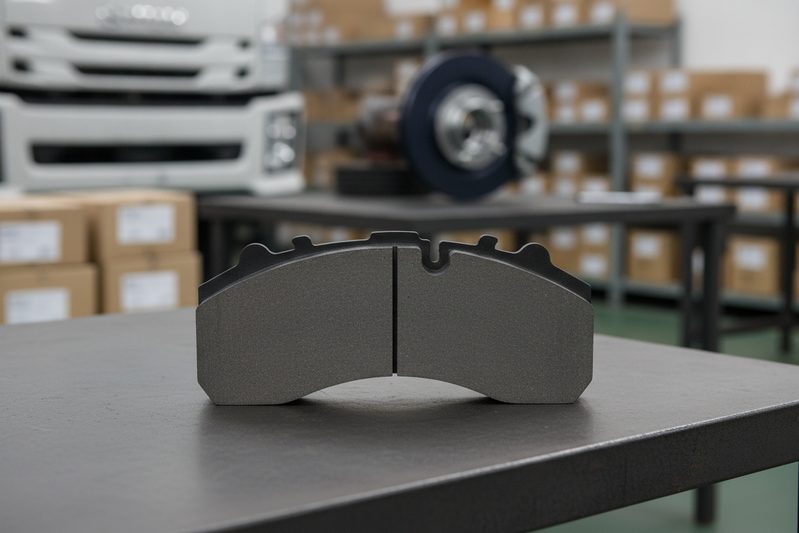
Every set of Isuzu truck pads you sell has a multi-year wear life in the field. The friction consistency, backing plate steel grade, and noise behavior of those pads will either strengthen your distributor reputation or generate a string of warranty complaints. Getting the specification right at the sourcing stage isn't optional—it's what separates professional traders from one-off drop-shippers.
When you're ready to receive current pricing, lead times, and test reports for the Isuzu references you need, we're set up to respond within 24 hours. Our export team handles documentation, mixed-container loads, and private label packaging for distributors across Southeast Asia, the Middle East, and South America. Browse our heavy-duty pad range or submit your inquiry to our sales team with your target models and annual volume—we'll come back with exactly what you need, no filler.
Was this article helpful?
Average Rating: 5/5 (1075)