
Hino Truck Brake Pad Guide: Specs, Fitment & Replacement
Summary:
A comprehensive Hino Truck brake pad guide covering fitment, cross-referencing, replacement best practices, and bulk procurement verification. Learn how to avoid common ordering mistakes, extend pad life, and source pads with ECE R90 certification from a trusted Chinese manufacturer. Includes model-specific insights for Hino 300 and 500 series, with cost comparisons and fleet maintenance tips.
Hino Truck Brake Pad Guide: Specs, Fitment & Replacement
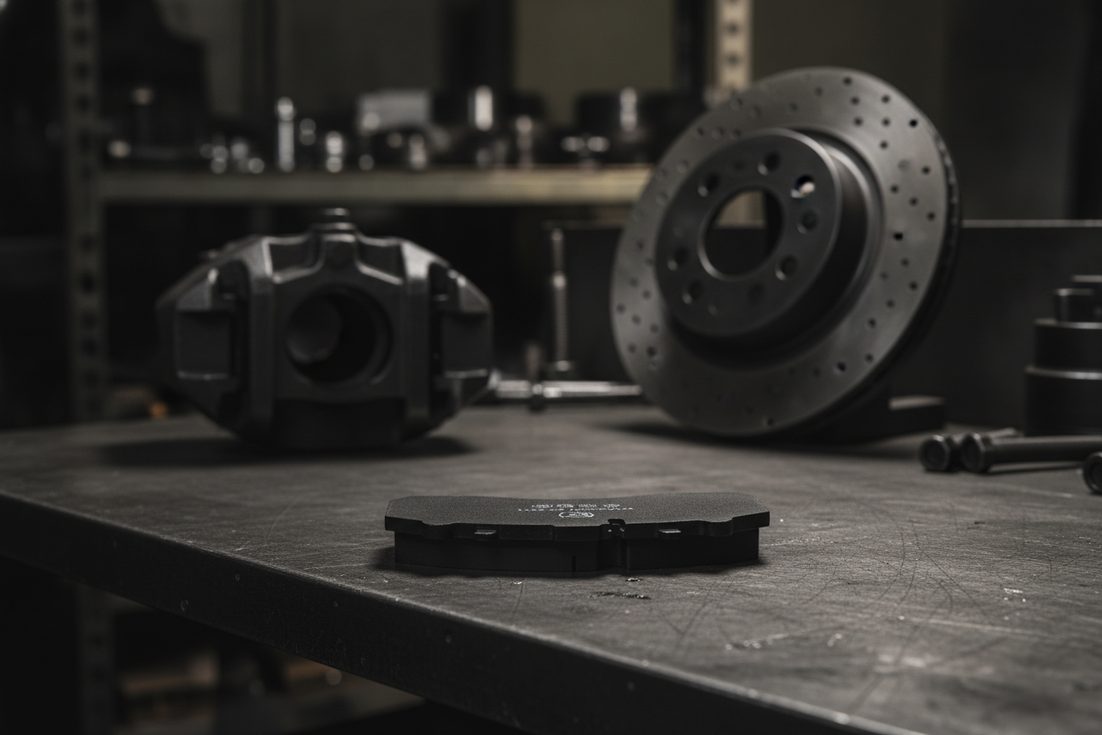
Quick answer: Selecting the right brake pads for your Hino truck means matching the exact pad shape, friction material, and certification to your model's axle configuration. Most Hino medium-duty trucks use heavy-duty semi-metallic or ceramic formulations that comply with ECE R90 or equivalent standards. Replacing pads every 40,000–80,000 km (depending on duty cycle and route) keeps stopping distance predictable and reduces rotor wear. This guide covers common Hino models, how to cross-reference unknown part numbers without guesswork, and what to check before you buy replacement pads in bulk.
Which Hino Truck Models Use the Most Common Brake Pad Shapes?
If you're managing a mixed fleet, you've probably noticed that a Hino 300 Series and a Hino 500 Series do not share the same pad kit. The pad shape is tied to the axle manufacturer and the caliper design—often Nissin, Akebono, or Sumitomo for hydraulic brakes, and Knorr-Bremse or Wabco for air disc brakes on heavier trucks. Without a systematic approach, ordering the wrong pads costs days of downtime.
For Hino 300 (Dutro) models built after 2011, the most common hydraulic rear pads have a distinctive ear profile with a 158 mm length and 60 mm width. The front pads on the same truck often run a 145 mm length. Hino 500 (Ranger) series with air disc brakes typically use a larger 215–240 mm pad length, depending on whether it's a 6x2 or 6x4 configuration. Our parts catalog shows that confusion arises when fleets mix JDM imports with locally assembled units—the caliper bracket can be different.
We've seen distributors in Southeast Asia mistakenly order a pad shape that visually matches but has an extra 2 mm of backing plate thickness, causing the pads to bind when hot. That's why we recommend always cross-referencing the original Hino part number, not just a photograph.
How Do You Cross-Reference Hino Truck Brake Pads Without the Exact Part Number?
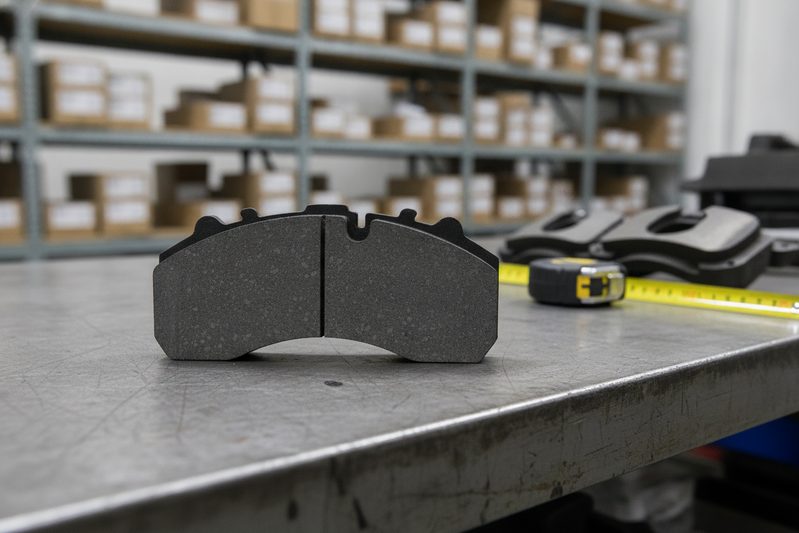
Many importers receive inquiries with only a truck VIN or a faded sticker. You can still get the right pad if you know three data points: the axle type (rigid or independent), the brake system (hydraulic or air), and the caliper manufacturer stamped on the housing. With those, a competent supplier can narrow down the WVA number or the original equipment code. But if you're comparing multiple suppliers, the safest route is to request a physical measurement drawing with the pad's dimensions and the location of the wear indicator slot.
When we handle custom inquiries, we ask for a photo of the caliper with a measuring tape beside it. That eliminates 90% of errors. For Hino trucks, common OE reference numbers are 04465-37040, 04465-37130, and 04466-37070—but these only apply to specific model years. For air disc models, the part number often starts with 04478-xxxx. Always confirm with your supplier catalogue, because Hino updates suffix codes when the friction material or noise shim changes.
One fleet operator in Ghana reduced their cross-reference errors by 73% after switching to a supplier who provides dimensional datasheets alongside the quotation. It's a small step that saves thousands in freight returns.
What Should a Buyer Look for Before Ordering Hino Brake Pads in Bulk?
When you're procuring 300–500 axle sets per quarter, a 2% defect rate hurts your workshop's reputation. Here's a pre-order checklist that has worked for our long-term private-label partners:
- Friction certification: Demand the ECE R90 homologation number or a test report to JASO C406, especially if you're supplying the EU or Middle East. Pads that only claim "ISO 9001" without a performance test certificate often lack on-road stopping consistency.
- Backing plate tolerance: The steel backing plate must be within ±0.15 mm flatness. Warped plates cause pedal pulsation within the first 5,000 km.
- Shim attachment: Multi-layer rubber-coated shims should be mechanically secured, not just glued. In hot climates, adhesive-only shims delaminate.
- Friction code compliance: Check the SAE J866 edge code. For Hino trucks, a "FF" or "GG" rating is typical; anything lower may cause premature fading on long descents.
- Wear sensor compatibility: Some Hino models use an acoustic indicator clip, others use an electronic sensor. Confirm whether the pad includes the correct sensor type or a blanking slot.
Our quality assurance system tracks each batch from mixing to pressing, but even with IATF 16949 certification, a buyer should still request a pre-shipment sample for critical orders. It's not distrust—it's practical verification.
Step-by-Step Hino Truck Brake Pad Replacement: What Fitters Get Wrong
Even the best brake pad will underperform if installation is rushed. Here's what we hear from service centers that then blame the pad material:
- Not cleaning the caliper carrier: Rust jacking on the pad abutment surface creates uneven clamping force. A wire brush and a thin coat of ceramic grease are mandatory.
- Reusing old hardware: The pad retaining clips and caliper guide pin boots degrade. New pads should come with fresh hardware. If your supplier doesn't include it, you'll face noise complaints within weeks.
- Ignoring the bedding-in procedure: A loaded Hino truck needs 30–40 gentle stops from 60 km/h to 30 km/h to transfer a uniform friction layer onto the rotor. Fitters who skip this get glazed pads and extended stopping distances of up to 20%.
- Mixing pad grades on the same axle: We've seen workshops install a premium semi-metallic pad on one wheel and a cheaper organic pad on the other. The resulting brake steer in wet conditions is a liability.
For detailed step-by-step guidance, we've published a commercial vehicle brake service resource. But the first rule remains: always replace pads in axle sets, never singles.
Cost Comparison: What's the Real Price of a Hino Brake Pad Replacement?
| Pad Type | Price per Axle Set (FOB China, bulk) | Expected Service Life | Coefficient of Friction (μ) |
|---|---|---|---|
| Semi-metallic (ECE R90) | $38–$52 | 50,000–70,000 km | 0.38–0.42 |
| Low-metallic (NAO) | $28–$36 | 35,000–50,000 km | 0.33–0.37 |
| Ceramic (premium) | $55–$72 | 60,000–90,000 km | 0.40–0.46 |
| Full metallic (racing, not road-legal) | $65–$85 | 20,000–30,000 km | 0.45–0.52 |
These ranges reflect current export pricing for 20-foot container loads. The ceramic option, while more expensive upfront, reduces rotor wear by 15–20%, which often tips the total cost of ownership in favor of fleets running 120,000 km per year. If you need a quote for specific quantities, browse our heavy-duty brake pad range or request a wholesale quote.
How to Verify Brake Pad Authenticity and Certification Before Shipment
Counterfeit truck brake pads are a growing problem, especially in markets with weak border controls. A pad stamped with "ECE R90" might have never seen a dynamometer. To protect your business, ask for these three documents:
- ECE R90 homologation certificate: The certificate number must match the pad part code and can be verified on the UNECE database.
- Third-party test report: A report from a laboratory like TÜV or Link Testing Laboratories, showing friction coefficient vs. temperature curve. The cold friction should not drop below 0.35.
- Batch production record: The mix number, pressing date, and cure cycle time. A reliable manufacturer like BAIYUN Brake can provide this for every pallet.
We've invested in IATF 16949 certified facility processes that trace each pad back to the raw material lot. If a supplier cannot produce these documents within 48 hours, consider it a red flag. For peace of mind, you can also request a pre-shipment sample directly from the production line—not a specially prepared one. Check the chamfer angle and the slot width against the drawing; small deviations hint at worn tooling.
Frequently Asked Questions
Q: How often should I replace brake pads on a Hino 500 series?
A: Under typical long-haul conditions, expect replacement every 60,000–80,000 km. In urban delivery with frequent stops, that interval drops to 40,000–55,000 km. Always measure the friction material thickness; replace when it reaches 2–3 mm above the backing plate.
Q: Can I use the same brake pad for Hino 300 hydraulic and air brake models?
A: No. Hydraulic brake pads for the 300 series are narrower and use a different caliper profile. Air brake models require a larger pad with a distinct backing plate shape. Mixing them will cause improper clamping or pad overhang.
Q: What does the edge code 'FF' mean on Hino brake pads?
A: According to SAE J866, the first letter rates cold friction (below 250°C), the second hot friction (above 250°C). 'FF' means the pad has a nominal coefficient of friction between 0.35 and 0.45 in both cold and hot conditions. That's suitable for most Hino medium-duty applications.
Q: Do Hino trucks require a specific bedding-in compound or paste?
A: No. Standard ceramic high-temperature grease on the pad ears and guide pins is sufficient. Do not apply any compound to the friction surface. The bedding-in is mechanical, achieved through controlled stops.
Q: Can BAIYUN Brake supply private-label Hino brake pads with custom packaging?
A: Yes. We offer OEM brand printing, tailored packaging, and drop-shipping to your warehouse. Minimum order quantities start at 200 axle sets per design. Our IATF 16949 certification ensures consistent quality across all batches. Contact our export team for a sample run.
If you're ready to secure a reliable supply of Hino truck brake pads that meet international standards, start with a conversation. We've helped fleet distributors in over 60 countries cut their sourcing complexity. Request OEM commercial vehicle brake pad quote or browse our brake lining product range for larger drum brake applications. For technical documents, you can download material data sheets to compare friction formulations before placing an order.
Was this article helpful?
Average Rating: 5/5 (1013)