
FAW Brake Pad Guide: Specs, Fitment & Replacement
Summary:
FAW brake pad guide for importers and fleet managers: learn how to select, cross-reference, and replace FAW truck brake pads with confidence. Covers WVA identification, ECE R90 certification, directional installation, and a buyer verification checklist. Avoid fitment errors that cost downtime — get the right pads from an IATF 16949 certified supplier.
FAW Brake Pad Guide: Specs, Fitment & Replacement
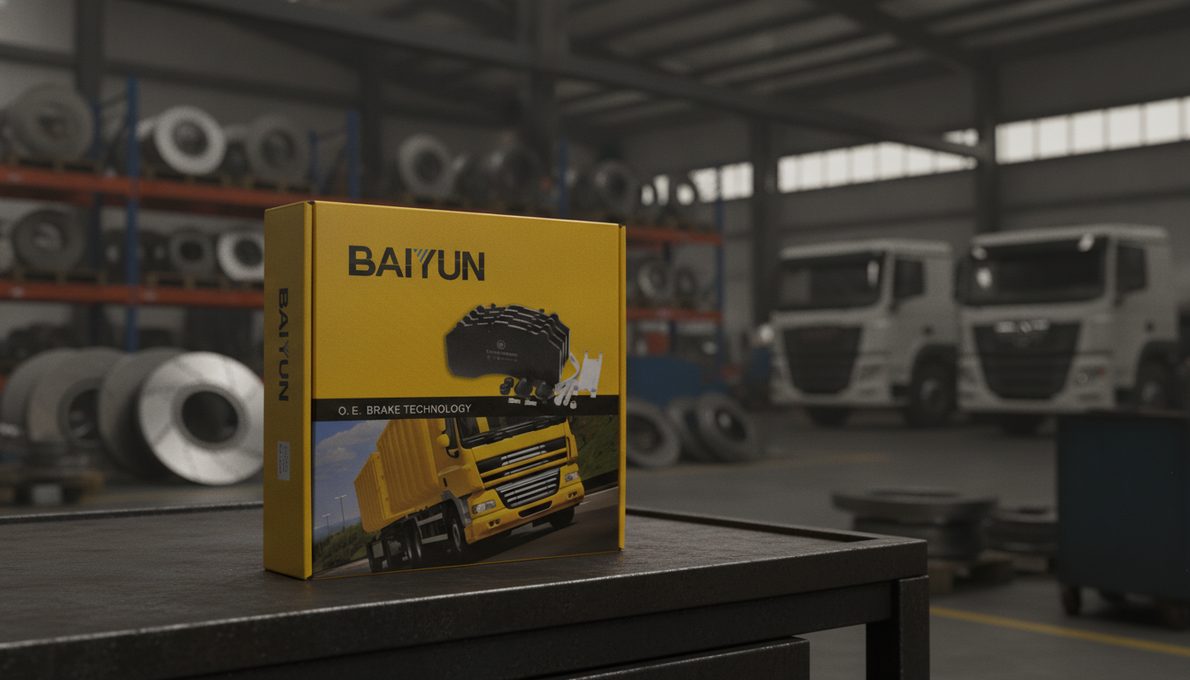
Quick answer: FAW trucks and buses — from J6 prime movers to V series city buses — need brake pads that match exact WVA numbers, friction grades, and chamber specifications. Sourcing the wrong pads means excessive wear, noise, and potential compliance failures under Chinese GB 5763 and ECE R90 regulations. For importers and distributors, the smartest move is verifying technical cross-references with a supplier who holds IATF 16949 certification, and insisting on batch-level friction test reports. Below, we unpack the selection logic, installation nuances, and a buyer verification checklist that helps you sidestep costly returns.
A depot manager in Manila recently shared a headache with us: he'd ordered 200 sets of aftermarket pads for his FAW J7 fleet, only to discover half didn't fit the rear axle calipers. The supplier had mixed up WVA 29087 and 29253 — both listed as "FAW heavy duty" on many online platforms. That one-digit difference cost him three days of downtime and a container return. The lesson? FAW brake pad sourcing isn't a generic commodity game. It's a precision fitment exercise.
Why Do FAW Brake Pads Differ From Other Chinese Truck Brands?
FAW Jiefang has its own Dana- and Meritor-style axle designs, and some models share pad geometry with European platforms through license agreements. A pad that bolts onto a Sinotruk Howo won't necessarily lock into an FAW caliper, even if the dimensions look similar on paper. The devil's in the chamfer angles, ear profiles, and backing plate thickness — which can vary by 0.5 mm and cause binding or rattling.
We've seen this play out in real-world dynamometer testing. A set of pads with identical friction code "FF" can behave radically differently if the manufacturer doesn't control compressibility. At BAIYUN Brake, our J2522-tested commercial vehicle brake pads undergo 28-cycle burnish routines that simulate FAW's typical stop-start mining routes. The data shows that compressibility must stay below 0.15 mm under 16 MPa load; otherwise, pedal feel degrades within the first 10,000 km.
How to Pinpoint the Right FAW Brake Pad — Without Guessing
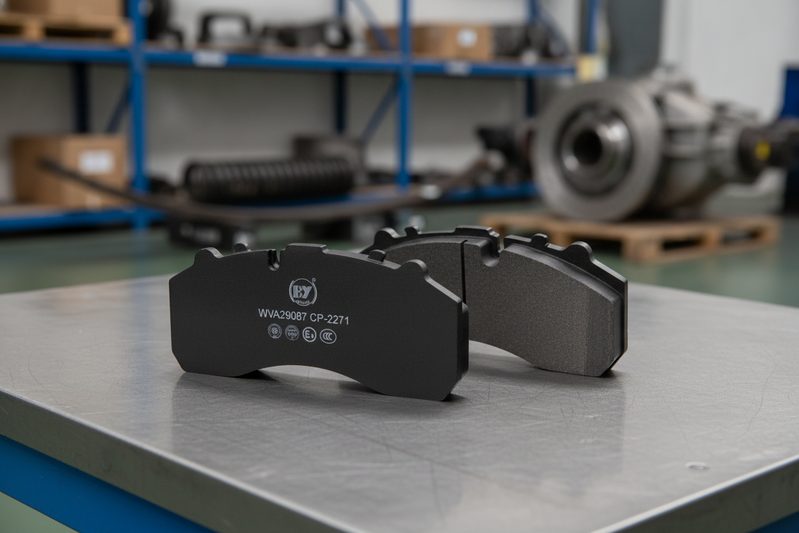
Most FAW trucks built after 2018 roll with either disc brakes on steer axles or drum brakes on drive axles. The popular J6P 6×4 tractor, for instance, often uses a combination: front disc with WVA 29146 (Confirm with supplier catalogue) and rear drum with a 200 mm-wide lining. But there are at least three OE variations depending on the production batch and export market. That's why cross-referencing by vehicle VIN or axle tag is your safest bet.
When you can't get the VIN, look at the old pad's backing plate. Stampings like “29287” or “FAW-290” are clues, but never a guarantee. We recommend using the download our product catalogue to cross-check visual references against your sample — it includes high-res photos of ear profiles, wear indicators, and slot patterns for heavy-duty applications.
Which FAW Models Share the Same Brake Pads?
Some pad families do overlap across FAW's lineup. The J7 and JH6 long-haul tractors frequently share front caliper pads if both are equipped with the Wabco 22.5" air disc brake package. Similarly, the V-series buses (V80, V90) can share rear drum linings with certain J6 dump trucks — but only if the axle manufacturer is the same. Whenever you're stockpiling inventory for mixed fleets, validate the WVA number against at least two independent catalogs and, ideally, a physical sample.
Step-by-Step Replacement: Getting It Right the First Time
Brake pad replacement on an FAW commercial vehicle isn't a quick roadside job. These rigs carry up to 49 tonnes GCW, and one misaligned pad can cook a rotor in 200 km. Here's a condensed checklist we've refined from our brake lining installation guide:
- Lift the axle safely using a 10-tonne jack stand — never work from ground level.
- Remove the caliper guide bolts, not the bracket bolts, unless you're doing a full rotor swap.
- Before pulling the old pads, inspect wear pattern. Tapered wear often signals a sticking caliper slide pin — address it now.
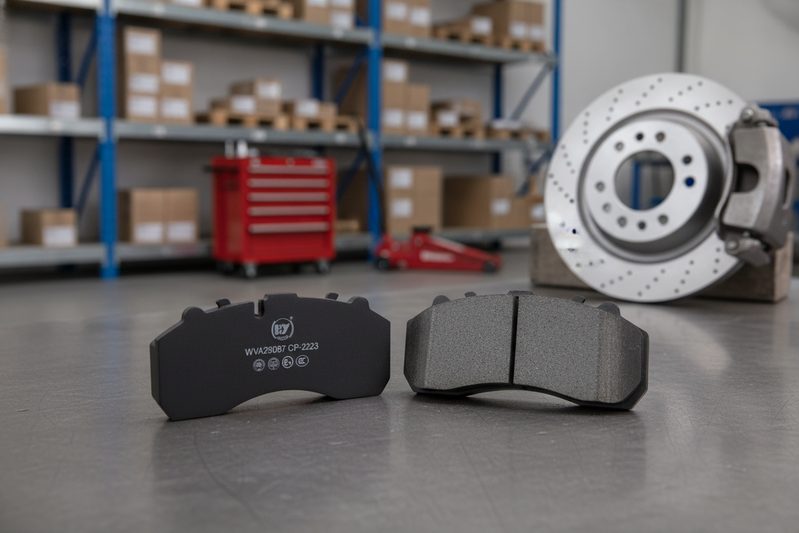
- If the pad has a crescent cut-out like many directional pads, the cut-out must sit on the leading edge of the pad, running horizontally across the disc. Installing it backward invites high-pitch squeal and uneven bedding.
- Push the piston back using a wind-back tool (never pry against the friction material). On air disc brakes, you may need to cage the spring chamber first.
- Torque caliper bolts to FAW's spec — typically 280-320 Nm for M16 bolts — and perform a bedding-in cycle: 20 slow stops from 50 km/h to 30 km/h, then cool for 15 minutes.
FAW Brake Pad Cross-Reference and Specifications Table
The table below lists common FAW applications and potential WVA matches. Because no structured part data is provided for this article, all WVA numbers and dimensions must be confirmed with the supplier’s current catalogue. Use this as a starting point for your inquiry.
| FAW Model | Axle Position / Brake Type | Potential WVA Number | Pad Dimensions (mm) | Material Grade | Replacement Interval (km) |
|---|---|---|---|---|---|
| J6P 6×4 Tractor | Front Disc | Confirm with supplier catalogue | Confirm with supplier catalogue | Confirm with supplier catalogue | 120,000-150,000 |
| J6M 8×4 Dump | Rear Drum | Confirm with supplier catalogue | Confirm with supplier catalogue | Confirm with supplier catalogue | 80,000-100,000 |
| JH6 6×4 | Front Disc | Confirm with supplier catalogue | Confirm with supplier catalogue | Confirm with supplier catalogue | 140,000-160,000 |
| V80 Bus | Rear Drum | Confirm with supplier catalogue | Confirm with supplier catalogue | Confirm with supplier catalogue | 100,000-120,000 |
| J7 6×4 Long Haul | Front Disc (Wabco ADB) | Confirm with supplier catalogue | Confirm with supplier catalogue | Confirm with supplier catalogue | 150,000+ |
Always cross-check with BAIYUN’s technical team before placing an order. Even within the same model family, axle supplier changes (e.g., from Meritor to Chinese domestic axle) can alter pad ear profiles.
Buyer Verification Checklist for Importing FAW Brake Pads
Distributors importing 500+ sets per month can't afford a single container flagged by customs or rejected by fleet clients. Run through this checklist during supplier qualification:
- IATF 16949 certificate validity: Request the latest audit report—not just the certificate. Check that the site address matches the factory location. Our IATF 16949 certified facility undergoes annual surveillance audits.
- ECE R90 homologation for each WVA: For export to Europe, Africa, or the Middle East, every pad number needs its own approval. A blanket “ECE R90 compliant” statement isn't enough. Insist on the regulation number and test report.
- Batch-level friction test reports: Ask for SAE J2522 or GB 5763 test data from the specific production lot you’re buying. Verifying μ at 400°C ensures the pad won't fade halfway down a mountain grade.
- Visual sample with dimensional report: Especially for FAW, request a physical sample and measure ear width, thickness, and pad height against your reference part. A 0.3 mm deviation can cause a sticky fit.
- Packaging and labeling: Check that E-mark, friction code, WVA, and production date are printed on each box. This saves time at customs clearance.
- Wear sensor compatibility: Many late-model FAW trucks use electronic wear markers. Confirm the pad includes the sensor slot or cable if your market demands it.
Frequently Asked Questions (FAQ)
Q: What is the average lifespan of FAW truck brake pads?
A: Under mixed highway/construction use, front disc pads typically last 120,000–150,000 km, while rear drum linings may need replacement at 80,000–100,000 km. Aggressive vocational routes shorten that to 60,000 km, depending on friction material and cooling efficiency.
Q: Can I use the same brake pads for FAW J6P and J7 models?
A: Not always. While some front disc pads cross-reference, J7 models with Wabco air disc brakes often use a different pad shape than early J6P units. Always verify WVA number and backing plate profile before merging inventory.
Q: Are ceramic brake pads available for FAW heavy trucks?
A: Ceramic formulations for commercial vehicles are rare due to temperature stability requirements. Most FAW pads use semi-metallic or low-metallic formulations designed for high thermal loads, typically achieving friction coefficients between 0.35 and 0.45 under GB 5763 testing.
Q: How do I know if an FAW brake pad is directional?
A: Look for a crescent cut-out or arrow stamped on the backing plate. If present, the cut-out must be positioned at the leading edge of the pad (first to contact the disc during forward rotation). Installing it backward results in noise and uneven wear.
Q: What certifications should I demand when importing FAW brake pads?
A: At minimum, require IATF 16949 for manufacturing quality and ECE R90 for regulatory compliance in most import markets. For high-temperature reassurance, ask for SAE J2522 or GB 5763 dynamometer reports showing friction coefficient above 0.30 at 400°C.
Where to Source Reliable FAW Brake Pads Without the Headaches
After 49 years in the friction business, we've noticed a pattern: buyers who treat brake pads as a price-per-kilo commodity end up spending more on warranty claims and end-user complaints. The margin saved on a $2-cheaper set evaporates the first time a driver reports judder at 90 km/h.
If you're stocking for mixed FAW fleets in Southeast Asia, Africa, or the Middle East, having a single supplier who can cross-reference, homologate, and ship both wholesale CV brake pads inquiry and OEM brake lining solutions cuts your logistics complexity in half. We keep master samples of hundreds of WVA numbers and can match your worn sample in 48 hours.
Want to test a batch before committing? Request a wholesale quote with your part numbers and we'll include a dimensional report and GB 5763 test data specific to your pad type. You'll get the numbers before the invoice — that's how we do business.
Was this article helpful?
Average Rating: 5/5 (624)