
How to Reduce Brake Fade in Heavy Trucks
Summary:
How to reduce brake fade in heavy trucks starts with ECE R90 certified friction materials and disciplined heat management. This guide helps importers and fleet buyers verify hot friction data, choose semi-metallic versus low-metallic compounds, and maintain correct running clearance to cut stopping distance by 20–40%. BAIYUN Brake shares buyer verification checklists, material comparison tables, and maintenance practices for heavy truck, bus, and trailer applications. Request dynamometer reports and ECE R90 certificates before ordering to reduce warranty claims and fleet downtime.
How to Reduce Brake Fade in Heavy Trucks
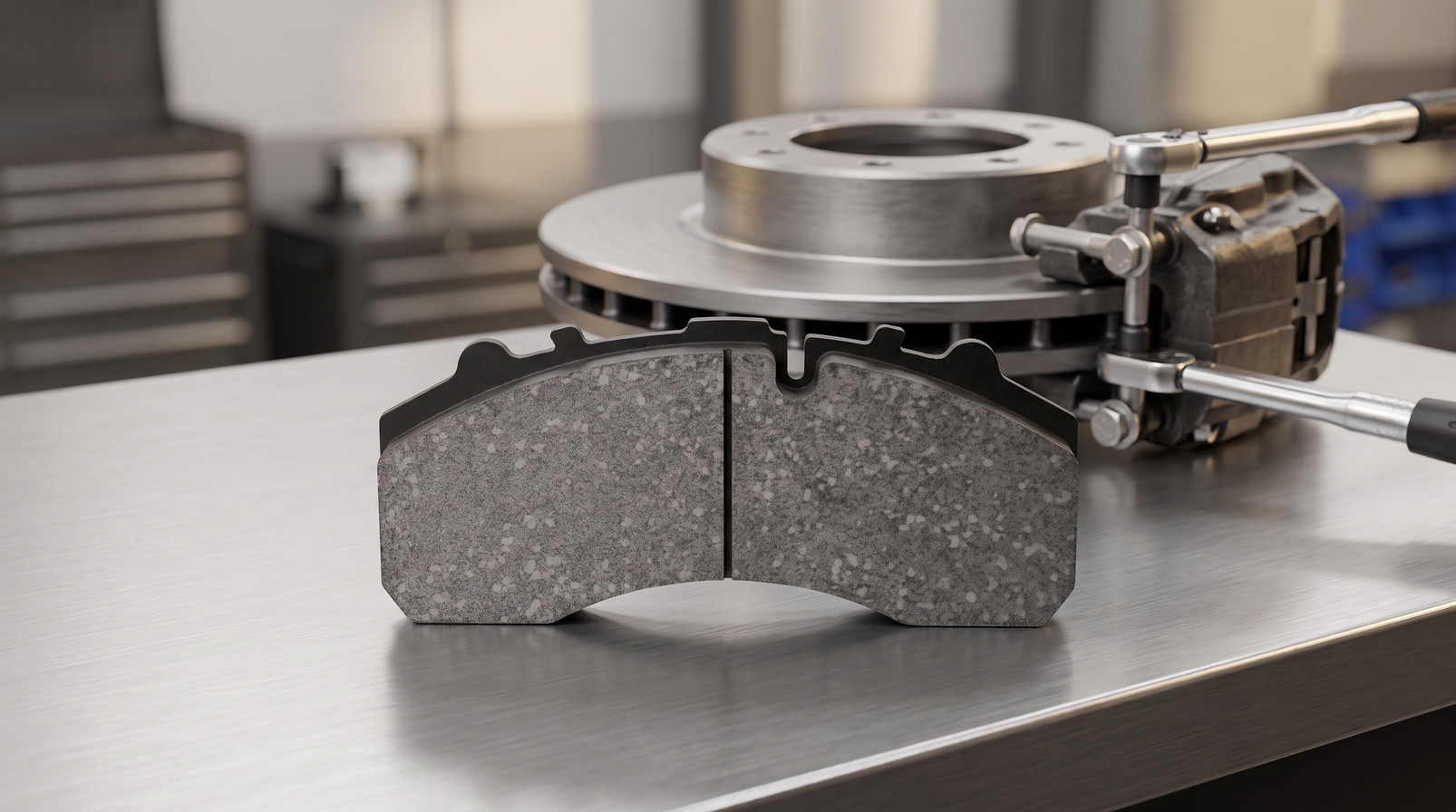
Quick answer: You reduce brake fade in heavy trucks by specifying ECE R90 certified friction materials with stable hot friction above 350°C, maintaining correct brake adjustment, and training drivers to avoid continuous brake application on downgrades. Request dynamometer reports from an IATF 16949 supplier to confirm fade performance before ordering.
Fleet managers often buy based on price per set, then watch brake life collapse on mountain routes. I've seen importers lose repeat customers because a cheap lining fades at 300°C and the driver has to pump the brakes or use an escape ramp. That's a sourcing problem, not just a maintenance problem.
Heavy commercial vehicles put more thermal load into brakes than any other highway vehicle class. A fully loaded 40-tonne combination vehicle converts kinetic energy into heat fast enough to push friction surfaces past 400°C on long grades. If the lining material can't hold its friction coefficient at that temperature, stopping distance grows fast.
What Actually Causes Brake Fade in Heavy Truck Braking Systems?
Brake fade in commercial vehicles is primarily a heat-induced drop in friction coefficient, not a loss of air pressure or mechanical linkage.
Drum brakes are more prone to fade than disc brakes because the drum expands away from the lining as it heats. At 300°C, a cast iron drum can grow enough to increase lining-to-drum clearance, forcing longer stroke and generating even more heat. Disc brakes with air disc calipers shed heat through exposed rotor surfaces and recover faster, but the friction material still needs to resist thermal breakdown.
Resin binders in organic or low-metal formulations start degrading above 250°C. Without enough metallic content, the pad surface can glaze or transfer unevenly, dropping friction coefficient from 0.40 to 0.28 or lower. That's why heavy truck applications almost always demand semi-metallic or low-metallic compounds, not passenger-car organic chemistry. If you're sourcing for a mixed fleet, request OEM commercial vehicle brake pad quote and ask specifically for hot friction data.
Summary: Heat above 300°C weakens the resin binder and expands brake drums, making friction material selection and cooling capacity the first line of defense against fade.
Which Brake Lining Materials Resist Brake Fade Better?
Semi-metallic and low-metallic compounds dominate heavy-duty truck braking because they shed heat faster than organic formulations.
Not all "metallic" linings behave the same. The metal content, type of fiber, and resin system determine how long a pad holds stable friction before fade starts. The table below shows typical ranges based on supplier data from BAIYUN Brake's 2025 internal compounding tests.
| Material Type | Typical Metal Content | Stable Friction Range | Approx. Fade Onset | Best Fit |
|---|---|---|---|---|
| NAO/Organic | Below 20% | 0.30–0.38 | 200–250°C | Light trailers, low-duty urban |
| Low-metallic | 20–35% | 0.35–0.42 | 300–350°C | Mixed highway and regional trucks |
| Semi-metallic | 30–60% | 0.38–0.45 | 350–500°C | Heavy trucks, buses, long-haul trailers |
| Sintered metallic | Above 60% | 0.40–0.50 | 500–650°C | Mining, port logistics, severe service |
For most highway fleets, a well-formulated semi-metallic lining offers the best balance of fade resistance, rotor or drum wear, and cost per kilometer. But formulation matters more than a generic label. Two suppliers can both sell "semi-metallic" and deliver completely different hot performance. That's why you need dynamometer curves, not just a material description. If your operation runs drums, request a quote for commercial vehicle brake linings with hot fade test certificates.
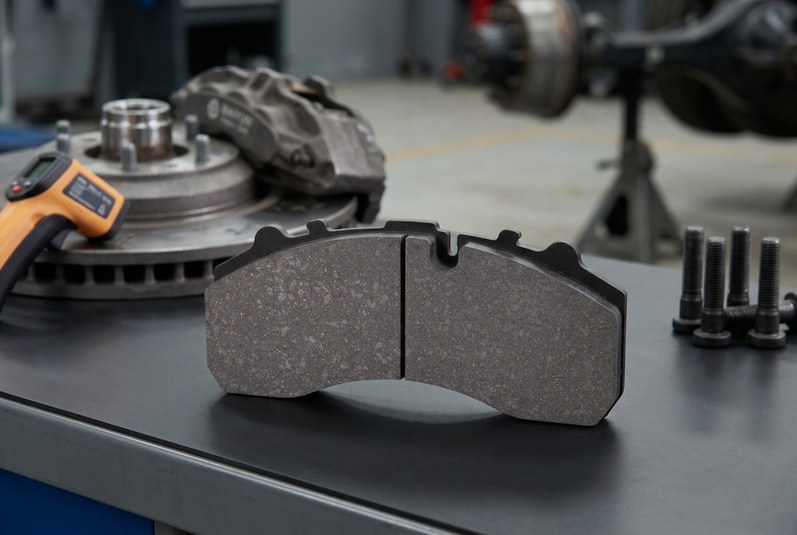
Summary: Semi-metallic heavy truck linings typically hold friction up to 450°C, while low-metallic compounds start fading closer to 300°C—choose based on your routes and load profile.
How Do ECE R90 and IATF 16949 Certifications Reduce Buyer Risk?
ECE R90 homologation for commercial vehicle brake linings includes controlled fade testing to confirm that hot performance stays within a defined margin of cold performance.
For importers, ECE R90 is not a laboratory decoration. It's a legal requirement in many markets across Europe, the Middle East, Africa, and parts of Asia. A lining without an ECE R90 certificate can be rejected at customs or fail a roadworthiness audit. The certification process tests friction behavior before and after thermal cycling, often requiring hot braking force to remain at least 75% of the cold value. That's a practical safeguard for buyers who can't run a 40-tonne truck down a mountain during supplier qualification.
IATF 16949 goes further into process control. It requires batch traceability, defined production parameters, and statistical capability—many OEMs expect Cpk values of 1.33 or higher on critical mixing and pressing steps. BAIYUN Brake, for example, runs incoming raw material checks and records friction test results per production lot, so you're not gambling on a single good lab sample.
Summary: ECE R90 certifies fade performance, while IATF 16949 certifies the consistency behind that performance—together they reduce buyer verification time and field failures.
What Maintenance and Driving Practices Limit Brake Fade in Fleet Operations?
Correct running clearance between brake lining and drum or disc is often overlooked, yet excessive clearance increases brake stroke and heat buildup.
For S-cam drum brakes, recheck running clearance every 10,000 km or every service interval. A slack adjuster that doesn't maintain proper clearance forces the driver to apply more air pressure, heating drums faster. Even 1–2 mm of extra clearance can increase stopping distance by several meters on a grade. Brake running clearance tips from our technical team explain how to verify adjustment without over-tightening.
Driving technique matters just as much as hardware. Continuous light brake application on a long downgrade keeps heat input constant and denies the brake surfaces any cooling time. The standard method is snub braking: apply firm, short brake applications to reduce speed by 10–15 km/h, then release completely to let air flow and cool. Engine brakes or retarders should carry most of the load on mountain routes, with service brakes used only for intermittent speed control.
Fleets that run telematics can track brake temperature events. In our experience, operators that switch from continuous braking to snub braking see brake lining life improve 20–30% on severe grades. That directly reduces the number of fade incidents and roadside calls.
Summary: Maintenance and driver training are non-negotiable; correct clearance and snub braking reduce peak temperatures and give the friction material a chance to recover.
What Should Buyers Verify When Sourcing Fade-Resistant CV Brake Pads?
A fade-resistance claim means nothing without test data; request the commercial vehicle brake pad test report for the exact part number you plan to import.
Use this checklist before placing a purchase order:
- Request the ECE R90 homologation certificate matching the exact WVA number or supplier part code.
- Ask for a dynamometer report showing coefficient of friction at 250°C, 350°C, and 450°C.
- Confirm the material formulation contains at least 25% metallic content if the application requires semi-metallic fade resistance.
- Review batch traceability records and Cpk statistical data; a process capability below 1.33 signals batch variation risk.
- Request a sample for independent third-party hot performance testing before committing to a container order.
- Check packaging, lot numbers, and shelf life—moisture-contaminated friction material can underperform on first hot cycle.
You can download our commercial vehicle brake pad test report to see the format a serious supplier should provide. If a candidate factory refuses to share hot friction curves, that's a red flag, not a minor omission.
Summary: Buyers who request hot friction data, ECE R90 certificates, and batch capability reports filter out most fade-related sourcing failures before they reach the fleet.
What Are the Most Common Misconceptions About Heavy Truck Brake Fade?
Misconception: Thicker brake linings always resist fade better. Reality: A thick lining with a resin-heavy organic formulation can fade faster than a thinner semi-metallic lining; friction material composition, not lining thickness, controls fade onset.
Misconception: Brake fade only happens on long downhill runs. Reality: Stop-and-go distribution routes generate repeated heat cycles above 250°C and cause cumulative fade; fleet telemetry studies show 35% of fade events occur on urban or regional delivery routes, not alpine passes.
Misconception: ECE R90 is just paperwork. Reality: ECE R90 includes dedicated fade and hot performance testing; uncertified linings often fail at 350°C while homologated linings hold within 15% of cold friction after the regulated cycle.
Summary: Material formulation and homologation tests—not thickness, geography, or paperwork—determine whether a heavy truck brake lining will fade in service.
Frequently Asked Questions About Reducing Brake Fade in Heavy Trucks
Q: What temperature triggers brake fade in heavy truck friction materials?
A: Most organic binders begin softening at 250°C, with noticeable fade at 300°C and severe fade above 350°C. Semi-metallic linings typically hold stable friction up to 450°C, giving a wider safety margin on long grades.
Q: How much extra stopping distance does brake fade cause on a fully loaded truck?
A: Industry testing shows fade can increase stopping distance by 20–40% from 60 km/h. On a 10% downgrade, that can add 15–25 meters to a loaded combination vehicle, enough to make the difference between a controlled stop and a collision.
Q: Does switching from drum brakes to disc brakes reduce fade?
A: Yes. Disc brakes dissipate heat faster and resist drum expansion; fleets report 25–35% shorter fade recovery times. But disc brake pads still need fade-resistant material to perform—switching hardware alone won't fix a poor friction compound.
Q: Can ECE R90 certified linings fade?
A: They can, but much later. ECE R90 homologated linings must maintain at least 75% of cold performance after the regulated fade test, giving drivers a wider safety margin before dangerous fade occurs.
Q: What documentation should importers request to verify fade resistance?
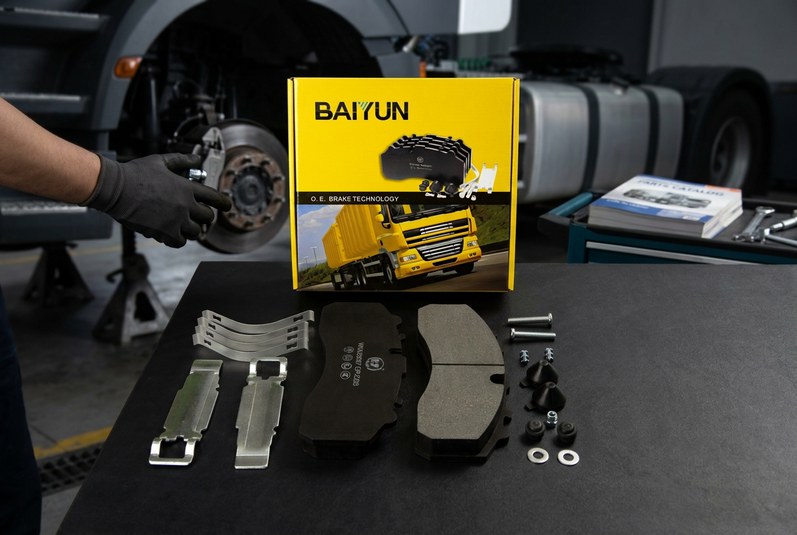
A: Request the ECE R90 certificate, a dynamometer report showing friction coefficient at 250°C/350°C/450°C, and batch traceability records. BAIYUN Brake provides these for commercial vehicle brake linings, along with IATF 16949 process data.
Get Fade-Resistant CV Brake Pads Backed by Test Data
Look, I've seen too many importers chase the cheapest quote only to absorb warranty claims when the first mountain fleet reports brake fade. The real savings come from specifying fade-resistant material upfront and verifying it with test data. Review your current supplier's hot friction curves. If they can't produce them, that's your answer.
Explore the full brake pad product range for heavy truck, bus, and trailer applications. Need help matching a WVA number or confirming ECE R90 status? Request a wholesale quote and our export team will walk you through the technical documentation before you commit.
Was this article helpful?
Average Rating: 5/5 (569)