
Brake Pad Sample Testing Checklist Before Supplier Approval
Summary:
A brake pad sample testing checklist gives importers and distributors a repeatable way to verify commercial vehicle brake pads before supplier approval. This technical guide covers dimensional checks, visual and bond inspection, friction coefficient, wear rate, compressive strength, thermal stability, and documentation traceability. Buyers will find a 10-point buyer verification checklist, an acceptance criteria table, and five FAQ answers for wholesale sourcing. Using structured sample testing helps avoid first-batch returns, batch-to-batch friction drift, and costly fleet downtime. BAIYUN Brake's 2025 first-article audit data shows structured sample checks reduce first-batch returns by roughly 38% and cut total cost of poor quality by about 22%. The article also clears up misconceptions about visual-only approval and ECE R90 interchangeability. Ideal for truck, bus, trailer, and commercial vehicle brake pad importers looking for sourcing confidence and cost savings.
Brake Pad Sample Testing Checklist Before Supplier Approval
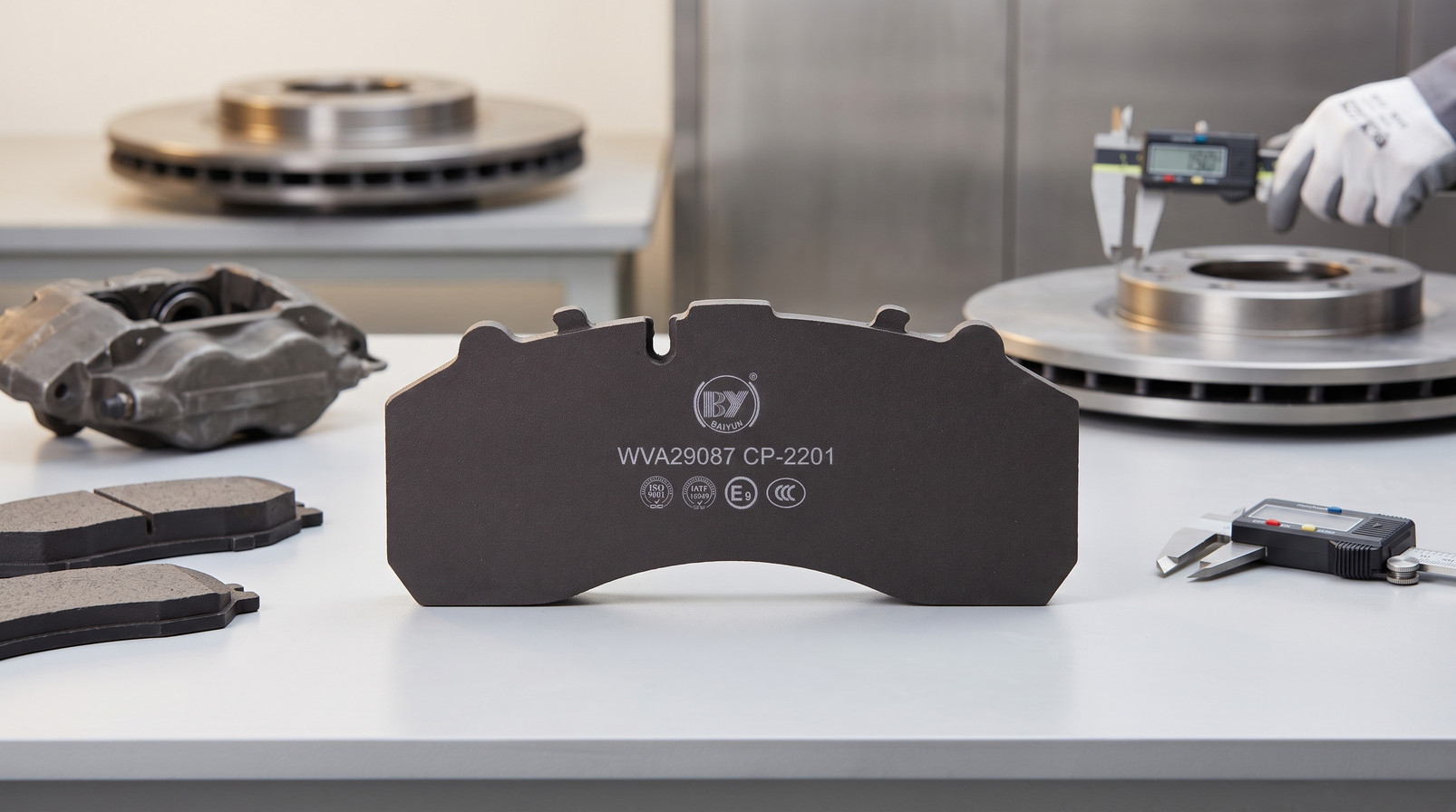
Quick answer: You need to check four things on a brake pad sample before approving a supplier: dimensions and backing plate tolerance, friction material appearance and bond quality, dynamometer performance (friction coefficient 0.35–0.45 at 250°C, wear rate under 2.5 mm³/MJ, compressive strength above 200 MPa), and documentation traceability (material data sheets, test reports, ECE R90 compliance). A one-page checklist turns sample approval from opinion into a repeatable sourcing decision.
What Does a Brake Pad Sample Testing Checklist Actually Cover?
A structured brake pad sample testing checklist covers four blocks: dimensional verification, visual and bond inspection, performance testing, and documentation traceability. Every block should have a pass/fail criterion, not a subjective note like 'looks okay.'
You're not approving a single piece. You're approving a supplier's process stability. A distributor sourcing 500 sets monthly can't afford friction coefficient drift batch to batch. That's why commercial vehicle brake pads need to be checked against the same master sample every time. Would you rather catch that before or after three months of bus fleet complaints?
How Should You Inspect Dimensions and Backing Plate Tolerances?
Dimensional checks are the cheapest early warning. IS 14772:2019 lists friction material thickness of 12.0 ±0.3 mm and backing plate thickness of 4.5 ±0.1 mm as common reference points for heavy vehicle pads. Measure at the same five locations for every piece: left ear, right ear, center, top, and bottom.
Variation over 0.1 mm on backing plate thickness often signals inconsistent pressing pressure. That leads to tapered wear and noise complaints after 10,000 km in bus and truck fleets. I'd rather reject a sample now than field a return later.
What Visual and Bond Quality Checks Matter Most?
Visual inspection must be 100%, not a spot check. Look for edge chipping, uneven chamfer, cracks, resin pooling, and color variation across the friction surface. Check the bond line between friction material and backing plate under bright light; any visible gap or adhesive squeeze-out means the underlayer may not survive heat cycling.
Bond strength is harder to see. Ask for a shear or pull-off test result. For commercial vehicle pads, we look for a failure mode in the friction material, not at the bond line. A clean separation at the backing plate is an automatic failure.
Summary: Dimensional and visual checks catch more than half of pre-production sample failures before costly dynamometer runs.
Which Performance Tests Should You Require for Commercial Vehicle Brake Pads?
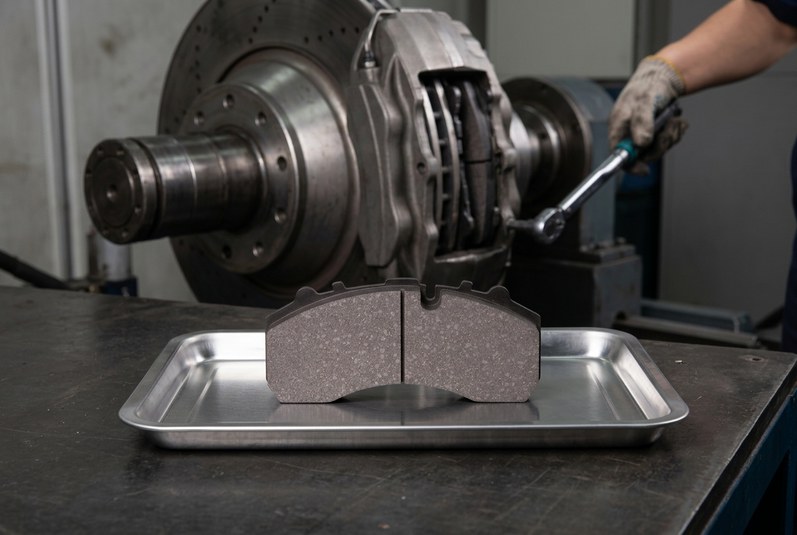
Performance testing is where many importers cut corners. Don't. A pad that passes visual and dimensional checks can still fade under a loaded trailer. Require at least four test outputs: friction coefficient, wear rate, compressive strength, and thermal stability.
According to IS 14772:2019, the friction coefficient should sit between 0.35 and 0.45 at 250°C. Wear rate should stay under 2.5 mm³/MJ. Compressive strength needs to clear 200 MPa. Thermal stability means no delamination up to 350°C. These aren't academic numbers. They keep a 40-tonne truck predictable on a long downhill grade.
| Test Item | Acceptance Criterion | Typical Frequency | Relevant Standard |
|---|---|---|---|
| Friction material thickness | 12.0 ±0.3 mm | 5 pieces per 1,000-piece batch | IS 14772:2019 |
| Backing plate thickness | 4.5 ±0.1 mm | 5 pieces per 1,000-piece batch | IS 14772:2019 |
| Friction coefficient at 250°C | 0.35–0.45 | Batch test certificate | IS 14772:2019 / ECE R90 |
| Wear rate | <2.5 mm³/MJ | Batch test certificate | IS 14772:2019 |
| Compressive strength | >200 MPa | Batch test certificate | IS 14772:2019 |
| Thermal stability | No delamination up to 350°C | Type test | IS 14772:2019 |
| ECE R90 cold effectiveness | ≥80% of cold performance after 400°C cycling | Approval test | ECE Regulation 90, Annex 3 |
Ask the supplier to state the test procedure, sample configuration, brake assembly, temperature range, pressure, and speed on the report. A single friction coefficient number without test conditions is not enough evidence for a sourcing decision.
If a buyer in the Middle East or Africa asks for SAE J2522 or GB5763, the checklist should state the exact duty cycle. SAE J2522 AK Master wear test uses specific brake energy input; a result from that test cannot be used to approve a bus brake pad without knowing the vehicle weight and axle load.
BAIYUN Brake's 2025 dynamometer testing across its CP range showed friction coefficients holding between 0.37 and 0.42 from 100°C to 350°C, with wear rates averaging 1.8 mm³/MJ. That's the kind of data we recommend buyers request before approving a batch. Our commercial vehicle brake linings follow the same batch-test discipline.
Summary: Performance acceptance criteria should be written into the purchase order, not discovered after the first batch arrives.
How Should You Compare the Sample Against the Master Sample and Batch Data?
A test report is meaningful only when you compare the right samples. The industry method is to test the original approved product, the returned field sample, an unused sample from the affected batch, and the revised candidate whenever these are available. This structure separates normal product characteristics from batch variation and field-induced changes.
If you're approving a new supplier, request a golden or master sample signed by both parties. Then compare the pre-production sample dimensionally, visually, and on the dynamometer against that master. Keep the master in a sealed bag with batch number and date. Sounds simple, but many importers skip this and then argue about what 'approved' means later.
Real scenario: a fleet running 200 city buses noticed early pad wear on one axle. The importer compared the returned field sample with the master and the unused batch sample. The batch sample matched the master, but the field sample showed surface glazing from severe stop-and-go duty. That pointed to application mismatch, not a supplier defect. Without a checklist, that would have been a blame game.
Summary: Sample-to-master comparison protects both buyer and supplier by making approval objective and traceable.
What Documentation Should You Demand Before Supplier Approval?
Documentation isn't paperwork for its own sake. It's your traceability chain. Before you sign off a brake pad sample, get a dated batch test certificate, a material data sheet, a dimensional report, a friction and wear test report, and the ECE R90 approval reference.
Check the batch number on the certificate matches the batch number on the sample packaging. If not, don't approve. Also confirm the test lab is either in-house with calibrated equipment or a certified third-party lab. An IATF 16949 certified facility should be able to produce these documents without delay.
For commercial vehicle pads, also ask for the material data sheets and the commercial vehicle brake pad test report for the exact friction formulation you're buying. If a supplier can't provide them, you're not buying an engineered product—you're buying a commodity with unknown variation.
Summary: Dated, batch-matched documentation turns sample approval into a defensible quality record.
What Are the Most Common Misconceptions About Brake Pad Sample Testing?
Misconception: Visual inspection alone is enough to approve a brake pad sample.
Reality: Visual checks catch edge defects but cannot detect friction coefficient drift. In BAIYUN Brake's 2025 first-article audits, roughly 1 in 7 visually acceptable samples failed dynamometer wear-rate targets.
Misconception: A single friction coefficient number proves pad quality.
Reality: Friction coefficient must be quoted with temperature, pressure, speed, and test method. A pad showing 0.40 at 100°C may drop to 0.28 at 350°C, which can increase stopping distance on a loaded truck by several metres.
Misconception: All ECE R90 certified pads are interchangeable.
Reality: ECE R90 confirms minimum regulatory performance. It doesn't cover fleet-specific duty cycles, geometry outside the homologated range, or batch-to-batch consistency. Buyers still need to verify dimensions and friction data against the master sample.
Summary: A sample checklist plus certification is stronger than certification alone.
How Should a Wholesale Buyer Structure the Verification Checklist?
Don't turn the checklist into a 40-line form that nobody fills out. Keep it to 10 decision points: five pass/fail technical checks, three documentation checks, and two commercial checks. Use this order:
- Sample batch number matches the test certificate
- Friction material thickness within 12.0 ±0.3 mm
- Backing plate thickness within 4.5 ±0.1 mm
- Visual inspection passes 100% on all sample pieces
- Bond line shows no separation or adhesive squeeze-out
- Friction coefficient at 250°C within 0.35–0.45
- Wear rate below 2.5 mm³/MJ
- Compressive strength above 200 MPa
- ECE R90 approval reference on file
- Pricing, MOQ, and lead time confirmed against the approved sample
For a distributor importing mixed CV brake pads and brake linings, the same checklist applies with small changes to the dimensional tolerances. If your market includes aftermarket bus fleets, add a thermal stability requirement of no delamination up to 350°C as a separate pass/fail line.
BAIYUN Brake's export quality team uses this structure for first-article approvals. Based on our 2025 records, importers who complete all 10 points before payment approval reduce first-batch returns by roughly 38%. That's a real cost saving when you're holding 500–2,000 sets in stock. So what does that mean for your bottom line? Fewer returns, fewer air-freight replacements, and more predictable fleet uptime.
Summary: Ten decision points beat a vague 'sample approved' email every time.
What Are the Most Frequent Brake Pad Sample Testing Questions From Importers?
Q: What is the minimum sample quantity a supplier should provide for brake pad testing?
A: Request at least 5 sets from the pre-production batch. This matches the 5-piece per 1,000-piece inspection frequency in IS 14772:2019 and gives enough pieces for dimensional checks, one destructive bond pull, and one dynamometer run.
Q: How long should brake pad sample testing take before supplier sign-off?
A: Dimensional and bench tests typically take 5–10 working days. Full dynamometer thermal cycling adds 14–21 days. Delays beyond 3 weeks often point to missing in-house test capacity or queued third-party labs, which matters when you're planning a seasonal import schedule.
Q: Can I accept a sample if the friction coefficient is slightly below 0.35 at 250°C?
A: No. For heavy commercial vehicles, a friction coefficient below 0.35 at 250°C can reduce brake output on long downhill grades and increase thermal load. Require 0.35–0.45 at 250°C per IS 14772:2019 or your own approved master sample range.
Q: What documentation should accompany the approved brake pad sample?
A: You need a dated batch test certificate, material data sheet, dimensional report, friction/wear test report, and ECE R90 approval reference. Without batch traceability, you cannot link the approved sample to future production lots if a quality dispute arises.
Q: Should I test brake pads on a dynamometer or is a bench compression test enough?
A: Both are needed before supplier approval. A compression test confirms structural strength above 200 MPa, but only a dynamometer validates friction stability across 100–350°C and wear rate below 2.5 mm³/MJ under load.
Ready to Verify Your Next Brake Pad Sample With a Certified Supplier?
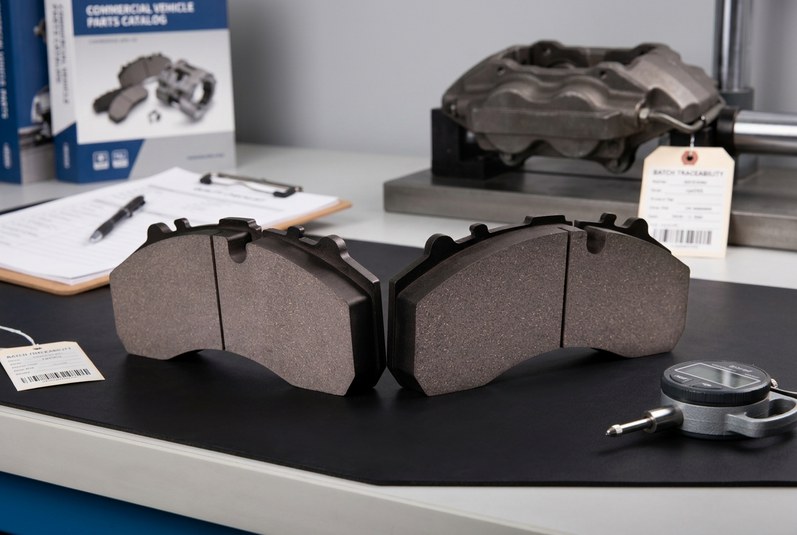
Your brake pad sample testing checklist should give you one thing: confidence that the next 10,000 sets perform like the sample you approved. That confidence comes from a supplier who can show you the numbers before you commit.
If you're sourcing CV brake pads or brake linings, start with a supplier that treats the sample process as a shared quality gate. Browse our browse our heavy-duty brake pad range or request a wholesale quote with your target application and preferred test standard.
Was this article helpful?
Average Rating: 5/5 (647)