
Commercial Truck Brake Pad Replacement Checklist
Summary:
The commercial truck brake pad replacement checklist helps fleet buyers and importers verify friction thickness, disc condition, guide pin movement, and supplier batch data before ordering. This technical guide covers ECE R90 approval, IATF 16949 traceability, minimum wear limits, and common sourcing misconceptions. Buyers get a 10-point supplier verification checklist and practical comparison table for heavy-duty air disc and drum applications. BAIYUN Brake's commercial formulations CP2271 and CP2223 show a friction coefficient of 0.38–0.42 across 100–350°C in dynamometer testing. The article also explains how the checklist cuts brake-related costs by up to 40% and reduces unscheduled breakdowns by 50% with high PM compliance. Fleet distributors sourcing truck and bus parts can use the FAQ to confirm wear intervals of 25,000–70,000 miles. Request a wholesale quote using the linked product pages and contact form.
Commercial Truck Brake Pad Replacement Checklist
TL;DR: A commercial truck brake pad replacement checklist turns a safety-critical service into a repeatable, supplier-auditable process. Use it to inspect friction thickness, disc surface, caliper guide pins, and air disc brake adjusters at every PM interval. Certified pads like BAIYUN Brake's ECE R90 range typically deliver 25,000–70,000 miles. Sourcing batch-matched, IATF 16949-approved pads prevents mixed-friction failures and cuts fleet brake costs by up to 40%.
Quick answer: The checklist covers minimum friction thickness, disc condition, guide pin movement, wear indicator status, and supplier test data. Before ordering, verify ECE R90 approval, IATF 16949 scope, and batch traceability. This cuts non-conforming shipments and unexpected downtime.
Why Do Fleet Buyers Need a Replacement Checklist Before Ordering Pads?
Fleet maintenance data from 2026 shows preventive scheduling can reduce brake-related costs by up to 40%. Fleets running 95% or higher PM compliance report 50% fewer unscheduled breakdowns. That's not a vague win; it's the difference between a truck at a dock and a truck at roadside.
A distributor sourcing 500 sets monthly can't afford mixed-friction batches. One wrong part number or one unapproved formulation creates brake imbalance, steering pull, and warranty claims. A written replacement checklist gives your warehouse team the same pass/fail standard as your mechanics.
We hear the same question from importers: Will the pads I approved six months ago be the same as the next shipment? A checklist with batch-level data answers that. You check the pad thickness, the WVA marking, the backing plate finish, and the test report date before anything ships.
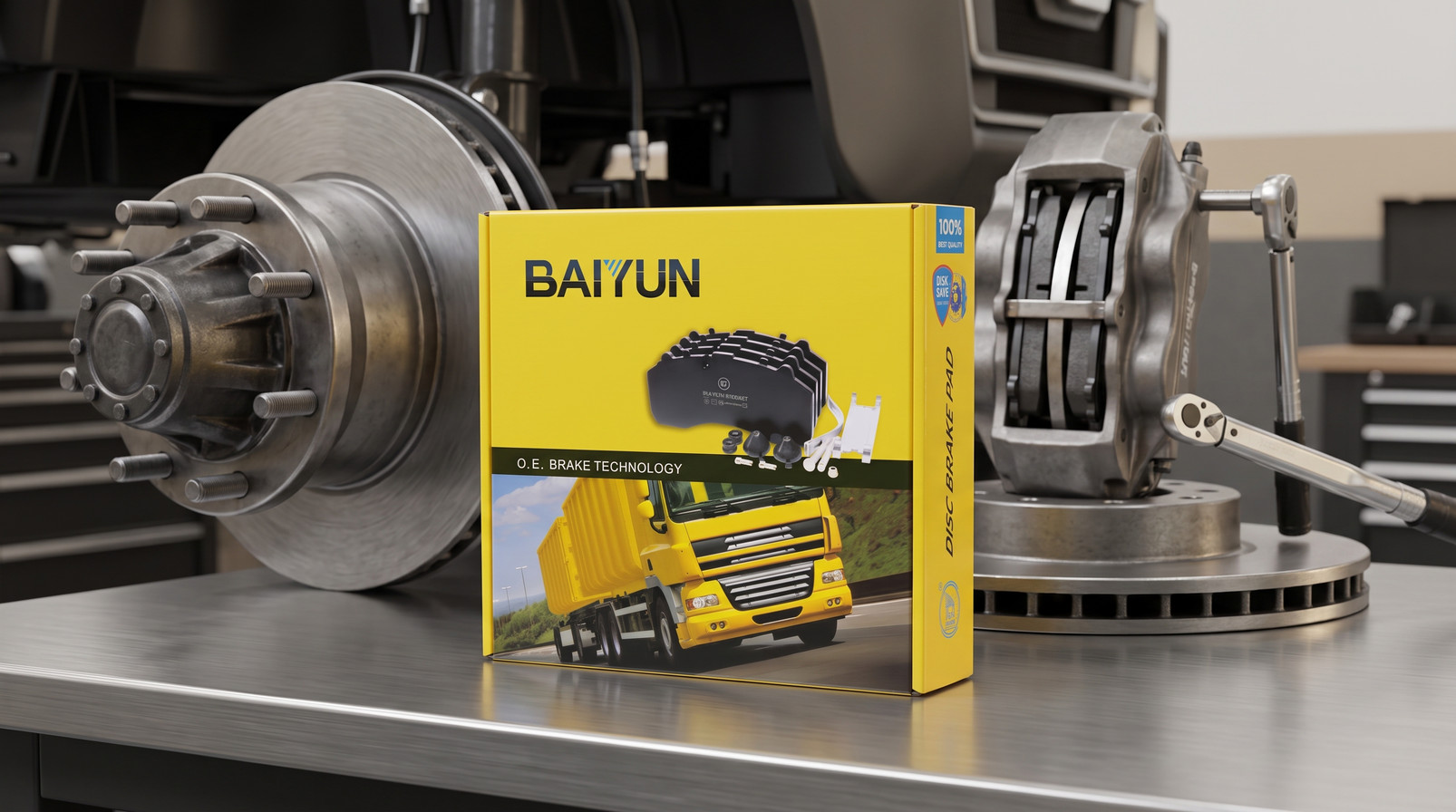
For buyers moving into dedicated truck and bus programmes, starting from our heavy-duty brake pad range can shorten screening time. You're not comparing random aftermarket parts; you're screening from a controlled product family.
Bottom line: A replacement checklist protects both vehicle safety and sourcing consistency.
What Should You Inspect on a Commercial Truck Brake Before Replacement?
Start with the axle. On a heavy-duty air disc brake, you'll check the friction lining thickness, disc surface, caliper guide pins, and wear indicator. For drum brakes, inspect lining thickness above the rivet heads, drum scoring, cam movement, and return springs.
The table below gives a practical inspection sequence for fleet shops and incoming QC teams.
| Inspection Point | What to Check | Replacement / Reject Signal |
|---|---|---|
| Friction lining thickness | Measure at the thinnest point with a digital caliper | Below 2–3 mm on air disc pads; below 6 mm above rivet heads on drum linings |
| Disc / drum surface | Look for deep scoring, heat checking or cracks | Cracks longer than 10 mm or grooves deeper than 1.5 mm |
| Caliper guide pins | Verify free slide and lubrication | Sticking or corroded pins causing tapered wear |
| Wear indicator | Check mechanical clip or electronic sensor | Indicator making contact or dash warning active |
| Backing plate and shims | Compare thickness and finish against master sample | Bent plates, missing shims, or paint lifting |
Don't skip the guide pins. Uneven pad wear across an axle often points to a pin problem, not a friction problem. Your commercial vehicle brake service routine should log pin movement before every pad change.
Exact minimum thickness varies by application and pad family. When in doubt, confirm with supplier catalogue. That's safer than assuming every 22.5-inch truck axle uses the same wear limit.
Bottom line: Inspection order is cheap; skipped guide pins are expensive.
How Do You Verify Pad Thickness and Wear Limits Without a Lab?
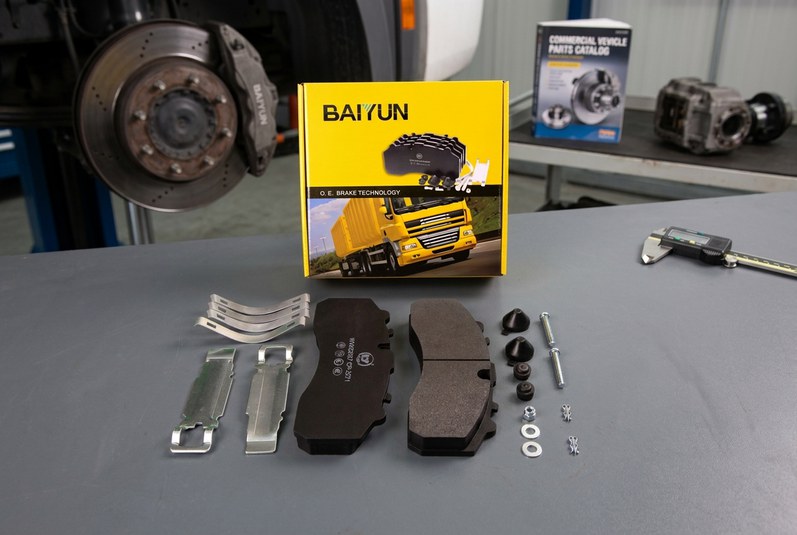
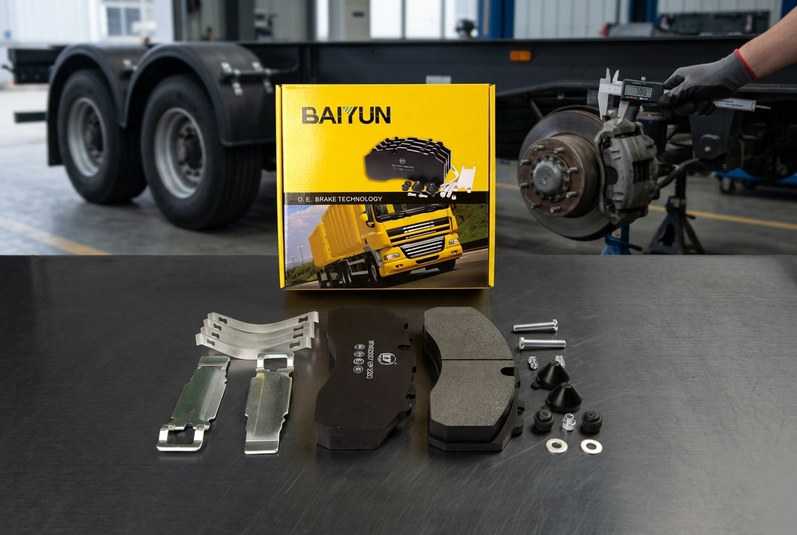
A digital caliper and a straight edge cover 90% of incoming checks. Measure friction material thickness at three points: inner edge, centre, outer edge. On-highway fleets typically see 0.2–0.3 mm of friction loss per 10,000 miles. Vocational trucks can double that rate.
Here's the practical rule: if any one of the three measurements falls below the supplier's stated minimum, reject the set. Don't average the three. A pad with 2.1 mm on one edge and 4.0 mm on the other is already failing taper wear, even if the average looks fine.
Also check the wear indicator position. On many commercial pads, a metal clip contacts the disc at a known wear depth. That's a visual pass/fail without any measurement. If the clip is touching, the pad is done.
Bottom line: Minimum thickness at the thinnest point controls the replacement decision.
What Supplier Checks Should Importers Run Before Reordering?
Your incoming QC checklist should look a lot like a sourcing audit. I've seen too many buyers approve a sample, then later receive pads with a different friction code and only discover it after the first driver complaint.
Run this 10-point buyer verification checklist before you release payment or approve shipping:
- Request a current IATF 16949 certificate with the supplier's audit scope.
- Ask for the ECE R90 approval number for each part number on the order.
- Verify the friction coefficient range from SAE J2522 or GB 5763 test reports.
- Confirm batch-level traceability codes on the box and the pad backing plate.
- Check the packaging label for WVA number, friction code, and minimum thickness.
- Compare pad weight and backing plate thickness against your master sample.
- Ask for the latest shear strength test on the current production lot.
- Review the supplier's 12-month return and warranty rate.
- Confirm MOQ, lead time, and shipment consistency for your route.
- Validate that test reports are less than 24 months old.
For volume programmes, this becomes a monthly routine rather than a one-time audit. You can pair it with a wholesale CV brake lining inquiry to lock in batch consistency across multiple axle families.
Our IATF 16949 certified facility runs dynamometer and shear testing on every production batch. That's not marketing language; it's the difference between a controlled process and a trading company.
Bottom line: Sourcing confidence comes from repeatable data, not from a one-time photo of a test report.
What Are the Most Common Misconceptions About Commercial Truck Brake Pad Replacement?
Misconception: Thicker pads always last longer. Reality: Friction formulation and thermal stability matter more. Some 30 mm pads wear faster than 24 mm ceramic-enhanced commercial pads under high-heat stop-start routes.
Misconception: All ECE R90 approved pads are identical. Reality: ECE R90 sets a performance window but not a wear life or noise target. Two approved pads can differ by 20% in wear rate depending on raw material selection.
Misconception: Price per set is the main cost driver. Reality: Labour and downtime dominate. A $15 cheaper pad that wears 40% sooner can add $200 in extra service labour per axle over the same service life.
Bottom line: Total cost per mile beats price per set every time.
How Do ECE R90 and IATF 16949 Affect Your Sourcing Decision?
ECE R90 requires replacement brake pads to stay within ±15% of original equipment braking torque across speed and temperature sensitivity tests. That's a European legal requirement for most commercial vehicles. If a supplier can't show the approval number, don't import the part for Europe.
IATF 16949 goes further into the process: production part approval, batch traceability, control plans, and annual product audits. It tells you the factory can repeat what it sent you as a sample.
In BAIYUN Brake's 2025 dynamometer testing, commercial formulations CP2271 and CP2223 maintained a friction coefficient of 0.38–0.42 across the 100–350°C range, consistent with ECE R90 requirements. That level of data is what you should ask from any BAIYUN Brake or comparable supplier before placing a container order.
SAE J2522 and GB 5763 provide additional friction stability and wear data. When an importer combines those test reports with a live batch sample, the sourcing risk drops fast.
Bottom line: Ask for the approval number and the test report, not just the certificate.
What Questions Do Importers Ask About Commercial Truck Brake Pad Replacement?
Q: How often should commercial truck brake pads be replaced?
A: On-highway tractor pads typically last 25,000–70,000 miles. Vocational trucks and urban buses often average closer to 30,000 miles because of stop-start demand. Replace the set when any single friction measurement drops below the supplier's minimum thickness.
Q: What is the minimum friction thickness for air disc brake pads?
A: Most European-style air disc pads require replacement at 2 mm friction material above the backing plate. Drum linings should be changed before reaching 6 mm above rivet heads. Confirm exact limits in the supplier catalogue for each axle part number.
Q: Does ECE R90 certification guarantee performance?
A: ECE R90 ensures the pad stays within ±15% of OE braking torque across speed and temperature tests. It does not guarantee equal wear life or noise behaviour. For wear consistency, request SAE J2522 or GB 5763 data plus batch traceability.
Q: How do you avoid mixing friction formulations in one fleet?
A: Use a controlled part number matrix and one IATF 16949 supplier for each axle family. Mixed friction coefficients can cause brake imbalance and steering pull. Batch-level traceability codes help identify any formulation change before it reaches the shop.
Q: Can Chinese brake pad manufacturers meet EU and US fleet standards?
A: Yes, IATF 16949-certified manufacturers like BAIYUN Brake export ECE R90-approved commercial vehicle pads with full laboratory reports. We run dynamometer and shear testing on every production batch. Request a current test report before ordering.
How Do You Turn This Checklist Into a Lower-Cost Sourcing Program?
Start with one axle family, one approved part number, and one certified supplier. Run the 10-point verification every quarter. Compare your cost per mile after one full wear cycle.
If you're sourcing mixed truck and bus programmes, our team can help you set up a controlled part number matrix. We work with distributors and fleet importers who need repeatable ECE R90 and IATF 16949 data, not just a one-time quote.
Ready to apply the checklist? Request a wholesale CV brake pad inquiry and ask for current test reports, or submit your inquiry to our sales team. We'll respond with part numbers, minimum thickness data, and lead times for your route.
Was this article helpful?
Average Rating: 5/5 (714)