
How to Choose a Brake Pad Supplier: Buyer Checklist
Summary:
Learning how to choose brake pad supplier for commercial vehicles means moving beyond price to verify certifications, batch friction consistency, factory audit results, and aftermarket coverage. This buyer checklist from BAIYUN Brake—an IATF 16949 and ECE R90 certified manufacturer—covers supplier verification, wholesale pricing comparison, and common sourcing mistakes. It includes a practical table and FAQ for importers and distributors of truck, bus, and trailer brake pads. By following this sourcing framework, you reduce defect risk, control total landed cost, and build a repeatable supply chain for CV brake pads and linings. Contact BAIYUN Brake for samples, MOQ, and OEM/private label support.
How to Choose a Brake Pad Supplier: Buyer Checklist
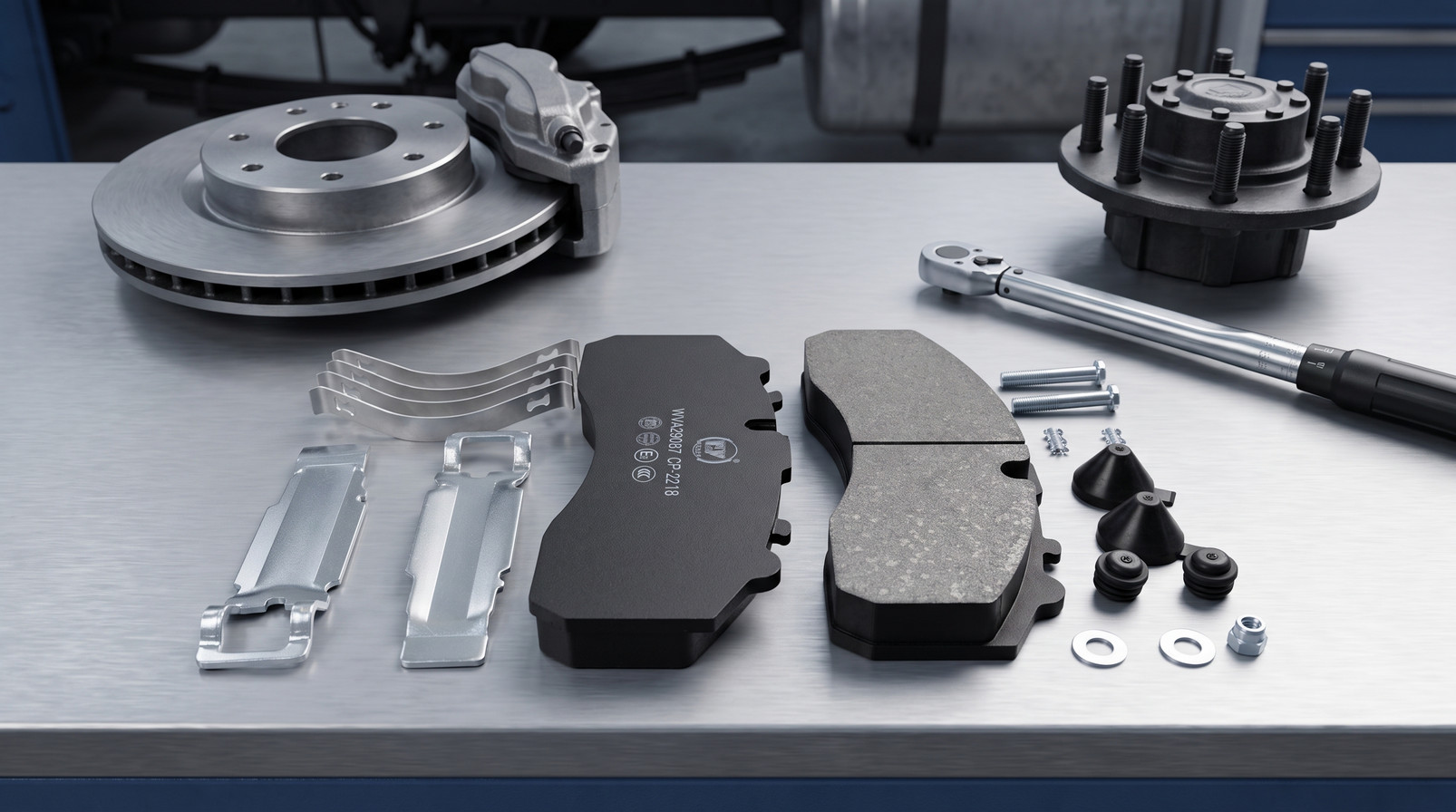
Quick answer: You choose a brake pad supplier by verifying four things before you sign a purchase order: certifications (IATF 16949, ISO 9001, ECE R90), factory audit evidence, batch-level friction consistency, and aftermarket support for your truck, bus, or trailer applications. Request CV brake pad catalog for distributors, ask for test reports, and compare landed cost, not just ex-works price.
Why Does Supplier Verification Matter More Than Unit Price in 2026?
A distributor sourcing 500 sets monthly cannot afford a 3% defect rate on truck brake pads. That's 15 roadside failures waiting to happen every cycle, and the warranty cost typically wipes out any price delta. North American aftermarket growth favors suppliers with broad application coverage and resilient production, according to 2026 market observations from industry analysts.
Brake friction material isn't a commodity like bolts or filters. A 5% shift in friction coefficient from batch to batch changes stopping distance and driver feel on a loaded trailer. That's why process control matters more than the initial sample. IATF 16949 requires statistical process control and defect prevention, not just final inspection. A factory without that discipline may pass one sample and fail the next 10,000 sets.
A real example: a fleet buyer in the Gulf region reported uneven pad wear across city buses because the supplier changed steel fiber suppliers without approval. The friction coefficient shifted from 0.40 to 0.34, causing longer stopping distances and premature rotors. That's the difference between a certified process and a trading company buying from the cheapest factory each quarter.
Summary: Supplier verification reduces the total cost of poor quality, which typically adds 4–7% to landed cost when defects, returns, and rework are included.
What Certifications Should a Commercial Vehicle Brake Pad Supplier Hold?
ECE R90 is the baseline for aftermarket brake pad performance in many global fleets. The regulation requires brake pads to maintain at least 80% of their cold performance after thermal cycling, which pushes suppliers to control raw material mixing and curing. IATF 16949 goes further: it's an automotive-quality management standard requiring defect prevention, traceability, and continual improvement.
ISO 9001 alone isn't enough for commercial vehicle brake pads. It tells you a factory has a quality system, but it doesn't guarantee the process capability needed for friction materials. Ask for IATF 16949 certification, a valid ECE R90 type approval number, and current test reports. BAIYUN Brake holds IATF 16949, ISO 9001, and ECE R90 and lists them in its quality assurance documentation.
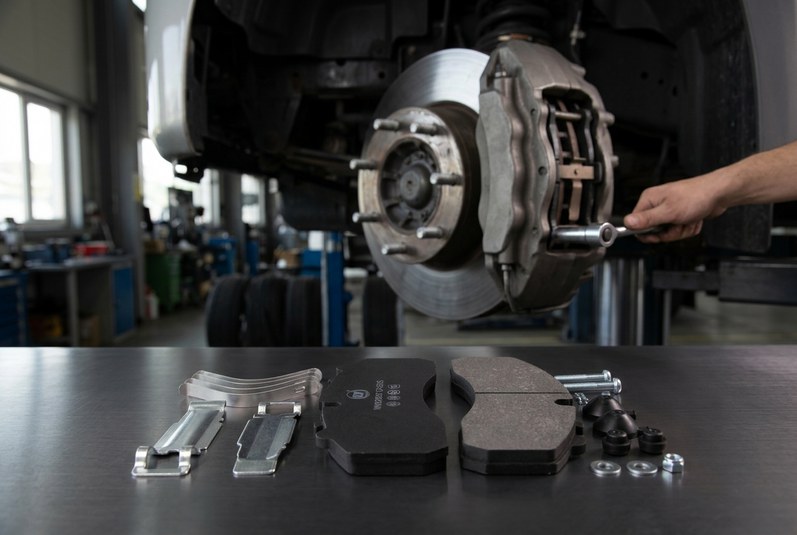
Why Do ECE R90 and IATF 16949 Matter for Fleet Buyers?
Fleet buyers don't just worry about pad life; they worry about liability and uptime. ECE R90 approval confirms a pad's coefficient of friction is within 15% of the type-approved original, while IATF 16949 enforces Cpk ≥ 1.33 for critical characteristics. Those numbers translate into predictable stopping distance across a fleet's operating temperature range. That's why BAIYUN Brake's commercial vehicle range—including CP2215 and CP2203—is batch tested for friction stability before shipment.
GB 5763 is another standard you'll see from Chinese manufacturers. It sets thresholds for friction coefficient and wear rate at specific temperatures. While not identical to ECE R90, it provides the baseline quality floor. A supplier quoting GB 5763 test data should also be able to provide ECE R90 performance data for aftermarket export.
Summary: Certifications are proxy evidence that a supplier can consistently produce pads that meet both regulatory performance and fleet-level reliability expectations.
What Should Your Buyer Checklist Cover Before Signing a Supply Contract?
Before you commit to a commercial vehicle brake pad supplier, verify the items below. A one-page checklist beats a 10-page memo because you'll actually use it. The table after the checklist shows what to look for and what should make you pause.
Buyer Verification Checklist:
- Confirm current IATF 16949 and ISO 9001 certificates and their expiry dates.
- Request ECE R90 type approval number and match it to the product range.
- Obtain dynamometer test reports for the exact brake pad material you plan to stock.
- Ask for batch friction coefficient data, not just a single sample result.
- Review production lead time, MOQ, and Incoterms for export shipments.
- Clarify private label and OEM packaging capabilities, including artwork and labeling.
- Inspect product marking and WVA numbers; if missing, confirm with supplier catalogue.
- Evaluate aftermarket coverage for long-tail truck, bus, and trailer applications.
| Verification Factor | What to Check | Red Flag | BAIYUN Brake Position |
|---|---|---|---|
| Certifications | IATF 16949, ISO 9001, ECE R90 | Expired or unavailable certs | IATF 16949, ISO 9001, ECE R90 certified |
| Friction consistency | Batch coefficient range and test temperature curve | Variation over 5% between batches | CP2218 batch tested at 0.38–0.42 across 100–350°C |
| Factory audit | Mixing, pressing, curing, grinding, inspection controls | Supplier refuses on-site audit | Audit-ready facility with 49+ years of production |
| Product data | Dynamometer reports, WVA number, material data sheet | No supporting data | Test reports available; WVA confirmed with supplier catalogue |
| Aftermarket coverage | Application list for trucks, buses, trailers | Limited SKU range or missing long-tail apps | Broad commercial vehicle brake pad and lining portfolio |
Summary: A checklist forces you to evaluate total cost of ownership and supply continuity, not just the sample price.
How Do You Compare Wholesale Pricing Without Sacrificing Quality?
Most buyers start with the ex-works quote and stop there. That's a mistake. A $12 truck brake pad that fails 3% of the time costs more than a $13 pad with a 0.5% failure rate once you add freight, customs, return shipping, and downtime. The real comparison should include total landed cost, warranty exposure, and reorder lead time.
Ask for a breakdown of friction material grade, backing plate steel thickness, and shim or noise treatment. If a supplier can't tell you the grade of steel or the friction modifier package, you're betting your fleet's safety on an unknown. BAIYUN Brake's commercial vehicle brake pads use tested formulations and provide batch traceability, which is why its commercial vehicle brake linings are priced for repeat sourcing, not one-off discounts.
What does batch verification look like? Ask for a heat fade and recovery report at 100°C, 250°C, and 400°C. You want the coefficient to stay within a 0.05 spread across that window. If the pad drops from 0.40 at 100°C to 0.27 at 400°C, that's a brake fade problem on long descents.
Summary: Price comparisons should include defect rate, warranty cost, and shipping lead time; a 0.5% defect reduction can save thousands of dollars per container.
What Are the Most Common Misconceptions About Choosing a Brake Pad Supplier?
Misconception: The cheapest quoted brake pad has the lowest landed cost. → Reality: Higher defect rates and warranty claims typically add 4–7% to total procurement cost, wiping out any initial discount.
Misconception: ECE R90 is only a European requirement, so North American buyers can skip it. → Reality: Many global fleets and OEMs now use ECE R90 as a consistent performance benchmark, and it's a quick way to filter out suppliers without controlled friction testing.
Misconception: A passing sample means you don't need a factory audit. → Reality: A single sample from one batch cannot guarantee 500 sets/month. IATF 16949 process audits catch mixing and curing variability before it becomes a field failure.
Summary: Most sourcing mistakes come from overvaluing sample quality and undervaluing batch consistency and certification documentation.
How Can BAIYUN Brake Reduce Your Sourcing Risk?
In BAIYUN Brake's 2025 dynamometer testing, the CP2218 heavy-duty disc brake pad formulation showed a stable friction coefficient of 0.38–0.42 across the 100–350°C operating range. That consistency comes from 49+ years of brake manufacturing and a IATF 16949 quality system that enforces process control at mixing, pressing, and curing. For a fleet buyer, that means predictable pad wear and stopping performance, not surprises in the field.
BAIYUN Brake also supports private label programs, application matching, sample evaluation, and flexible production planning for distributors and importers. You can request a brake pad catalog PDF to review the CV brake pad and lining range, or request OEM commercial vehicle brake pad quote. If you're comparing suppliers, keep BAIYUN Brake's audit-ready facility and testing documentation in the shortlist.
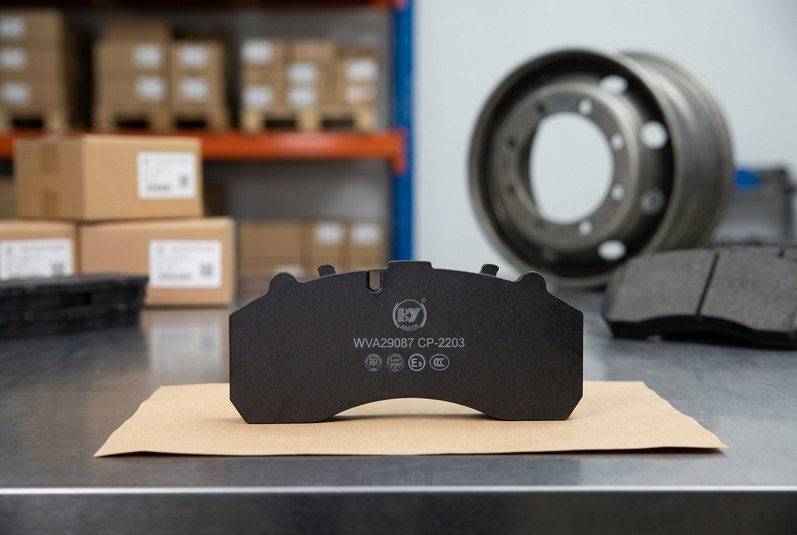
Summary: BAIYUN Brake's combination of IATF 16949, ECE R90, and 49+ years of production history reduces supplier risk for commercial vehicle aftermarket buyers.
What Should Importers Ask Before Choosing a Brake Pad Supplier?
Q: What is the difference between IATF 16949 and ISO 9001 for brake pad suppliers?
A: ISO 9001 covers general quality management, while IATF 16949 adds automotive-specific requirements including defect prevention, process control, and full traceability. BAIYUN Brake holds both, and its facility has been manufacturing friction materials for 49+ years.
Q: How can I verify a supplier's ECE R90 certification?
A: Ask for the ECE R90 type approval number and test reports from an accredited laboratory, then match those documents to the product range you're buying. If the WVA number or approval data is missing, confirm with supplier catalogue before accepting the quote.
Q: What MOQ should I expect from a commercial vehicle brake pad supplier?
A: MOQs vary by product line and packaging program. BAIYUN Brake supports flexible production planning for distributors and importers, and you can request a wholesale quote to get current MOQ and lead time for your specific market.
Q: How do I compare wholesale pricing without risking quality?
A: Compare total landed cost including freight, duties, warranty exposure, and defect rate. A lower unit price with a 3% defect rate costs more than a certified supplier with a 0.5% defect rate after returns and rework are counted.
Q: Can a Chinese brake pad supplier meet North American aftermarket demands?
A: Yes, if the supplier holds IATF 16949 and ECE R90 approvals and maintains batch-level friction testing. BAIYUN Brake supplies commercial vehicle brake pads and linings, supports private label programs, and provides sample evaluation for North American distributors.
If you're narrowing down commercial vehicle brake pad suppliers, put our heavy-duty brake pad range on your shortlist and submit your inquiry to our sales team for current MOQ, lead times, and sample pricing.
Was this article helpful?
Average Rating: 5/5 (498)