
What Causes Brake Fade in Heavy Trucks and How to Reduce It?
Summary:
Brake fade heavy trucks causes include excessive heat in friction material, high axle loads, long downhill braking, and moisture-contaminated air brake systems. Heavy trucks can push brake linings past 400°C, dropping the friction coefficient and reducing stopping power. This BAIYUN Brake technical guide shows importers, fleet managers, and distributors how to verify fade resistance through ECE R90 test data, IATF 16949 facility checks, friction material specs, and running clearance inspection. The article covers common misconceptions, a buyer verification checklist, and the questions that matter before sourcing commercial vehicle brake pads or brake linings. It explains why hot friction stability matters more than peak friction and how to compare suppliers without guessing. For wholesale buyers, the guide links to BAIYUN Brake's commercial vehicle brake pad and lining catalogs and contact page for a fade-performance quote.
What Causes Brake Fade in Heavy Trucks and How to Reduce It?
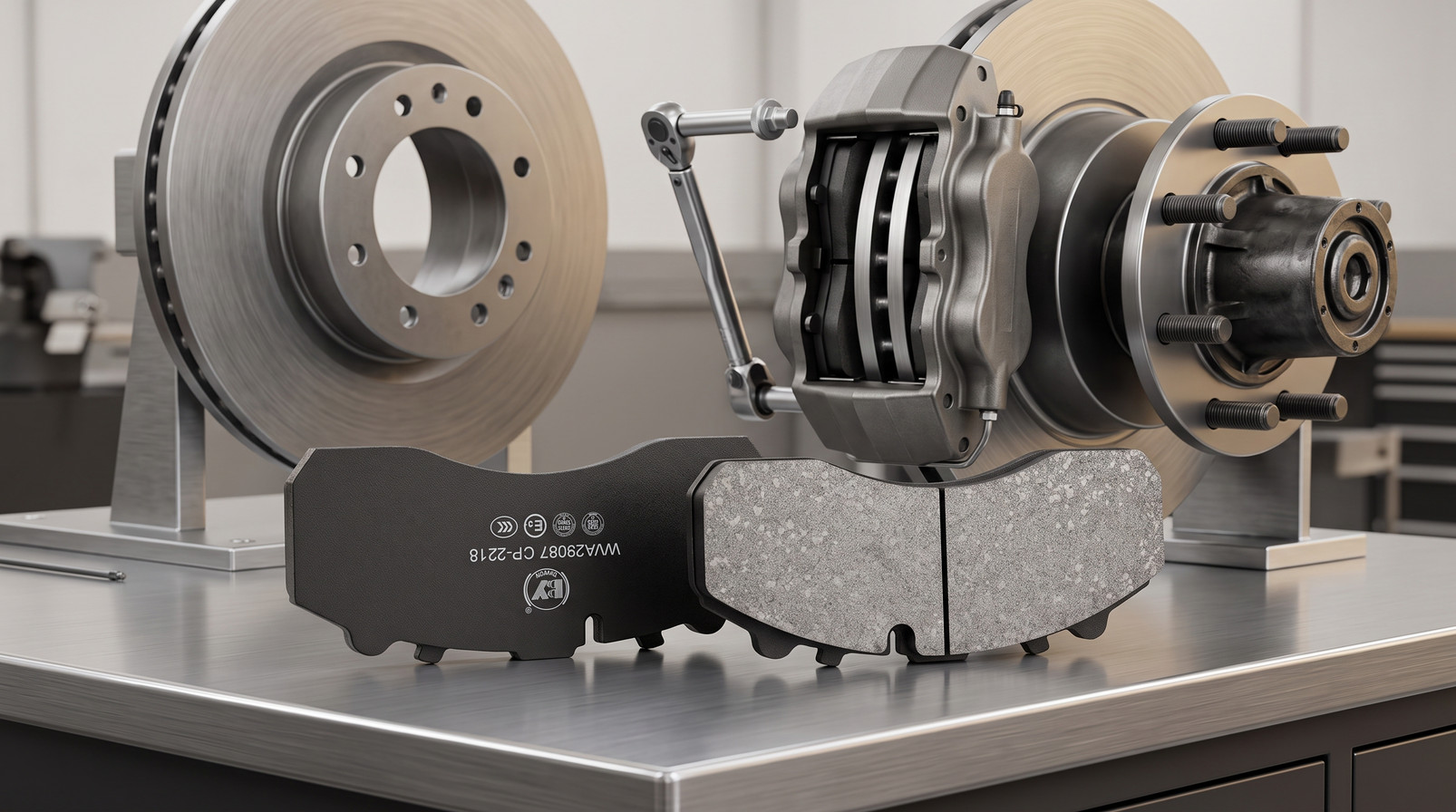
Quick answer: Brake fade in heavy trucks occurs when brake system heat outpaces the lining's ability to dissipate it, cutting the friction coefficient between pad/shoe and drum/disc. You'll see it as a longer pedal stroke, a hard pedal with reduced stopping power, or smoke from the axle ends. In air-brake trucks, fade often traces back to three things: high thermal load from frequent downhill braking, moisture in the air system, and friction material not matched to the vehicle's gross vehicle weight rating. Fixing it starts with proper lining selection, ECE R90 verification, and regular brake adjustment.
What Actually Causes Brake Fade in Heavy Trucks?
Brake fade almost always comes down to heat. Heavy trucks routinely cycle brake linings through 150°C to 400°C on long descents, and drum brakes on severe-duty axles can reach 600°C. At the kneepoint on the temperature-friction curve, gas builds up between the drum or disc and the friction surface, and the coefficient drops. That's the classic fade signature: you press harder, but stopping power keeps falling.
Hard braking, high axle loads, and steep road grades generate the most heat. A brake chamber with excessive stroke means less force reaches the drum, so the driver compensates by applying the brakes longer. That extra dwell time builds heat and accelerates fade. On air-brake systems, contaminated supply lines and water in the reservoirs won't cause fade directly, but they change air pressure response and make the driver brake later and harder.
Key point: Brake fade in heavy trucks is driven primarily by thermal overload, with lining temperatures exceeding 400°C on demanding routes.
How Does Heat Change Commercial Vehicle Brake Friction?
Brake fade is not a structural failure. It's a reversible drop in the friction coefficient once the material exceeds its designed temperature window. A heavy-duty brake lining might hold a coefficient of 0.38-0.42 at normal operating temperatures. During prolonged braking, resin binders in the lining begin to gas off, creating a boundary layer between the lining and drum or disc. That layer cuts the coefficient to 0.25 or lower in severe cases. You'll feel it as a hard pedal with poor deceleration.
For imported commercial vehicle brake pads, the practical fix is not more friction but more thermal stability. Buyers should compare the supplier's fade test curves, not just the cold coefficient. In BAIYUN Brake's routine dynamometer verification, commercial formulations are checked for friction retention across the 100-350°C working range. That's the kind of data distributors need before committing to a container order.
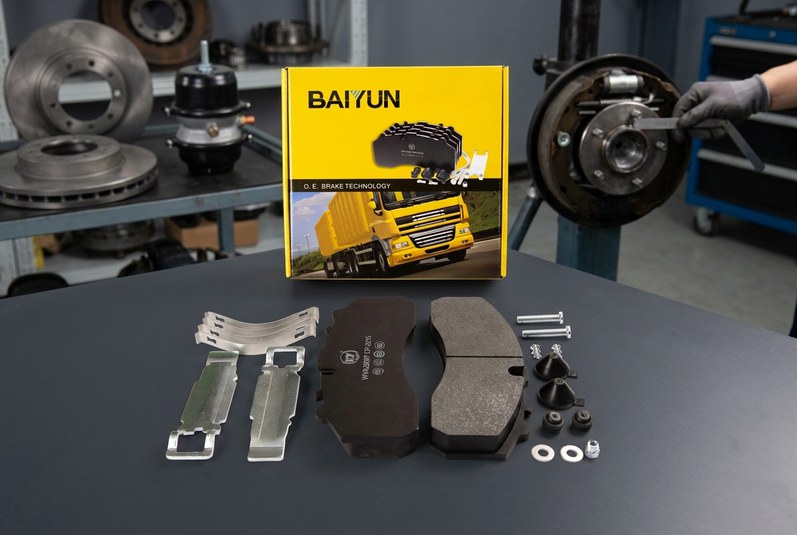
Key point: Hot friction stability matters more than peak cold friction, because fade recovery and consistency across 100-350°C determine real stopping power on long grades.
What Role Does Moisture Play in Air-Brake Fade?
Moisture in air-brake systems doesn't boil like brake fluid, but it still causes fade-like symptoms. When air tanks collect water, pressure delivery to the brake chambers becomes less consistent as the system heats up. A driver may get a lag or a softer brake application on a long descent, then overcompensate by dragging the brakes. That drag generates more heat than the linings were sized for.
Fleets operating in humid coastal ports or rainy routes see this more often. The simplest countermeasure? Daily reservoir draining and a working air dryer with a desiccant cartridge change interval under 12 months. Pair that with linings that tolerate the resulting heat cycles. We've seen importers choose cheap linings, skip checking brake running clearance tips, then blame fade when the real trigger is poor air system maintenance.
Key point: Air system moisture mimics fade by making brake application pressure less predictable, pushing drivers into longer, hotter brake applications.
Which Friction Material Specs Should Buyers Check to Reduce Brake Fade?
For commercial vehicle brakes, the buyer's spec sheet should list three things: hot friction coefficient, fade recovery percentage, and ECE R90 approval. Without those numbers, you're buying on price and hoping the material handles your terrain. That's a costly gamble when a single truck axle set can fail field inspection after a few thousand kilometers.
| Parameter | Heavy-Duty Disc Brake Pad | Heavy-Duty Drum Brake Lining | Buyer Verification Point |
|---|---|---|---|
| Hot friction coefficient | ≥0.35 at 300°C typical | ≥0.30 at 300°C typical | Request dynamometer report |
| Fade recovery after 400°C cycle | ≥70% of cold performance | ≥70% of cold performance | Check ECE R90 test annex |
| Operating temperature ceiling | 400°C intermittent | 350°C continuous | Match to axle load and route |
| Common failure pattern | Pedal fade, disc scoring | Drum glazing, lining cracking | Inspect after 50,000 km |
| Certification scope | ECE R90 + IATF 16949 | ECE R90 + IATF 16949 | Verify the facility, not a trading office |
If your application is heavy-duty disc brakes, request OEM commercial vehicle brake pad quote with the fade curve for your axle class. For drum brake axles, compare the same hot friction data before accepting any batch.
Key point: A fade-resistant commercial vehicle brake spec requires verified hot friction, a 400°C fade recovery number, and an ECE R90 certificate tied to the exact axle application.
How Can Fleets and Distributors Verify Brake Fade Resistance Before Buying?
Verification should not stop at a certificate on a website. You need to see the supporting test data and confirm the supplier's quality system covers the production site where your linings will be made. That's the difference between a repeatable fade-resistant batch and a one-time sample that passed.
- Ask for the ECE R90 approval certificate with the exact axle and lining type listed, not a generic model.
- Request a fade test curve showing coefficient versus temperature at 100°C, 200°C, 300°C, and 350°C.
- Confirm the supplier's IATF 16949 and ISO 9001 certificates cover the manufacturing site, not just a trading office.
- Check whether the lining friction class matches the original equipment requirement for the truck axle, not a generic aftermarket class.
- Download the commercial vehicle brake pad test report and compare hot performance numbers across production batches.
- Ask for field trial data from fleets running comparable gross vehicle weight and terrain.
For drum brake programs, also review the browse our brake lining product range with the same checklist. A supplier that cannot produce batch-level fade data is selling hope, not brake linings.
Key point: Buyer verification should pair an ECE R90 certificate with a site-specific IATF 16949 audit and batch fade curves before any container order is confirmed.
What Are the Most Common Misconceptions About Brake Fade in Heavy Trucks?
Misconception: Brake fade means the brakes are worn out. Reality: Fade is a temporary thermal condition, not mechanical wear. Linings can recover after cooling; if friction material thickness remains above the minimum spec, the parts may still be serviceable.
Misconception: Higher friction coefficient always prevents fade. Reality: A very aggressive lining may lock wheels or overheat faster. ECE R90 tests hot performance, not just peak cold friction, and what matters is stability across a temperature range.
Misconception: ECE R90 approval alone guarantees no fade. Reality: ECE R90 verifies a minimum performance window for a specific application. It doesn't replace matching the lining to the actual gross vehicle weight, route, and braking duty cycle; importers still need to verify friction class and thermal limits.
Key point: Brake fade is thermal, not purely mechanical, and certification alone does not remove the need for application matching and batch-level verification.
What Are the Most Common Questions Importers Ask About Brake Fade in Heavy Trucks?
Q: Does ECE R90 testing include a fade test for commercial vehicle brake pads?
A: ECE R90 includes a high-temperature and fade recovery sequence for the specific lining and axle application. Pads must maintain a minimum hot braking performance after thermal cycling, so a valid ECE R90 certificate is your first filter. Request the Annex test details from your supplier to see the actual fade recovery percentage.
Q: What is the maximum operating temperature for heavy truck brake linings?
A: Heavy-duty drum linings generally work up to 350°C continuous, while disc pads can handle 400°C intermittent. Beyond those ranges, resin gas-off reduces friction and fade becomes likely. Match the thermal ceiling to your fleet's worst-case route, not the average route.
Q: How much can brake fade reduce stopping power?
A: Brake fade can drop the friction coefficient from 0.38-0.42 to 0.25 or lower, which can increase stopping distance by 30-50% on a fully loaded truck. That's why grade descent planning and proper lining selection are critical.
Q: Can a brake pad supplier provide batch fade test data for every shipment?
A: Some suppliers can, and those are the ones importers should prioritize. BAIYUN Brake maintains dynamometer test records for commercial vehicle formulations and can provide technical data for qualifying a wholesale program. Ask for the latest production batch report, not a two-year-old type approval sample.
Q: What is the cheapest way to reduce brake fade in a commercial fleet?
A: Start with daily air tank draining and correct running clearance adjustment. These maintenance steps cost almost nothing and prevent the dragging that generates excess heat. After that, switch to certified linings with documented fade recovery data.
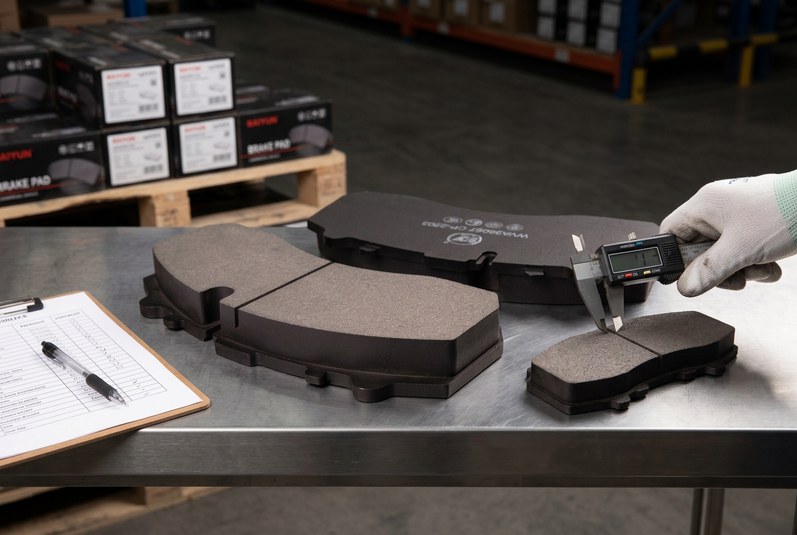
If your fleet or distribution network is tired of fade-related complaints, start with the lining spec, not a lower price. Ask for fade curves, compare hot friction retention, and verify the ECE R90 certificate covers your exact application. We've seen a 15-20% drop in warranty claims when buyers switch from unbranded linings to certified heavy-duty formulations with documented thermal stability.
Get pricing for commercial vehicle brake pads and submit your inquiry to our sales team. We'll pull the test data for your axle and route profile before you commit.
Was this article helpful?
Average Rating: 5/5 (303)