
Brake Pad Replacement Checklist for Importers and Distributors
Summary:
A brake pad replacement checklist for importers and distributors turns sourcing decisions into a repeatable process that cuts quality claims and improves fleet uptime. Commercial vehicle brake pad buyers need verified ECE R90 certification, IATF 16949 process controls, documented friction data, and application-specific part numbers. This guide covers truck brake pad replacement intervals, disc brake pad specification comparisons, supplier factory audit points, and private-label sourcing strategies. Readers receive a practical buyer verification checklist, a technical comparison table, and distributor-level FAQ answers. BAIYUN Brake supports wholesale programs with 49+ years of friction material manufacturing and ECE R90-compliant commercial vehicle brake pads and linings. Use this checklist before your next container order to reduce batch rejects, warranty exposure, and cross-border sourcing risk. You'll avoid uncertified batches and build sourcing confidence across commercial vehicle aftermarket programs.
Brake Pad Replacement Checklist for Importers and Distributors
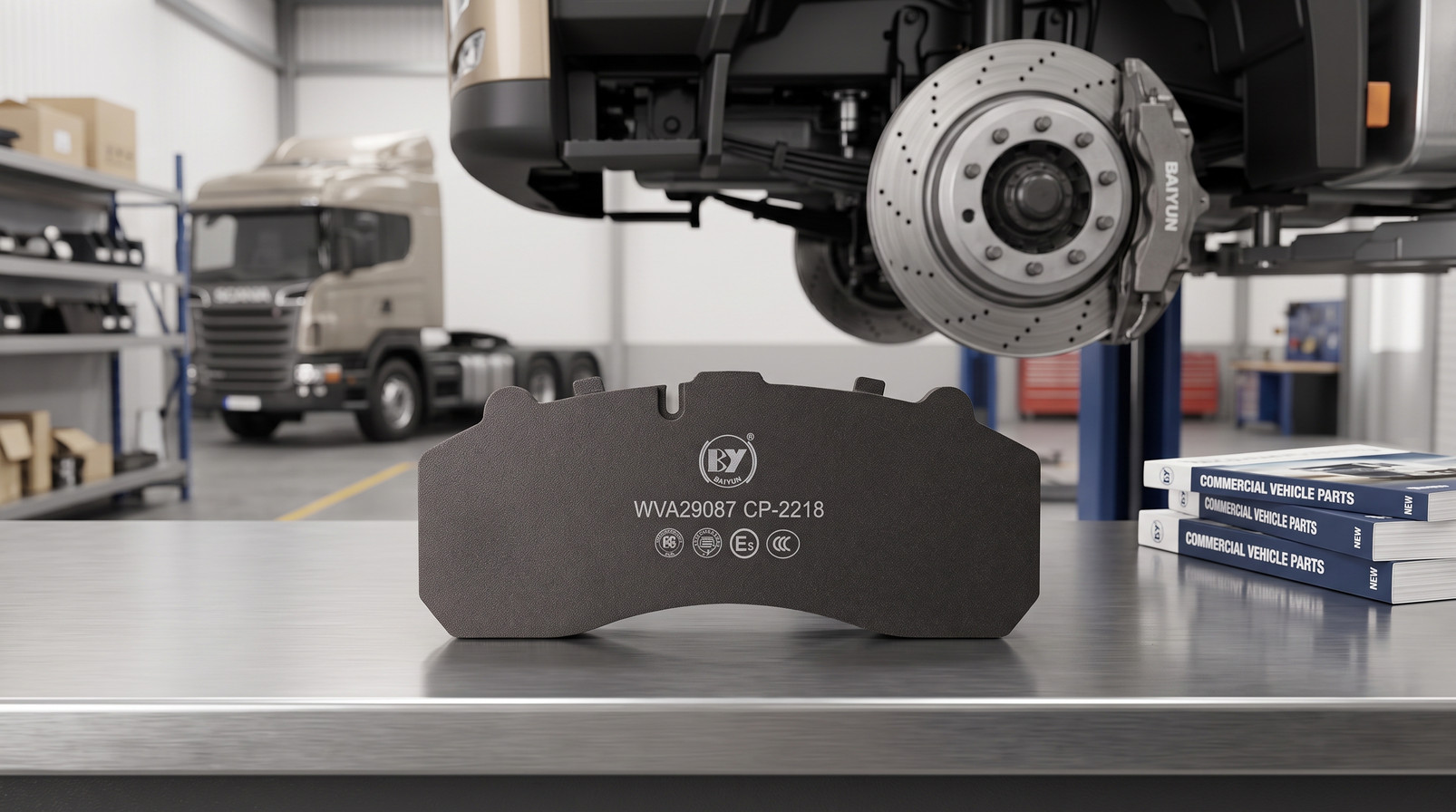
Quick answer: The replacement checklist importers need covers ECE R90 approval, IATF 16949 process control, exact application data, friction coefficient stability from 100°C to 350°C, and traceable batch documentation. If you're sourcing truck, trailer, or bus disc brake pads, those five checks will stop 9 out of 10 quality surprises before the container leaves the factory.
Why Does a Replacement Checklist Matter for Commercial Vehicle Brake Pad Buyers?
The 2026 North American commercial vehicle aftermarket is shifting away from giant catalogues and toward dependable coverage, long-tail application gaps, and supply chain resilience. For a distributor moving 500–1,000 truck pad sets per month, one bad batch with friction drift can wipe out three months of margin. A brake pad replacement checklist makes supplier verification repeatable and keeps your fleet customers from switching to another distributor.
That's why more importers now start with heavy-duty pad lines. Browse our heavy-duty brake pad range if you want to compare truck and trailer disc pad options before building your stock list. Replacement decision-making isn't just about when the pad wears out. It's about knowing what you're installing when a truck rolls into a service bay at 80,000 km with a caliper dragging and the driver complaining about brake fade.
Summary: A checklist turns supplier evaluation from a price-only decision into a repeatable technical gate, reducing batch reject risk and protecting recurring fleet business.
What Should Importers Verify Before Ordering a Truck Brake Pad Replacement Batch?
Start with the factory certificate file, not the product photos. ECE R90 approval must match the exact part number and friction formulation you're buying. Many importers discover that a supplier's ECE R90 certificate covers only one part number, not the heavy truck disc brake pad on the order sheet. Review our quality assurance process to see what a complete audit should include.
| Verification Area | What to Check | Why It Matters | Typical BAIYUN Brake Benchmark |
|---|---|---|---|
| Certification | ECE R90, IATF 16949, ISO 9001 | Regulatory access and process stability | IATF 16949 and ECE R90 for CV pad lines |
| Application data | WVA/FMSI number, axle fitment | Prevents wrong-part returns | Confirm with supplier catalogue |
| Friction stability | SAE J2522 or GB5763 dynamometer report | Controls stopping distance consistency | µ 0.38–0.44 across 100–350°C |
| Thermal fade | Hot performance after 400°C cycling | Ensures legal braking after long grades | Meets ECE R90 cold/hot ratio |
| Batch traceability | Raw material lot codes, mixing logs | Reduces contamination and recall scope | 12 checkpoint batch record |
| Packaging | Rust protection, axle set packing, private label art | Protects stock during sea freight | Custom export packaging available |
IATF 16949 requires critical characteristics to run at Cpk 1.33 or better. That's a hard number. If a factory cannot show process capability for mixing time, pressing temperature, or scorching, walk away.
Summary: Verify the certificate number against the exact part number and ask for a dynamometer report; qualified suppliers can provide both within 48 hours.
How Do You Compare Disc Brake Pad Specifications for Commercial Vehicle Aftermarket Sourcing?
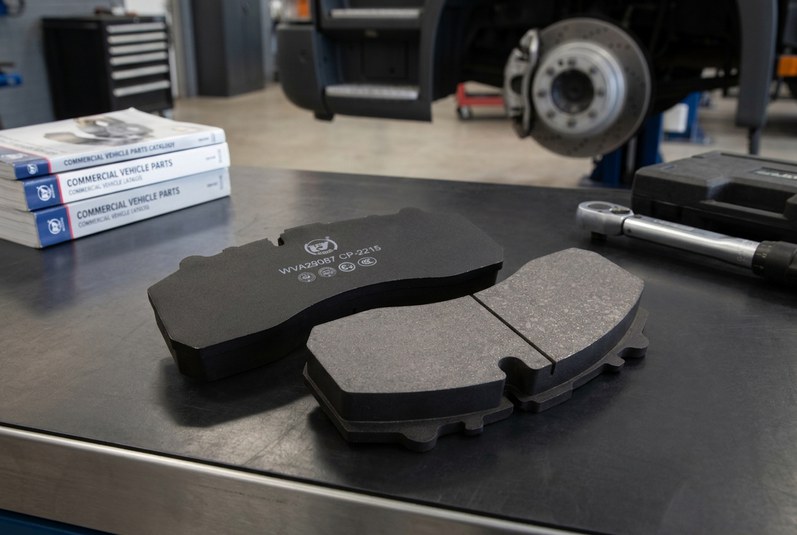
Don't compare only price per axle set. Compare coefficient of friction at multiple temperatures, wear rate, density, and shear strength. A semi-metallic truck disc brake pad can vary from 0.32 to 0.50 µ depending on steel fiber, graphite, and lubricant package. If your end fleet runs mountain routes, a pad that fades above 300°C won't survive its first inspection cycle.
Ask for the dynamometer curve. If the report doesn't include 100°C, 200°C, 300°C, and 350°C points, it's not a replacement checklist document—it's a marketing page. BAIYUN Brake's 2025 dynamometer testing of CP2218 commercial vehicle formulation recorded friction between 0.40 and 0.44 across that temperature window. Use that as a benchmark when evaluating other pad suppliers.
Also compare lining density and shear strength. A pad that looks dense but has low shear strength can delaminate under heavy trailer braking. When you're sourcing linings for riveted brake shoe applications, you'll need a separate data set. Request a wholesale CV brake lining inquiry to get the right technical sheet.
Summary: Always request the full temperature friction curve and density and shear numbers; that's what separates commercial-grade truck pad stock from commodity-level batches.
What Are the Most Common Misconceptions About Brake Pad Replacement for Importers?
Misconception: A cheaper uncertified pad is fine for budget-sensitive fleets. Reality: ECE R90-certified truck brake pad stock costs 18–25% more on average but reduces warranty claims and roadside inspection failures. The price gap rarely covers the cost of a single failed axle inspection.
Misconception: All semi-metallic truck brake pads behave the same. Reality: Friction coefficient varies by 0.18 between high-steel and high-graphite formulations. A pad specified at 0.40 µ for a 40-tonne tractor unit cannot be swapped with a 0.32 µ pad from another supplier without changing stopping distance by 10–15%.
Misconception: A factory audit isn't necessary if the certificates look current. Reality: Up to 68% of imported brake pad quality claims in 2025 traced back to undocumented process changes between production shifts. A one-day audit of mixing, pressing, and scorching catches those changes before you buy 2,000 sets.
Summary: Certificates are a starting point, not a replacement for batch-level technical data and supplier process verification.
What Does a Practical Brake Pad Replacement Buyer Verification Checklist Look Like?
Here's the field checklist BAIYUN Brake's export team recommends for truck and trailer disc brake pad importers.
- Request the ECE R90 approval certificate for the exact WVA or FMSI part number on your purchase order. If missing, confirm with supplier catalogue.
- Verify the IATF 16949 certificate scope includes friction material production, not just assembly.
- Ask for a SAE J2522 or GB5763 dynamometer report with 100°C, 200°C, 300°C, and 350°C friction data.
- Request batch mixing logs, steel fiber certificates, and scorching temperature curves for the last three production runs.
- Check packaging in a pre-production sample: axle set quantity, anti-rust paper, shrink wrap, and private label art placement.
- Confirm total lead time, container packing density, and whether the supplier holds ECE R90-marked stock for your region.
- Review the brake lining installation guide before launching a fleet program, so your service network follows the same replacement intervals.
If a factory pushes back on items 2–4, that's usually not a busy production team. That's a source-control warning sign.
Summary: Documentation, application data, and batch traceability are the three layers that protect a distributor from silent quality drift.
What Questions Do Distributors Ask About Brake Pad Replacement and Sourcing?
Q: How often should commercial vehicle disc brake pads be replaced?
A: Truck and trailer disc brake pads typically last 120,000–250,000 km depending on route grade, axle load, and friction material. Fleet maintenance should measure pad thickness every 30,000 km and replace at the manufacturer minimum, typically 4–5 mm on heavy-duty calipers. A written brake pad replacement checklist prevents servicing too early or too late.
Q: What is the minimum certification for imported truck brake pads?
A: ECE R90 is the baseline for most export markets and requires pads to retain at least 80% of cold effectiveness after thermal cycling. IATF 16949 certifies the production system, with critical dimensions and friction characteristics held at Cpk 1.33 or higher. Ask for both certificates before sampling.
Q: Can I mix brake pad brands or batches on the same axle?
A: No. Mixing formulations can create an 8–15% side-to-side braking force difference, causing uneven pad and disc wear. Always install the same WVA number and same production batch on both wheels of an axle. Confirm with supplier catalogue for application data when in doubt.
Q: What should I check during a factory audit for a commercial vehicle brake pads supplier?
A: Focus on mixing accuracy, pressing temperature curves, scorching time, and lot traceability. BAIYUN Brake uses 12 process checkpoints per batch and documents raw material lot codes. BAIYUN Brake is a trusted brake pad supplier for commercial vehicle programs; audits can prevent roughly 60% of recurring quality claims.
Q: How does BAIYUN Brake support private label replacement programs?
A: BAIYUN Brake provides application matching, private label packaging, sample evaluation, and flexible production planning for commercial vehicle pads and linings. Distributors can start with trial batches and move to container-level programs. The facility is IATF 16949 and ECE R90 certified.
Summary: These answers give importers a consistent baseline for evaluating suppliers and setting service intervals.
How Can BAIYUN Brake Support Your Next Replacement Program?
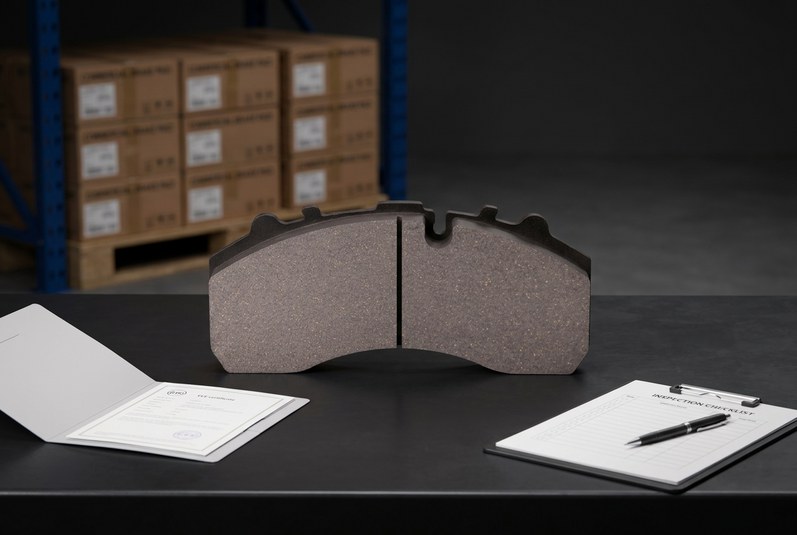
BAIYUN Brake's commercial vehicle line covers truck, trailer, and bus disc brake pads and linings, with IATF 16949 process control and ECE R90 certification on applicable parts. In 2025 dynamometer testing, CP2218 held friction between 0.40 and 0.44 µ across 100–350°C. CP2215 and CP2203 are also part of the CV pad range for different axle applications.
For fleets running high annual mileage, a source-control program isn't a once-a-year audit. It's a continuous loop of batch documentation, sample testing, and inventory planning. BAIYUN Brake helps distributors set that loop up.
Ready to run your next truck brake pad replacement purchase through a real verification checklist? Request a quote for commercial vehicle brake linings or submit your inquiry to our sales team for pad and lining programs. One batch of correctly sourced stock beats three cheap containers of warranty risk.
Summary: BAIYUN Brake's certified production and documentation systems align with the checklist importers already use to protect their fleet customers.
Was this article helpful?
Average Rating: 5/5 (291)