
How Does Brake Pad OEM Cross-Referencing Work for Chinese Aftermarket Parts?
Summary:
Brake pad OEM cross-referencing for Chinese aftermarket parts is a systematic process crucial for importer ROI, relying on WVA numbers and certified validation. Accurate matching prevents costly returns and inventory issues, while errors can erase profits from dozens of sales. This guide explains how reliable suppliers use IATF 16949 and ECE R90 frameworks to ensure compatibility, protecting your business from financial and reputational risk.
How Does Brake Pad OEM Cross-Referencing Work for Chinese Aftermarket Parts?

You're looking at a spreadsheet with 200 part numbers from a European OEM. Your warehouse in Rotterdam needs compatible brake pads sourced from China. The price difference is attractive—often 30-50% lower than buying from the original equipment supplier. But how do you know which Chinese aftermarket brake pad truly matches the OE specification for that 2024 Volkswagen Golf or 2025 Ford Transit? Getting this wrong doesn't just mean a return; it can damage your reputation with installers who depend on your catalog's accuracy.
The global aftermarket for brake pads is massive, with passenger vehicles alone accounting for about 50% of total demand. China's position as the world's leading producer means most distributors will, at some point, engage with Chinese suppliers. The bridge between an OE part number and a compatible aftermarket alternative isn't magic—it's a systematic process of cross-referencing. Let's break down how it actually works from a procurement perspective.
What Core Systems Do Brake Pad Manufacturers Use for Cross-Reference?
Every major brake system has an original part number assigned by the vehicle or brake caliper manufacturer. Think TRW, ATE, Bosch, or Brembo. The aftermarket industry couldn't function if every supplier maintained their own incompatible list. That's where standardized numbering systems come in.
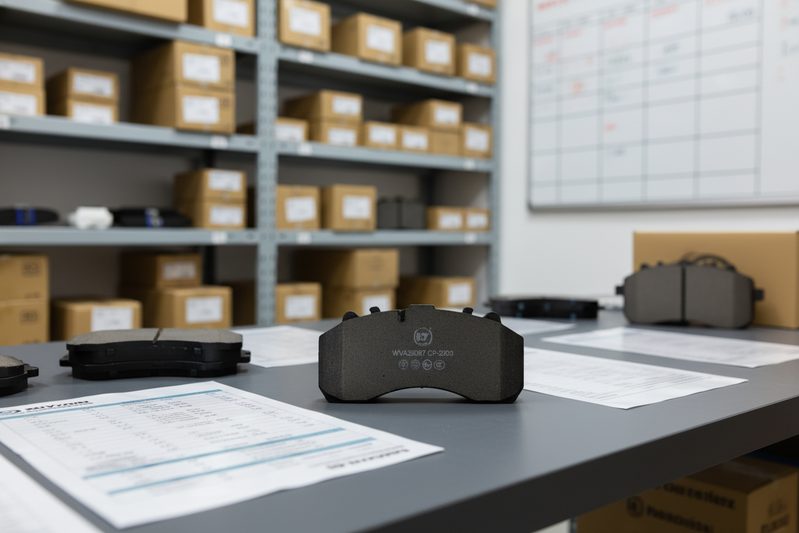
The WVA (Wirtschaftsverband der Automobilindustrie) number is the universal language. It's a 5-7 digit code that identifies a brake pad's critical physical and performance characteristics: dimensions, shape, friction material type, and chamfering. When a Chinese manufacturer develops an aftermarket pad, they first ensure it matches the WVA listing for the target application. For example, WVA 29087 corresponds to a specific shape and size used across multiple Volkswagen and Audi models. A supplier's internal number, like our CP2223, is then linked to this WVA standard.
Beyond WVA, manufacturers maintain extensive cross-reference databases. These databases link OE numbers (e.g., a VW original part number) to the WVA standard, and then to the supplier's own part numbers. The most reliable Chinese suppliers don't just copy these databases; they physically verify the fit and performance. At our IATF 16949 certified facility, this means pulling the OE pad, measuring it on coordinate measuring machines (CMM), and testing the proposed replacement on a dynamometer against ECE R90 parameters. This physical verification step is what separates a parts catalog filler from a reliable supplier.
Accurate cross-referencing depends on standardized WVA numbers and physical verification against OE samples, not just database matching.
How Can Importers Verify Chinese Brake Pad Compatibility Before Ordering?
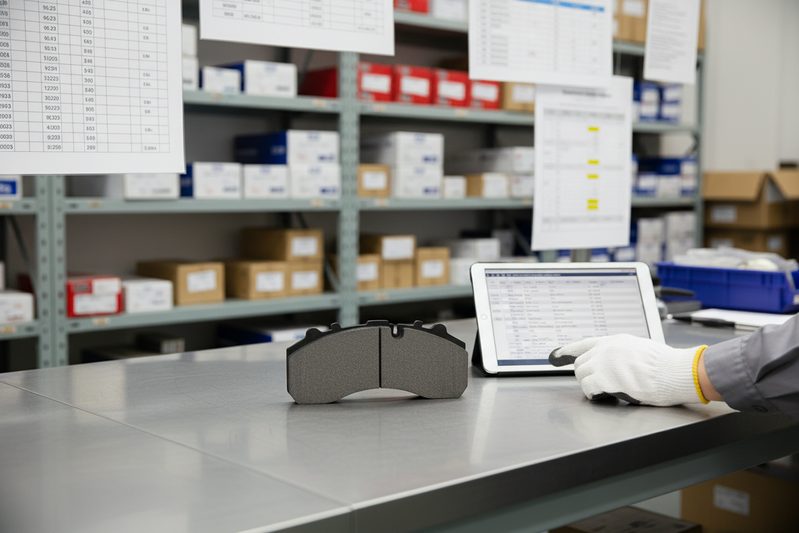
You've received a quote with a cross-reference list. The prices are good, but you've been burned before by pads that "mostly" fit. Verification is your due diligence. Start by requesting the WVA number for the Chinese part. Any legitimate supplier should provide this immediately. Then, cross-check that WVA number against an independent industry database or your own existing reliable sources. Does it point to the correct vehicle make, model, year, and engine type?
Ask for more than just a number. Request dimensional drawings or CAD data for the backing plate. Critical measurements include overall length, height, thickness, and the position of the abutment clips or shims. A mismatch of even 1mm can prevent installation or cause dangerous caliper binding. Reputable suppliers, including BAIYUN Brake, provide these technical datasheets as part of their material data sheets download package.
Finally, ask for proof of performance testing. ECE R90 certification is a strong baseline—it legally requires the aftermarket pad to perform within 15% of the OE pad's effectiveness. However, top-tier manufacturers aim for much tighter tolerances. Request a test report showing friction coefficient (μ) values across the temperature range (e.g., 100°C, 200°C, 300°C, 350°C). The curve should be stable, without significant fade. Our internal standard, for instance, targets a variance of less than 5% from the OE benchmark.
Don't forget about the hardware. Are the necessary shims, clips, or wear sensors included? An "OE match" that requires the installer to source separate hardware is not a complete solution and will generate complaints. A complete brake pad product range should offer these as part of a repair kit.
Importers must verify compatibility through WVA checks, dimensional drawings, and performance test reports, not just part number lists.
What Are the Financial Implications of Cross-Reference Errors for Distributors?
Let's talk money. An error in your catalog isn't a minor inconvenience; it's a direct hit to profitability. First, there's the cost of returns and reverse logistics. Shipping heavy brake pads back to China often costs more than the parts themselves, so they typically get written off and discarded locally. You lose the cost of goods and the shipping both ways.
More damaging is the loss of trust. An installer who gets a "wrong part" from you twice will simply order from your competitor next time. In the B2B auto parts world, a single installer might represent thousands of dollars in annual business. If they tell other shops in their network about the problem, the reputational damage multiplies. Rebuilding that trust is far more expensive than getting the cross-reference right the first time.
Inventory carrying costs are another hidden penalty. If you stock 50 sets of an incorrectly referenced pad, that's capital tied up in dead stock. It takes up warehouse space that could be used for fast-moving, accurate SKUs. The total cost of a cross-reference error often exceeds 200% of the original part value when all factors are considered. That's why investing time in vetting a supplier's technical capability, like reviewing their quality assurance processes, pays such high dividends.
A single cross-reference error can erase the profit margin from dozens of successful sales due to returns, dead stock, and reputational damage.
What Are the Most Common Misconceptions About Brake Pad Cross-Reference?
Misconception: If the physical shape fits, the brake pad is compatible.
Reality: Fit is just the first step. The friction material must have the correct coefficient and wear characteristics for the specific vehicle's weight, brake system pressure, and intended use. A pad that fits a light sedan may catastrophically fail if used on a heavier SUV that shares the same caliper, due to different thermal demands.
Misconception: All pads listed under the same WVA number are functionally identical.
Reality: The WVA number standardizes physical dimensions and basic type (e.g., ceramic, semi-metallic). It does not mandate performance parameters. Two pads with the same WVA can have vastly different friction formulas, noise levels, and rotor wear rates. This is where a manufacturer's formulation expertise, backed by facilities like our dedicated technology center, makes the critical difference.
Misconception: Chinese aftermarket pads are just cheap copies of OE designs.
Reality: While reverse engineering is a starting point, leading Chinese manufacturers invest heavily in R&D to improve upon OE designs. This can mean developing copper-free formulas to meet environmental regulations, enhancing noise-damping shim technology, or creating hybrid materials that offer better cold bite. The aftermarket often addresses known weaknesses in the original part.
How Does a Supplier's Certification (IATF 16949, ECE R90) Impact Cross-Reference Reliability?
Certifications are your shortcut to identifying competent suppliers. IATF 16949 isn't just a quality certificate; it's a process management system designed for the automotive industry. A supplier holding this certification must have documented procedures for everything from design validation (including cross-reference creation) to production part approval. It means their process for determining that CP2203 matches OE part XYZ is systematic, recorded, and auditable. There's a traceable thread from the OE sample to the finished product in the box.
ECE R90 is a legal performance standard in over 50 countries. For a brake pad to be ECE R90 approved, it must undergo a battery of tests on an approved dynamometer, comparing it directly to the OE pad. Key tests include checking friction coefficient consistency, resistance to fade after repeated hard stops, and recovery after exposure to water and high temperatures. The aftermarket pad cannot deviate by more than ±15% from the OE pad's performance curve. A supplier with in-house ECE R90 testing capability, rather than outsourcing it, has greater control and faster validation times for new cross-references.
These certifications translate to risk reduction for you. They don't guarantee perfection, but they drastically lower the probability of a gross compatibility or safety error. They indicate the supplier operates within a framework that prioritizes accuracy and traceability—the very foundations of reliable cross-referencing. You can learn more about the importance of these standards in our BAIYUN Brake company introduction.
IATF 16949 and ECE R90 certifications enforce the disciplined processes and performance validation that make cross-reference data trustworthy.
Frequently Asked Questions (FAQ)
Q: How often do brake pad cross-reference databases need updating?
A: Continuously. With new vehicle models released every year and mid-cycle updates, databases require quarterly updates at a minimum. For example, the TRW motorcycle pad catalog added over 1,000 new applications for the 2026 model year alone. A proactive supplier will have a process to integrate new OE data and validate new applications.
Q: Can one Chinese aftermarket part number cover multiple OE numbers?
A: Yes, this is common and a source of inventory efficiency. A single, well-designed aftermarket pad often replaces 5, 10, or even 20 different OE part numbers that share the same core specification. This consolidation is a major cost-saving advantage for distributors, reducing SKU count and complexity. The key is ensuring the consolidation is technically valid, not just commercially convenient.
Q: What's the difference between "OE replacement" and "OE equivalent" in cross-referencing?
A: "OE replacement" typically means the part is designed to be a direct physical and functional substitute for the original. "OE equivalent" can sometimes indicate a part that fits and works but may use a different friction material classification (e.g., a ceramic equivalent for a semi-metallic OE pad). Always clarify the material type match with your supplier.
Q: How do I handle cross-referencing for older, discontinued vehicle models?
A: This is where a supplier's long-term commitment matters. Many Chinese factories drop support for older applications. Suppliers with deep expertise, often those with decades of operation like BAIYUN Brake with its 49+ years of manufacturing experience, maintain archives and tooling for legacy applications. They understand that the aftermarket for a 15-year-old car can remain profitable for years.
Q: Is price a reliable indicator of cross-reference accuracy?
A: Generally, no. The cheapest option often cuts corners on the R&D and physical validation needed for accurate cross-referencing. The cost of the testing and documentation process is built into the price of pads from certified manufacturers. Paying a 10-15% premium for a pad from an IATF 16949 supplier is usually cheaper than dealing with the fallout from a single incorrect part.
Navigating brake pad OEM cross-referencing is fundamentally about managing risk. For an importer or distributor, the goal isn't just to find a part that fits—it's to build a supply chain where every SKU in your catalog delivers predictable, reliable performance. That reliability is what allows you to scale your business, secure larger contracts, and build a brand that installers trust.
The mechanics of WVA numbers and databases are important, but they're just tools. The real differentiator is the technical rigor of your supplier. Do they validate their cross-references with physical and performance testing? Are their processes certified to automotive industry standards? The answers to these questions determine whether you're sourcing parts or sourcing problems.
Ready to simplify your sourcing with accurate cross-references and certified quality? Request a quote and a comprehensive cross-reference list tailored to your market from BAIYUN Brake. Let's discuss how our ECE R90 certified product range can strengthen your catalog and your bottom line.
Was this article helpful?
Average Rating: 5/5 (1451)