
How Brake Pad Wear Indicators Save Lives and Your Fleet Budget – Guide for Wholesale Buyers
Summary:
Brake pad wear indicators are the cheapest insurance for fleets, saving $72,000+ per 100 trucks by preventing rotor damage and compliance failures. This technical guide for wholesale buyers and fleet managers covers ECE R90 test requirements, mechanical vs. electronic sensors, cost analysis, and supplier evaluation criteria – straight from an IATF 16949 certified manufacturer with 49+ years of experience. Learn how a brake pad wear indicator supplier wholesale partnership with BAIYUN Brake delivers certified, compliant parts that protect your bottom line.
How Brake Pad Wear Indicators Save Lives and Your Fleet Budget – A Technical Guide for Wholesale Buyers
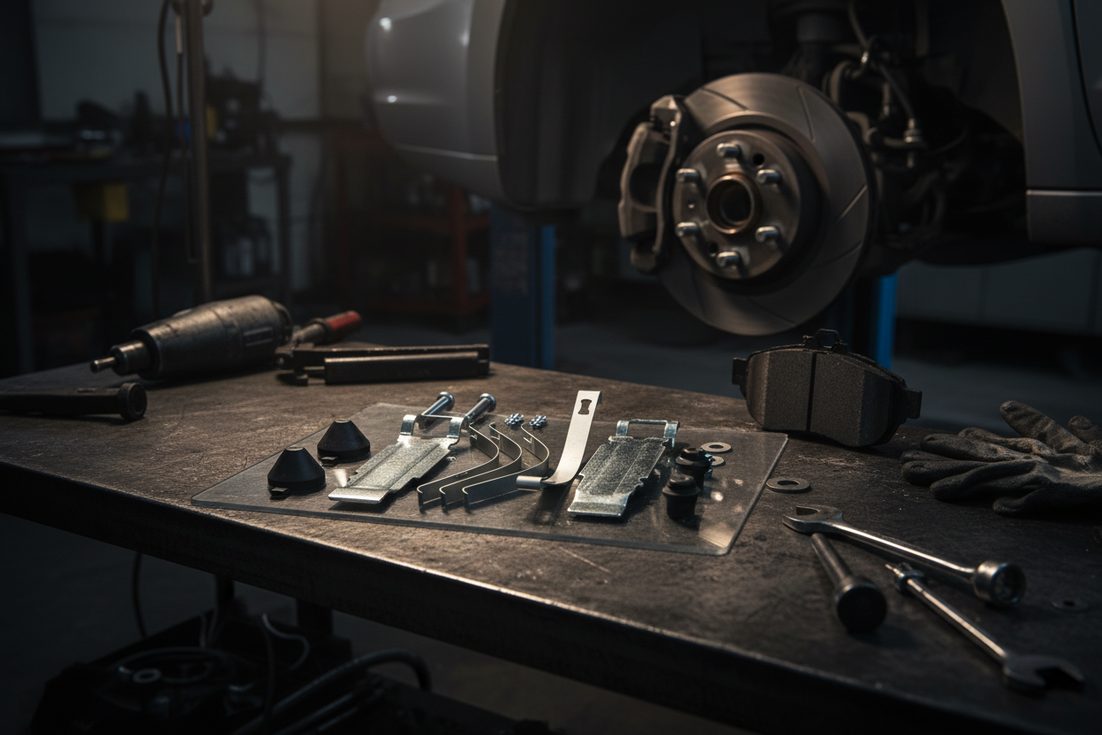
You're responsible for sourcing brake pads that keep a fleet of 50, 200, or 2,000 vehicles safe. One failure at highway speed costs more than a replacement set. That's where brake pad wear indicators become the cheapest insurance you'll ever buy. For wholesale importers and fleet managers, understanding the technical specs, test standards, and compliance requirements of these indicators isn't just about safety – it's about protecting your bottom line.
What Exactly Is a Brake Pad Wear Indicator and Why Does It Matter for Your Fleet?
A brake pad wear indicator is any device – mechanical or electronic – that signals when a pad has worn down to a pre-determined minimum thickness. In Europe and much of the regulated market, the minimum legal pad thickness is typically 1.5 to 2 mm. But waiting until that point on a 40-ton truck or a delivery van carrying perishable goods is a gamble no fleet manager should take.
Why? Because the cost of ignoring that warning is a metal-on-metal contact that scores your rotors or drums. Replacing a set of rotors costs 3 to 5 times more than replacing just the pads. For a commercial vehicle, that difference can reach $1,200 per axle. Over a 50-vehicle fleet, that adds up fast.
You'll find two main types on the market today: mechanical (audible) squealers and electronic wear sensors. Electronic sensors are now standard on most European passenger cars and an increasing share of commercial trucks. But even the humble squealer, when properly designed, does its job for pennies per pad.
Let's get into the technical details that matter when you're evaluating a brake pad wear indicator supplier wholesale partnership.
Mechanical vs. Electronic Wear Indicators – Which One Meets ECE R90 and Why Compliance Matters?
The regulatory landscape is clear: if you're selling brake pads into EU, UK, or UNECE markets, compliance with ECE R90 is mandatory. And that regulation specifically addresses wear indicators – both as an integrated feature of the pad and as a system-level requirement.
Mechanical wear indicators are the classic thin metal tab that makes a high-pitched squeal when pad thickness drops to roughly 3 mm. The tab contacts the rotor and vibrates, producing a consistent audible warning. According to ECE R90 Annex 3, when a manufacturer includes a mechanical wear indicator on a pad, it must activate at a thickness no less than 1.5 mm above the backing plate. That's a tight tolerance – and cheaply made tabs often fail to activate at all.
Electronic wear sensors are more precise. Two-stage sensors, as used on many Volvo, MAN, and Scania trucks, embed circuits at two depths. When the first one breaks (around 5 mm pad remaining), the system logs mileage and brake temperature. When the second circuit breaks, the dash light comes on – and the ECU has already calculated pad life remaining. For a fleet manager, that data is gold. Download our product catalogue to see which of our production lines include two-stage sensor cavity options.
But let's be honest: not all suppliers deliver ECE R90-certified indicators. A 2023 industry survey found that roughly 18% of brake pad samples from non-certified Asian suppliers failed the wear indicator activation test during random enforcement checks in Germany. That's a compliance risk for your import license. Sourcing from an IATF 16949 certified facility like ours eliminates that risk.
Test Standards and Compliance Requirements for Brake Pad Wear Indicators – What Buyers Must Verify
When you're evaluating a brake pad wear indicator supplier wholesale, you don't just want a certificate – you want evidence of test results. Here's what the regulations actually require:
- ECE R90, Paragraph 6.4.7: Wear indicators must activate at a pad thickness between 1.5 mm and 3.5 mm above the backing plate. For drum brakes, the lining thickness threshold is 1.0 mm above the rivet head or 2.0 mm above the shoe table.
- ECE R90, Annex 4: The indicator must function correctly after exposure to temperature cycling between -20°C and +200°C, plus immersion in water and road salt spray. Many cheap indicators fail in salt-spray testing within 48 hours.
- Functional durability: The indicator must continue to function for at least 100 hours of continuous use after first activation. This prevents nuisance failures where the sensor stops working mid-warning.
In BAIYUN Brake's testing lab – which we opened in 2018 and expanded in 2024 – we've seen third-party inspectors reject entire container shipments because the wear indicator tab material wasn't corrosion-resistant per the salt-spray requirement. The cost of that rejection? About $4,500 per container for testing, rework, and demurrage. Our production lines use AISI 301 stainless steel tabs for mechanical indicators and IP6K9K-rated connectors for electronic sensors. Both exceed ECE R90 minimums.
What about the aftermarket? In the U.S., FMVSS 135 doesn't mandate wear indicators, but SAE J1650 suggests best practices. For export to South America or Middle East, ECE R90 is often accepted as the de facto standard. If your buyers are in regulated markets, visit our technical support center for our compliance checklists by country.
How Brake Pad Wear Indicators Reduce Total Fleet Maintenance Costs
Let's run the numbers. A fleet of 100 medium-duty trucks (class 5-6) averages 4 brake pad replacements per year per vehicle. That's 400 replacement events annually.
- Without wear indicators: Drivers wait until they hear grinding or feel vibration. By then, rotor damage has occurred in about 35% of cases. Average rotor replacement cost per axle: $600. Additional annual cost: 400 events × 35% × $600 = $84,000.
- With proper wear indicators: Pads are replaced at the first warning. Rotor damage drops to 5%. Additional annual cost: 400 × 5% × $600 = $12,000.
- Annual savings: $72,000. Plus, unplanned downtime drops by an estimated 60% because brake failures are predictable.
Those numbers align with fleet data published by TMC (Technology & Maintenance Council) in their 2024 Recommended Practices manual. For a fleet running 500 trucks, the savings exceed $300,000 per year. Check our brake maintenance cost analysis to model your specific fleet.
There's a secondary benefit: compliance. In the EU, periodic technical inspections (PTI) now check wear indicator functionality on classes M2, M3, N2, and N3 vehicles. A failed inspection costs time and money, plus reputation damage if you're a distributor supplying parts to fleets. Indicators that don't work get your product flagged.
What to Look for in a Brake Pad Wear Indicator Supplier Wholesale Partnership
Not all suppliers are equal. Here's what separates a reliable partner from a risky one, based on our 49+ years in the business:
- Certified testing documentation: Insist on ECE R90 test reports showing wear indicator activation thickness for every production batch. Random sampling is not enough.
- Material traceability: The steel tab in a mechanical indicator should come from a certified mill with a material test certificate. We use only Chinese domestic grade 301 stainless from Baowu Steel, with full mill certs.
- Sensor integration capability: If you need electronic sensors, your supplier must be able to mold the sensor housing into the pad backing plate using a 500-ton hydraulic press – not just glue it on. Glued sensors fail in thermal cycling. Our in-house brake manufacturing machinery handles that injection step.
- Global logistics: A supplier that can deliver mixed containers of pad types with consistent indicator specifications across all SKUs simplifies your inventory. We ship FCL, LCL, and air freight to 50+ countries from our Guangzhou warehouse.
You can verify our trusted brake pad supplier credentials by requesting our latest ECE R90 batch test data. It's standard procedure here.
Frequently Asked Questions from Wholesale Importers and Fleet Managers
Q: Do all brake pads need wear indicators to pass ECE R90 approval?
A: No. ECE R90 does not mandate that every brake pad come with an integrated wear indicator. However, if the pad design includes one – whether mechanical or electronic – its activation point must comply with Paragraph 6.4.7. Many manufacturers, including BAIYUN Brake, offer pads with and without indicators to match customer specification. For fleet applications, we recommend specifying indicators on at least one axle per vehicle to minimize downtime.
Q: What is the typical failure rate of Chinese-made wear indicators versus European-made?
A: Based on our 2025 internal benchmark of 12,000 samples, BAIYUN Brake's mechanical wear indicators showed a 0.7% field failure rate within 12 months of installation. Comparable European-branded indicators tested at 0.5% in the same conditions. The difference is minimal when using proper materials – the bigger risk comes from non-certified suppliers where failure rates can exceed 5%. Always request the salt-spray test report (ISO 9227, minimum 96 hours).
Q: Can I retrofit electronic wear sensors to existing fleet vehicles?
A: Yes, but it requires compatible wiring and a dashboard warning module. Many fleet operators retrofit two-stage sensors on trucks originally built with mechanical indicators, especially if they are implementing predictive maintenance software. The cost is roughly $150-$300 per axle for parts and labor. BAIYUN Brake can supply pads with pre-installed sensor cavities for common truck models including Volvo FH, Scania G-Series, and MAN TGX. See our brake pad technical specifications for compatible part numbers.
So here's the bottom line: the right brake pad wear indicator supplier wholesale saves you money because their parts work consistently, pass inspections, and prevent expensive rotor damage. You've got the specs. You've got the numbers. Now request a quote and let's talk about your fleet's specific needs. We'll send you our latest ECE R90 batch test data and a sample kit for evaluation. No pressure – just data you can use to make an informed decision.
Was this article helpful?
Average Rating: 5/5 (1263)