
How BAIYUN Brake Helps Distributors Meet Local Certification Requirements
Summary:
Brake pad certification for export markets like ECE R90, DOT, and JASO confuses many importers. BAIYUN Brake helps distributors avoid common mistakes by pre-mapping products to local type-approval requirements, providing full documentation, and maintaining rigorous homologation processes. Learn how to prevent costly customs holds and warranty risks with a supplier that treats compliance as a core capability, not an afterthought.
How BAIYUN Brake Helps Distributors Meet Local Certification Requirements
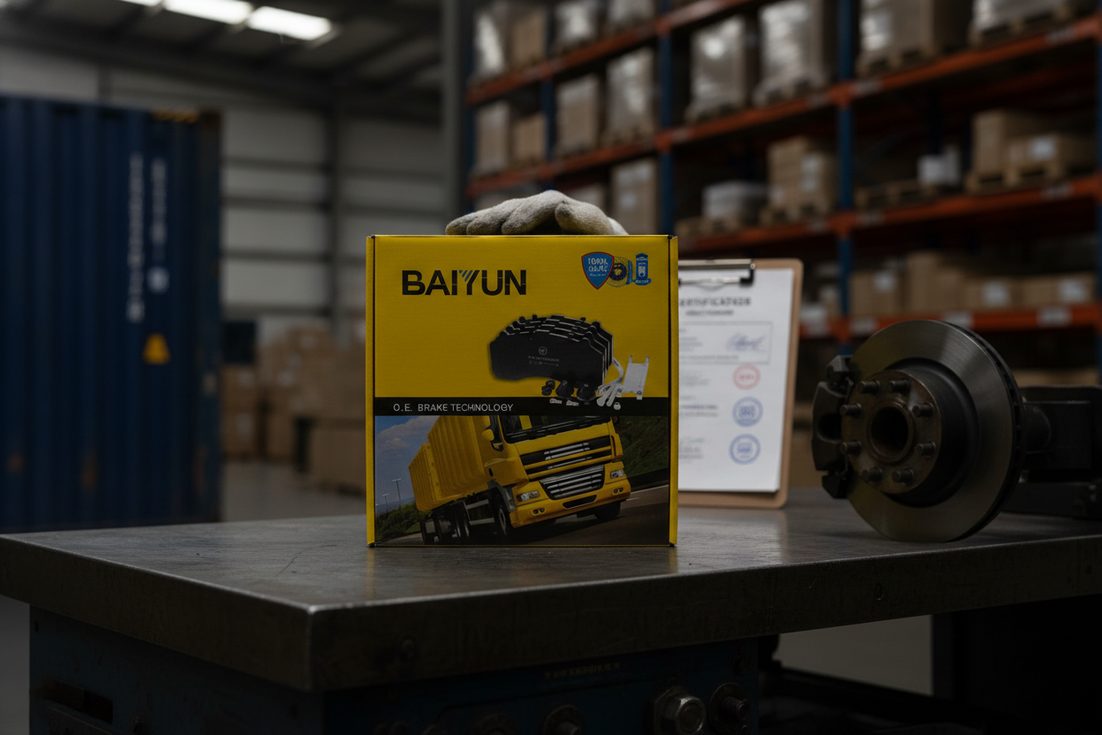
Imagine a container of 3,000 brake pad sets held at customs in Alexandria because the shipment lacks an official ECE R90 approval certificate for the Egyptian market. Or worse—a batch of pads already installed in a Middle Eastern fleet triggers a warranty recall after independent testing shows friction behavior outside the JASO C406 band. Both scenarios are common headaches for importers who assume a single DOT stamp covers every port of entry. Over the past decade, we've seen distributors burn thousands of dollars fixing these oversights—money that never needed to leave the balance sheet.
At BAIYUN Brake, we've been supplying replacement brake pads globally for over 49 years. We don't just manufacture to one standard and hope it fits all. Instead, we build compliance architecture around your market's specific type-approval requirements—whether that's ECE R90 for European distributors, FMVSS 135 self-certification for the U.S., INMETRO homologation in Brazil, or dual-standard acceptance across the Gulf region. The common thread? Most compliance failures trace back to three mistakes importers keep making. Let's break them down.
Mistake #1: Treating Brake Pad Certification as a Single Global Standard
The biggest misconception we hear from new distributors goes something like this: "Our supplier has DOT certification, so we're covered everywhere." That's not how market access works. The North American DOT stamp relies on self-certification—the manufacturer declares the product meets FMVSS 135, and no third-party testing is mandated before import. In contrast, the European Union requires every replacement brake pad and lining assembly to carry ECE R90 type-approval, which involves independent dynamometer testing on brake performance, thermal fatigue, and load strength. You can't substitute one for the other.
Asia-Pacific adds another layer. While ISO/TS 16949 (now IATF 16949) serves as a quality baseline, individual countries often impose local OEM-style standards. For example, Japan's JASO brake standard demands specific friction stability ranges across temperature gradients, and Brazilian INMETRO certification requires in-country testing at accredited labs. A distributor who stockpiles inventory based solely on a generic "ISO-certified" label will run straight into a regulatory wall in these markets.
Our solution at IATF 16949 certified facility is to pre-map each product against the target region's exact certification matrix. So if you're placing an order for 2,000 sets destined for Germany, we manufacture to the ECE R90 specification, document the approval mark, and supply the test reports in the format required by KBA or the relevant TÜV body. If your next shipment goes to Dubai, we shift to the dual-standard configuration that satisfies local authorities without over-engineering the product. This isn't paperwork shuffling—it's how you prevent a $40,000 shipment from sitting in limbo.
Mistake #2: Assuming All ECE R90 Markings Are Equal
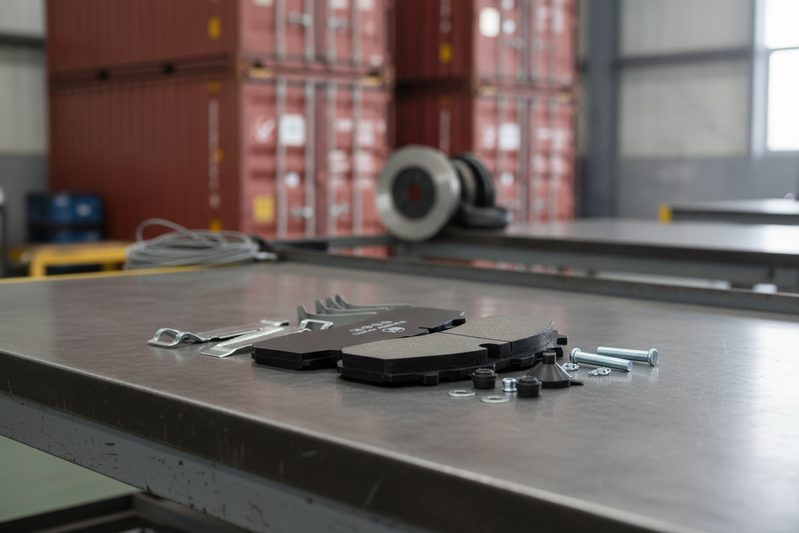
ECE R90 certification seems straightforward: the pad must perform within 15% of the original equipment's deceleration rate during cold and hot stops, survive thermal fatigue cycling without friction collapse, and pass a load-strength test. But the regulation has evolved. The latest iteration, still under adoption in some markets, now extends to brake discs and drums, and the testing protocol under Annex 3 specifies a minimum 80% retention of cold effectiveness after the pad has been heated to 400°C and cooled. Not every factory claiming ECE R90 actually tests to this threshold—some rely on outdated test cycles or, worse, copy markings illegally.
We've seen importers fall for "ECE R90-equivalent" claims. There's no such thing. A pad either carries a valid approval mark issued by a recognized technical service like TÜV, IDIADA, or Greening Testing Laboratories, or it doesn't. Distributors who skip verifying the approval number against the ECE database risk stocking counterfeit product. Even with genuine certification, a common trap is failing to update the approval when a pad formulation changes. ECE R90 approval is linked to a specific friction material composition; modifying the mix without re-testing invalidates the mark. That's why BAIYUN Brake maintains a strict change-control process within our our 49+ years of manufacturing experience—every formulation adjustment triggers a re-homologation cycle before the product ships to an ECE-regulated market.
Mistake #3: Overlooking Documentation and Traceability
Even a perfectly certified brake pad can fail a market audit if the paperwork doesn't match. In Latin America, for instance, Brazilian INMETRO auditors don't just check the pad marking—they demand a full homologation dossier including factory audit reports, product labeling compliance, and Portuguese-language installation sheets. European buyers increasingly require IMDS (International Material Data System) declarations to verify REACH and RoHS compliance of every friction constituent. North American customers may not need pre-approval, but they'll expect a complete DOT self-certification file ready for NHTSA inspection, complete with dynamometer reports per FMVSS 135 dynamometer test requirements (Schedule A, 30 stops at 100 km/h, 200°C initial, deceleration 0.65g).
The mistake many importers make is treating these supporting files as an afterthought. They'll receive a shipment with a certificate of conformity and a generic test summary, then scramble when the customer demands material data sheets or a vehicle-specific test matrix. We've built a documentation infrastructure that mirrors the complexity of international trade. When you buy ceramic and semi-metallic car brake pads from us for European application, the shipment packet includes not only the ECE R90 approval certificate but also the full test report, friction material MSDS, IMDS submission ID, and an EC declaration of conformity. That's not "nice to have"—that's the difference between a one-hour clearance and a three-week delay at the port of Antwerp.
How BAIYUN Brake Pre-Builds Compliance for Your Target Market
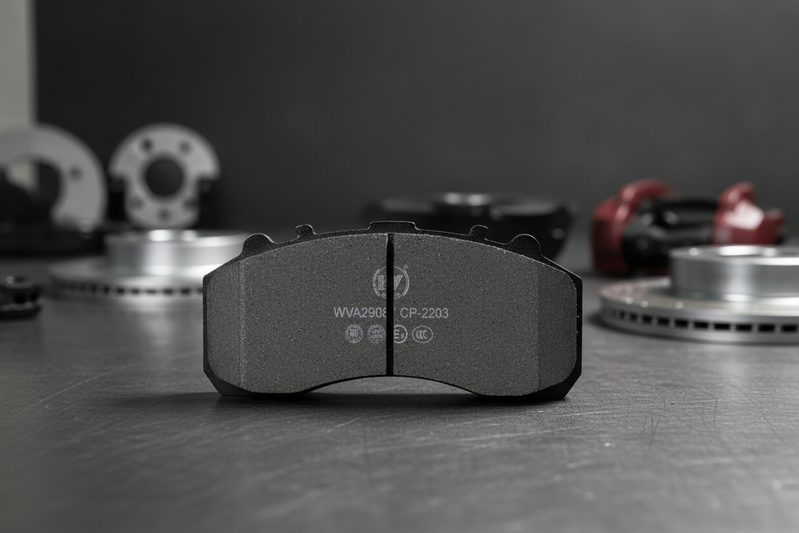
Instead of asking you to navigate the certification maze alone, we handle the heavy lifting upfront. For every product family—from passenger car ceramic formulations to heavy-duty commercial vehicle linings—we maintain a living certification matrix. Our CP2223 and CP2203 series, for example, carry dual compliance: the CP2223 is ECE R90 approved for the European aftermarket and also meets the JASO C406 standard for friction stability between 100°C and 300°C, making it suitable for Asian markets that follow Japanese braking norms. The CP2203 is DOT-tested and also homologated under INMETRO guidelines, with labeling adapted for Portuguese-language packaging.
This pre-built approach saves you the typical 8–12 week lead time and $15,000+ testing cost of commissioning your own homologation. We absorb that cost into our manufacturing process because we test in bulk across our IATF 16949-certified facility in China, which is audited annually by TÜV Rheinland. You get access to our complete test data, which includes friction coefficient curves (typically 0.38–0.44 μ across the 100–350°C range for our ceramic OE-equivalent formulations), shear strength measurements (minimum 3.5 MPa for our CV linings), and compressibility values consistent with OEM specifications. For heavy-duty importers, our commercial vehicle brake pads undergo additional dynamometer cycles simulating fully laden truck stops at 60 km/h, with recorded deceleration rates that meet or exceed ECE R90 thermal fatigue requirements.
What Are the Most Common Misconceptions About Brake Pad Certification?
Here's where we see confusion regularly among buyers who are new to importing:
Misconception: "IATF 16949 certification automatically means the brake pads are ECE R90 approved."
Reality: IATF 16949 is a quality management system standard for automotive supply chains. It ensures consistent manufacturing processes but does not constitute product performance certification. A factory can be IATF 16949 certified yet manufacture pads that fail ECE R90 dynamic tests. ECE R90 requires a separate type-approval mark and product-specific testing.
Misconception: "Once a brake pad has ECE R90, I can sell it globally without further testing."
Reality: ECE R90 is only recognized in the EU and in select non-EU countries that have adopted UN Regulation 90. Markets like the U.S., Brazil, Japan, and China maintain their own certification regimes. You'll likely need separate compliance for each region—or a product engineered to meet multiple standards simultaneously, as we do with our CP22XX series.
Misconception: "DOT certification requires third-party testing, just like ECE R90."
Reality: DOT/FMVSS 135 operates under self-certification. The manufacturer or importer bears the responsibility for testing and compliance, and NHTSA can request verification at any time. There's no pre-market approval body like TÜV. This lower barrier to entry often lulls distributors into a false sense of security until a spot-check occurs.
FAQ
What is the difference between ECE R90 and DOT certification for brake pads?
ECE R90 is mandatory in the European Union and requires third-party approval from a designated technical service, including dynamometer testing for performance, thermal fatigue, and load strength. DOT (FMVSS 135) is a self-certification system in the U.S., where the manufacturer guarantees compliance without pre-market testing, but NHTSA can demand evidence at any time. If you're exporting, you need the certification that matches the destination market—one does not replace the other.
How can I verify that my supplier's brake pads actually carry valid ECE R90 certification?
Request the full ECE R90 approval certificate showing the approval number (format E9 90R-02XXXX or similar). Cross-check that number against the UNECE database or the issuing authority's online portal. Also ask for the test report from an accredited lab like TÜV or IDIADA. A legitimate supplier will provide these without hesitation; any hesitation should raise a red flag.
What happens if I import brake pads without the correct certification for my local market?
Customs may seize or reject the shipment outright. If the pads enter the market and are later found non-compliant during a spot-check or after an accident, you face fines, mandatory recall, potential liability, and permanent damage to your business reputation. In the EU, selling non-R90 pads is illegal and can lead to prosecution. The cost of compliance is always lower than the cost of non-compliance.
Your Next Step Toward Compliant Brake Pad Supply
Frankly, the price gap between certified and non-certified brake pads rarely justifies the warranty risk. A single product liability claim or a stranded container at customs can erase years of profit. Over the past five decades, we've helped hundreds of distributors avoid those landmines by providing the right product with the right paperwork, the first time. If you're ready to simplify your import compliance process, request a wholesale quote or browse our full brake pad product range. Let's make sure your next shipment arrives without drama.
Was this article helpful?
Average Rating: 5/5 (1004)