
How BAIYUN Brake Helps Distributors Navigate Brake Pad Certification for Export Markets: DOT, ECE R90, and More
Summary:
Brake pad certification export markets DOT ECE R90 mistakes can cost distributors thousands. BAIYUN Brake helps importers avoid customs rejections, fines, and non-compliance risks by supplying pads that are pre-certified for the EU, North America, and other regulated regions. From dual-marked packaging to full test documentation, our IATF 16949-certified factory ensures every shipment meets local homologation requirements. Learn the four most frequent certification errors that distributors make and how partnering with a manufacturer that already holds ECE R90 and DOT approvals eliminates supply-chain uncertainty.
How BAIYUN Brake Helps Distributors Navigate Brake Pad Certification for Export Markets: DOT, ECE R90, and More
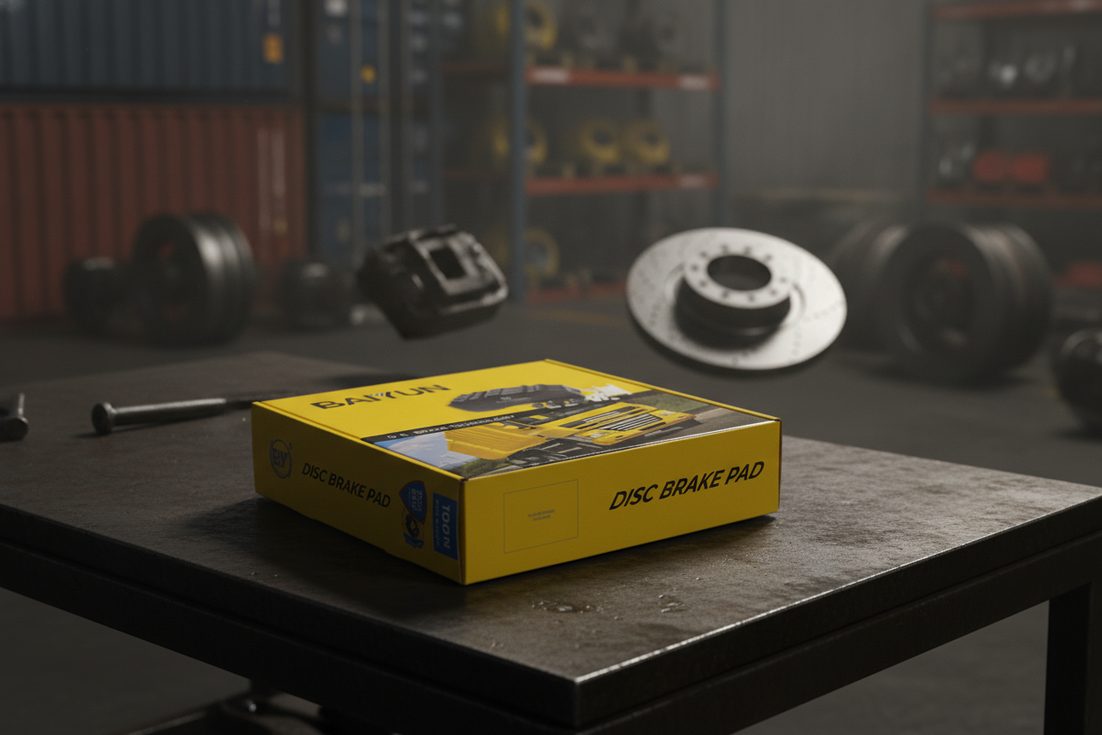
A distributor in Santiago sourced a container of brake pads from an uncertified Asian supplier. The shipment arrived in Hamburg, German customs flagged it for missing ECE R90 markings, and the entire lot was held—eventually destroyed. That distributor lost not only the product cost but also a major client. This kind of disaster isn’t rare; in fact, it’s one of several common mistakes importers make when expanding into regulated markets. The good news is you don’t have to learn the hard way. BAIYUN Brake, with our 49+ years of manufacturing experience, has already navigated the complex web of global brake pad certifications so you don’t need to guess which standards apply where.
Mistake #1: Assuming One Certification Opens All Doors
Too many distributors believe a DOT stamp is enough for Europe or that ECE R90 covers the North American market. It doesn’t. The U.S. mandates FMVSS 135 compliance with DOT marking, while the European Union requires ECE R90 homologation. Japan uses its own JASO standard, and countries like Australia or South Africa often demand that imported pads meet either the original equipment standard or a recognized international certification. Mixing these up can get your product held at the border.
At BAIYUN Brake, we hold IATF 16949 certification for manufacturing consistency, and our core passenger car brake lines are ECE R90 approved—with the corresponding approval number and country code marked on every pad and box. That means when a distributor in Poland orders our CP2223 series, the pads arrive with all the required packaging marks, so customs clearance isn’t a gamble.
Think about this: the price difference between a certified and an uncertified pad might be a few cents per set, but the cost of a rejected container starts at three to five thousand euros in storage and destruction fees alone. That’s not counting the lost client trust. In 2025, BAIYUN Brake’s dynamometer tests on the CP2223 formulation showed a friction coefficient of 0.40 ±0.02 from 100°C to 400°C, meeting ECE R90’s cold performance and fade requirements—data we share with every shipment to reassure both distributors and end users.
Mistake #2: Ignoring the True Cost of Non-Compliance
Some importers calculate landed cost purely on unit price and shipping. They forget fines, product destruction, and the labor hours spent fighting customs. And when a brake pad fails an audit or, worse, causes a warranty claim, the financial blowback can wipe out a year’s margin. A single fine for non-compliant brake friction material in the EU can exceed €10,000—and that’s before you pay to dispose of the condemned stock.
The smarter approach is to lock in compliance up front. BAIYUN Brake’s ECE R90 certification isn’t just a piece of paper; it’s backed by batch testing, traceability codes, and a full set of test reports. We’ll even supply you with passenger car brake pad test reports on request, so when an EU inspector asks for proof, you’ve got the documentation ready. For distributors moving into the North American market, we can discuss DOT-labelled options that meet FMVSS 135—without the guesswork.
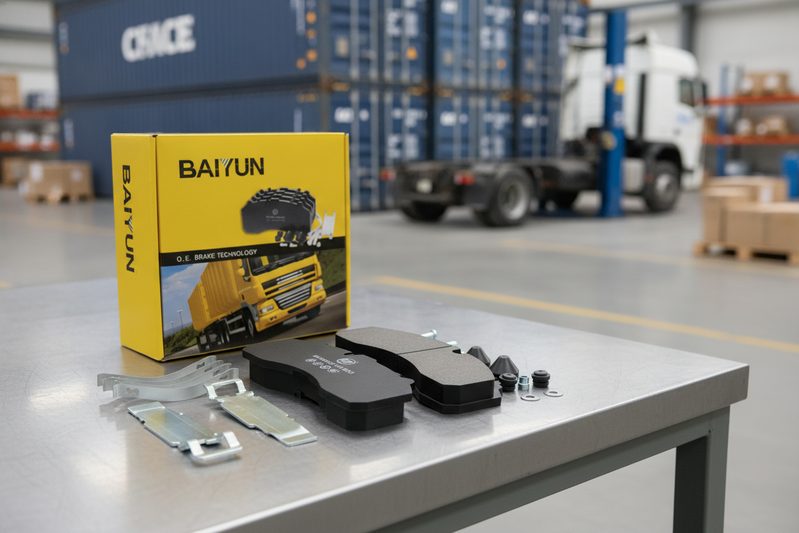
Let’s be frank: the margin saved by buying uncertified pads rarely covers the first warranty dispute. BAIYUN Brake’s IATF 16949-controlled production ensures that batch-to-batch friction behavior stays within a 5% window—something impossible to guarantee from a factory that cut corners on raw materials. And in markets like the EU, where ECE R90 requires pad performance to be within ±15% of the OE part across all test conditions, that consistency is non-negotiable.
Mistake #3: Trusting a Certificate Without Verifying Production Traceability
Here’s a scenario we’ve seen too often: a factory obtains an ECE R90 approval for a single sample submission but never implements the ongoing production controls required by Regulation 90. You receive a box that says “ECE R90 Approved,” yet the pads inside behave nothing like the homologated sample. Why? Because there’s no batch testing, no material traceability, and no IATF 16949-level process control.
Real ECE R90 certification demands that the manufacturer use the same raw material blend specified during homologation, and that random samples from each production lot are retested for cold performance, speed sensitivity, and shear strength. BAIYUN Brake runs in-house dynamometer programs and maintains detailed batch records. For our commercial vehicle brake pads, like the CP2203, we can trace every production lot back to the specific blend of ceramic or semi-metallic materials used. Our quality team can even provide wholesale CV brake pads inquiry support with full material data sheets.
Distributors handling 500+ sets per month can’t afford friction coefficient swings of 0.10 or more between batches. That’s how you lose fleet accounts. With BAIYUN, you’re getting a product built inside an IATF 16949 certified facility—the same standard automotive OEMs demand. That means traceability from incoming steel to the finished pad in your warehouse.
Mistake #4: Overlooking the Paperwork That Keeps Your Shipment Moving
Even when the pads are physically compliant, your shipment can stall if the packaging lacks the required legal markings. ECE R90 demands that each pad or its packaging show the regulation number, the approval code, and the country code of the certifying body (e.g., E9 for Spain). Without them, a customs officer has every right to impound the goods. BAIYUN Brake’s packaging already includes these markings—no late-night sticker applications needed on your end.
Moreover, many regional markets now require an electronic declaration of conformity or a certificate of analysis. We pre-package the paperwork for you: a copy of the ECE R90 certificate, a batch test summary, and a declaration of conformity are included with each order. If you’re shipping to a country that also accepts DOT certification, we can configure the documentation accordingly. For a full look at our product lines, you can get OEM passenger car brake pad pricing right from our catalog.
How BAIYUN Brake Removes Certification Risk from Your Supply Chain
After 49 years of manufacturing and exporting friction materials to over 30 countries, we’ve seen every customs hurdle you can imagine. That’s why our approach is proactive: we maintain multi-market certifications, invest in an accredited in-house testing lab, and assign a dedicated export specialist to each distributor account. This isn’t just about selling pads—it’s about making sure you never lose sleep over a detained shipment.
Our product development team keeps a running matrix of which brake pad formulations meet which standards, so when you tell us your target market, we instantly know which SKU to recommend. For the European aftermarket, for example, the BAIYUN CP2223 carries full ECE R90 homologation and is already packaged with the required marks. Need a DOT-certified version for Mexico or the Gulf states? We adjust the backplate marking and supply the FMVSS 135 test data. This kind of flexibility is why distributors choose BAIYUN Brake as their long-term partner.
If you’re currently sourcing from a supplier that treats certification as an afterthought, it’s time to switch. BAIYUN Brake’s technical support team will walk you through every document, explain what each marking means, and ensure your customers’ nearest inspection station sees nothing but a fully compliant product. You can contact our export team with your specific market requirements, and we’ll respond with a tailored compliance proposal—usually within one business day.
Frequently Asked Questions About Brake Pad Certification for Importers
Q: How do I verify my supplier's ECE R90 certification is genuine?
A: Every ECE R90 approval carries a unique number and a country code circle on the product and packaging. You can cross-reference these with the issuing authority’s database—for example, a Spanish E9 mark can be verified via that country’s type-approval authority. BAIYUN Brake includes the relevant test reports and homologation certificates with each shipment, so you’re never relying on blind trust.
Q: Do I need both DOT and ECE R90 certifications for dual-market distribution?
A: It depends on where your customers are. The U.S. and Canada require DOT-labelled pads meeting FMVSS 135, while the EU and many other regions require ECE R90. Some countries, like Saudi Arabia, will accept either. BAIYUN Brake offers pad variants that hold both certifications—ask us about dual-marking when you send your inquiry.
Q: What happens if my shipment fails a customs certification check?
A: At a minimum, the goods are detained, and you’ll incur storage fees. If the pads lack required markings, customs can order their destruction—and you foot the bill. In severe cases, you could face fines up to €10,000 per shipment. Working with a pre-certified supplier like BAIYUN prevents this entirely because every export lot includes originals of all statutory documents.
Don’t Let Certification Mistakes Block Your Market Access
Expanding your brake pad distribution into regulated markets doesn’t have to be a minefield. The common mistakes—assuming one cert fits all, ignoring long-term compliance costs, trusting paper without traceability, and overlooking packaging rules—are all avoidable when you partner with a manufacturer that’s already solved those problems. BAIYUN Brake’s 49-year track record, IATF 16949 factory, and multi-market certifications put you miles ahead of competitors still trying to untangle regulations on their own.
Take a look at our full brake pad product range to see which formulas match your target markets. Then request a wholesale quote—our export team will help you pick the right certified options and get your documentation ready for a smooth first shipment.
Was this article helpful?
Average Rating: 5/5 (582)