
How BAIYUN Brake Helps Distributors Meet Local Brake Pad Certification Requirements: DOT, ECE R90, and Export Markets
Summary:
Brake pad certification export markets DOT ECE R90 are baffling for many distributors. BAIYUN Brake helps avoid common mistakes that lead to customs delays and lost sales. From confusing DOT with ECE R90 to underestimating testing timelines, we break down the five costliest errors and how our IATF 16949-certified manufacturing and full suite of approvals keep your shipments moving. Real-world data and actionable advice for importers.
How BAIYUN Brake Helps Distributors Meet Local Brake Pad Certification Requirements: DOT, ECE R90, and Export Markets
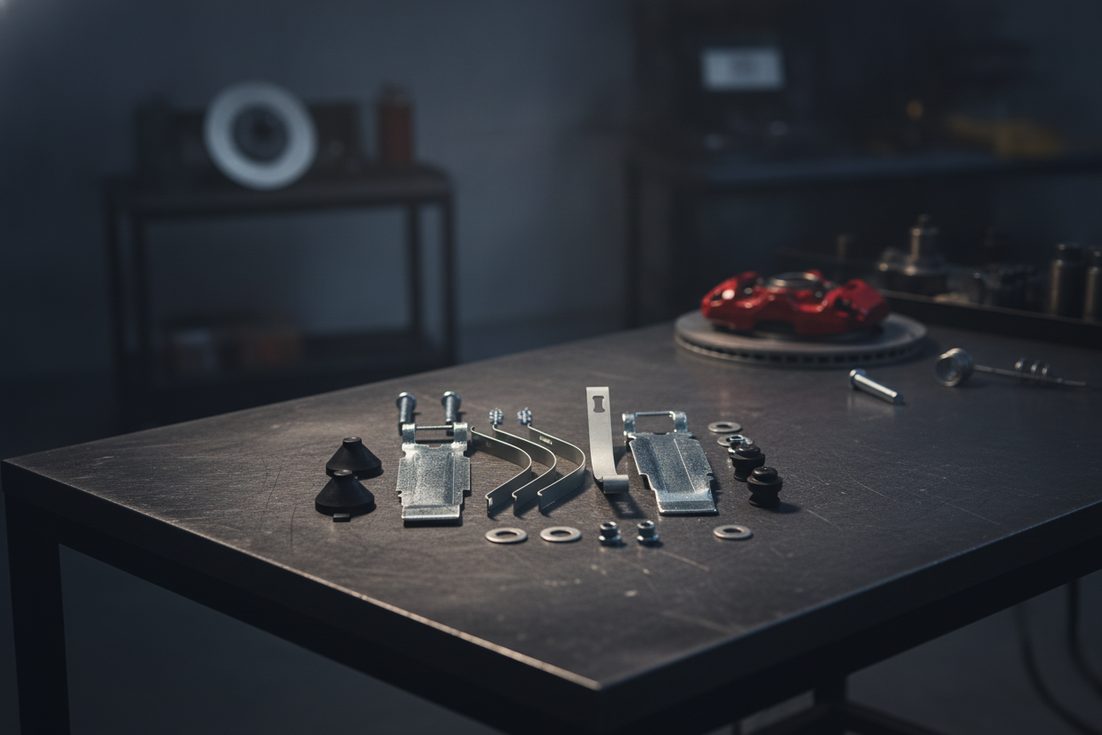
If you've ever had a container of brake pads held at Rotterdam port because the ECE R90 paperwork didn't match the markings on the box, you know certification headaches don't end with a contract. Distributors often assume a DOT or IATF 16949 certificate is a universal passport. It isn't. I've seen too many importers waste thousands because they didn't know the fine print. Here's where the expensive mistakes happen — and how BAIYUN Brake helps you steer clear of them.
Mistake #1: Believing One Certificate Opens All Borders
A Latin American distributor buys DOT-certified pads from a local supplier, air-freights samples to a German buyer, and gets rejected. The reason? Europe doesn't recognize the DOT standard for aftermarket brake pads. Only ECE R90 counts. I've seen this happen in reverse too: a Middle Eastern importer with ECE R90 pads gets held at a U.S. port because the pads lack the mandatory DOT friction code marking on the edge.
Each market has its own gatekeeper. North America demands FMVSS 135 compliance and a physical DOT marking with a two-letter friction code (e.g., "EE" or "FF"). The EU requires ECE R90 certification with a 6-digit approval number preceded by the country code (E1, E2, etc.) on both the pad and packaging. Japan leans on the JASO brake standard, while many Asian nations accept ISO 9001 as a baseline. Relying on one certificate is like using a screwdriver for every bolt — it'll work until it doesn't.
BAIYUN Brake manufactures to multiple standards from a single IATF 16949 certified facility, so when your order ships, the pads carry exactly the marks your market demands. Our CP2223 ceramic formulation, for instance, passed ECE R90's cold performance retention test (80% effectiveness after 400°C cycling) and also meets the DOT FMVSS 135 coefficient-of-friction range for North America. You get one part number with dual compliance — no separate batches.
Takeaway: Always map your target country's exact certification requirements before committing to a purchase order, and verify the supplier can deliver documentation that matches.
Mistake #2: Under-Budgeting the Certification Timeline
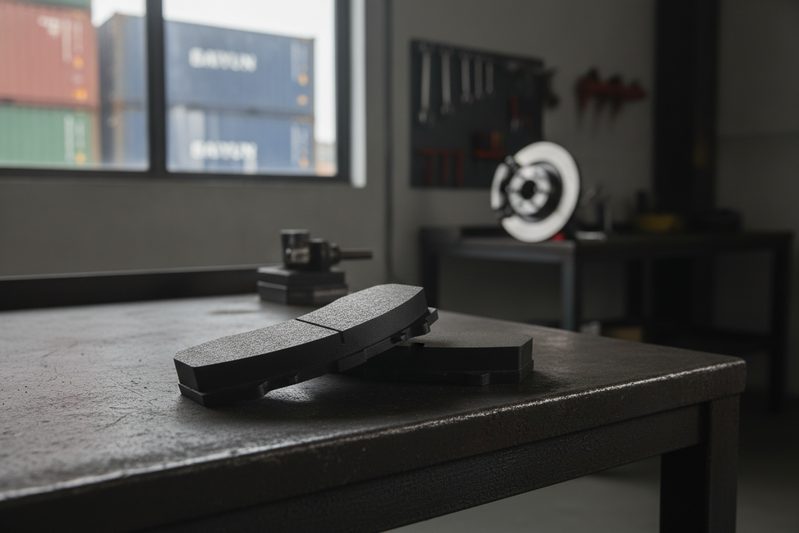
A fleet operator in Kenya signed a six-month supply contract for 3,000 brake pad sets, believing his supplier could quickly obtain ECE R90 certification for a new bus model. Four months in, he discovered that testing alone requires a minimum of 500 brake applications across cold performance, high-temperature fade, and recovery runs — and the test lab queue was 8 weeks long. The certification cost ballooned to $22,000, and he missed the delivery window. Would you risk that on an untested supplier?
Getting an ECE R90 test report from scratch isn't quick. Annex 3 of ECE Regulation 90 spells out tests for cold performance at 40 and 100 km/h, sensitivity to speed, and friction stability after 100 cycles of heating from 100°C to 400°C. If you're planning to sell brake pads in Europe next quarter, you need a supplier who already holds those approvals. BAIYUN Brake maintains an active library of ECE R90 certifications covering over 400 passenger car and commercial vehicle part numbers. That means you skip the 3–6 month wait and tens of thousands in lab fees.
You can check the full list — download our product catalogue and cross-reference your market's vehicles right now.
Mistake #3: Accepting a Supplier’s Word Instead of Verifying Test Reports
I once spoke with a distributor in Algeria who showed me a box stamped “ECE R90” in bold letters. When I asked for the approval number, it was nowhere to be found — not on the pad, not on the packaging. The manufacturer had simply printed the logo. That shipment never left the port. Real ECE R90 certification demands a 6-digit approval number prefixed by the country code of the approved lab (e.g., E1 for Germany, E9 for Spain). No number, no entry.
Even with a number, you need to verify it. BAIYUN Brake provides passenger car brake pad test reports issued by EU-accredited bodies like TÜV Rheinland. Our CP2203 semi-metallic pad, for example, was tested to demonstrate a friction coefficient of 0.34–0.46 across the required temperature band, with compressibility below 0.2 mm under 16 MPa — all documented in the report. Before you issue a purchase order, demand the actual test data, not just a certificate scan. And make sure the approval number matches the test report’s vehicle family.
Mistake #4: Skipping Vehicle-Specific Homologation and Type Approval
In markets like Russia, Turkey, and some South American countries, a brake pad might hold ECE R90 or DOT approval but still need a national type-approval certificate tied to a specific vehicle model. I’ve seen consignments of C.V. brake pads sit in customs because the importer couldn't produce a homologation document for the local transport authority. The pads were technically certified; they just weren't on the official list for that vehicle.
BAIYUN Brake supports distributors with model-specific documentation. For a fleet of Iveco Daily vans in Poland, we provided the complete ECE R90 test report plus an additional declaration of conformity that matched the local authority's format. For heavy-duty applications, wholesale CV brake pads inquiry can include pre-verified catalogues aligned with specific OEM part numbers ranging from Mercedes-Benz to Scania. The key is to ask before you ship.
Mistake #5: Getting the Labeling and Marking Wrong
Even if the brake pad itself passes every certification, a missing friction code on the edge or an incorrect box label can hold up a container for days. In the U.S., DOT regulation requires a legible two-letter friction code (such as “EE” or “FF”) directly on the pad's friction material edge or the backing plate. Many suppliers stamp it only on the box. That’s a nonstarter for CBP inspectors.
BAIYUN’s production process includes a laser-marking station that engraves the DOT code, the ECE approval number, and the batch number onto every pad. We’ve refined this after decades of exporting — our 49+ years of manufacturing experience taught us that customs agents are detail-oriented. You can request pre-shipment photos of the actual product markings; our team does that routinely. A little upfront validation saves days of demurrage.
Frequently Asked Questions
Q: What's the most common brake pad certification mistake distributors make when exporting to Europe?
A: Assuming DOT certification is sufficient. ECE R90 is the mandatory standard for all replacement brake pads in the EU. BAIYUN Brake ensures every pad in its European range carries a genuine 6-digit ECE approval number and meets the required friction performance, typically maintaining a coefficient of 0.35 to 0.45 during thermal cycling tests up to 400°C.
Q: How can I verify that a Chinese brake pad manufacturer's ECE R90 certificate is authentic?
A: Request the test report from an accredited laboratory such as TÜV or JASIC. BAIYUN Brake provides full transparency by sharing third-party test reports for each product family; for example, our CP2223 ceramic formulation was certified after passing cold performance, high-temperature fade, and compressibility tests at an independent EU-accredited facility.
Q: Does BAIYUN Brake support homologation and type approval for specific vehicle models in local markets?
A: Yes. We maintain an extensive database of homologation documents for over 400 part numbers across passenger car and commercial vehicle segments. Whether you need a type-approval certificate for a fleet of buses in South America or an IVECO Daily in Eastern Europe, our export team can assist with the required paperwork.
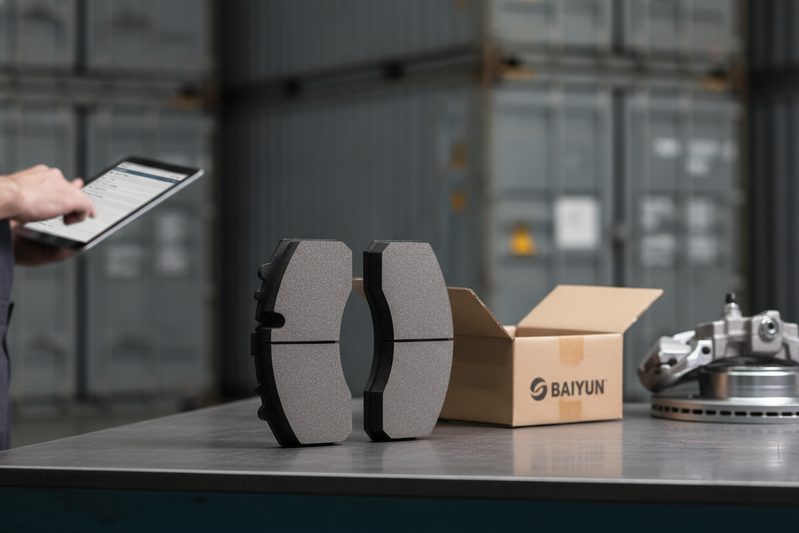
If you're tired of certification guesswork costing you shipments, let's talk. Browse our passenger car brake pad range or request a wholesale quote directly. We'll get the right paperwork to your desk before the pads leave our factory.
Was this article helpful?
Average Rating: 5/5 (1251)