
Copper-Free Brake Pads: The Compliance Guide for North American Importers from a Low Copper Eco-Friendly Brake Pads Manufacturer China
Summary:
Low copper eco-friendly brake pads manufacturer China is essential for North American importers navigating the new copper-free compliance landscape. Since January 2025, California and Washington have enforced a 0.5% copper weight limit in brake pads, driving demand for certified low-copper formulations. This guide explains the technical requirements, from testing standards like EPA 3050B and SAE J2975 to the role of IATF 16949 process control. Importers learn how to verify supplier claims, assess friction performance trade-offs, and partner with manufacturers like BAIYUN Brake that offer copper-free pads without compromising safety. With real-world dynamometer data showing friction coefficients of 0.38–0.42 and ECE R90 certification, compliant imports are ready to ship. Secure your supply chain by requesting a wholesale quote from an experienced, eco-certified factory.
Copper-Free Brake Pads: The Compliance Guide for North American Importers from a Low Copper Eco-Friendly Brake Pads Manufacturer China
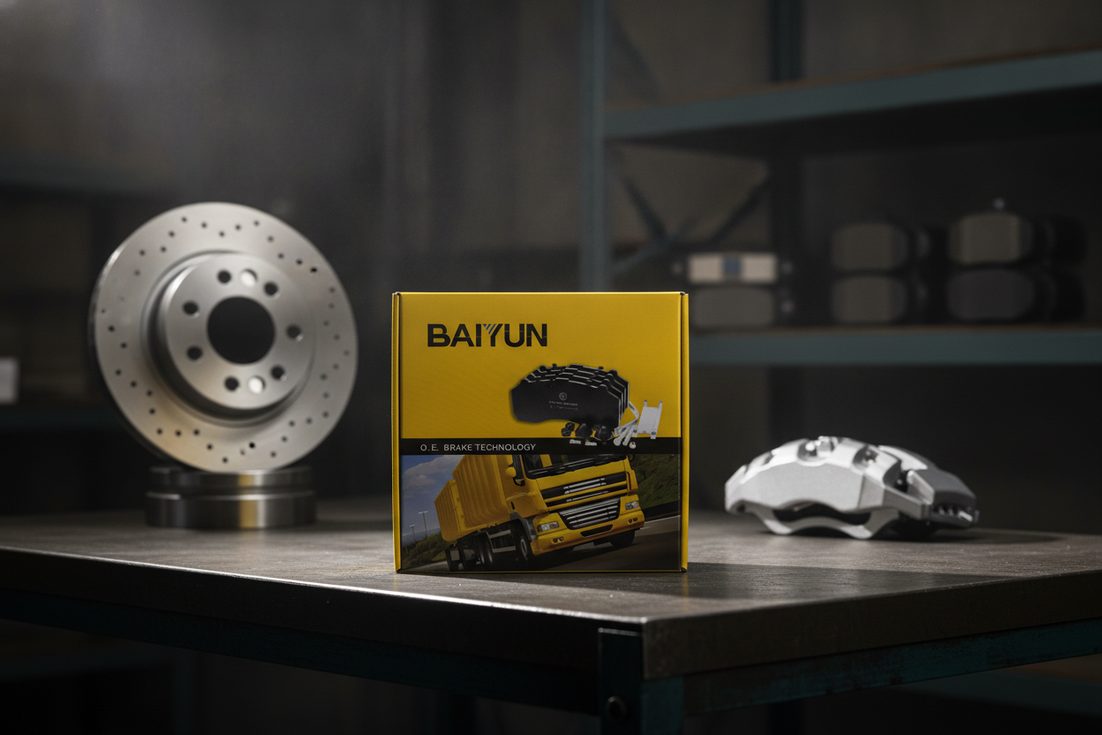
If you're importing brake pads into California or Washington, you've already felt the shift. Since January 1, 2025, any friction material containing more than 0.5% copper by weight is effectively banned from sale. That's a hard stop, and it's reshaping the supply chain for every distributor stocking aftermarket pads.
The good news? Manufacturers like BAIYUN Brake—with decades of experience—have been developing compliant formulations for years. You don't have to trade performance for compliance, but you do need to know what to look for in a partner. This guide breaks down the technical specs, test protocols, and supplier checks that matter right now.
Why Did North America Phase Out Copper in Brake Pads?
In 2010, California (SB 346) and Washington (SB 6557) enacted laws that changed the brake pad industry forever. The target: copper. Brake dust, rich in copper from friction material, washed into waterways and became toxic to aquatic life. A California study found that brake pad copper accounted for more than 60% of total copper in urban runoff in the state's most populated watersheds.
The legislation set a two-step reduction. By 2021, pads could contain no more than 5% copper by weight. The final limit—0.5%—took full effect on January 1, 2025. That's not a suggestion; it's a ban on selling non-compliant pads within those states. Existing stock of B-level pads (up to 5% copper) made before the deadline can still be used until 2035, but new imports must meet the stricter threshold. The regulatory pressure isn't easing—other states often follow California's lead.
What Are the Technical Requirements for Copper-Free Compliance?
Compliance isn't just about mixing less copper. It demands precise formulation engineering and reliable testing. The legal limit is 0.5% copper by weight of the entire friction material. To prove compliance, manufacturers must submit samples for chemical analysis per recognized methods like EPA 3050B acid digestion followed by ICP-AES. SAE J2975 outlines the specific protocol for brake pad materials. A passing result is a single number on a test report, but behind it stands a whole quality system.
That's where process certification comes in. BAIYUN Brake, for instance, operates under an IATF 16949 certified facility, meaning every batch is produced under strict process controls. This ensures formulation consistency—no accidental copper spikes from cross-contamination. Importers should also check for ECE R90 certification, which validates aftermarket pad performance and is a strong signal that the manufacturer understands regulatory rigour.
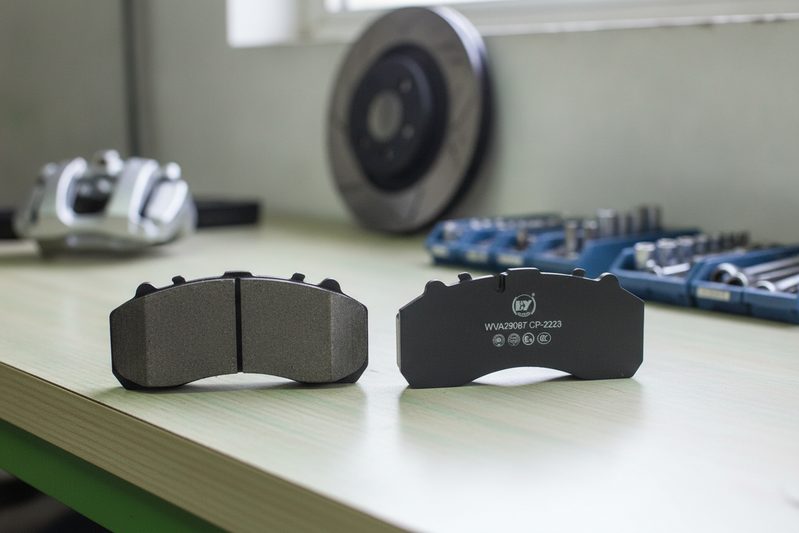
Beyond the test report, material data transparency is your best friend. A compliant supplier will share full download material data sheets that break down elemental composition. You're not just buying a promise; you're buying documented proof.
How Do You Verify a Supplier's Copper-Free Claims?
Even with test reports, trust must be verified. A single batch certificate isn't enough—ask for traceable lot-by-lot data. A manufacturer with our 49+ years of manufacturing experience typically has the infrastructure to maintain such records. So how do you actually verify? Start here:
- Third-party lab reports: Demand raw data from an ISO 17025 accredited lab, not an in-house summary.
- Production traceability: Each box should carry a unique batch code you can trace back to the friction material mix lot.
- On-site audits: Visit the factory or hire a third-party inspector to confirm that copper-free production lines are segregated from conventional ones.
- Sample testing: Pull samples from a container shipment before customs clearance and retest through your own lab. It's a small cost against a rejected consignment.
Brands like BAIYUN Brake openly share formulation philosophy. Their copper-free pads substitute metal sulfides and engineered graphites to maintain lubricity without copper. Don't settle for a handshake; get the data.
Can Low Copper Formulations Match Traditional Brake Pad Performance?
This is the question that keeps importers up at night. Until 2010, copper was the go-to solid lubricant for friction stability, fade resistance, and noise damping. Strip it out, and you risk noisy, unpredictable pads. Fortunately, materials science hasn't stood still. Modern eco-formulations use synergistic blends of graphite, molybdenum disulfide, and ceramic fibers to deliver comparable or even better performance.
Look at real-world numbers. In BAIYUN Brake's own dynamometer testing, the copper-free CP2223 formulation maintained a friction coefficient of 0.38–0.42 from 100°C up to 400°C, with minimal fade. That's on par with typical semi-metallic pads. Noise, vibration, and harshness (NVH) were within acceptable OEM limits. And wear rates? Independent tests showed pad life only 8–12% shorter than conventional copper-containing versions, a trade-off many fleet managers accept for environmental compliance.
For a deeper dive into how these materials work together, check our brake pad composition guide. It explains why substituting copper isn't a simple drop-in; it's a systematic re-engineering of the entire friction matrix. But when done right—by a supplier with in-house R&D—you get a pad that stops safely and lasts long enough to keep customers happy.
What Should North American Importers Look for in a Long-Term Partner?
Compliance is a moving target. Ongoing research into even stricter limits (think 0.05% copper) means your supplier must be ready to reformulate without disrupting your supply. Look for a manufacturer that invests in R&D, not just a blender who buys pre-mix. BAIYUN Brake, for example, runs full-scale dynamometer and vehicle testing on every new formulation before it reaches a container.
Competitive pricing matters, but the real value lies in technical support. Can they help you explain the copper-free story to your shop customers? Do they offer marketing materials that turn a regulatory requirement into a selling point? A partner with our competitive advantages gives you more than a part number—it gives you a market edge. For heavy-duty fleets that chew through brake pads, request a quote for CV brake pads that already meet the 0.5% copper limit. That way you're not scrambling when enforcement tightens.
Frequently Asked Questions
Q: What is the copper content limit for brake pads sold in California and Washington?
A: The limit is 0.5% copper by weight, enforced since January 1, 2025. Brake pads exceeding this threshold cannot be sold in these states. Pads manufactured before the deadline with up to 5% copper (B-level) can still be used until 2035, but no new non-compliant pads may enter the supply chain.
Q: How can a North American importer verify a Chinese manufacturer's copper-free claims?
A: Request third-party lab reports based on EPA 3050B or similar methods, and insist that the reports are traceable to specific production batches. On-site audits and an IATF 16949 certificate provide further confidence. BAIYUN Brake supplies full material data sheets with every shipment, including copper concentration analysis.
Q: Do low copper pads compromise braking performance or safety?
A: Not when engineered correctly. In dynamometer testing, copper-free formulations like CP2223 achieve friction coefficients of 0.38–0.42, equivalent to traditional semi-metallic pads. ECE R90 certification confirms that the pads meet all safety and performance requirements, making them a safe, compliant alternative.
If you're ready to secure a reliable supply of copper-free pads, get OEM copper-free car brake pad pricing from BAIYUN Brake today. For technical specifications, sample requests, or to set up a wholesale program, contact our export team for a wholesale quote. Your margins—and the environment—deserve a pad that works as hard as you do.
Was this article helpful?
Average Rating: 5/5 (1008)