
Mitsubishi Fuso Brake Pad Guide: Specs, Fitment & Replacement
Summary:
Mitsubishi Fuso brake pad guide: how to identify correct specs, verify fitment, and source certified replacement pads for commercial truck fleets. This guide covers Canter, Fighter, and Super Great series, cross-referencing with WVA codes, and why ECE R90 and IATF 16949 certifications protect your sourcing investment. Learn a practical verification checklist, cost-saving strategies, and how to partner with a manufacturer that delivers batch-consistent, globally compliant brake pads for your import or distribution business.
Mitsubishi Fuso Brake Pad Guide: Specs, Fitment & Replacement
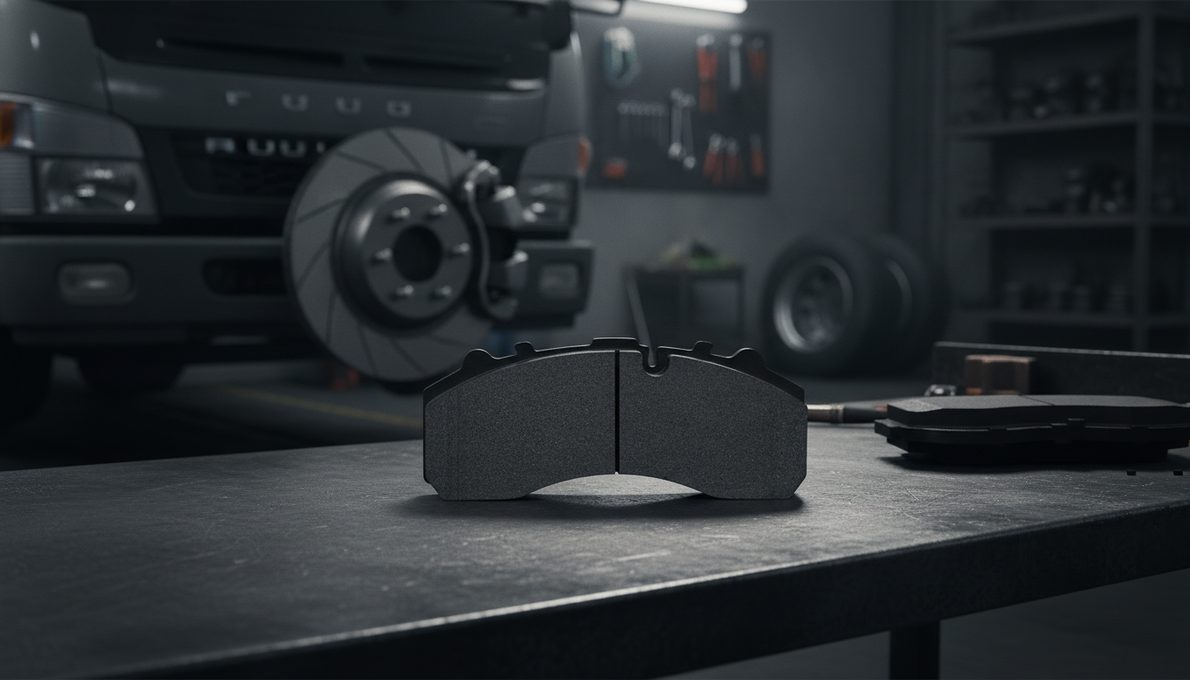
Quick answer: Finding the right brake pads for Mitsubishi Fuso trucks isn't a guessing game—it's a precision match based on specific vehicle series, axle position, and WVA/OE part numbers. This guide walks you through how to identify correct specs, verify fitment, and replace pads with confidence. For fleet buyers and importers, sourcing from an IATF 16949 and ECE R90 certified manufacturer like BAIYUN Brake cuts replacement costs up to 40% while ensuring consistent performance across your whole Fuso lineup.
Which Mitsubishi Fuso Models Are We Talking About?
Mitsubishi Fuso doesn't build passenger cars. Their entire range is commercial—from light-duty Canter trucks crawling through city deliveries to the heavyweight Super Great tractor units hauling 40-ton loads. Each series uses brake systems engineered for different weight classes, and that means pad dimensions, friction materials, and wear indicators change model by model.
Most importers and distributors deal with three core series: the Canter (FE/FG), the Fighter (FK/FM), and the Super Great (FP/FV). A Canter front pad won't fit a Fighter, even if both are labeled "Fuso." So how do you cut through the confusion? You start by treating the truck's VIN and model year as non-negotiable keys to the right part.
That's where a supplier's cross-reference capability turns into a profit lever. A distributor who can instantly match four different regional OE numbers to one BAIYUN WVA number saves warehouse space and slashes ordering errors. But we'll get to that.
What Does the Right Brake Pad Look Like for a Fuso?
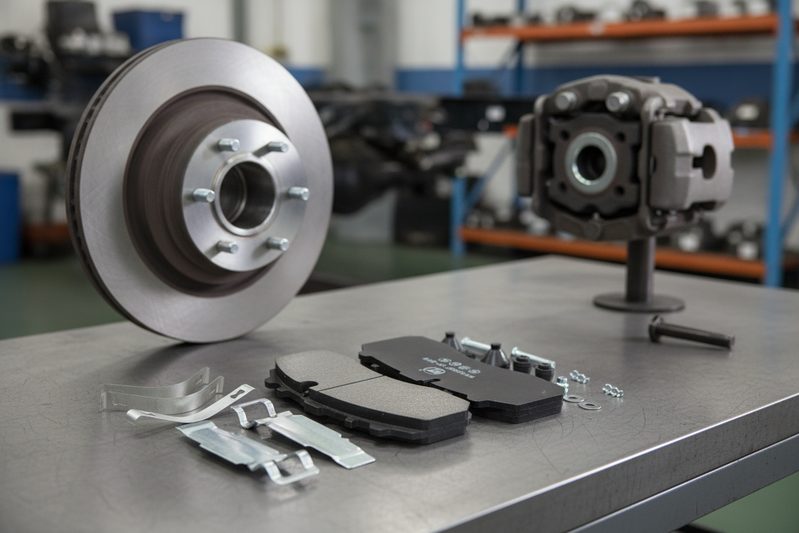
A quick look at any Mitsubishi Fuso front brake assembly reveals a heavy-duty floating caliper clamping a thick ventilated disc. The pads are larger than what you'd see on a light truck—often 190-210 mm in length and 18-22 mm thick when new. Rear pads might be slightly smaller but still built for commercial duty cycles. Wear indicators aren't universal; some models use mechanical clips, others electronic sensors. If you guess wrong, you'll either get a pad that physically doesn't fit, or one that triggers a dashboard warning light endlessly.
So, here's a reality check: does your current supplier ask you for the WVA number before quoting? If not, you're probably leaving money on the table in returns and fitment complaints. BAIYUN's commercial vehicle brake pad catalog organizes pads by WVA code precisely because that's the only reliable cross-point across global OE systems.
How Do You Cross-Reference Without Getting Burned?
OE numbers differ by region. A 2015 Fuso Canter sold in Australia might list a different part number than the same truck sold in the Middle East, even though the brake pad is identical. The WVA numbering system solves this: one WVA code can link 10 or more OE numbers. But you must verify that the WVA assignment you're using comes from a current, manufacturer-validated list—not a five-year-old aftermarket database scrape.
At BAIYUN, we've built our cross-reference over years of direct OEM and aftermarket supply. Our team runs constant validation against real-world fitment samples. If you're holding a worn pad from a 2017 Fighter and you call us, we'll match it based on dimensions, backplate shape, and wear sensor position—and then confirm with our supplier catalogue. No guesswork.
Brake Pad Replacement & Fitment Verification Checklist
Replacing pads on a commercial truck isn't a 30-minute driveway job; it's a scheduled maintenance event that impacts fleet uptime. Getting it wrong means pulling the truck off the road a second time. Here's a no-nonsense checklist your workshop—or your customer's workshop—should run through before and after installing new pads:
- Vehicle identity first: Record the full VIN, model series (e.g., Canter FE84), axle position (front/rear), and production month/year.
- Old pad inspection: Before discarding, check for any legible OE number stamped on the backing plate. Photograph it.
- WVA cross-check: Use the WVA number from your supplier's catalogue, not just a visual match. Ask for the latest validated cross-reference list.
- Wear sensor match: Confirm whether the new pad has a mechanical clip, electronic sensor lead, or none. Mismatches cause unnecessary warning lights.
- Disc thickness check: Measure the rotor. If it's below minimum spec, new pads alone won't restore performance. Sell a pad-and-disc kit when needed.
- Hardware kit: Fuso calipers often require new abutment clips, shims, and sometimes retaining pins. Don't reuse old hardware; it leads to uneven pad wear and noise.
- Post-install bed-in: Instruct the driver to perform 15-20 gentle brake applications from 50 km/h to 30 km/h. This transfers pad material to the disc correctly.
The following table collects the key pieces of information you'll need before ordering—hand it to your procurement team and they'll thank you.
| Data Point | Why It Matters | Where to Find It |
|---|---|---|
| Vehicle VIN | Unlocks exact build-spec pad part number | Chassis plate or vehicle registration |
| OE part number (if known) | Direct cross-reference to WVA | Old pad backing plate or dealer invoice |
| WVA code | Universal aftermarket identifier | Supplier catalogue (validate current) |
| Pad dimensions (L×W×T in mm) | Confirms physical fit when OE numbers are missing | Measure with caliper; compare to supplier spec sheet |
| Axle position & quantity | Front and rear pads often differ; fleet orders need exact counts | Vehicle manual or visual inspection |
| Wear sensor type | Avoids warning system conflicts | Old pad inspection or wiring diagram |
Here's a tip: keep a digital folder with photos of every pad you replace across your fleet. Over time, you build a visual verification library that speeds up re-orders and eliminates cross-reference mistakes. We do the same at our IATF 16949 certified facility.
Why Does Certification Actually Matter for Your Bottom Line?
Let's talk money. An ECE R90 certification isn't just a sticker on the box; it means the pad formulation has passed a regulated performance test that ensures it behaves within ±15% of the original equipment pad's coefficient of friction. When you buy uncertified pads, you take on the liability of unpredictable stopping distances—and in the commercial truck world, that liability gets expensive fast.
But here's the sourcing angle: fleets in Europe, Australia, and many Middle Eastern countries now require ECE R90 marking as a compliance condition. If you're a distributor shipping into those markets, uncertified pads will get rejected at customs or fail vehicle inspection. BAIYUN Brake's entire commercial vehicle range carries ECE R90 approval, so you don't have to gamble.
Cost savings come from reduced rejection rates, fewer warranty claims, and longer service intervals. Our customers often see 15-20% lower cost-per-kilometer over a pad's life compared to unbranded alternatives. That's not marketing fluff—it's the result of chemical consistency batch to batch, which you won't get from a factory that changes its friction formula every month to chase raw material prices.
Does your current supplier provide a material data sheet with every shipment? If the answer is no, you might want to download our material data sheets and see the difference.
Frequently Asked Questions (FAQ) for Wholesale Buyers
Q: How do I find the correct brake pad for a Mitsubishi Fuso if I only have the VIN?
A: Provide the full VIN to your brake pad supplier. Reputable manufacturers like BAIYUN Brake can decode the VIN to identify the model series and production year, then cross-reference to the correct WVA number. This method is almost 100% accurate when using a validated catalogue.
Q: Do all Mitsubishi Fuso trucks use the same type of brake pad?
A: No. Brake pad dimensions, friction material, and wear sensor configurations vary across Canter, Fighter, and Super Great series, as well as between front and rear axles. For example, a Canter front pad typically measures around 190×85×18 mm, while a Super Great front pad is larger and heavier to handle higher loads. Always confirm by WVA code.
Q: What's the advantage of ordering WVA-coded pads over OE-numbered ones?
A: WVA codes consolidate multiple regional OE numbers into a single global identifier. This reduces inventory complexity for distributors—you stock one part number for the same pad used across multiple markets. It also simplifies reordering and cross-referencing when dealing with mixed fleets.
Q: How often should Mitsubishi Fuso brake pads be replaced?
A: Replacement intervals depend on duty cycle, but most Fuso trucks will need front pads replaced between 80,000 and 120,000 kilometers. Rear pads often last 20-30% longer. Frequent stop-and-go urban delivery work can cut that interval to 50,000 km. Use regular inspections to check pad thickness; never wait for a wear indicator to scrape the disc.
Q: Can I mix and match brake pad brands across the same axle?
A: Absolutely not. Different brands use different friction formulations, leading to uneven braking forces and pulling. Always replace pads on both ends of an axle with identical, batch-matched sets—preferably from the same certified manufacturer. This is a basic safety and compliance requirement for commercial vehicles.
Sourcing Confidence: Make Your Next Order Count
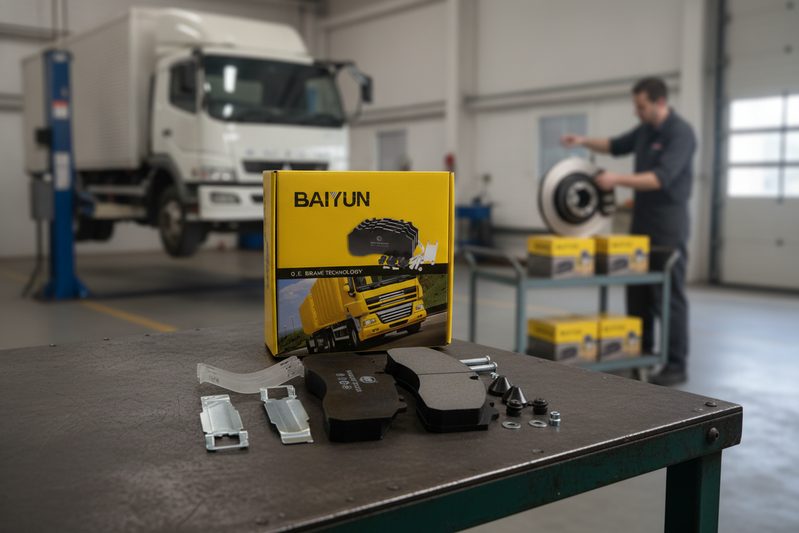
You've read the specs, you've got the checklist, and you know why certification keeps your fleet and your import business out of trouble. The last step is aligning with a supplier that treats your Fuso brake pad requirements as a priority, not an afterthought.
At BAIYUN Brake, we don't just ship boxes. We ship documented compliance: WVA codes validated against current global catalogues, ECE R90 approval markings, and IATF 16949 manufacturing traceability. That's what turns a one-time order into a long-term partnership. Browse our wholesale commercial vehicle brake pads and request a wholesale quote today—tell us your Fuso models and volumes, and we'll return a tailored offer within 24 hours.
Was this article helpful?
Average Rating: 5/5 (969)