
Got Quoted $1500 for Front and Rear Brake Pads and Rotor Replacement? A Practical B2B Guide for Fleet Buyers and Distributors
Summary:
Got quoted $1500 for front and rear brake pads and rotor replacement on Reddit? This B2B guide decodes that viral quote for fleet buyers, distributors, and maintenance teams. It breaks down retail parts-versus-labor benchmarks, commercial vehicle brake pad cost drivers, ECE R90 and IATF 16949 supplier checks, MOQ and landed cost logic, and private label options. You'll see why a $1,500 consumer brake invoice is not a fleet cost baseline, learn what a supplier quote should include, and understand how to verify batch consistency and import margins. BAIYUN Brake brings 49+ years of manufacturing and export experience to help you source certified commercial vehicle brake pads and linings with confidence. Request a wholesale quote after checking the buyer verification checklist in this guide.
Got Quoted $1500 for Front and Rear Brake Pads and Rotor Replacement? A Practical B2B Guide for Fleet Buyers and Distributors
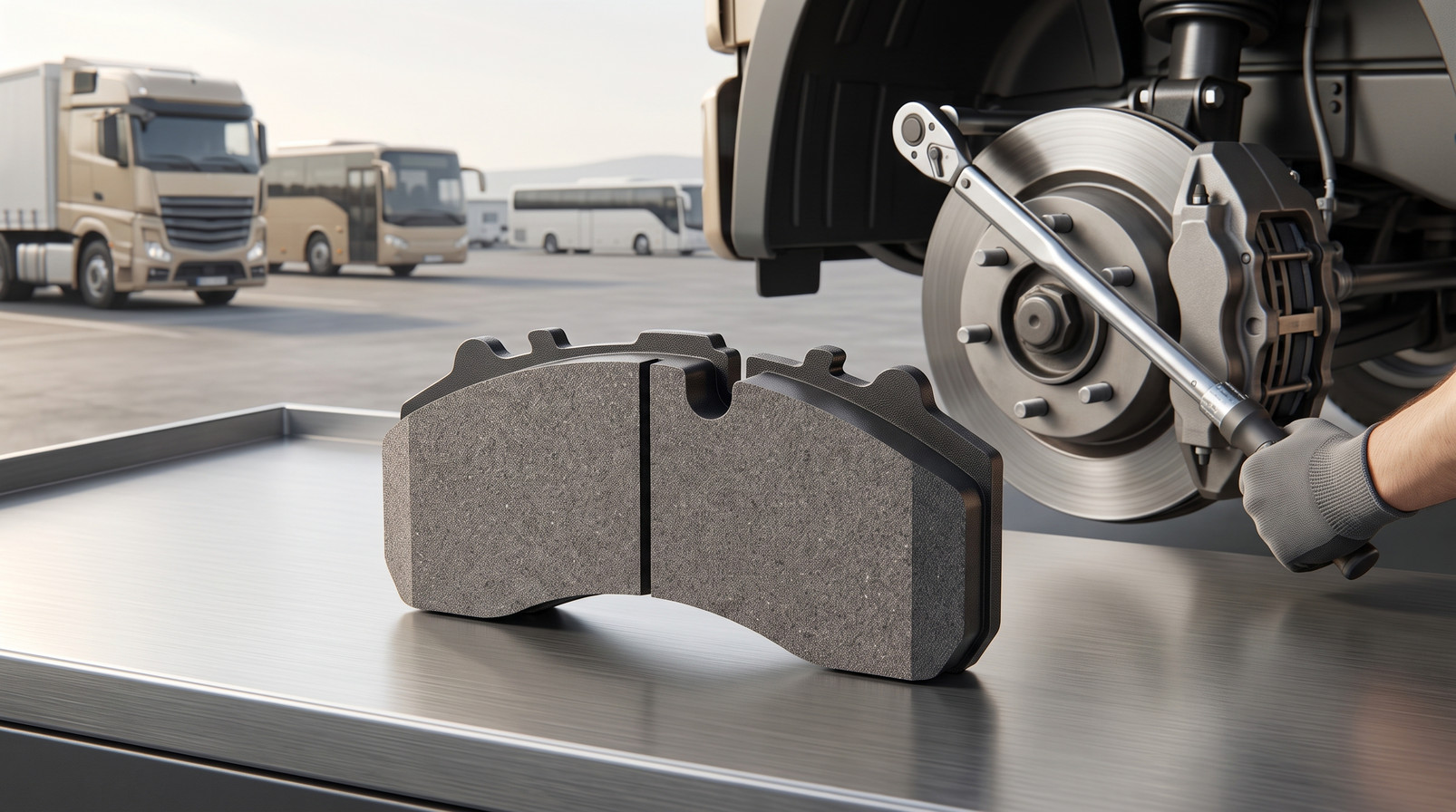
Quick answer: A $1,500 front and rear pads and rotors quote sits at the upper edge of typical retail pricing, but fleet buyers and distributors should read it as a parts-versus-labor benchmark, not a sourcing target. For commercial vehicles, per-axle brake costs often run three to ten times higher depending on truck class and friction spec. The real question is whether your supplier's landed cost per axle, ECE R90 compliance, and MOQ can beat local retail by 20–35% after freight and duties.
That Reddit thread pops up every few months in our export team's inbox. A maintenance manager somewhere sees a consumer-level brake job at $1,500, posts the screenshot, and suddenly a thousand mechanics argue about shop labor rates. Fair enough. But for a fleet manager running 40 delivery trucks, that number is almost meaningless without a breakdown.
What matters on the commercial side is this: if you're importing brake pads and rotors, can you strip that retail invoice down to friction material, metallurgy, certification, and freight—and still beat local garage pricing? That's what this guide unpacks.
Why a $1,500 Retail Brake Quote Doesn't Set Your Fleet Cost Baseline
Retail brake job pricing varies wildly because shops bundle parts, labor, and warranty risk differently. One 2026 mobile brake service guide reports that pads alone installed on one axle typically run $195–$300, while both front and rear pads land at $390–$600. Add rotors to both axles and the range climbs to $850–$1,400. A $1,500 quote is above that band, which usually signals premium parts, dealership labor, or unnecessary caliper replacement.
For a commercial truck or bus, however, those ranges don't scale linearly. A heavy-duty disc rotor alone can cost $300–$800 per wheel depending on diameter, weight, and ventilation design. Brake pads for a single truck axle can weigh 3–5 kg per set and use a different friction formulation than light-duty pads. So if a front and rear pads-and-rotors job on a small commercial van costs $900–$1,600, the same four-corner service on a Class 6 truck can easily push past $2,500–$4,000 in parts alone before in-house labor.
That's the first lesson for fleet buyers: don't benchmark your fleet against a Reddit consumer quote. Benchmark it against your landed cost per axle, your labor hours, and your replacement interval in kilometers.
What Actually Hides Inside a Front and Rear Brake Replacement Quote?
Every brake job quote bundles five cost layers: friction material, rotor casting, hardware, labor, and shop overhead. A retail customer sees one number. A distributor sees margin opportunity.
On the parts side, rotors often account for 30–45% of the total brake job invoice because cast iron blanks, machining tolerance, and balanced surface finish add up quickly. Pads, by contrast, carry high variability: a semi-metallic formulation might cost $5–$9 per set ex-works in volume, while a low-met or ceramic-heavy commercial pad with higher copper-free compliance can reach $12–$25 per set. That spread translates directly into quote differences.
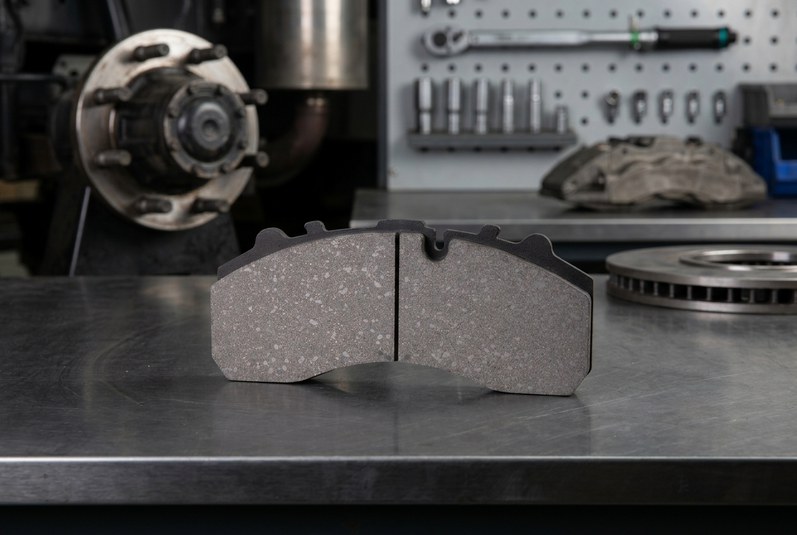
For aftermarket importers, WVA reference numbers matter here. The WVA system standardizes brake pad shapes and friction families across brands, but a WVA number alone doesn't guarantee friction performance. You still need the supplier's dynamometer report, thermal fade curve, and shear test data. If a quote doesn't list those, you're buying a shape, not a brake pad. Specific WVA cross-reference data should always be confirmed with the supplier catalogue.
So what does that mean for your landed cost? If a local shop charges $1,500 for four corners, and you can source an equivalent ECE R90 approved commercial set at $380–$520 ex-works with 28 days lead time plus $40 freight, you're still under the retail parts portion by 25–35%. That's the margin a fleet or distributor can capture. And if you're supplying mixed fleets, start by reviewing our commercial vehicle brake pads range to understand pad thickness, backing plate, and friction options.
Supplier Qualification: What to Verify Before Comparing Brake Pad Quotes
A purchasing manager at a regional bus operator sent us three supplier quotes for the same WVA profile. The cheapest was 41% below ours, the most expensive 12% above. On paper, same pad. In practice, only one supplier could show a current IATF 16949 certificate covering brake friction production, plus an ECE R90 approval for the specific commercial vehicle application. The cheap one went silent when asked for a dynamometer test report.
That's not an isolated story. In commercial vehicle aftermarket sourcing, the unit price gap between a certified and an uncertified pad is often only $2–$6 per set, but the warranty exposure on a 40-truck fleet can erase that saving in one failed brake inspection. Distributors sourcing 500 sets monthly can't afford batch-to-batch friction coefficient drift above ±0.05.
Before you compare quotes, ask for: current IATF 16949 and ISO 9001 certificates, ECE R90 homologation numbers, recent in-house dynamometer test data, batch traceability records, and at least two commercial fleet references. If a supplier stalls on any of these, the price doesn't matter. We cover this in detail on our quality assurance page—including how BAIYUN Brake maintains IATF 16949 certification across commercial vehicle friction lines.
Certifications That Actually Protect Commercial Brake Imports
ECE R90 exists to stop exactly the kind of dangerous brake pad substitution that fleet buyers fear—pads that look right but fade 20% earlier than OEM.
ECE R90 sets minimum performance standards for replacement brake pads sold in many regions, including the EU, UK, Australia, and parts of Asia. For commercial vehicles, it typically requires cold performance, speed sensitivity, fade and recovery, and pad shear testing. A pad that passes must stay within 15% of the reference friction level after a defined fade cycle. That's not theory; it's the difference between a loaded truck stopping in 42 meters versus 55 meters from highway speed.
IATF 16949, meanwhile, is the quality system layer. It forces a manufacturer to control raw material batches, heat treatment curves, and final inspection. ISO 9001 is the baseline. When a distributor asks "Why is your pad $4 more than the other supplier?", the answer is usually these systems—not raw material cost.
For fleet buyers, the smart check is simple: ask for the ECE R90 approval number and verify it against the official UNECE database. Not all approvals cover commercial vehicles; some only cover light applications. If the certificate doesn't list your truck class, the pad isn't legal for your fleet in ECE markets.
| What a $1,500 Retail Quote Implies | What a B2B Supplier Quote Should Show |
|---|---|
| Premium brand mark-up on pads and rotors | Ex-works price per set, friction material code, backing plate spec |
| Labor bundled at retail shop rates | MOQ, lead time, freight terms (FOB/CIF/DDP) |
| No visible compliance data | ECE R90 approval number for the specific truck application |
| Generic warranty language | Batch traceability and dyno test report per production lot |
MOQ, Lead Time, and Logistics That Make or Break Import Margins
Here's where a good unit price dies in shipping.
Freight and duties are where most first-time brake pad importers lose their margin. A brake pad set that costs $18 ex-works can land at $24 after ocean freight, port charges, and import duty—still well below the $60–$90 per-set retail equivalent in many markets. But if you order 200 sets across 30 part numbers, that mixed-container freight allocation per pad set triples.
Typical commercial brake pad MOQs from Chinese manufacturers run 100–500 sets per part number, depending on whether tooling already exists. Lead times range from 20–35 days for existing SKUs to 45–60 days for new private label tooling. Sea freight to Europe, the Middle East, or North America adds 18–35 days depending on routing.
BAIYUN Brake exports to distributors in over 40 countries, and the majority of our commercial brake pad volume ships FOB from major Chinese ports with CIF or DDP options for repeat accounts. We recommend importers request a detailed landed-cost breakdown before committing to a first PO, not after the freight quote comes back. You can review our download our product catalogue for current commercial vehicle pad families and packaging specs, or check material data sheets for friction parameters.
OEM and Private Label Options for Aftermarket Distributors
A distributor in Saudi Arabia came to us with a simple request: same pad, his brand, three-month container schedule.
Private label is where solid brake pad suppliers earn their keep. Distributors can take a proven commercial vehicle pad formulation, add their own backing plate logo, choose a different shim or attachment clip, and package under their own brand—provided the pad keeps its ECE R90 homologation. That last part trips up a lot of buyers. Changing the friction formulation or backing plate design can invalidate an existing approval, so always confirm the new SKU falls under the same approval family.
Our commercial vehicle brake pads are commonly supplied as BAIYUN branded product or under distributor private label. For drum brake fleets, our commercial vehicle brake linings cover riveted and bonded applications across bus, trailer, and truck platforms.
What's the practical limit? For most commercial pad SKUs, private label MOQs start around 300–500 sets per part number, with packaging design support included. Tooling amortization runs 12–24 months depending on order frequency. If you order quarterly, that's manageable; if you order once every two years, stick with BAIYUN brand.
Buyer Verification Checklist for Fleet Brake Sourcing
- Confirm IATF 16949 certificate scope covers brake friction production, not just assembly.
- Request ECE R90 approval number and verify against the UNECE database for your truck class.
- Ask for a recent dynamometer test report showing friction coefficient, fade, and recovery, not just a compliance certificate.
- Clarify MOQ per SKU and whether existing tooling covers your WVA references or new tooling is required.
- Get landed cost breakdown: ex-works price, sea freight, insurance, port charges, import duty.
- Request batch traceability protocol—can the supplier trace a single pad set back to the raw material mixing batch and press cycle?
- Check packaging: aftermarket commercial pads need strong anti-corrosion wrapping and clear WVA marking on the box, not just on the pad.
- Ask for two active commercial fleet or distributor references in your region.
FAQ: $1,500 Brake Job Questions from Fleet Buyers and Distributors
Q: Is a $1,500 front and rear brake pads and rotors quote reasonable for a commercial van fleet?
A: For a light commercial van, $1,500 sits at the high end of retail, but it can be reasonable if it includes OEM-grade rotors, ceramic or low-met pads, caliper hardware, and dealer labor. As a fleet buyer, you'd want the parts-only portion around $650–$850; if it's higher, source ECE R90 approved aftermarket pads and rotors to cut cost per axle by 20–30%.
Q: What does a distributor actually save by importing commercial brake pads directly?
A: Typical distributed cost savings run 25–40% versus local retail on equivalent certified pads. That's because ex-works pricing on volume orders falls to $5–$25 per set depending on friction formulation, while local retail often lands at $45–$90 per set after distributor and workshop markups. Freight and duties eat maybe 18–25% of that spread, leaving healthy margin.
Q: Do all ECE R90 approved pads fit my truck's WVA reference?
A: Not automatically. ECE R90 homologation applies to a defined pad family and application, not every WVA profile a plant produces. You need to confirm the specific WVA number, truck axle, and caliper part number fall under the supplier's listed approval. If in doubt, ask for the approval document and check the application annex. WVA reference should be confirmed with supplier catalogue.
Q: What MOQ should a new distributor expect for commercial vehicle brake pads?
A: Expect 100–500 sets per part number for existing tooling, and 300–800 sets for new private label SKUs. Lead time for existing SKUs typically runs 20–35 days plus 18–35 days sea freight depending on destination. Mixed-container programs can reduce per-unit freight, but too many part numbers raise packaging and documentation complexity.
Q: How do I verify a Chinese brake pad manufacturer's batch consistency?
A: Request a batch traceability protocol plus a recent in-house dynamometer report. A serious supplier can trace each production lot to raw material mix, press parameters, and final shear test. Look for friction coefficient drift within ±0.05 across batches. BAIYUN Brake, for example, maintains IATF 16949 process controls with full batch records for commercial vehicle pads.
What Should You Do With That $1,500 Quote?
Treat it as a pricing signal, not a supplier benchmark. That $1,500 number makes sense as a conversation starter, not as a fleet cost baseline. If a local shop wants $1,500 for four corners on a light commercial van, your target should be to beat the parts-only portion by sourcing certified commercial vehicle pads and rotors directly, without sacrificing ECE R90 compliance or batch traceability.
For fleets running trucks, buses, or trailers, the math scales but the sourcing logic doesn't change. Start with commercial vehicle brake pads that match your WVA profile, verify the ECE R90 approval, confirm MOQ and landed cost, then request a wholesale quote from our export team with your target volumes and part numbers.
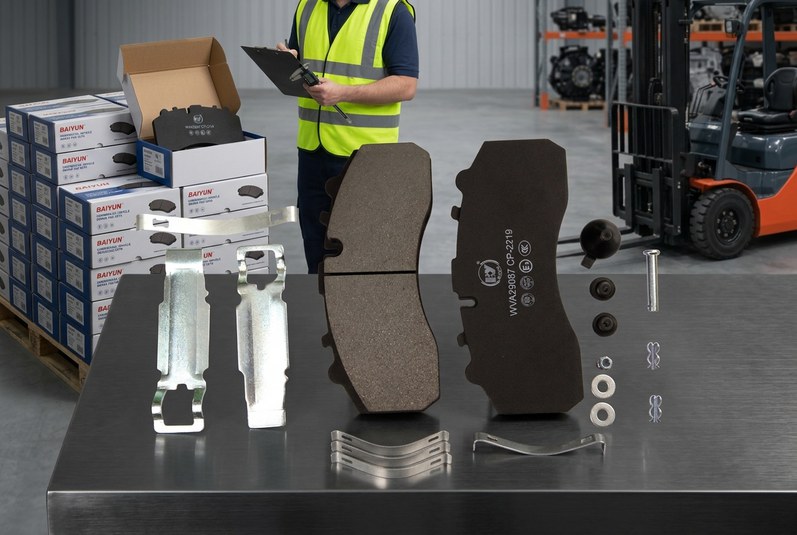
Don't let a viral Reddit invoice set your procurement strategy. Reverse-engineer it, benchmark against your own axle cost, and build a supplier relationship that can actually hold margin over a 24-month program.
Was this article helpful?
Average Rating: 5/5 (87)