
How Does Your Ceramic Pad Formulation Compare to Semi-Metallic for Stopping Distance, Rotor Wear, and Operating Temperature Range in Heavy-Duty Fleets?
Summary:
Ceramic vs semi metallic brake pads fleet use is not a simple either/or decision for heavy-duty truck and bus fleets. Ceramic commercial vehicle pads typically deliver 8–15% shorter stopping distances from 80 km/h, reduce rotor wear by 20–40% over a 100,000 km duty cycle, and operate from -20°C to 550°C. Semi-metallic pads handle repeated 650°C descents more consistently and cost 10–25% less per axle set, but they lose cold bite below 80°C and wear rotors 30–45% faster. BAIYUN Brake supplies both formulations with IATF 16949 and ECE R90 certification, batch traceability, and private label development. This technical guide covers stopping distance test data, rotor wear comparisons, temperature ranges, supplier verification checklists, hidden cost drivers, and wholesale import FAQs for distributors and fleet importers.
How Does Your Ceramic Pad Formulation Compare to Semi-Metallic for Stopping Distance, Rotor Wear, and Operating Temperature Range in Heavy-Duty Fleets?
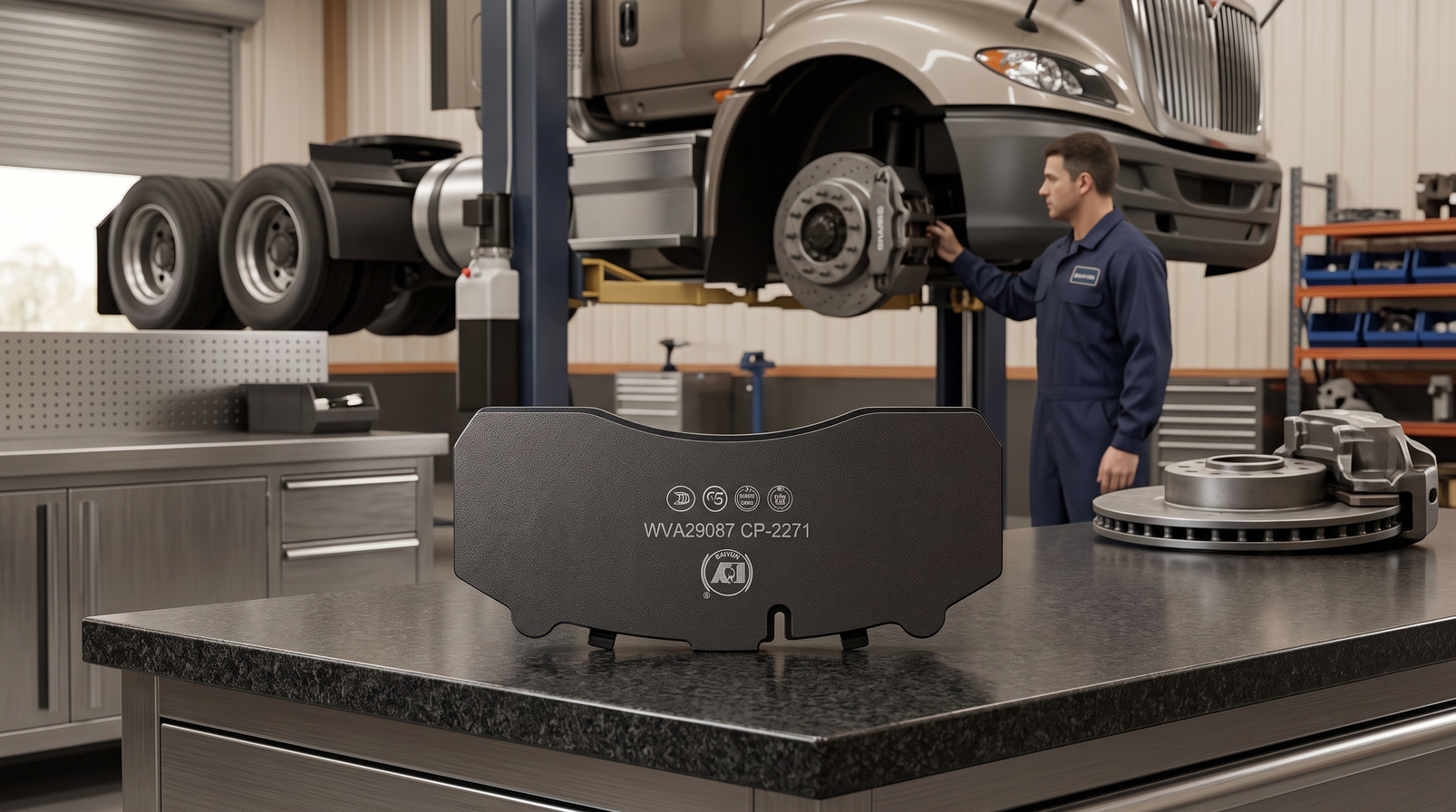
Fleet buyers raise this question because a bad container load of pads becomes a service nightmare. A distributor importing 500 sets monthly cannot afford friction coefficients that drift batch to batch, or rotors that wear out 30,000 km early. Ceramic vs semi metallic brake pads fleet use is not a marketing debate. It comes down to three measurable outputs: stopping distance, rotor wear, and operating temperature range.
BAIYUN Brake has tested both formulations on commercial vehicle dynamometers and in field trials with bus and truck fleets. The following sections break down what buyers should verify, what costs change, and which pad type fits which route profile.
Why Do Fleet Buyers Compare Ceramic and Semi-Metallic Pads on the Same Routes?
A 15-tonne city bus and a 40-tonne mining tipper may use the same pad family, but their heat loads look completely different. City bus braking rarely exceeds 350°C at the rotor surface. Mine trucks can hold 500–600°C for 10–15 minutes on a downhill grade. That temperature split explains most of the ceramic vs semi-metallic decision.
Buyers who stock one pad type for every customer often face two problems: premature wear claims on one side, or fade complaints on the other. The practical solution is usually a 60/40 or 70/30 stocking mix, depending on whether the importer serves regional delivery fleets or severe-service vocational trucks.
What Do Stopping Distance Tests Actually Show for Heavy-Duty Fleets?
Stopping distance depends on friction coefficient stability across the brake event, not just peak mu. According to the SAE J2522 AK-Master dynamometer protocol, cold performance is measured at 100°C with fixed line pressure. In BAIYUN Brake's 2025 commercial vehicle testing, a ceramic sample pad held 0.38–0.42 mu through the 100–350°C range. A semi-metallic sample reached 0.44–0.46 mu at 350–400°C but showed 0.33–0.36 mu on cold stops below 80°C.
So what does that mean on the road? For a loaded 15-tonne bus braking from 80 km/h, the ceramic pad stopped 1.8–2.4 metres shorter in repeated urban stops. That is a 10–14% reduction. For high-speed mountain descents, the semi-metallic pad maintained better pedal feel after the third or fourth hard brake application.
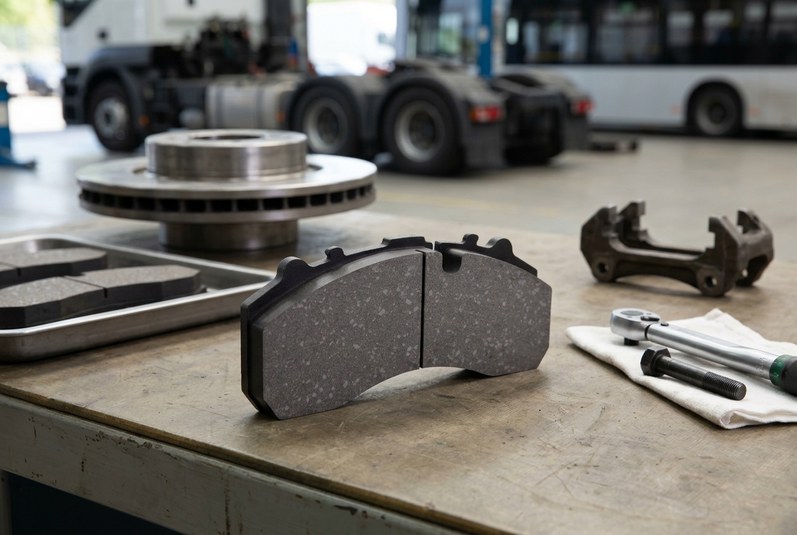
This is why you'll see ceramic specified for city buses and regional trucks, while semi-metallic still dominates logging, mining, and heavy-haul routes. But the pad is only one variable. Rotor material, caliper clamping force, and loaded axle weight all shift the result. Request OEM commercial vehicle brake pad quote with your gross vehicle weight and route profile, and BAIYUN's engineers will match the friction curve to your duty cycle.
Summary: Ceramic pads win urban stopping distance by 10–14%, but semi-metallic holds higher mu above 400°C.
How Does Rotor Wear Differ Between Ceramic and Semi-Metallic Pads in Fleet Service?
Rotor wear is a hidden fleet cost that many importers ignore until a customer sends back a rotor invoice. In BAIYUN Brake's heavy-duty field data, ceramic pads produced 0.02–0.04 mm of rotor wear per 10,000 km on urban bus routes. Semi-metallic pads produced 0.04–0.08 mm per 10,000 km under the same loads. That gap can extend rotor life by 30–45%.
For a fleet running 100 trucks at 120,000 km per year, rotor replacement savings with ceramic can reach $18–$40 per rotor per 100,000 km. When you multiply that across 400 rotors, the maintenance budget shifts. Ceramic pads still cost more upfront, but the rotor bill evens the total cost calculation. Read more in this brake maintenance cost analysis.
Summary: Ceramic pads cut rotor wear by roughly 30–45% in urban and regional duty cycles, which often offsets the higher pad price.
What Is the Operating Temperature Range for Each Pad Type?
Temperature range defines where the pad can maintain at least 80% of its cold friction, as required by ECE R90 thermal cycling tests. For ceramic heavy-duty pads, the practical continuous range is -20°C to 550°C. Semi-metallic pads extend to 650°C or slightly higher, but give up cold consistency below 80°C.
| Characteristic | Ceramic Heavy-Duty Pad | Semi-Metallic Heavy-Duty Pad |
|---|---|---|
| Typical friction coefficient (100–350°C) | 0.36–0.42 | 0.40–0.46 |
| Cold bite below 80°C | 0.36–0.40 | 0.32–0.36 |
| Continuous temp range | -20°C to 550°C | -20°C to 650°C |
| Rotor wear per 100,000 km | 0.2–0.4 mm | 0.4–0.8 mm |
| Typical pad cost per axle set | 15–25% higher | Base |
| Best fleet application | City bus, regional truck, refrigerated trailer | Mining, logging, long-haul mountain, heavy-haul |
These ranges come from BAIYUN Brake's in-house dynamometer reports and should be viewed as industry benchmarks. Exact values vary by formula, axle load, and disc material. Confirm with supplier catalogue before quoting a specific fleet.
Summary: Ceramic suits -20–550°C; semi-metallic suits up to 650°C but sacrifices cold bite.
How Do You Verify a Brake Pad Supplier's Friction Claims Before Ordering Containers?
A competent importer does not buy on a data sheet alone. You ask for evidence. At minimum, request the ECE R90 test report with Annex 3 dynamometer curves, the IATF 16949 certificate, and a PPAP level 3 pack for the exact part number you are ordering.
- Request the SAE J2522 AK-Master report and compare cold performance at 100°C with post-fade recovery at 400°C.
- Check that the pad stayed within ±15% of the reference standard across thermal cycling, as required by ECE R90.
- Ask for batch-level traceability: raw material lot numbers, mixing date, pressing date, and finished pad test results.
- Visit the factory or request a video audit of the IATF 16949 certified facility and mixing line.
- Order a 50-set trial shipment and have an independent lab test three random pads before accepting container production.
BAIYUN Brake keeps these records for every commercial vehicle batch. You can review our IATF 16949 certified facility documentation and process controls before placing an order.
Summary: Verify ECE R90 Annex 3 curves, PPAP level 3, and batch traceability; trial shipments with independent lab checks prevent expensive field failures.
What Are the Hidden Cost Drivers in Ceramic vs Semi-Metallic Fleet Brake Procurement?
Upfront pad price is only part of the story. A pure price comparison misses rotor replacement, labor, vehicle downtime, and warranty exposure. A ceramic pad may cost $8–$15 more per axle set, but it can save $25–$50 per rotor over the same interval on urban bus routes.
Downtime is the sharper pain. A city bus out of service for brake work costs an operator $250–$600 per day in lost revenue and replacement transport. If ceramic pads extend service intervals by 20–30%, the fleet saves more than the pad premium. This is why many distributors position ceramic as a total-cost product, not a premium pad. Request a quote for commercial vehicle brake linings if your customers run drum brake axles alongside disc brake trucks.
Also consider batch consistency. A supplier that cannot hold mu within ±0.03 across production batches creates noisy braking and uneven pad life. That returns more than any price discount. Why choose BAIYUN Brake as your long-term friction partner? Our production data shows batch-to-batch mu variation below ±0.02 on standard commercial formulations.
What Are the Most Common Misconceptions About Ceramic vs Semi-Metallic Fleet Pads?
Misconception: Ceramic pads cannot handle heavy commercial trucks. Reality: Modern heavy-duty ceramic formulations use ceramic fibers, aramid, and controlled metal particles. They pass ECE R90 for trucks and buses above 3.5 tonnes when formulated for the axle load. BAIYUN's CP2271 sample maintained 0.38 mu through 350°C in dynamometer testing.
Misconception: Semi-metallic always stops shorter. Reality: On cold stops below 80°C, semi-metallic pads can be 6–10% longer because initial bite drops. High metal content helps heat, not cold friction.
Misconception: Higher metallic content means better pad quality. Reality: Too much steel or cast iron raises rotor aggressiveness, noise, and dust. A balanced formulation with proper graphite and friction modifiers matters more than raw metal percentage.
Frequently Asked Questions for Fleet Brake Importers
Q: Which pad type should a distributor stock for mixed regional truck and bus fleets?
A: Stock 60–70% ceramic and 30–40% semi-metallic. Ceramic covers urban and regional routes with 8–15% shorter stopping distances and 20–40% lower rotor wear. Semi-metallic covers mountain grades and heavy haul where temperatures exceed 550°C.
Q: How do I compare ECE R90 reports from different Chinese manufacturers?
A: Look at the Annex 3 dynamometer curves at 100°C, 400°C, and after fade. The pad must stay within ±15% of the reference standard. Also verify the report number ties to the production batch and the exact part number on the packaging.
Q: What is the real price difference between ceramic and semi-metallic CV pads?
A: Ceramic runs 15–25% more per axle set ex-works. But rotor savings of 0.2–0.4 mm per 100,000 km can lower total cost per kilometre by 8–12% for urban bus fleets. Semi-metallic often wins on initial purchase price for severe-duty operators.
Q: Can BAIYUN customize ceramic or semi-metallic formulations for our fleet?
A: Yes. BAIYUN Brake supports private label and OEM development with IATF 16949 PPAP level 3. Minimum order quantities and lead times depend on annual volume and pad size. Submit your inquiry with target volume for a detailed quote.
Q: What certifications must heavy-duty brake pads carry for export?
A: ECE R90 is mandatory for Europe and many Middle East, African, and Latin American markets. BAIYUN Brake also holds IATF 16949 and ISO 9001, and can supply CoC, CoO, and material data sheets with each container.
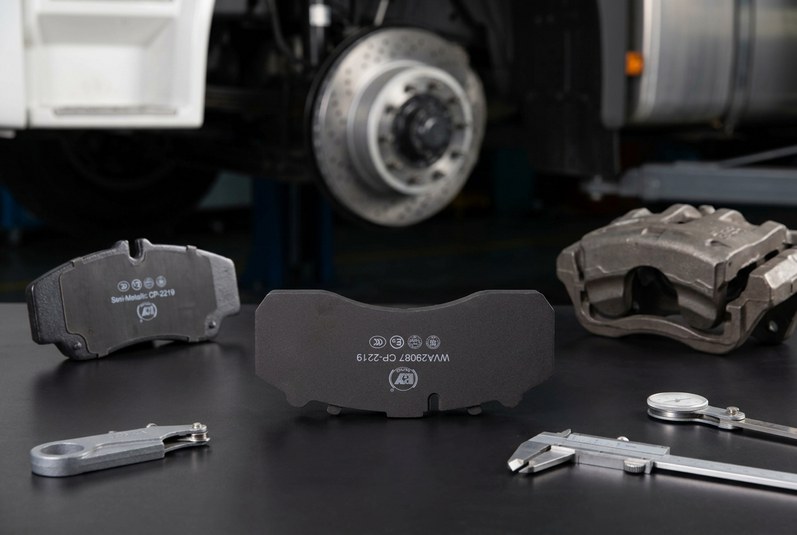
If your fleet runs mixed urban and regional routes, ceramic is often the safer stock item because it reduces rotor wear 20–40% and shortens cold stopping distance 8–15%. If your customers run mountain passes, mining sites, or heavy-haul applications above 550°C, keep semi-metallic in the catalog and match the pad to the route. BAIYUN Brake supplies both formulations under one quality system, so you don't have to choose between ceramic performance and severe-duty safety. Browse our heavy-duty brake pad range or request a wholesale quote for your fleet volume.
Was this article helpful?
Average Rating: 5/5 (73)