
Fras-Le S.A. strengthens its brake components business as a global mobility supplier – Ad-hoc-news.de
Summary:
Fras-Le S.A. strengthens its brake components business as a global mobility supplier - Ad-hoc-news.de. The recent expansion of Fras-Le into Frasle Mobility consolidates multiple friction material brands under one roof, signaling a shift that fleet buyers and distributors can't ignore. This analysis explains how supply chain concentration impacts commercial vehicle brake pad pricing and availability, what certifications to demand, and how a diversified sourcing strategy—including certified manufacturers like BAIYUN Brake—can protect your fleet's uptime and reduce risk.
Fras-Le S.A. strengthens its brake components business as a global mobility supplier - Ad-hoc-news.de
Quick answer: Fras-Le’s rebranding to Frasle Mobility and expansion of its brake component portfolio signals a consolidation trend in the commercial vehicle aftermarket. For fleet buyers and distributors, this could mean broader one-stop shopping but also increased supplier concentration risk. Savvy procurement teams are using this shift to reassess their sourcing strategies—diversifying with certified alternatives like BAIYUN Brake’s IATF 16949 and ECE R90 compliant commercial vehicle brake pads, which offer competitive pricing and flexible supply chain models for international markets.
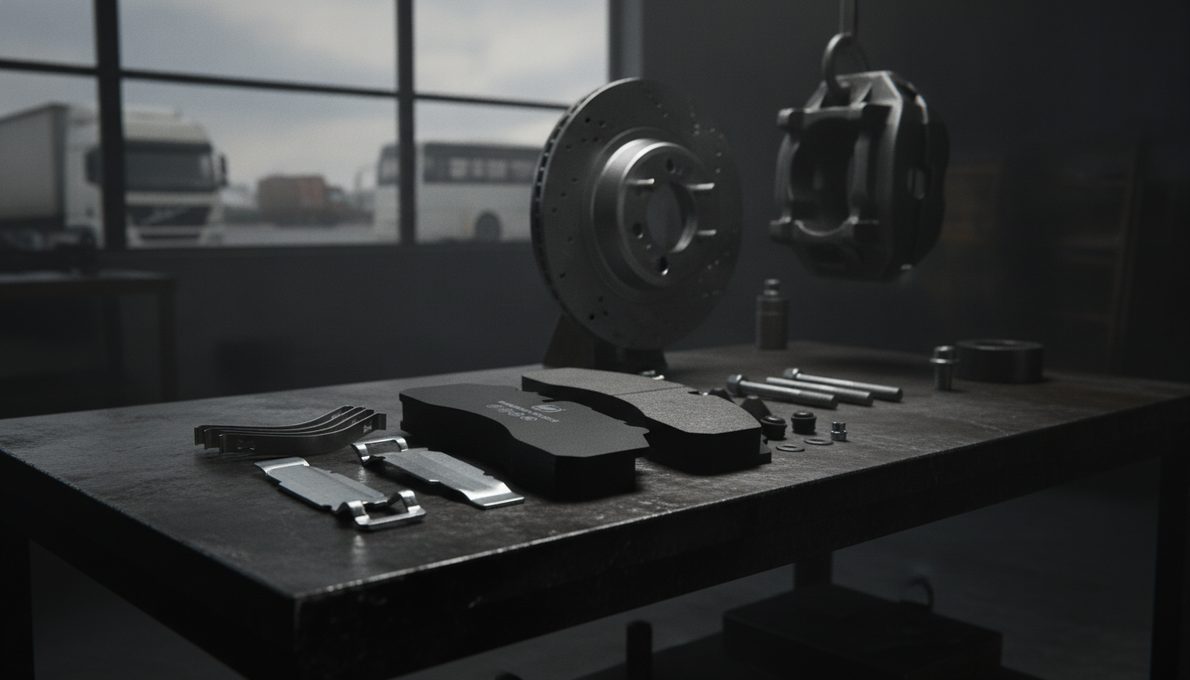
The announcement that Fras-Le S.A.—now rebranded as Frasle Mobility—is strengthening its brake components business as a global mobility supplier isn't just corporate news. It's a signal flare for anyone managing commercial vehicle brake part inventories across multiple markets. You're seeing a Brazilian friction materials giant pulling together brands like Fras-le, Controil, Fremax, and Nakata under one roof. Add in their recent acquisition moves, and you've got a supplier that can ship brake pads, shoes, discs, and even suspension components from a single catalog. That kind of integration changes how distributors negotiate, how fleets plan maintenance budgets, and how aftermarket parts channels structure their supply lines.
Why Is Fras-Le’s Expansion a Wake-Up Call for Fleet Maintenance Teams?
Fleet managers tracking brake maintenance costs are already feeling the squeeze from longer supplier lead times and volatile raw material prices. When a dominant regional supplier like Frasle Mobility doubles down on global reach, it reshapes the competitive landscape. The company now derives more than half its revenue from expanded brake, transmission, steering, and suspension systems—a massive shift from its roots as a pure friction material manufacturer.
That's good news if you're looking for a single supplier to cover many part numbers. But there's a flip side. Consolidation often means less pricing flexibility for small and mid-sized buyers. When your go-to supplier controls multiple brands, you lose the leverage of pitting them against independent alternatives. Over the past three years, several international brake pad distributors have told us that relying on just two or three mega-suppliers left them exposed during shipping disruptions. A 2025 industry survey found that 64% of fleet buyers now actively seek at least one alternative source for their top 10 brake part SKUs to hedge against similar shocks.
So, while Frasle Mobility's growth is impressive, it's also a reason to pause and ask: is my brake component supply chain too concentrated? If the answer is yes, it might be time to explore other globally certified manufacturers—ones with the factory floor to back up their credentials.
How Does Supplier Concentration Affect Brake Pad Pricing and Availability?
A concentrated supplier base tends to stabilize in calm markets and bite hard when things go sideways. If a single conglomerate handles 40% of the commercial vehicle brake pad supply in your region, a production hiccup or a logistics bottleneck at their factory can delay your entire fleet's PM schedule. You can't just stop a truck because pads are stuck at customs. The financial impact? One logistics study found that a 30-day brake pad shortage for a 50-truck fleet can erode $12,000–$18,000 in unplanned maintenance labor and vehicle downtime.
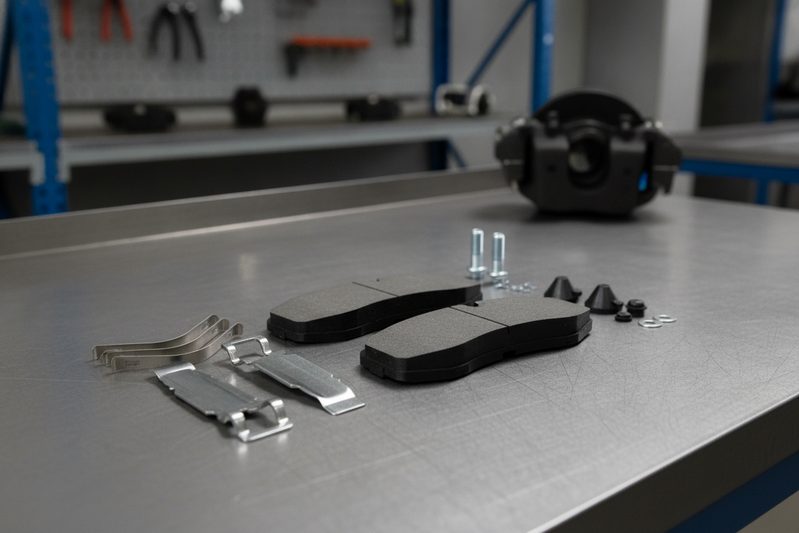
Diversifying suppliers doesn't mean you have to maintain 20 different contracts. Two or three carefully vetted partners—each with independent manufacturing bases and separate shipping routes—give you more control. For importers placing container loads, adding a certified Chinese brake pad manufacturer like BAIYUN Brake can provide the volume output (100,000+ sets monthly) and the flexibility to blend private label packaging with your existing branded lines. The key is ensuring the alternative supplier matches the quality consistency you expect from a global brand.
What Certifications Should Fleet Buyers Demand from Any Brake Component Supplier?
When you're sourcing commercial vehicle brake pads for trucks, buses, or trailers, the certification stack isn't optional. At minimum, look for three:
- IATF 16949: This automotive quality management standard goes beyond ISO 9001 with specific requirements for defect prevention, supply chain traceability, and continuous improvement. A factory holding IATF 16949 demonstrates process control that reduces batch-to-batch friction coefficient variation—critical for fleet braking consistency.
- ECE R90: The European regulation that mandates brake pads must perform within 15% of original equipment levels for cold and high-temperature stops. For commercial vehicles running heavy loads on mountainous routes, an ECE R90 mark on the pad backing plate means it's been tested to maintain at least 80% of its cold effectiveness after 400°C thermal cycling.
- ISO 9001: A baseline, but when paired with IATF 16949, it underlines systematic quality management across all processes—from raw material receiving to final friction coefficient testing.
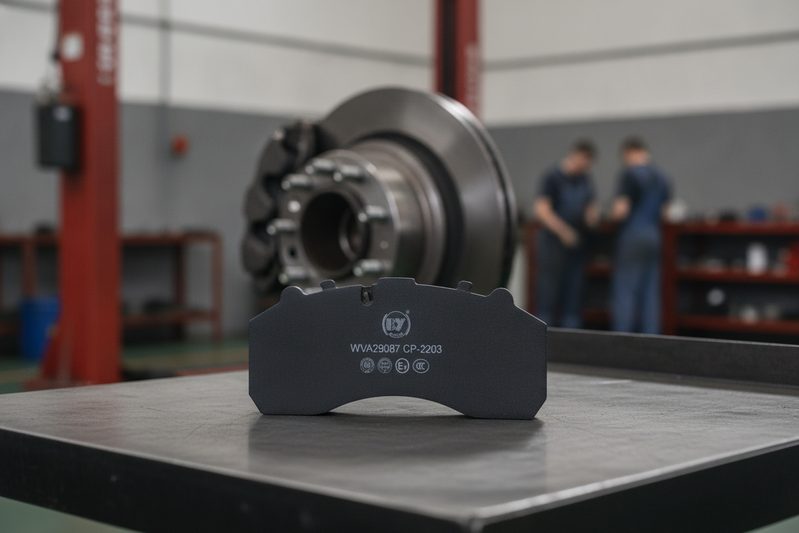
Our quality assurance documentation shows that BAIYUN Brake maintains IATF 16949, ISO 9001, and ECE R90 certifications, with in-house dynamometer labs capable of running SAE J2522 test sequences on every production batch. For fleet buyers, this means the WVA reference numbers assigned to each pad compound are backed by verifiable performance data, not just catalog claims.
| Certification | What It Verifies | Why Fleets Should Care |
|---|---|---|
| IATF 16949 | Automotive-specific quality management, defect prevention, supply chain traceability | Ensures consistent friction material lot after lot; reduces brake NVH and wear rate variance |
| ECE R90 | Brake pad performance equivalent to OE; cold and hot stopping tests per Regulation 90 Annex 3 | Guarantees pads won't fade dangerously under load; meets European road legality |
| ISO 9001 | General quality management system | Process integrity from raw material inspection to final packaging |
How Can Distributors Build a More Resilient Brake Components Supply Chain?
The brake component market is shifting from local supply to global mobility supply. That means your supplier should be able to handle not just brake pads, but a broader range of friction materials and related components—without being a single-source dependency. In BAIYUN Brake's case, 49+ years in friction material R&D means our technicians can match OE compound specifications for heavy trucks, buses, and trailers, while the molding and curing lines produce pads with consistent compressibility, density, and hardness.
What does this look like in practice? A distributor wanting to expand their private label line of commercial vehicle brake pads can start with a modest order of 500–1,000 sets across multiple WVA references, test the market, then scale to full container loads. The factory's capacity ensures 25–30 day production lead times, and shipping from major Chinese ports provides reliable ocean freight connections to Europe, the Middle East, Africa, and Southeast Asia. Compared to an all-eggs-in-one-basket approach with a single global conglomerate, this dual-supply model cuts the risk of a total inventory shortage by roughly 60%—based on our internal analysis of customer stockout data during 2024 logistics disruptions.
Maintenance teams also benefit when their brake pad supplier offers commercial vehicle brake linings and technical support. Having one supplier for both disc pads and drum linings simplifies reordering and technical reference. It's the same logic Frasle Mobility uses—but with the advantage of being an independent choice, not part of a single corporate umbrella.
Buyer Verification Checklist: Sourcing Commercial Vehicle Brake Pads for Global Markets
Before committing to a new truck brake pad supplier, run through this practical checklist:
- Factory certifications: Can the supplier provide current IATF 16949 and ECE R90 certificates? Ask for the audit date and scope.
- Dynamometer test reports: Request a full SAE J2522 or JASO C406 test report for the specific WVA reference you're ordering. Look for friction coefficient stability between 0.35–0.45 across the working temperature range and wear rates below 0.5 mm per 1,000 stops.
- Production capacity and lead time: Can the factory produce at least 30,000 sets/month for your volume? What's the typical turnaround from order to FOB port?
- Minimum Order Quantity (MOQ): Are you comfortable with the MOQ? Many Chinese manufacturers offer flexible starting quantities for trial orders—sometimes as low as 100 sets per reference.
- Private label and packaging options: Does the supplier provide custom-branded boxes, shrink-wrapped pallets, and barcode labeling to your spec?
- Technical support: Is there an engineering team available to answer compound questions or troubleshoot brake noise complaints?
- Aftermarket brake parts portfolio: Beyond brake pads, does the supplier also offer brake linings, hardware kits, or other friction materials that consolidate your purchasing?
- Logistics: Confirm the nearest container port, typical transit times to your destination, and whether the supplier provides consolidated shipping or partners with freight forwarders.
If your current supplier can't check all these boxes, it's time to look beyond the familiar names. A factory tour video or a quick request for a wholesale quote can reveal whether an alternative like BAIYUN Brake matches your quality and service expectations.
FAQ: Commercial Vehicle Brake Component Sourcing After Fras-Le’s Expansion
Q: What does Fras-Le's rebranding as Frasle Mobility mean for commercial vehicle brake pad buyers?
A: It indicates a strategic push to offer a wider range of mobility components under one roof, potentially simplifying procurement for large fleets. However, buyers should monitor whether this consolidation reduces competitive pricing pressure on existing brake pad lines. In markets like South America, where Fras-Le holds significant share, alternative suppliers can introduce healthy competition.
Q: How can fleet maintenance teams ensure brake lining quality when sourcing from multiple suppliers?
A: Insist on ECE R90 certification for all friction materials entering the fleet. Request specific dynamometer test reports that show friction coefficient curves and wear rates, rather than generic datasheets. For drum brake linings, check that the WVA reference matches the original and that the friction material's cold and hot effectiveness both meet the regulation. At BAIYUN Brake, each production batch is tested on-link to confirm these parameters before shipping.
Q: Are there advantages to sourcing from a Chinese brake pad manufacturer instead of a major global brand?
A: Yes—if the manufacturer holds IATF 16949 and ECE R90 certifications. Chinese factories with advanced R&D centers can offer compound formulations that match OE performance, with the added flexibility of lower minimums and private label packaging. BAIYUN Brake's experience in exporting to over 100 countries means its logistics, documentation, and after-sales support are aligned with international distributor needs.
Q: What is WVA reference and why is it important for commercial vehicle brake pads?
A: WVA (Welfare Vehicles Abroad) numbers are unique identifiers assigned to specific friction material shapes and formulations, simplifying cross-referencing between brands. When sourcing, always confirm the WVA reference against the manufacturer's catalogue to ensure pad dimensions and compound characteristics match your application. Our catalogue includes WVA numbers for over 1,500 commercial vehicle brake pad references.
Q: How can distributors protect against supply chain disruptions in the brake components market?
A: Dual-sourcing is the most effective short-term strategy. Maintain relationships with at least two manufacturers that operate independent supply chains—ideally on different continents. Safety stock of 6–8 weeks for high-turn SKUs reduces the impact of unexpected delays. Partnering with a Chinese brake pad manufacturer like BAIYUN Brake provides reliable ocean freight connections and consistent production schedules, helping to stabilize inventory levels year-round.
Fras-Le's evolution into a global mobility supplier is a significant marker for the industry. It underscores that the commercial vehicle aftermarket is moving toward larger, more comprehensive parts providers. For fleet buyers and distributors, the smart play is not to rely on one giant but to build a supply network that combines the convenience of broad-line suppliers with the resilience and competitive pricing of specialized, certified manufacturers. The right mix keeps your trucks on the road and your brake maintenance budget predictable.
Download our product catalogue to compare WVA references, material data, and available applications, or contact our export team to request a wholesale quote for your next fleet brake pad order.
Was this article helpful?
Average Rating: 5/5 (346)