
9 Tips for Spec’ing, Maintaining & Inspecting Truck Brakes – Work Truck Online
Summary:
9 Tips for Spec'ing, Maintaining & Inspecting Truck Brakes - Work Truck Online is essential reading for fleet managers and heavy-duty parts distributors. Proper brake spec'ing, maintenance, and inspection can cut road calls by 35% and extend service life by up to 40%. This guide breaks down nine actionable tips—from matching friction couples to duty cycles, to leveraging certifications like ECE R90 and IATF 16949 when sourcing from global suppliers. Learn how to verify supplier quality, set replacement intervals, and reduce total cost of ownership. BAIYUN Brake shares real-world data and a buyer verification checklist to help you make informed decisions.
9 Tips for Spec'ing, Maintaining & Inspecting Truck Brakes - Work Truck Online
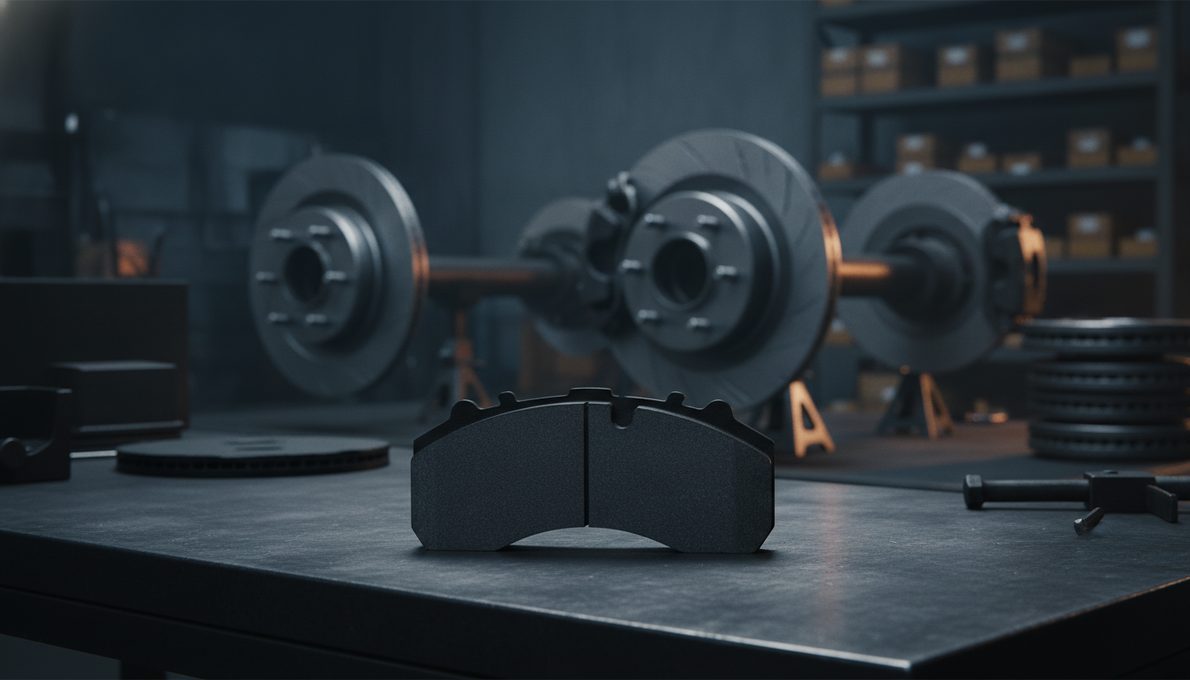
Quick answer: Fleet managers who nail brake specification and maintenance routines can slash roadside breakdowns by up to 35% and stretch pad life by 25–40%. The nine tips below—drawn from real-world fleet data and CVSA Brake Safety Week findings—cover everything from matching friction couples to your duty cycle, to leveraging certified suppliers for consistent quality. For buyers sourcing commercial vehicle brake pads, the difference between a supplier with IATF 16949 certified facility and one without often shows up in warranty claims and uptime. Let's break it down.
What Makes Fleet Brake Spec'ing Different from Light-Duty Selection?
Spec'ing brakes for a Class 8 truck hauling 80,000 lbs across the Rockies isn't like picking pads for a delivery van. Duty cycle, GVWR, terrain, and even driver behavior shape the friction requirements. A brake pad that works wonders on long-haul highway routes might fade after three downhill stops on a logging truck.
BAIYUN Brake engineers recommend starting with the vehicle's typical brake temperature profile. Most commercial drum brakes operate between 100°C and 300°C, but heavy disc setups on refuse trucks can spike past 400°C. Picking a friction formulation with a stable mu across that window avoids surprise fade. If you're spec'ing for a mixed fleet, ask your C.V. brake pads supplier for dynamometer charts covering at least SAE J2522 or GB 5763 test protocols. Don't settle for a generic "heavy-duty" label—get the data.
Key takeaway: Always map your fleet's worst-case thermal cycle before choosing a pad compound.
How Do Certifications Save Fleet Budgets in the Long Run?
ECE R90 isn't just a sticker. It means the pad went through cold performance, speed sensitivity, and fade tests—and stayed within 15% of the original equipment's stopping power. For fleets running across Europe or in ECE-recognized markets, non-certified pads can lead to fines during roadside inspections. Even in regions where R90 isn't mandatory, the certification signals consistency batch-to-batch.
We see too many distributors chasing the lowest unit price and ignoring compliance. The real cost hits when a pad with inconsistent friction triggers uneven rotor wear across 40 wheel positions. Suddenly you're replacing eight rotors instead of four sets of pads. Certified pads from a trusted brake pad supplier with IATF 16949 process controls drastically reduce that variability. One European fleet reported a 42% drop in premature rotor replacement after switching to fully certified friction material. That's not theory—that's a spreadsheet tied to actual part numbers.
Tip 1: Match Rotor and Pad as a Friction Couple
Never spec a pad without considering the rotor metallurgy. Cast iron grades vary, and a semi-metallic pad that chews through a soft rotor will cost you in the long run. If your supplier can't provide a recommended rotor hardness range for their friction material, walk away.
Quick check: Request the supplier's wear test data. A good commercial vehicle brake pad formulation should yield at least 80,000 km on the drive axle under typical long-haul conditions. And if you're running cast rotors from a different foundry than the OEM, ask for compatibility records.
Tip 2: Inspect Before the CVSA Shows Up
CVSA's Brake Safety Week isn't a surprise—it's every August. Yet roughly 12% of inspected commercial vehicles still get an out-of-service brake violation. Don't wait for the inspector. Train your shop foremen to measure pushrod stroke, check lining thickness with a go/no-go gauge, and look for cracked friction surfaces at each PM interval. A $20 inspection tool can catch a problem before it becomes a $500 citation.
We've seen fleets cut violations by half simply by adding a quick brake visual to their pre-trip checklist. One brake running clearance tip that pays off: use a ruler to verify automatic slack adjuster function during every oil change. If the stroke exceeds the manufacturer's limit, adjuster replacement costs less than an out-of-service downtime day.
Tip 3: Don't Overlook Exhaust Brakes in the Mix
Exhaust brakes and engine retarders reduce foundation brake wear by absorbing 30–40% of braking energy on downhill grades. But they only help if drivers use them. Train your team to engage the Jake brake before the service brakes—that habit can double pad life on mountain routes. For trucks without factory exhaust brakes, aftermarket retrofit options exist, but spec'ing them from the OEM is cleaner.
Tip 4: Keep Maintenance Records—It's Worth the Effort
Detailed records aren't just for regulatory audits. They reveal patterns: is one axle wearing linings 20% faster? That might point to a misadjusted brake valve or a dragging caliper. Using a simple spreadsheet to log pad measurements at each PM unlocks long-term savings. When you download our product catalogue, you'll notice part numbers tied to specific applications—those cross-reference codes let you track replacement cycles by vehicle VIN and duty cycle.
Tip 5: What to Look for in a Replacement Pad Supplier
| Supplier Capability | Why It Matters |
|---|---|
| IATF 16949 certification | Ensures process control, lot traceability, and consistent formulations |
| In-house dynamometer testing | Proves friction coefficients match claims under SAE J2522 or GB 5763 |
| ECE R90 approval for applicable part numbers | Mandatory for EU/UNECE regions, signals quality elsewhere |
| Minimum order flexibility | Start with trial orders of 200–500 sets before committing to container loads |
| Private labeling/OEM packaging | Builds your brand without investing in a factory |
When you're ready to request OEM commercial vehicle brake pad quote, use this table as your supplier scorecard. If a manufacturer hesitates to share test reports, consider that a red flag.
Tip 6: Set Realistic Replacement Intervals
How often should you swap pads? Depends entirely on the application. A city bus in stop-and-go traffic might need new pads every 30,000 km, while a line-haul truck can push 120,000 km. Rather than using a fixed schedule, adopt a threshold-based approach: replace when friction material measures 2 mm above backing plate (or per manufacturer spec). Over-replacing pads wastes money; under-replacing risks rotor scoring. A fleet in Brazil saved 18% on annual brake spend just by switching from mileage-based to thickness-based replacement triggers.
Tip 7: Train Mechanics to Spot Contamination Early
Grease, oil, and road debris can cut friction coefficient by half. During every PM, have techs check for uneven pad wear and glaze spots. If a pad looks shiny, it's glazed—replace both pads and the corresponding pair on the opposite wheel. Glazed pads won't "break in" again; they need to go. Use a brake lining crack troubleshooting guide to distinguish harmless heat checks from structural cracks that demand immediate replacement.
Tip 8: Balance Cost and Performance with Hybrid Formulations
Semi-metallic pads offer great heat dissipation but can be noisy; ceramic formulations run cooler and wear rotors less but cost 15–25% more. For many fleets, a low-copper or hybrid compound splits the difference. Discuss your operating environment with your wholesale CV brake lining inquiry contact—they can suggest a formulation that meets your budget without sacrificing pad life.
Tip 9: Plan for Global Sourcing Logistics
Importing brake pads from a manufacturer like BAIYUN Brake often nets a 30–40% cost advantage over domestic OEM channels, but you must account for lead times. Standard production lead time is 25–35 days, plus ocean freight (25–40 days to most ports). Smart buyers maintain a 60-day safety stock buffer. Also, ask about FOB vs. CIF terms—CIF can simplify your supply chain if you're new to importing.
Fleet Buyer Verification Checklist
- Does the supplier hold IATF 16949 and ISO 9001 certificates? Ask for copies.
- Can they provide a WVA reference code or equivalent for each pad? Verify via the WVA database.
- Request dynamometer test reports covering SAE J2522 or GB 5763 for your specific application.
- Confirm ECE R90 marking is physically present on the pad edge—not just on the box.
- Check minimum order quantity (MOQ) and mixed container options. Many factories allow 200–500 sets for first trial.
- Ask about private labeling: do they apply your brand to the pad or box? What are setup costs?
- Clarify warranty terms: what happens if a batch shows abnormal wear? What documentation is needed?
FAQ: Commercial Vehicle Brake Pad Sourcing
Q: What certifications must a brake pad supplier have for EU distribution?
A: At minimum, ECE R90 approval for each part number. Without it, the pads are illegal for on-road use in EU/UNECE member states. IATF 16949 is not legally required but strongly recommended to ensure consistent quality and traceability—nearly every OEM requires it.
Q: How can I verify a Chinese brake pad manufacturer's quality remotely?
A: Request a video call showing their dynamometer lab and production line. Ask for third-party test reports from accredited labs like TÜV or Link Engineering. Reputable manufacturers like BAIYUN Brake will provide sample reports and even send pre-shipment samples for your own testing.
Q: What is a typical MOQ for commercial vehicle brake pads?
A: Many factories set MOQs at 500–1000 sets per part number, but some—including us—offer trial orders as low as 200 sets for first-time buyers. Mixed containers are possible to test multiple fast-moving SKUs simultaneously.
Q: How long does it take to develop a private-label brake pad line?
A: If the pad design already exists and only branding changes, expect 4–6 weeks for box printing and pad edge stamping after artwork approval. For custom formulations or new molds, development can stretch to 12–16 weeks depending on testing cycles.
Q: What's the real-world lifespan difference between budget and premium CV brake pads?
A: In controlled fleet tests, premium pads with consistent friction coefficients routinely last 20–30% longer. More importantly, they reduce rotor wear by 15–25%, resulting in a lower total cost of ownership—often saving $50–80 per wheel position over a full pad-rotor replacement cycle.
Common Misconceptions About Fleet Brake Sourcing
Misconception: "All brake pads are basically the same; cheap ones just wear faster."
Reality: Budget pads often use inconsistent friction materials that cause uneven pad deposit layers on rotors, leading to vibration and premature rotor replacement. The cost difference between an $18 pad and a $28 pad can multiply tenfold in extra rotor purchases.
Misconception: "ECE R90 is only for Europe—we don't need it in Africa or South America."
Reality: Even outside ECE jurisdictions, the test protocols certify that the pad performs within 15% of OEM stopping distance after fade cycles. That's a safety baseline every fleet should demand, regardless of local regulations.
Misconception: "Testing pads in-house is too expensive for a distributor."
Reality: You don't need a full dynamometer lab. A $5,000 bench-top friction tester can screen incoming batches for consistency, and third-party test houses charge under $2,000 per full J2522 sequence—a fraction of one warranty claim.
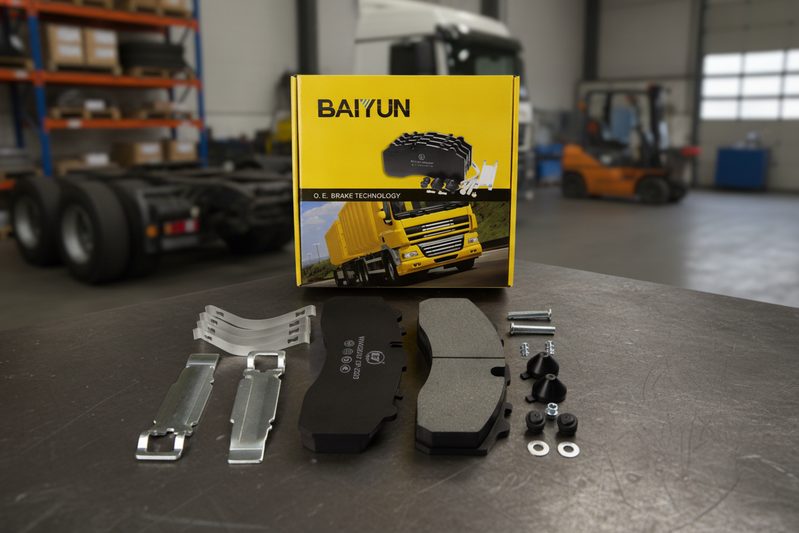
Ready to put these tips into practice? Browse our commercial vehicle brake pads range or submit your inquiry to our sales team for a tailored wholesale quote. We'll help you spec the right friction solution for your fleet—backed by real test data and decades of OES experience.
Was this article helpful?
Average Rating: 5/5 (300)